Advocates Protect Ranchers, Not Horses and Burros?

A visitor asked for information showing that some of the advocacy groups defer to cattle/mining interests at the expense of wild horses and burros.  Here is the reply:

Hi R.,

Data collection and number crunching are needed to show how the government manages areas set aside for wild horses and burros.

There are many such posts on the blog, here is a recent example:

How Many Wild Horses Can the North Lander Complex Support?

The government puts ranching interests far above those of the horses and burros.

AMLs typically correspond to 20% or less of the authorized forage.

Livestock receive three to six times more forage than the horses and burros.

The off-range corrals and pastures are flooded with animals displaced from their home range by permitted grazing.

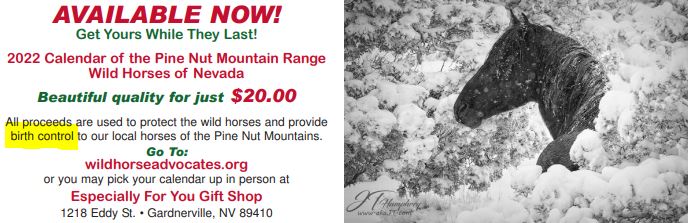
In their desire to get rid of the horses with PZP, instead of helicopters, the advocates reinforce the status quo and protect the ranchers.

That’s how you know they’re frauds.

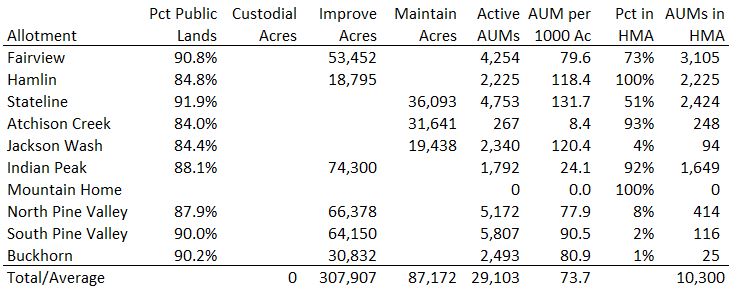
The problem is resource allocation, which is documented in the land-use plans.

As for drilling and mining, they affect anywhere from a few acres to a few thousand acres, but public-lands ranching devours entire HMAs and beyond.

Regards,

B.

westernhorsewatchers.com

RELATED: Lots to Celebrate at Sulphur HMA, If You’re an Advocate.

Three Out of Four Americans Duped by Advocates?

They’re wrong about almost everything in the wild horse world, so it’s easy to imagine, but Western Horse Watchers has no such data.

However, the Campaign Against America’s Wild Horses indicated today in a news release that 74% of those who responded to their poll oppose helicopter roundups, and 63% support birth control for herd management.

Statements regarding the beliefs of Americans, a huge leap from their sample of 520 registered voters, give or take, may or may not be valid.

Referring to helicopter roundups, the group’s executive director noted that “The more the American public knows about the BLM, the less supportive it is of the inhumane and outdated approach to wild horse and burros.”

If the people understood how the BLM manages the public lands, especially areas set aside for wild horses, they’d reject the Montana Solution along with the roundups.

That’s bad news for her and her army of volunteers, who seek the approval of the bureaucrats and ranchers at the expense of our wild horses.

RELATED: Signatories of Rock Springs Petition Duped by Advocates?

Wildlife Society Acknowledges Support for 2022 Roundup Plan

The self-annointed conservation group said today in a news release that it signed the letter endorsing the BLM’s increased use of roundups and fertility control for wild horse and burro management, noting the agency’s commitment to “gather and sterilize 22,000 wild horses and burros across the western U.S. in coming years,” which, of course, is wrong.

The goal is to capture 22,000 such animals in FY 2022 and remove 19,000 from their home range.

That’s between now and September 30.

They don’t even know what they’re supporting.

Western Horse Watchers was unable to determine if the group advocates for all wildlife, including wolves, mountain lions and coyotes, or only the species that fit their agenda.

The announcement indicated that horses and burros, as non-native invasive species, compete with native wildlife and can cause damage to resources and habitat, but was silent on the effects of other non-native species, such as privately owned cattle and sheep, which far outnumber the horses and burros and graze in the same areas.

RELATED: CSF Endorses FY 2022 Resource Enforcement Goals.

NNCC Horses Fetch $92,250 in Recent Auction

Sixteen saddle-started horses and one halter-trained colt, forced off their home range in Nevada to accommodate the public-lands ranchers, were adopted over the weekend at the Northern Nevada Correctional Center, according to a BLM news release dated February 28.

The announcement said there are no natural predators that can effectively control wild horse and burro populations on America’s public lands, as those animals would also be interested in the privately owned cattle and sheep that dominate the landscape and may find them to be easier targets.

CSF Endorses FY 2022 Resource Enforcement Goals

The Congressional Sportsmen’s Foundation, a nonprofit that works with Congress, governors and state legislatures to promote hunting, angling, recreational shooting and trapping, said in a news release yesterday that it signed a letter to Tracy Stone-Manning, along with other hunting and wildlife groups, supporting the BLM’s plan to gather 22,000 wild horses and burros from western rangelands this year.

The letter describes the animals as nonnative, feral livestock that lack natural predators and can have significant detrimental impacts on native ecosystems and wildlife habitat.

Other signatories include the National Rifle Association, Public Lands Foundation and The Wildlife Society.

Privately owned cattle and sheep, the predominant nonnative species on America’s public lands, were not mentioned and apparently have no impact on rangeland health.

What PBS Didn’t Tell You About America’s Wild Horses

The wild horse and burro program has been a drag on the grazing program for fifty years.

Nearly half of their land is managed principally for livestock.  The remainder is managed primarily for livestock, with few exceptions.

AMLs are low relative to the available resources.  Most of the forage has been assigned to privately owned cattle and sheep, with a small amount reserved for wildlife.

Pest control programs, the subjects of numerous environmental assessments, do not allocate resources.  They cannot change resource allocations.  They enforce resource allocations already on the books, in the land-use plans.

Findings of no significant impact don’t apply to the horses.

Roundups shift resources back to the ranchers in just a few weeks.  Darting programs accomplish the same thing over a much longer timeframe but with the added benefit that the herds don’t bounce back.

Protect Wild Horses from Advocates 08-29-21

Most of the advocates are frauds.  Next to the federal government, nobody’s getting rid of more wild horses than they are.

At the Salt River and Virginia Range, they operate almost exclusively of the bureaucrats and ranchers, whose approval they seek at all costs.  Residents, tourists, motorists, campers, hikers, predators and shooters can’t even come close.

RELATED: Story of ‘American Horses.’

Black Mountain Wild Burro Removal Continues

Operations resumed on February 12, according to the gather page.  No activity has been reported since February 16.

Fifty five animals have been trapped to date, with none shipped and no deaths.

The capture and removal goals are identical, 80 each.

The cumulative total includes 38 jacks, 14 jennies and three foals.

Youngsters represented 5.5% of the burros captured.

Of the adults, 73.1% were male and 26.9% were female.

Body condition scores were not provided.

The location of the trap site was not specified.

Black Mountain HMA Map 02-25-22

Roughly half of the HMA is subject to permitted grazing, as shown on the Western Watersheds map, and the AML corresponds to about 28% of the authorized forage.

The incident was not announced at the BLM news site but it does appear on the FY 2022 roundup schedule.

Animals outside the HMA on private lands are targeted.

Last year, 481 animals were removed from the area, according to figures at the gather page.  The event has not been marked complete and no such announcement has been posted by the BLM.

New Resource Enforcement Plan for Bible Springs Complex?

The project appeared today at ePlanning.  No documents have been posted and there are no opportunities for public comments at this time.

An announcement soliciting public input for the scoping phase of the project may or may not be posted to the BLM news site.

The Complex includes three HMAs in western Utah.

Bible Springs Complex Map 02-24-22

The HMAs are subject to permitted grazing, as shown on the Western Watersheds map.

The Proposed Action would remove excess horses until the herds are at the low end of their AMLs and apply fertility control to reduce growth rates thereafter, according to the project description.

Challis Roundup Day 4

The incident began on February 20.  Gather stats through February 23:

  • Target: Horses
  • Type: Planned
  • Method: Bait
  • Captured: 15
  • Average daily take: 3.8
  • Capture goal: 70
  • Removal goal: 39
  • Returned: None
  • Deaths: None
  • Shipped: 13

The cumulative total includes 5 stallions, 8 mares and 2 foals.

Youngsters represented 13.3% of the horses captured, consistent with a growth rate of 8% per year.  Land managers often use a rate of 20% per year to predict herd sizes.

Of the adults, 38.5% were stallions and 61.5% were mares.

Body condition scores ranged from three to five.

The location of the trap site within the HMA was not provided.

Challis HMA Map 11-11-21

Day 4 ended with two unaccounted-for animals.

The number of horses removed to date is 15.

Mares returned to the HMA will be treated with fertility control of unspecified type.

Other statistics:

  • AML: 253
  • Forage assigned to horses: 3,036 AUMs per year
  • Pre-gather population: 224
  • Forage liberated to date: 180 AUMs per year
  • Water liberated to date: 150 gallons per day
  • Forage assigned to livestock: 9,756 AUMs per year (estimated)
  • Horses displaced from HMA by permitted grazing: 813
  • True AML: 1,066
  • Stocking rate at new AML: 6.9 wild horses per thousand public acres
  • Horses displaced from HMA by drilling and mining: Ask the advocates

RELATED: Challis Roundup in Progress.

Shackleford Herd Grows Slightly in Latest Census

The Park Service said in a news release yesterday that 121 horses were living on the barrier island at the end of 2021, up from 117 at the end of 2020.

The growth rate was 3.4%.

Eleven foals were counted and seven deaths were reported.

The average lifespan was eleven years and no mares were treated with contraceptives in 2021, according to the annual report.  Fertility control was introduced in 2000.

The herd was 39% male and 61% female, a characteristic observed in other areas where the Montana Solution has been applied for an extended period.

RELATED: Shackleford Herd Grows In Latest Census.