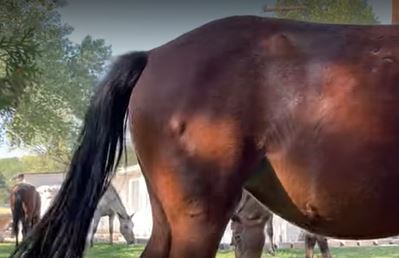
The bill will provide funding to support the poisoning of mares with a restricted-use pesticide, which the Campaign Against America’s Wild Horses describes in a recent news flash as “sustaining wild horse populations through robust fertility control and habitat stewardship programs.”
Today’s news release said the BLM is required to manage wild horse herds at the appropriate management levels that were established through the analysis of monitoring data and water and forage availability on a sustainable basis.
This is nonsense.
AMLs represent the number of horses allowed by plan, not the number of horses the land can support.
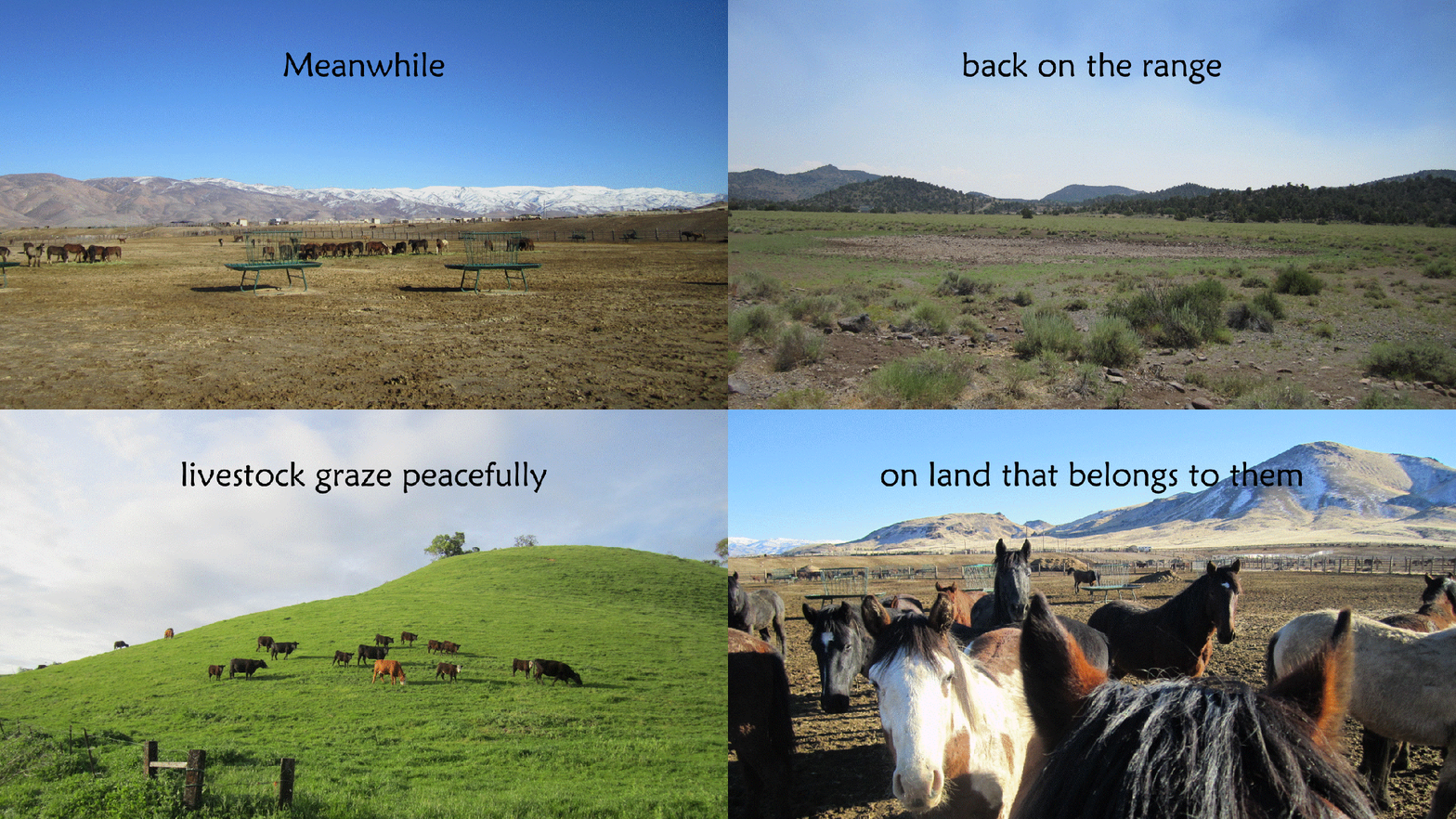
How can they represent carrying capacities when livestock receive three to six AUMs for every AUM assigned to the horses?
There is nothing in the WHB Act that says AMLs must be small relative to the available resources, but they are, so ranchers can access most of the food and water in the lawful homes of wild horses.
The fourth component of the new plan is clearly a nod to the public-lands ranchers, as if the other three weren’t, that boosts genetic diversity while keeping herd sizes small.
In the future you won’t be able to adopt a Hardtrigger horse, only a horse captured in the Hardtrigger HMA—a mutt, Heinz 57.
The listing on Redfin says the property, known as Cross L Ranch, covers 3,314 deeded acres in Nye County, NV, with access to 13,289 AUMs on BLM grazing allotments.
Cattle run on public lands most of the year, except for a few months when they retreat to the deeded acreage for the off season.
The ranch is offered with approximately 800 head of cattle plus equipment.
There are several pastures with water sources, six wells, 250 acres of alfalfa-grass under pivot and 40 acres of wheel line, visible in the following video.
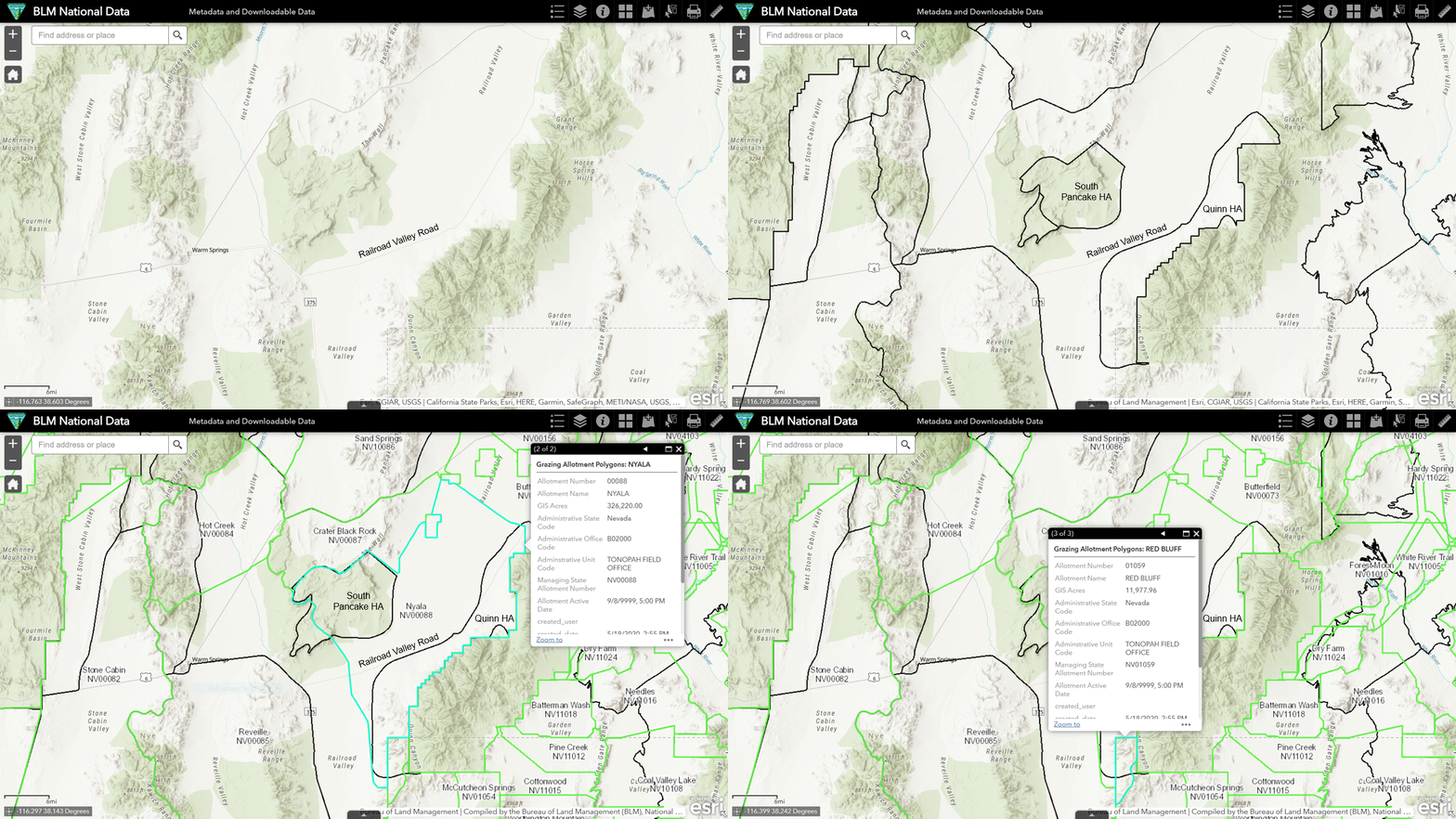
The Operator Information Report at RAS ties the ranch to one grazing authorization and the Allotment Information Report links it to the Nyala and Red Bluff allotments, both in the Tonopah Field Office.
Nyala offers 13,255 active AUMs on 321,274 public acres and Red Bluff offers 34 active AUMs on 12,125 public acres, according to the Allotment Master Report, for a weighted average 39.9 AUMs per year per thousand public acres, enough to support 3.3 wild horses per thousand public acres.
Nyala overlaps the Quinn and South Pancake Herd Areas, as shown in the National Data Viewer. Red Bluff intersects Quinn. Click on map to open in new tab.
The forage assigned to livestock in the two allotments would support 1,100 wild horses.
A nonprofit with a solid donor base could purchase the property and petition the BLM for a change in livestock types and grazing seasons, allowing wild horses to graze on public lands, as American Prairie did for bison in Montana.
The idea of achieving and maintaining AMLs, the goal of the ill-advised “Path Forward,” is to minimize pests that interfere with animal agriculture, even in areas where grazing does not occur, such as Pryor Mountain, Spring Creek Basin and Little Book Cliffs.
Animal agriculture occurs in adjacent allotments, where the horses might wander in search of greener pastures.
The leading methods of pest control are forcible removal by helicopters, voluntary separation from their lawful homes by baited traps and population growth suppression with restricted-use pesticides.
The advocates claim that helicopter roundups are cruel and costly and want the resource allocations—that greatly favor the ranchers—enforced by poisoning the mares.
Thus, the wild horse and burro program operates as a pest control program for the grazing program, in defiance of the original statute.
All of the changes since 1971, including the introduction of AMLs, were intended to benefit the public-lands ranchers, not the drillers, miners, hunters and loggers as the advocates would have you believe.
The closure of two HMAs in Wyoming and the downsizing of a third, to appease the Rock Springs Grazing Association, is just the latest chapter in the long-running story.
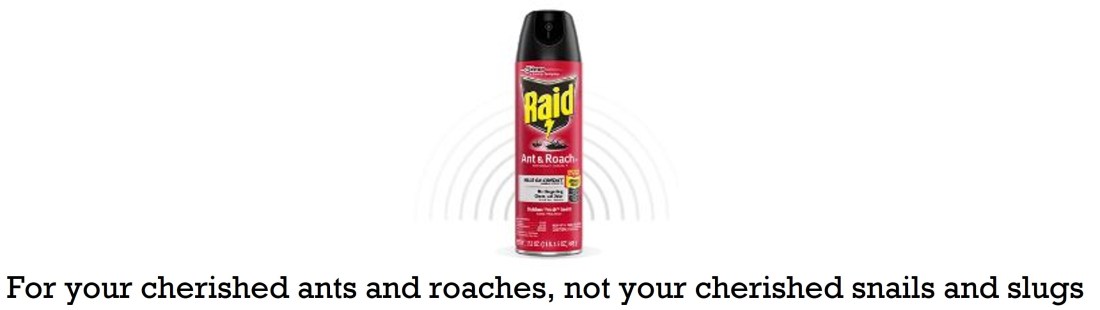
The advocates use Zonastat-H and GonaCon Equine to control pests (wild horses and burros) that interfere with animal agriculture (permitted grazing), a purpose for which the pesticides were not registered.
Application must cease immediately, followed by investigation of those involved, public and private.
Both products appear on the same list as toxic chemicals.
Hunters, trappers and ranchers want wild horses eradicated from public lands, according to a news flash earlier this week by the Campaign Against America’s Wild Horses, but they are not actually getting rid of any wild horses, at least not by an approved method.
CAAWH is, along with its affiliates, offshoots and supporters, in numbers that rival the largest of roundups.
In a story dated May 11 about the case against the Rock Springs RMP Amendments, Suzanne Roy, monster-in-charge of CAAWH, told Cowboy State Daily that it’s not about saving the environment, it’s about getting rid of wild horses in favor of cattle grazing, exactly what her field workers are doing across the American west.
Around here, that qualifies as hypocrisy and fraud.
Like all good liberals, the advocates believe that reproduction is a problem, a defect of nature, to be controlled in some cases with abortion, contraception and sterilization.
The United States can’t support so many people, especially of white European descent, but it can sustain an unlimited number of criminal invaders of color.
The advocates project these beliefs onto wild horses, suppressing their numbers to a point where genetic viability is threatened, so millions of privately owned nonnative animals can reproduce and graze at large in their lawful homes.
Petitioners have asked the court to set aside and remand the amendments, the Record of Decision and Final EIS pending BLM’s compliance with the Wild Horse and Burro Act, Federal Land Policy and Management Act, National Environmental Policy Act and the Administrative Procedures Act, according to the complaint.
The Animal Welfare Institute said in today’s news release that it has joined forces with the American Wild Horse Campaign, Western Watersheds Project, author and instructor Dr. Chad Hansen, and wildlife photographers Kimerlee Curyl and Carol Walker to defend the free-roaming horses of the Wyoming Checkerboard against the Rock Springs Grazing Association, instigator of the case.
A new ordinance has been drafted, to be considered by Sandoval County commissioners at their May 24 meeting, according to a report dated May 9 by the Rio Rancho Observer.
The measure is accompanied by a resolution that would establish a permitting process for feeding the animals, and only 501(c)(3) nonprofits with demonstrated experience and knowledge in wild horse management and protection would be eligible.
Given the remarks about overpopulation in the preamble, applicants that poison mares with restricted-use pesticides, such as Zonastat-H and GonaCon Equine, would likely receive highest priority.
A public meeting to enable residents and others to share their opinions and suggestions has been set for May 17, as described in a county news release dated May 8.
Although hunters, trappers and ranchers who want wild horses eradicated from public lands have come out against the legislation, as stated in a new eBlurb from the Campaign Against America’s Wild Horses, they are not getting rid of any horses.
The news flash appears on the propaganda page hosted by Lucky Three Ranch.
Apparently, repudiation of the Virginia Range darting program by Nevada senators has not dampened their enthusiasm for the bill, or at least the illusion of it.
If their followers understood their true intentions and loyalties, financial support would dry up overnight.
The Rock Springs Field Office portion of the Adobe Town HMA will revert to HA status and be managed for zero wild horses. In the Rawlins Field Office portion of the HMA, all checkerboard land and the portion of the HMA north of the existing Corson Springs southern allotment boundary fence will revert to HA status and be managed for zero wild horses. The remaining lands (within the RFO) will be retained as an HMA and managed with an AML of 259 – 536.
The Great Divide Basin HMA will revert to HA status and be managed for zero wild horses.
The Salt Wells Creek HMA will revert to HA status and be managed for zero wild horses.
The White Mountain HMA will continue to be managed with an AML of 205 – 300, including checkerboard lands.
The agency received 26 letters from various individuals and organizations during the protest period and determined, after careful review, that none had merit, according to today’s news release. Refer to the Protest Resolution Report for details.
Decisions are usually subject to a 30-day appeal period, but this was not indicated in the announcement.
For a history of the case, refer to Section 3.0.
The decision is discussed in Section 4.0.
The ROD and PRR were copied to the project folder with other related documents.
The museum has not updated its fundraising page since April 20, but a story posted yesterday by WAVY News said the total has passed $450,000, about 72% of the goal.
The report did not indicate if the April 30 deadline was extended but the GoFundMe page is still active.
An article dated April 26 by Taos News says the home was leveled by a fire, but founder Judy Barnes told Western Horse Watchers that insurance investigators believe it was an explosion.
A GoFundMe has been set up to help with rebuilding.








 Western Horse Watchers Association