Triple B Roundup, Day 23

The incident began on July 17.  Gather stats through August 8:

  • Target: Horses
  • Type: Planned
  • Method: Helicopter
  • Category: Cruel and costly
  • Captured: 867, up from 747 on Day 21
  • Average daily take: 37.7
  • Capture goal: 1,900
  • Removal goal: 1,800
  • Returned: None
  • Deaths: 17, up from 16 on Day 21
  • Shipped: 801, up from 712 on Day 21

The figures above are based on the daily reports.

A mare was put down on Day 23 due to pre-existing conditions.

The death rate is 2.0%.

The capture total includes 305 stallions, 417 mares and 145 foals.

Youngsters represented 16.7% of the animals gathered.

Of the adults, 42.2% were male and 57.8% were female.

The herd can’t be growing at a rate of 20% per year with a birth rate of 17% per year.

A better estimate would be 12% per year, assuming a death rate of 5% per year.

The observed percentages of stallions and mares cannot be attributed to a simple random process centered at 50% males / 50% females.

Abnormal sex ratios are often found in herds subject to the Montana Solution but not double-digit birth rates.

Body condition scores were not given.

The location of the trap was not disclosed.

The Complex and surrounding lands are subject to permitted grazing.

Triple B Complex Map 07-11-22

Day 23 ended with 49 unaccounted-for animals.

Mares treated with fertility control may be returned to the area at a later date.

Other statistics:

  • Horses allowed by plan (AML): 821
  • Forage assigned to horses: 9,852 AUMs per year
  • Pre-gather population: 3,475
  • Forage liberated to date: 10,404 AUMs per year
  • Water liberated to date: 8,670 gallons per day
  • Forage assigned to livestock: 49,188 AUMs per year (estimated)
  • Horses displaced from Complex by permitted grazing: 4,099
  • True AML: 4,911
  • Stocking rate at new AML: 3.0 horses per thousand acres
  • Horses displaced from Complex by drilling and mining: Ask the advocates

RELATED: Triple B Roundup, Day 21.

Blue Wing Roundup, Day 8

The incident began on August 1.  Gather stats through August 8:

  • Target: Horses and burros
  • Type: Planned
  • Method: Helicopter
  • Category: Cruel and costly
  • Horses captured: None
  • Burros captured: 805, up from 693 on Day 6
  • Average daily take: 0.0 horses, 100.6 burros
  • Capture goal: 200 horses, 800 burros
  • Removal goal: 200 horses, 800 burros
  • Horses returned: None
  • Burros returned: None
  • Horse deaths: None
  • Burro deaths: 10, up from 6 on Day 6
  • Horses shipped: None
  • Burros shipped: 540, up from 438 on Day 6

The figures above are based on the daily reports.

No animals were gathered on Day 8.

Two jacks were put down on Day 7 due to pre-existing conditions, followed by a jack and jenny on Day 8.

The burro death rate is 1.2%.

The burro total includes 338 jacks, 405 jennies and 62 foals.

Youngsters represented 7.7% of the burros captured.

Of the adults, 45.5% were male and 54.5% were female.

The herd can’t be growing at a rate of 20% per year with a birth rate of 8% per year.

A better estimate would be 3% per year, assuming a death rate of 5% per year.

Low birth rates are often associated with the Montana Solution but the Blue Wing HMAs are not on the fertility control list in the latest schedule.

Body condition scores were not given.

The location of the trap was not disclosed.

The HMAs in the Complex are subject to permitted grazing.

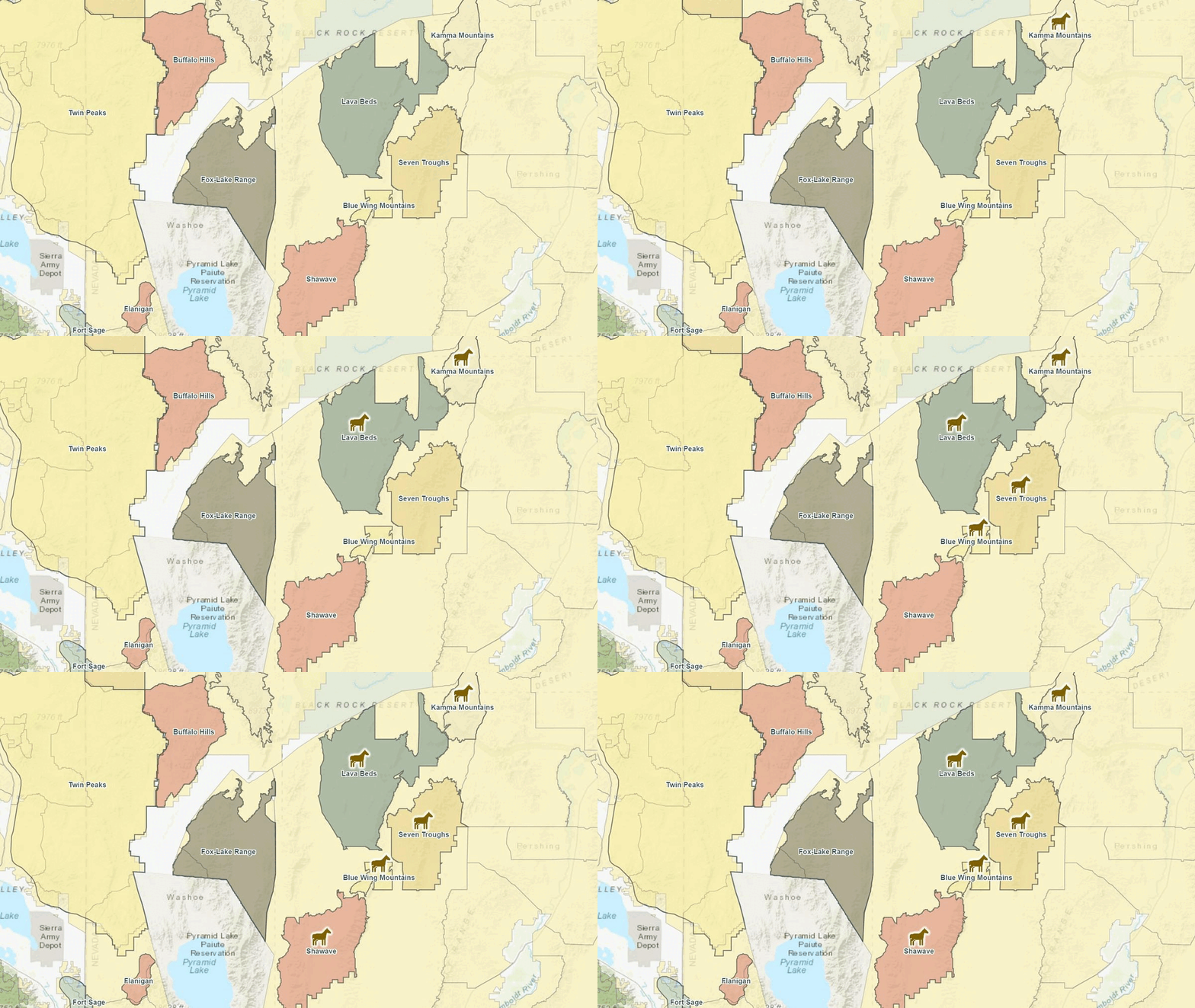
Blue Wing Complex Map 07-26-22

Day 8 ended with no unaccounted-for horses and 255 unaccounted-for burros.

The capture goal for burros has been reached.

Other statistics:

  • AML: 553 horses and 90 burros, equivalent to 598 horses
  • Forage assigned to horses and burros: 7,176 AUMs per year
  • Pre-gather population: 1,695 horses and 1,327 burros, equivalent to 2,359 horses
  • Forage liberated to date: 4,830 AUMs per year
  • Water liberated to date: 4,025 gallons per day
  • Forage assigned to livestock: 9,631 AUMs per year (estimated)
  • Animals displaced from Complex by permitted grazing: 802 horses
  • True AML: 1,355 horses and 90 burros, equivalent to 1,400 horses
  • Stocking rate at new AML: 1.2 horses per thousand acres
  • Horses displaced from Complex by drilling and mining: Ask the advocates

RELATED: Blue Wing Roundup, Day 6.

Twin Peaks Roundup, Day 16

The incident began on July 23.  Gather stats through August 7:

  • Target: Horses and burros
  • Type: Planned
  • Method: Helicopter
  • Category: Cruel and costly
  • Horses captured: 1,837, up from 1,458 on Day 13
  • Burros captured: 38, no change from Day 13
  • Average daily take: 114.8 horses, 2.4 burros
  • Capture goal: 1,978 horses, 339 burros
  • Removal goal: 1,868 horses, 339 burros
  • Horses returned: None, no change from Day 13
  • Burros returned: None, no change from Day 13
  • Horse deaths: 23, up from 21 on Day 13
  • Burro deaths: None, no change from Day 13
  • Horses shipped: 1,657, up from 1,258 on Day 13
  • Burros shipped: 38, no change from Day 13

The figures above are based on the daily reports.  They may differ from the totals at the gather page.

No burros have been taken since Day 8.

A mare and filly were put down on Day 16 due to pre-existing conditions.

The horse death rate is 1.3%.

The horse total includes 722 stallions, 805 mares and 310 foals.

Youngsters represented 16.9% of the horses captured.

Of the adults, 47.3% were male and 52.7% were female.

The herd can’t be growing at a rate of 20% per year with a birth rate of 17% per year.

A better estimate would be 12% per year, assuming a death rate of 5% per year.

Body condition scores on Days 14 through 16 ranged from 4 to 5.

The trap is in the North Twin Peaks Home Range.

The HMA is subject to permitted grazing.
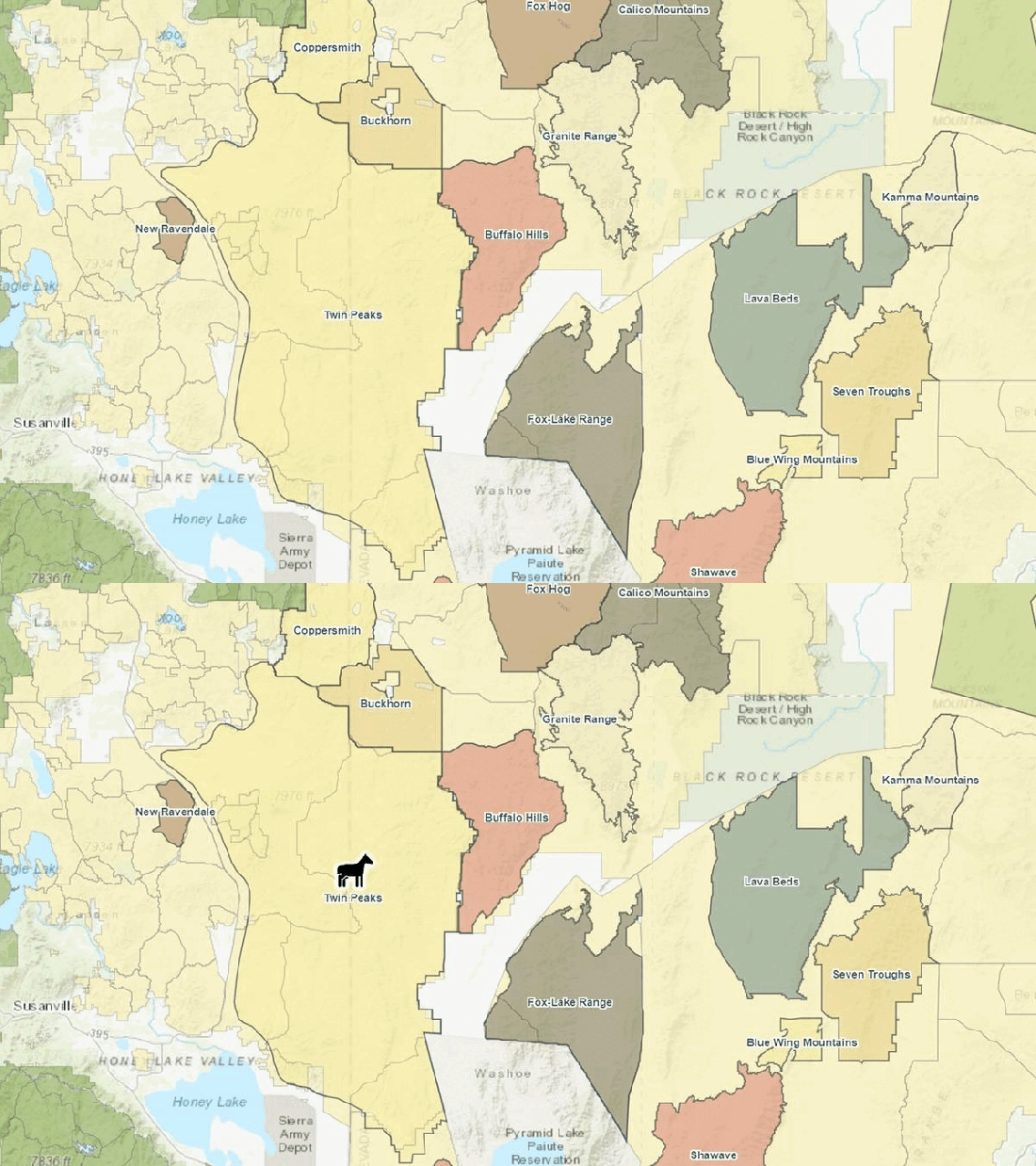
Twin Peaks HMA Map 07-19-22

Day 16 ended with 157 unaccounted-for horses and no unaccounted-for burros.

The horse capture goal is 93% complete but the burro goal is only 11% achieved.

Mares treated with fertility control will be returned to the area at a later date.

Other statistics:

  • AML: 758 horses and 116 burros, equivalent to 816 horses
  • Forage assigned to horses and burros: 9,792 AUMs per year
  • Pre-gather population: 3,316 horses and 401 burros, equivalent to 3,516 horses
  • Forage liberated to date: 22,272 AUMs per year
  • Water liberated to date: 18,560 gallons per day
  • Forage assigned to livestock: 27,178 AUMs per year (estimated)
  • Animals displaced from HMA by permitted grazing: 2,264 horses
  • True AML: 3,022 horses and 116 burros, equivalent to 3,080 horses
  • Stocking rate at new AML: 4.1 horses per thousand acres
  • Animals displaced from HMA by drilling and mining: Ask the advocates

RELATED: Twin Peaks Roundup, Day 13.

Foal Rescued from Mud at Beatys Butte HMA

A WHB Specialist with the BLM Lakeview District pulled him out with a rope after his mom ran up to her truck then back to a ridge several times, according to a report by KTVL News of Medford, OR.

The incident could have been avoided by an aggressive darting program, which the advocates would be eager to provide, aided by safe and efficient helicopter roundups.

The HMA is in southern Oregon and lies within the Beaty Butte Allotment.

The AML is small relative to the available resources, with livestock receiving six times more forage than the horses.

The government collects around $25,000 per year in grazing fees from ranching activity inside the HMA while it spends about $2.9 million per year to care for the 1,583 horses displaced thereby.

Would you say that permitted grazing is a wise use of the public lands?

Are the advocates protecting the horses or the ranchers?

‘Wild Horse Fire Brigade’ Means Victory for Permittees

The proposal has been in the news recently, including a report by ABC15 News, a podcast by NPR, an article by The Hill and a column in the Pagosa Daily Post.

Wild horses would be moved from areas where they’re not wanted (by public-lands ranchers) to remote wilderness areas not particularly suited to livestock grazing.

The plan was developed by a rancher.

How would it be put into practice?

They would be forced from their lawful home by helicopters, crammed into trailers and hauled to places nobody can access, where they would devour forage that propagates wildfires, supposedly.

McKinney Fire 08-08-22

How does that differ from what you see today at Piceance, Triple B and Twin Peaks?

The means by which they’d stop lightning, smokers and arsonists is a detail that hasn’t been worked out.

Boosting their appetite for conifers is another problem but they’re working on it.

Once the horses are gone, the ranchers will be able to enjoy everything their allotments have to offer, a goal they almost achieved in the “fast disappearing” days before the WHB Act.

RELATED: SHOCKER: Rancher Proposes Changes That Benefit Ranchers.

Batteries to Be Produced from Gibellini Vanadium?

In 2018, vanadium was designated as a critical material by the U.S. government due to its importance to the defense and energy storage sectors, with no domestic production and all supplies imported, mostly from Russia, China and South Africa.

A vanadium shortage is expected by 2025, according to Nevada Vanadium, with the rising popularity of the vanadium redox flow battery, a mature technology that is scalable to hundreds of megawatt-hours of storage.

Battery life is projected to be at least 20 years with no degradation of the vanadium or charge density.

However, a story by NPR indicates there are few if any companies making the batteries in the U.S. and the top producer is in China.

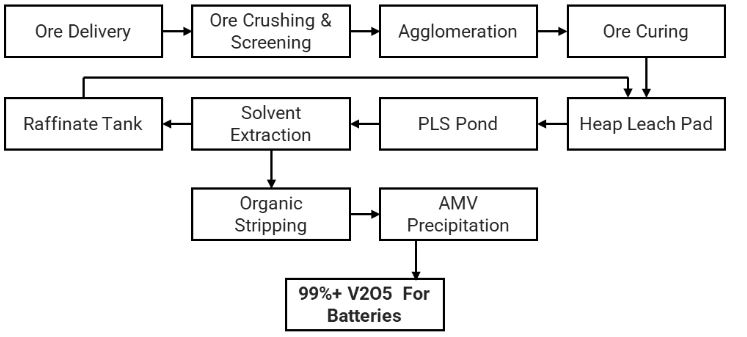
The NVV flow diagram suggests the mine’s output is intended for batteries.

NVV Process Flow Diagram 08-08-22

Why won’t the government license the technology to American manufacturers?

The metal will be pulled from American soil and processed with American resources.

As with the Keystone Pipeline, enriching our enemies seems to be a top priority of the one-horse pony and his illicit administration.

The Draft EIS for the Gibellini Mine only mentions vanadium redox flow batteries in Section 2.3, the Renewable Energy Alternative to the Proposed Action.

RELATED: Water for Vanadium Mine to Be Supplied by Fish Creek Ranch.

Triple B Roundup, Day 21

The incident began on July 17.  Gather stats through August 6:

  • Target: Horses
  • Type: Planned
  • Method: Helicopter
  • Category: Cruel and costly
  • Captured: 747, up from 735 on Day 19
  • Average daily take: 35.6
  • Capture goal: 1,900
  • Removal goal: 1,800
  • Returned: None, no change from Day 19
  • Deaths: 16, no change from Day 19
  • Shipped: 712, up from 674 on Day 19

The figures above are based on the daily reports.

No horses were gathered on Day 21 due to heavy rains.

The death rate is 2.1%.

The capture total includes 263 stallions, 356 mares and 128 foals.

Youngsters represented 17.1% of the animals gathered.

Of the adults, 42.5% were male and 57.5% were female.

The herd can’t be growing at a rate of 20% per year with a birth rate of 17% per year.

A better estimate would be 12% per year, assuming a death rate of 5% per year.

The observed percentages of stallions and mares cannot be attributed to a simple random process centered at 50% males / 50% females.

Abnormal sex ratios are often found in herds subject to the Montana Solution but not double-digit birth rates.

Body condition scores were not given.

The location of the trap was not disclosed.

The Complex and surrounding lands are subject to permitted grazing.

Triple B Complex Map 07-11-22

Day 21 ended with 19 unaccounted-for animals.

Mares treated with fertility control may be returned to the area at a later date.

Other statistics:

  • Horses allowed by plan (AML): 821
  • Forage assigned to horses: 9,852 AUMs per year
  • Pre-gather population: 3,475
  • Forage liberated to date: 8,964 AUMs per year
  • Water liberated to date: 7,470 gallons per day
  • Forage assigned to livestock: 49,188 AUMs per year (estimated)
  • Horses displaced from Complex by permitted grazing: 4,099
  • True AML: 4,911
  • Stocking rate at new AML: 3.0 horses per thousand acres
  • Horses displaced from Complex by drilling and mining: Ask the advocates

RELATED: Triple B Roundup, Day 19.

Blue Wing Roundup, Day 6

The incident began on August 1.  Gather stats through August 6:

  • Target: Horses and burros
  • Type: Planned
  • Method: Helicopter
  • Category: Cruel and costly
  • Horses captured: None
  • Burros captured: 693, up from 378 on Day 3
  • Average daily take: 0.0 horses, 115.5 burros
  • Capture goal: 200 horses, 800 burros
  • Removal goal: 200 horses, 800 burros
  • Horses returned: None
  • Burros returned: None
  • Horse deaths: None
  • Burro deaths: 6, up from 4 on Day 3
  • Horses shipped: None
  • Burros shipped: 438, up from 108 on Day 3

The figures above are based on the daily reports.

No animals were gathered on Day 6.

Two jacks were put down on Day 5 due to pre-existing conditions.

The burro death rate is 0.9%.

The burro total includes 279 jacks, 358 jennies and 56 foals.

Youngsters represented 8.1% of the burros captured.

Of the adults, 43.8% were male and 56.2% were female.

The herd can’t be growing at a rate of 20% per year with a birth rate of 8% per year.

A better estimate would be 3% per year, assuming a death rate of 5% per year.

The observed percentages of jacks and jennies cannot be attributed to a simple random process centered at 50% males / 50% females.

Abnormal sex ratios and low birth rates are often associated with the Montana Solution but the Blue Wing HMAs are not on the fertility control list in the latest schedule.

Body condition scores were not given.

The location of the trap was not disclosed.

The five HMAs in the Complex are subject to permitted grazing.

Blue Wing Complex Map 07-26-22

Day 6 ended with no unaccounted-for horses and 249 unaccounted-for burros.

Other statistics:

  • AML: 553 horses and 90 burros, equivalent to 598 horses
  • Forage assigned to horses and burros: 7,176 AUMs per year
  • Pre-gather population: 1,695 horses and 1,327 burros, equivalent to 2,359 horses
  • Forage liberated to date: 4,158 AUMs per year
  • Water liberated to date: 3,465 gallons per day
  • Forage assigned to livestock: 9,631 AUMs per year (estimated)
  • Animals displaced from Complex by permitted grazing: 802 horses
  • True AML: 1,355 horses and 90 burros, equivalent to 1,400 horses
  • Stocking rate at new AML: 1.2 horses per thousand acres
  • Horses displaced from Complex by drilling and mining: Ask the advocates

RELATED: Blue Wing Roundup, Day 3.

CBS Mornings Looks at Twin Peaks Roundup

Filmed on July 26, when 46 horses were captured, including six foals.

The description at the gather page said there were nine members of the public observing that day, including Joy Benedict, a reporter from KCBS TV, Los Angeles and her crew.

Benedict interviewed two BLM public affairs officers and the BLM Northern California District monitoring coordinator.

For an example of “Save a Horse, Hire a Cowboy,” and how the wranglers might handle the horses, watch the video in this post.

RELATED: Twin Peaks Roundup, Day 13.
BLM Admits Piceance HMA Not Managed Primarily for Horses!

Agency spokesman Eric Coulter told the ABC affiliate in Denver that maintaining the HMA is a balancing act because the land is used for wild horses, livestock, oil and gas, and recreation.

“That’s one of our big challenges as an agency.  We have a multiple-use mission.  You know, herd management area is a multiple use area, it’s not managed primarily for horses.”

Problem identified.  Causes known.

The helicopter shown in the story, tail number N166MB, is registered to Helicopter Roundup Service LLC of Nephi, UT, according to information at FlightAware.

Piceance Helicopter 08-06-22

The listing at Dun & Bradstreet indicates the key principal is Dave Cattoor.

RELATED: Congress Sets AMLs?

Twin Peaks Roundup, Day 13

The incident began on July 23.  Gather stats through August 4:

  • Target: Horses and burros
  • Type: Planned
  • Method: Helicopter
  • Category: Cruel and costly
  • Horses captured: 1,458, up from 1,211 on Day 11
  • Burros captured: 38, no change from Day 11
  • Average daily take: 112.2 horses, 2.9 burros
  • Capture goal: 1,978 horses, 339 burros
  • Removal goal: 1,868 horses, 339 burros
  • Horses returned: None, no change from Day 11
  • Burros returned: None, no change from Day 11
  • Horse deaths: 21, up from 18 on Day 11
  • Burro deaths: None, no change from Day 11
  • Horses shipped: 1,258, up from 1,016 on Day 11
  • Burros shipped: 38, no change from Day 11

Data quality is poor.  The figures above are based on the daily reports.  They may differ from the totals at the gather page.

No burros have been taken since Day 8.

A colt was put down on Day 12 due to a broken leg.  Two more horses were euthanized on Day 13 because of pre-existing conditions.

The horse death rate is 1.4%.

The horse total includes 559 stallions, 648 mares and 251 foals.

Youngsters represented 17.2% of the horses captured.

Of the adults, 46.3% were male and 53.7% were female.

The herd can’t be growing at a rate of 20% per year with a birth rate of 17% per year.

A better estimate would be 12% per year, assuming a death rate of 5% per year.

Body condition scores on Days 12 and 13 ranged from 4 to 5.

The trap is in the North Twin Peaks Home Range.

The HMA is subject to permitted grazing.

Twin Peaks HMA Map 07-19-22

Day 13 ended with 179 unaccounted-for horses and no unaccounted-for burros.

Mares treated with fertility control will be returned to the area at a later date.

Other statistics:

  • AML: 758 horses and 116 burros, equivalent to 816 horses
  • Forage assigned to horses and burros: 9,792 AUMs per year
  • Pre-gather population: 3,316 horses and 401 burros, equivalent to 3,516 horses
  • Forage liberated to date: 17,724 AUMs per year
  • Water liberated to date: 14,770 gallons per day
  • Forage assigned to livestock: 27,178 AUMs per year (estimated)
  • Animals displaced from HMA by permitted grazing: 2,264 horses
  • True AML: 3,022 horses and 116 burros, equivalent to 3,080 horses
  • Stocking rate at new AML: 4.1 horses per thousand acres
  • Horses displaced from HMA by drilling and mining: Ask the advocates

RELATED: Twin Peaks Roundup, Day 11.

Triple B Roundup, Day 19

The incident began on July 17.  Gather stats through August 4:

  • Target: Horses
  • Type: Planned
  • Method: Helicopter
  • Category: Cruel and costly
  • Captured: 735, up from 647 on Day 17
  • Average daily take: 38.7
  • Capture goal: 1,900
  • Removal goal: 1,800
  • Returned: None, no change from Day 17
  • Deaths: 16, up from 14 on Day 17
  • Shipped: 674, up from 554 on Day 17

The figures above are based on the daily reports.

Two horses were put down on Day 19 due to pre-existing conditions.  They’d be alive if there was no roundup.

The death rate is 2.2%.

The capture total includes 255 stallions, 352 mares and 128 foals.

Youngsters represented 17.4% of the animals gathered.

Of the adults, 42.0% were male and 58.0% were female.

The herd can’t be growing at a rate of 20% per year with a birth rate of 17% per year.

A better estimate would be 12% per year, assuming a death rate of 5% per year.

The observed percentages of stallions and mares could not be produced by a simple random process centered at 50% males / 50% females (p-bar = .5, n = 607 adults).

How to Compute p-chart Limits 02-10-22

Abnormal sex ratios are often found in herds subject to the Montana Solution but not double-digit birth rates.

Body condition scores were not given.

The location of the trap was not disclosed.

The Complex and surrounding lands are subject to permitted grazing.

Triple B Complex Map 07-11-22

Day 19 ended with 45 unaccounted-for animals.

Mares treated with fertility control may be returned to the area at a later date.

Other statistics:

  • Horses allowed by plan (AML): 821
  • Forage assigned to horses: 9,852 AUMs per year
  • Pre-gather population: 3,475
  • Forage liberated to date: 8,820 AUMs per year
  • Water liberated to date: 7,350 gallons per day
  • Forage assigned to livestock: 49,188 AUMs per year (estimated)
  • Horses displaced from Complex by permitted grazing: 4,099
  • True AML: 4,911
  • Stocking rate at new AML: 3.0 horses per thousand acres
  • Horses displaced from Complex by drilling and mining: Ask the advocates

RELATED: Triple B Roundup, Day 17.

New Horse Safety Rules Show Assateague Desperation?

The herd on the Maryland side of the island has been all but ruined by the Montana Solution, an unstated goal of the advocates.

Now, the Park Service may be trying to save them from disappearing altogether.

That means separating them from you.  You are the problem, not the bureaucrats and not the advocates.

Park officials announced a series of initiatives this week aimed at reducing or eliminating human interaction, according to a story by the Maryland Coast Dispatch.

As such, the animals will be moved from new “red zones,” formerly known as visitor areas, to prevent undesirable interactions from occurring.

An announcement describing the changes has not appeared on the Assateague news page as of this morning.

RELATED: Assateague Ponies Flee Island.

Foal-Free Friday, No Turning Over of the Genetic Soil Edition

The herd on the Maryland side of Assateague Island is still trying to recover from the darting program, which was shut off in 2016.  The advocates point to it as a paragon of wild horse management.

The Park Service buried the census results for 2022, breaking a long tradition of transparency.  What are they hiding?

On the Virginia side, the ponies are rounded up in July and pushed into the channel for the annual swim, seen in the following video.

The herd makes the return trip a few days later minus the youngsters, who were stripped away and sold at auction.

With the exception of a few “buy backs” who return with the adults, the breeding population doesn’t change.

If you visited the island today, you’d think it was subject to the Montana Solution.

As in other such cases, the volunteers don’t publish any reports showing the effects of their management strategy.  There is no accountability to the public.

RELATED: Foal-Free Friday, Abnormal Sex Ratios and Mother’s Milk Edition.

Piceance Roundup Cut Short by GonaCon Supply?

The BLM wasn’t able to secure enough of the vaccine, which may act as a sterilant, to carry out the original plan according to a story by the Steamboat Pilot & Today.

Personnel with Piceance Mustangs, a ranching advocacy group, helped the agency select the 41 stallions that were returned to the HMA.

Another 56 mares, representing most of the unaccounted-for animals, are still in temporary corrals, awaiting a second dose of the pesticide.

Others are still whining about some horses that flipped over a hidden fence during the chase, when they’d be first in line to get rid of them with the Montana Solution.

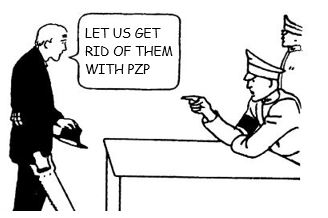
Protect Wild Horses from Advocates 08-29-21

The wild horse and burro program has been a drag on the grazing program for 50 years.

RELATED: Piceance Roundup Ends Early.

Blue Wing Roundup, Day 3

The incident began on August 1.  Gather stats through August 3:

  • Target: Horses and burros
  • Type: Planned
  • Method: Helicopter
  • Category: Cruel and costly
  • Horses captured: None
  • Burros captured: 378, up from 174 on Day 1
  • Average daily take: 0.0 horses, 126.0 burros
  • Capture goal: 200 horses, 800 burros
  • Removal goal: 200 horses, 800 burros
  • Horses returned: None
  • Burros returned: None
  • Horse deaths: None
  • Burro deaths: 4, up from 1 on Day 1
  • Horses shipped: None
  • Burros shipped: 108, up from zero on Day 1

The figures above are based on the daily reports.

Three burros were put down on Day 2 due to pre-existing conditions.

The burro death rate is 1.1%.

The burro total includes 155 jacks, 193 jennies and 30 foals.

Youngsters represented 7.9% of the burros captured.

Of the adults, 44.5% were male and 55.5% were female.

The herd can’t be growing at a rate of 20% per year with a birth rate of 8% per year.

A better estimate would be 3% per year, assuming a death rate of 5% per year.

Body condition scores were not given.

The location of the trap was not disclosed.

The five HMAs in the Complex are subject to permitted grazing.

Blue Wing Complex Map 07-26-22

Day 3 ended with no unaccounted-for horses and 266 unaccounted-for burros.

No animals will be treated with fertility control and returned to the area according to the latest schedule.

Other statistics:

  • AML: 553 horses and 90 burros, equivalent to 598 horses
  • Forage assigned to horses and burros: 7,176 AUMs per year
  • Pre-gather population: 1,695 horses and 1,327 burros, equivalent to 2,359 horses
  • Forage liberated to date: 2,268 AUMs per year
  • Water liberated to date: 1,890 gallons per day
  • Forage assigned to livestock: 9,631 AUMs per year (estimated)
  • Animals displaced from Complex by permitted grazing: 802 horses
  • True AML: 1,355 horses and 90 burros, equivalent to 1,400 horses
  • Stocking rate at new AML: 1.2 horses per thousand acres
  • Animals displaced from Complex by drilling and mining: Ask the advocates

RELATED: Blue Wing Roundup in Progress.