New Resource Enforcement Plan for Clan Alpine HMA?

A new project was created in ePlanning yesterday but no documents were posted.

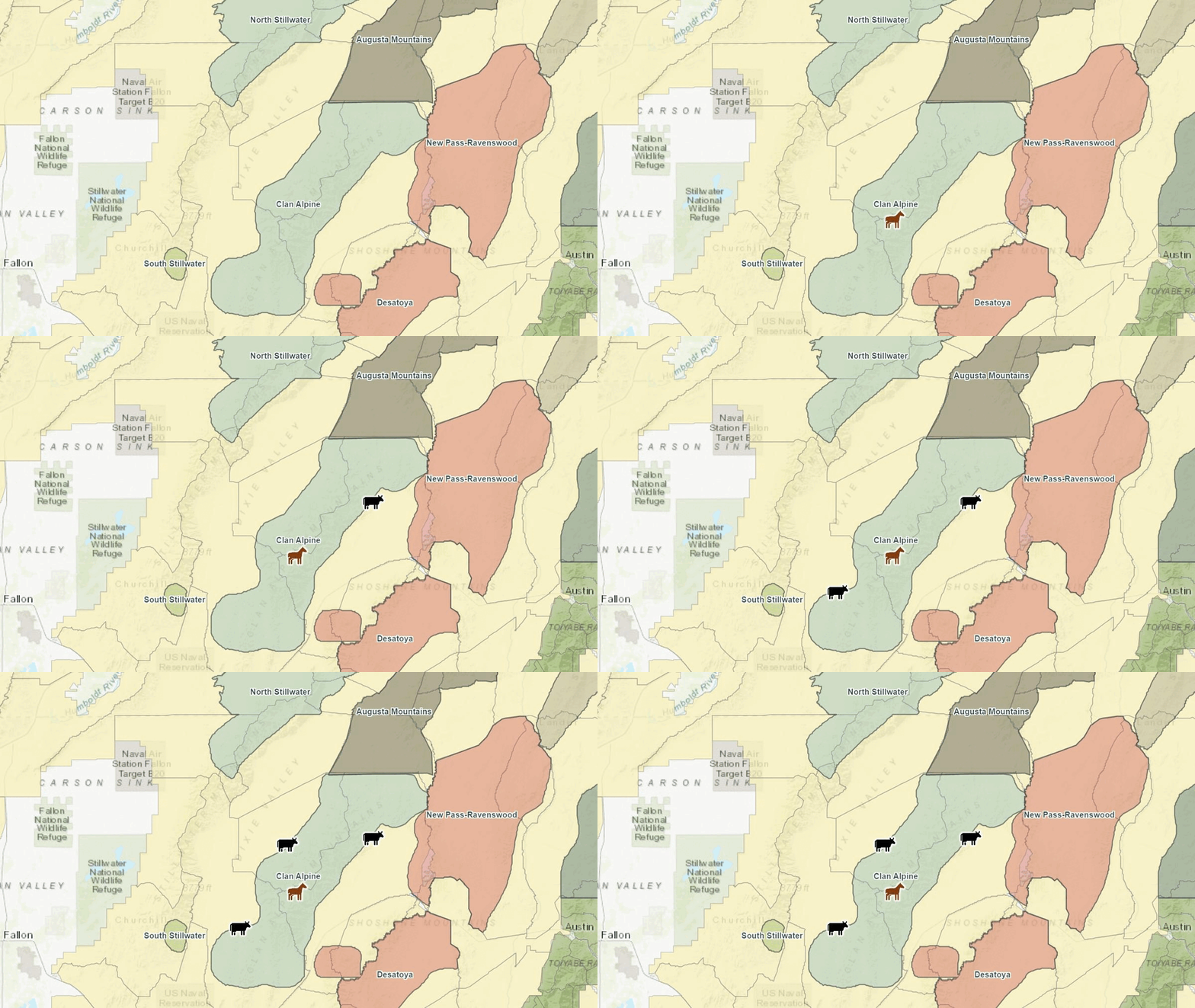
The HMA covers 302,226 total acres in central Nevada, including 298,064 public acres.

The 979 horses allowed by plan require 11,748 AUMs per year.

The stocking rate allowed by plan is 3.3 wild horses per thousand acres, considerably higher than the target rate across all HMAs of one wild horse per thousand acres.

The estimated population as of March 1 was 1,944.

Clan Alpine HMA Map 12-15-22

The HMA overlaps three allotments, Cow Canyon on the west side, Clan Alpine on the east side and Dixie Valley on the south side.

The Allotment Master Report puts all three in the Improve category.

The allotments offer 15,038 active AUMs per year on 796,683 public acres, for a weighted average forage availability of 18.9 AUMs per year per thousand acres, enough to support an additional 1.5 wild horses per thousand acres.

Curiously, on a per acres basis, the horses receive twice as much forage as livestock, an outlier in the resource management process!

Virginia Range Crimefighting Update for December

The Nevada Board of Agriculture met today in Las Vegas.

The Animal Industry update was item 9 on the agenda.

The report indicated that 24 horse-vehicle collisions have occurred in 2022, compared to 27 in 2021 and 46 in 2020.

Wild Horse Connection continues to feed the horses in NDA approved locations to draw them away from highways and urban areas.

WHC Arrogance 08-13-21

The Campaign Against America’s Wild Horses, a leader in the wild horse removal industry, has delivered 941 doses of their favorite pesticide in FY23, including 221 primers and 720 boosters.

Crime in the Wild Horse World 05-26-22

With 77% of the injections being boosters, the program is moving into its final phase, and many of the mares will become sterile in another year or nearly so.

There is no hesitation.  They are not having second thoughts about what they are doing.

It’s balls to the wall to win the approval of the bureaucrats and ranchers.

RELATED: Virginia Range Crimefighting Efforts Paying Off?

For Your Innocent Ants and Roaches 10-23-22

Navigating the BLM National Data Viewer

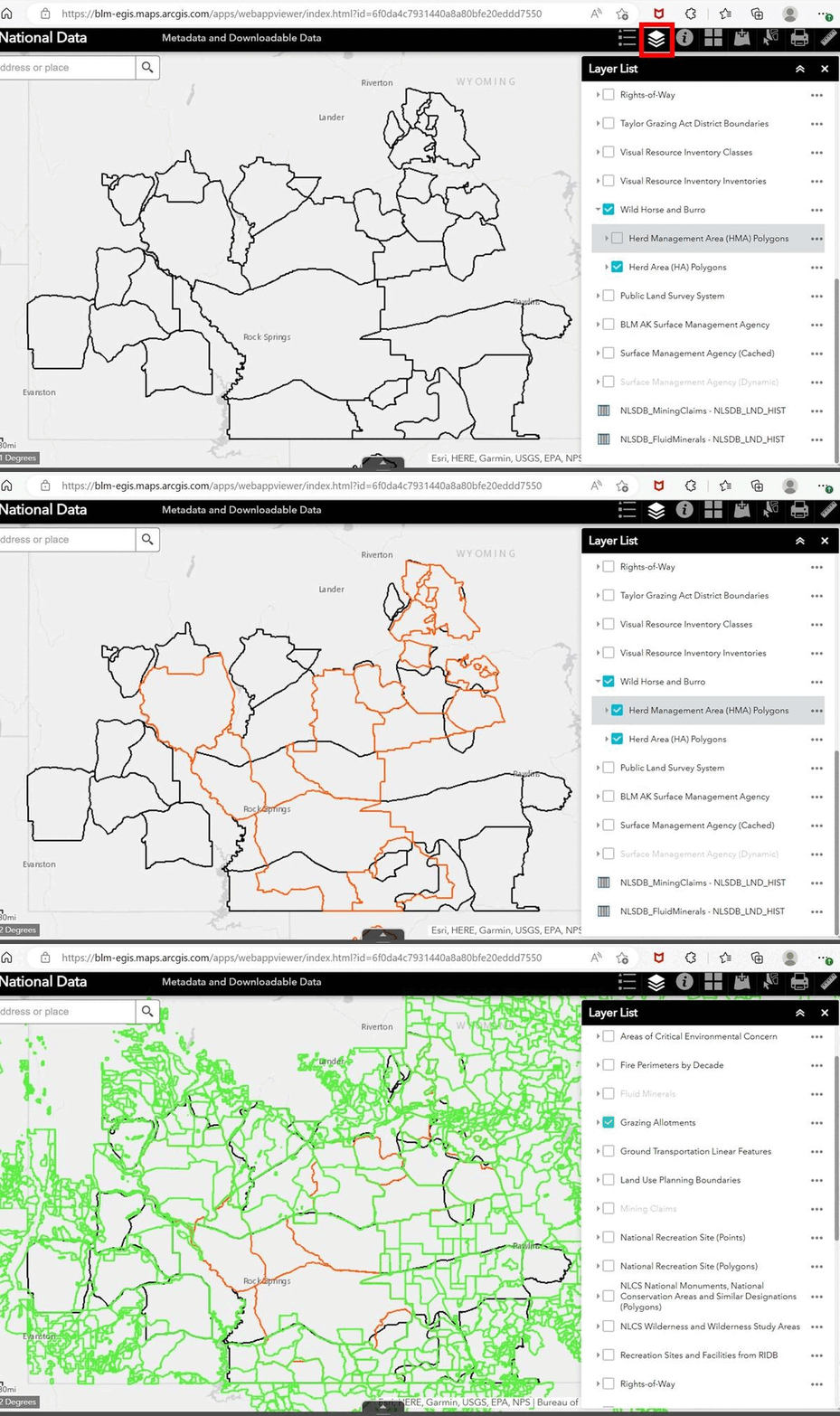
Open the viewer, dismiss the splash screen and zoom/drag the map to the area you want to investigate.

In this example, the map has been scrolled to southwest Wyoming, the area affected by the Rock Springs RMP Amendments.

Click the layers icon to display the layer list.

Clear all of the check boxes except Wild Horse and Burro.

Expand the WHB layer by clicking the little triangle on the left.

By default, only HAs are displayed (black borders).

Navigating the National Data Viewer 12-14-22

If you put a check in the HMA box, the map will show the HMAs (orange borders).

Clear the HA check box if you only want to view the HMAs.

If you click on one of the polygons, a pop-up box will provide data for that area.

As noted yesterday, the black parcels denote land identified for wild horses and burros, while the orange areas represent those where horses and burros are still allowed—in small numbers, of course, relative to the available resources.

Scroll the list up and turn on the grazing allotments (green borders).

Now you know why there are 62,000 wild horses and burros in off-range holding.

The map tells you by visual inspection that roughly half of the land in this part of the state designated for horses and burros has been lost to permitted grazing, while the remainder has been subordinated to permitted grazing.

Has your favorite advocacy group explained any of this to you?

RELATED: Exploring the BLM National Data Viewer.

Exploring the BLM National Data Viewer

A downside of the Western Watersheds map is that it does not show the HAs, only the HMAs, but the National Data Viewer shows both, along with grazing allotments.

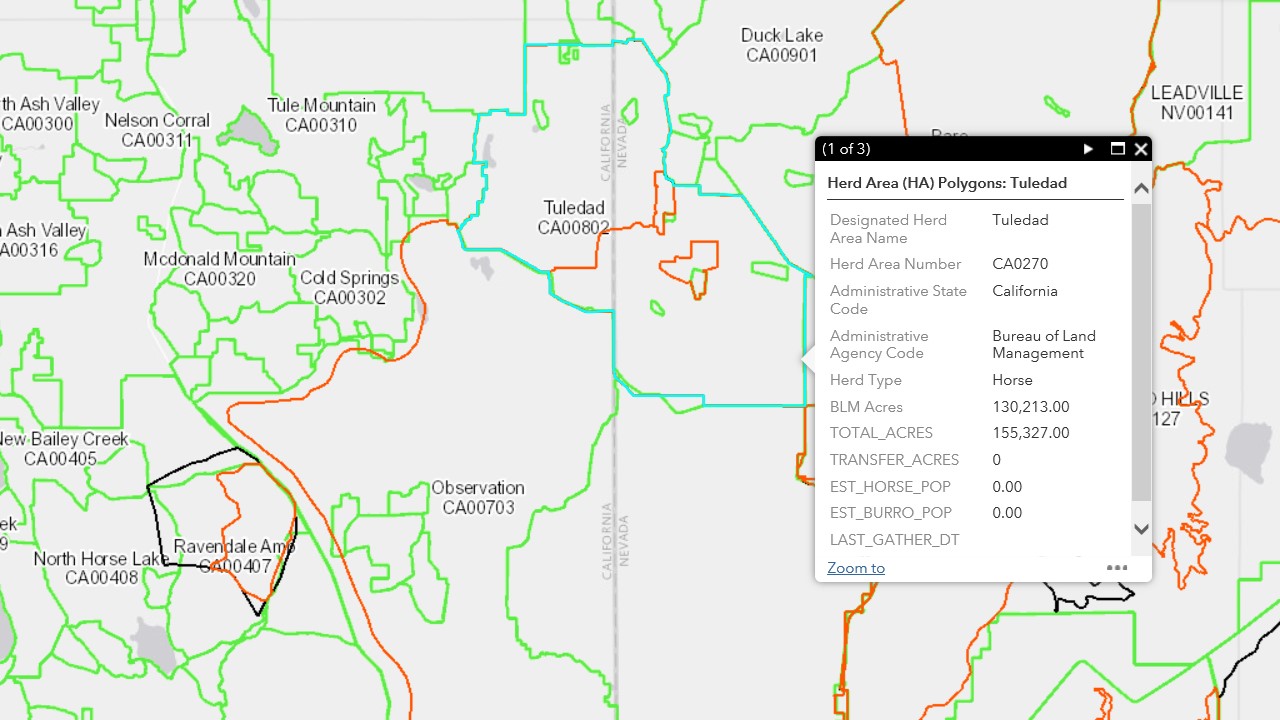
In this example, allotment boundaries are green, HMA boundaries are orange and HA boundaries are black.

If you click inside one of the polygons, a pop-up box takes you through the applicable land designations by hitting the little triangle in the upper right.

BLM National Data Viewer Example 12-13-22

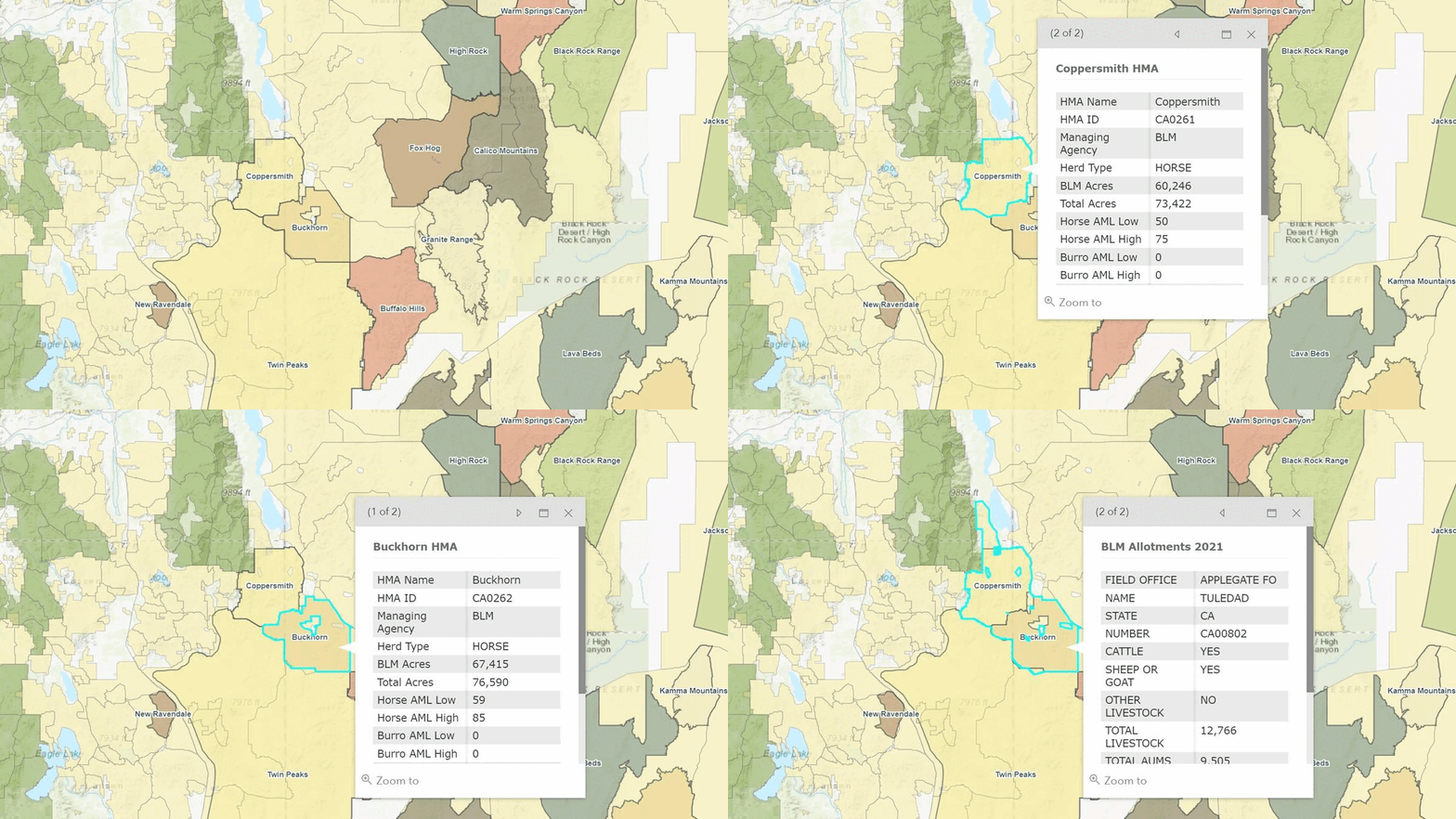
Turns out that Campito’s old stomping ground, the Buckhorn HMA, and the adjacent Coppersmith HMA, are inside the Tuledad HA.

The HAs show you how much land was originally identified for wild horses and burros and the HMAs show you how much remains.

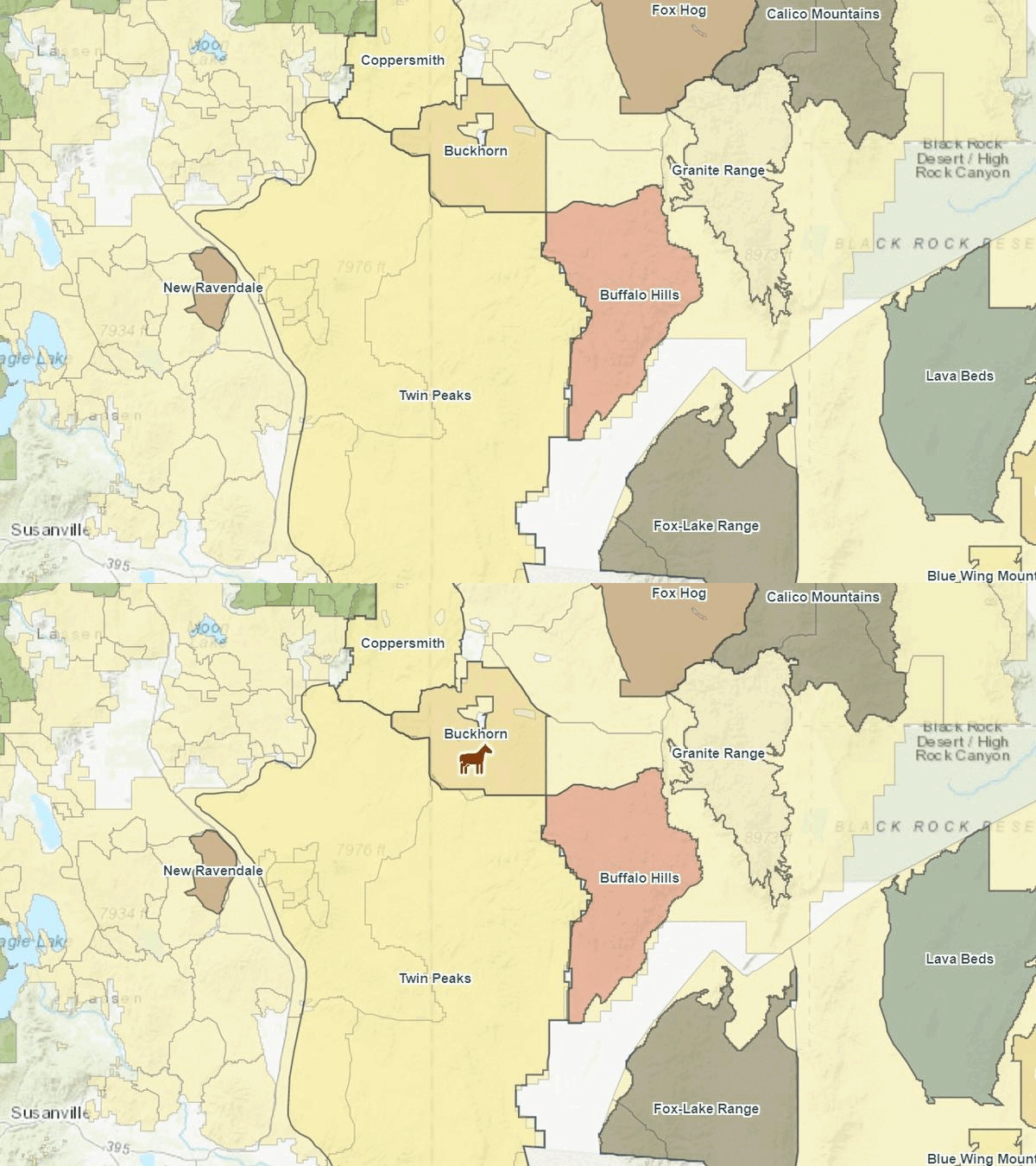
The New Ravendale horses have lost roughly half of their land, denoted by the orange parcel inside the black parcel that’s overlapped by the Ravendale AMP Allotment.

RELATED: How Many Wild Horses Can the Buckhorn HMA Support?

Assateague Census for December

The herd contained around 80 horses in 2016, when the safe, proven and reversible darting program was shut off.

If it was growing at a rate of 15% per year, the population should be about 185 now.

The herd size was 78 as of December 9, according to the Assateague Island Alliance, no change from October 5.

Does that mean the growth calculation is wrong?

No, it means the advocates are full of crap.

Why are you still giving them money?

RELATED: Assateague Herd Struggling in Latest Census.

PZP Dangers 10-21-22

How Many Wild Horses Can the Buckhorn HMA Support?

With the news of Campito’s passing, let’s take a look at resource management in his home range, which may explain why he and others were removed therefrom.

The Western Watersheds map indicates the Buckhorn and Coppersmith HMAs lie within the Tuledad Allotment.

The allotment represents food taken from the horses and given to livestock.

It likely predates the HMAs and should have been zeroed out to satisfy the “managed principally” requirement of the original statute.

Tuledad Allotment Map 12-11-22

The Buckhorn HMA covers 76,590 total acres, including 67,415 public acres, and the 85 horses allowed by plan require 1,020 AUMs per year.

Forage availability in this parcel works out to 15.1 AUMs per year per thousand public acres, enough to support 1.3 wild horses per thousand public acres.

The Coppersmith HMA covers 73,422 total acres, including 60,246 public acres, and the 75 horses allowed by plan require 900 AUMs per year.

The land in that parcel offers 14.9 AUMs per year per thousand public acres, enough to support 1.2 wild horses per thousand public acres.

The HA/HMA Report gives the estimated populations and acreage breakdowns as of March 1.

The weighted average forage availability across the two HMAs (sum of AUMs divided by sum of acres) is 15.0 AUMs per year per thousand public acres.

The Allotment Master Report provides information on the missing resources and answers questions about the actual carrying capacity of the HMAs.

The allotment covers 177,847 total acres, including 143,307 public acres, with ten pastures and eleven authorizations.

The Authorization Use Report shows the on and off dates.

With 7,406 active AUMs per year, forage availability in Tuledad is 51.7 AUMs per year per thousand public acres, enough to support 4.3 wild horses per thousand public acres.

So, Buckhorn should be able to sustain 1.3 + 4.3 = 5.6 wild horses per thousand public acres, for a True AML of 5.6 × 67,415 ÷ 1,000 = 377, 4.4 times higher than the current AML.

The current AML is small relative to the available resources because the HMA is managed primarily for livestock.

Even in the mid-90s, Campito and his herd were likely cheated by the bureaucrats in favor of the ranchers, as their progeny are today, leading to removal from their lawful home, probably by helicopter.

If the advocates were involved, they’d almost certainly demand removal by pesticide, making them complicit in the destruction.

Although the herd is currently at 3.2X AML, the last roundup in Buckhorn was in December 2009, suggesting the resources are adequate and the HMA can support many more horses than the BLM admits.

RELATED: The Carrying Capacity Puzzle.

Lone Stallion of California’s White Mountains Passes On

His remains were discovered by a hiker and confirmed by a Forest Service biologist, according to a story by The San Diego Union-Tribune, after his final summer in the meadows near Campito Mountain.

He was 31.

Wild herds are not uncommon in the area, but he kept to himself.

He was born in the Buckhorn HMA, captured in 1995 and adopted in 1996.

Details after that are not clear, including the date of separation from his forever home near Susanville.

Buckhorn HMA Map 12-11-22

A biologist with the California Department of Fish and Wildlife said he had been part of a High Sierra pack string but escaped during a trek into the high country.

Nobody knows where he went to survive the harsh winters.

The elevation of Campito Mountain, shown by the marker on the Western Watersheds map, is 11,570 feet.

White Mountains Map 12-11-22

The nearest HMAs are Montgomery Pass, Fish Lake Valley and Piper Mountain.

The Ancient Bristlecone Scenic Byway passes to the east.

RELATED: Montgomery Pass Wild Horses Migrating Westward?

Foal-Free Friday, the Advocates Don’t Mean Well Edition

They know PZP is a sterilant.

They know HMAs are managed primarily for livestock.

They know they’re disrupting the natural order.

They know they’re reducing birth rates and herd sizes.

They know they’re skewing the ratio of males to females.

They know they’re acclimating the horses to people.

So why do they persist in their ruinous darting programs?

They want the ranchers to succeed, not the horses.

Keep that in mind while you’re making end-of-year charitable contributions.

RELATED: Foal-Free Friday, What’s Past Is Prologue Edition.

Advocates are the Predators 11-30-21

Release of Calico Mares Set for Next Week

They have been treated with GonaCon Equine and will be returned to an unspecified location on or about December 13, according to a BLM news release.

The event will be open to public observation.

Development of safe, practical, effective and long-lasting fertility control methods is a top research priority for the agency.

Long-lasting fertility control does not mean sterility.

Words matter when you’re a liberal.

RELATED: Calico Roundup Ends Early.

History of Wild Horse and Burro Program 12-01-22

WHBAB Nomination Update

The WHBAB directory shows three vacancies occurring on October 9 but an unofficial notice at the Federal Register seeks nominations for two.

The official version publishes tomorrow.

RELATED: WHBAB Nominations Sought.

UPDATE: A BLM news release dated December 8 suggests that responses to the original announcement were sufficient to fill the opening for humane advocacy but not for livestock management and wildlife management.  The selection process could end with a PZP fanatic, rancher and hunter seated on the Board, none of whom would be a voice for wild horses and burros.

Assateague Filly Up for Naming

The raffle ends on December 16 according to a story by the Maryland Coast Dispatch.

Tickets are $10 each, to be purchased at the Assateague Island Alliance contest page.

Western Horse Watchers would like to see her named Montana, in defiance of those who try to stop reproduction in wild horse herds.

Despite the birth of nine foals this year, the size of the herd has not changed since the 2021 census results were announced.

In fact, it has not changed very much since the darting program was shut off in 2016.

RELATED: Assateague Foal Naming Contest Yields $4,550.

Advocate Misleads Readers About HMAPs

The writer of a column in today’s edition of The Nevada Independent argues the real problem is not too many horses but loss of habitat.

The lack of Herd Management Area Plans threatens all animals on the range, while allowing for a growing presence of profit-driven industries.

This is nonsense.  The land is still there.

Nothing except Herd Management Area Plans will protect the habitats of wild horses and all the animals that live there, according to the author, who linked to a BLM Handbook that refutes her claim!

If privately owned livestock, not mentioned in the column, receive 80% of the authorized forage in an area set aside for wild horses, the driver of the roundups and downstream programs, including the stockpiling of captured animals, that specification, and the consequences thereof, will be reflected in the new HMAP.

Resource Allocations and HMAPs 12-06-22

HMAPs are useless without changes to the RMPs!

The writer also endorses HR 6635, the ridiculous helicopter ban, that won’t stop the flow of horses off the range because it doesn’t touch the RMPs and the beliefs, attitudes and priorities of those who write them.

RELATED: The Three R’s of HMAPs.

MHF Coordinator Set Right by Public-Lands Rancher

Ann Souders, Community Engagement Coordinator for the Mustang Heritage Foundation, initially was a vocal opponent of wild horse adoption. according to a story by Cowboy State Daily but changed her mind after speaking with Wyoming horse expert Ken McNabb and is now focused on raising awareness, providing education and increasing the placement of wild horses and burros into private care.

Not mentioned in the report is McNabb’s side hustle: Running cattle on Himes Group, a BLM allotment managed by the Cody Field Office.

Himes Group Allotment Map 12-05-22

The Allotment Master Report puts it in the Improve category, with McNabb receiving 73 AUMs per year.

The Authorization Use Report shows 37 head allowed on public lands from mid-April to mid-June.

It’s a small operation but that does not absolve him from conflicts of interest when handing out advice about wild horses.

The aim of MHF is to increase the number of successful adoptions and placements into private care, through programs such as EMM and TIP, not to raise awareness about the mismanagement of resources in areas set aside for wild horses.

Mismanagement of Resources in Wild Horse Areas 12-05-22

Pokegama Update

The incident started on September 26, when a stallion and mare were captured.

Another stallion was captured on September 28.

No horses were taken between September 29 and November 20.

Two stallions, a mare and a foal were trapped on November 21, bringing the total to seven.

One horse died on November 22.

Three horses were returned to the range but no details were given.

The capture and removal goals are 200 each.

RELATED: Pokegama Roundup in Progress.

Foal-Free Friday, What’s Past Is Prologue Edition

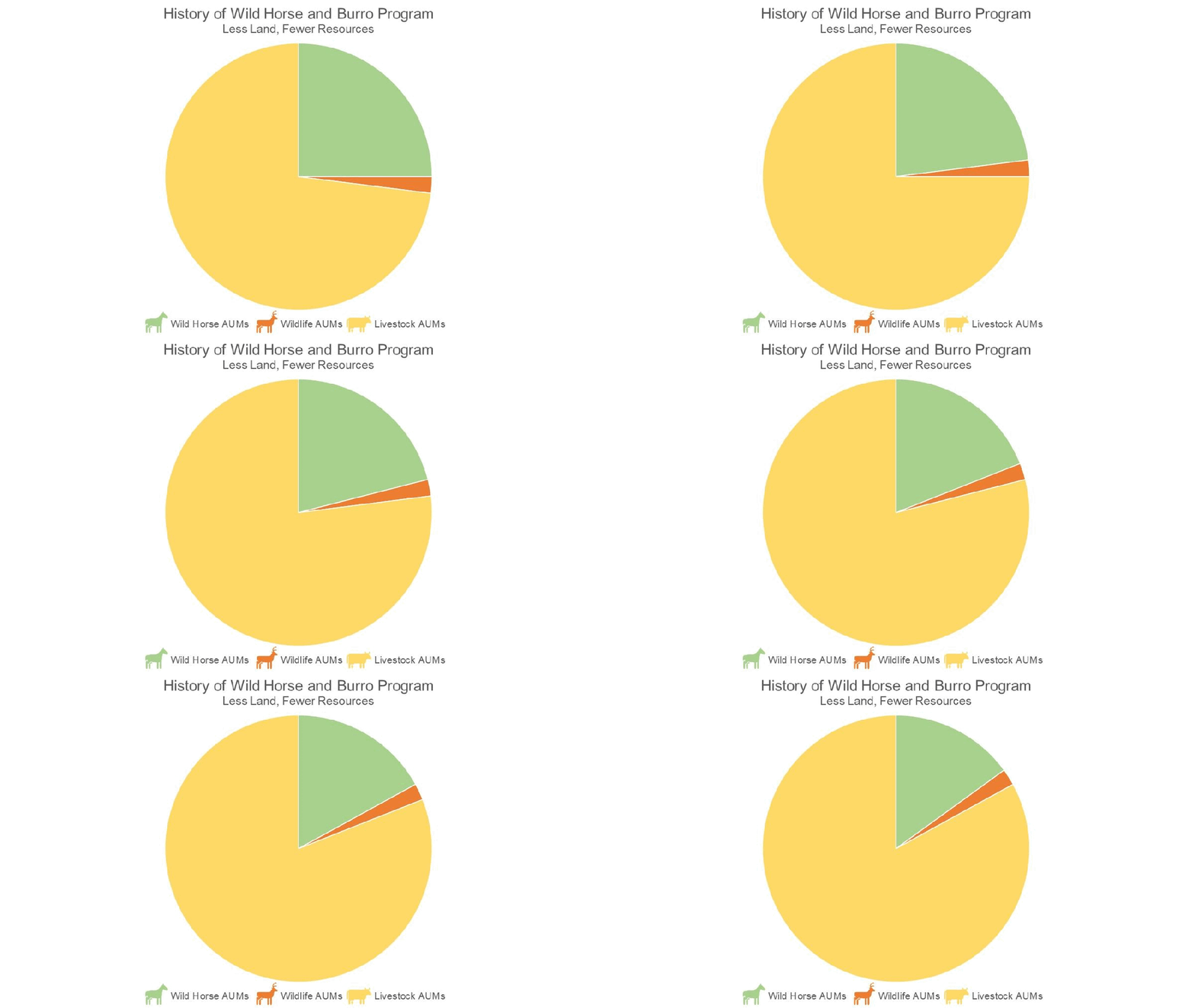
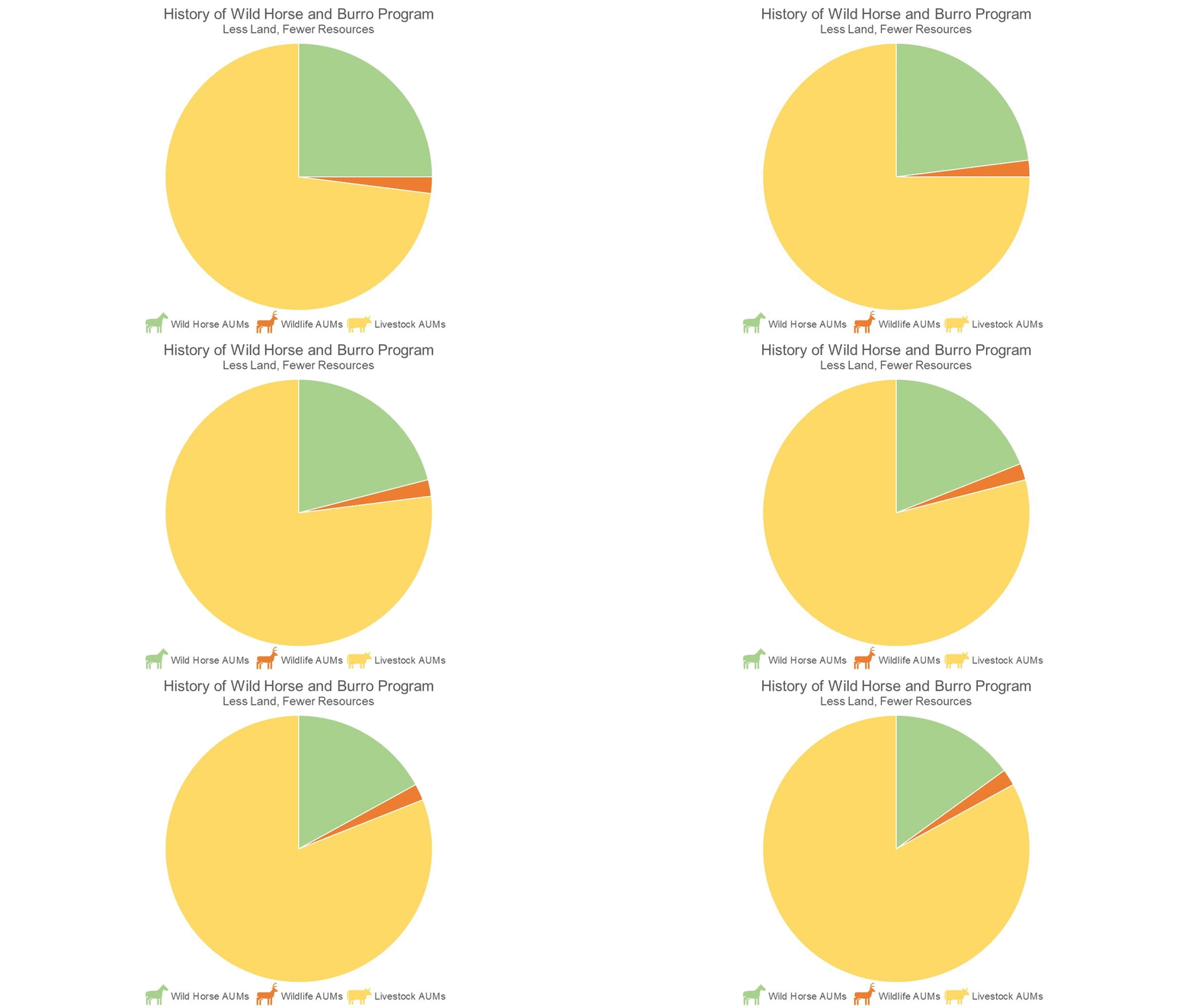
Long-term trends in resource management indicate greater need for helicopter roundups and population suppression.

History of Wild Horse and Burro Program 12-01-22

Instead of turning the clock back, the advocates have bet their futures on population suppression.

And they want you to pay for it.

Whenever you see references to cruel and costly roundups, humane management, keep them wild and free, or protect our cherished horses, you know you’re being swindled.

RELATED: Foal-Free Friday, Indoctrinating the Youngsters Edition.