How Many Wild Horses Can the Reveille HA Support?

The answer can be found by the same method used for the HMA but with more acreage.

The HMA is a subset of the HA, which is a subset of the Reveille Allotment.

The allotment offers 39.1 AUMs per year per thousand public acres.

The HA covers 387,676 public acres.

Therefore, the forage assigned to livestock inside the HA is 39.1 × 387,676 ÷ 1,000 = 15,158 AUMs per year, assuming the resource is evenly distributed across the parcel, enough to support 15,158 ÷ 12 = 1,263 wild horses.

The True AML would be 138 + 1,263 = 1,401, because the HA contains the HMA.

The BLM receives 15,158 × 1.35 = $20,463 per year from ranching activity inside the HA while it spends $5 per head per day, at least, for a total of $2,304,975 per year, to care for the 1,263 wild horses displaced from the HA by permitted grazing.

This is a fine example of how the government caters to special interests, wastes our money and mismanages our public lands.

RELATED: How Many Wild Horses Can the Reveille HMA Support?

How Many Wild Horses Can the Reveille HMA Support?

There are three layers of forage demand in most HMAs: Horses, livestock and wildlife.

To estimate the carrying capacity, convert the forage assigned to livestock to wild horses and add the result to the AML.

The HMA is a subset of the Reveille Allotment, as shown in the National Data Viewer.

Reveille HMA in Reveille Allotment 06-28-23

The HMA offers 138 × 12 = 1,656 AUMs per year on 104,500 public acres, or 15.8 AUMs per year per thousand public acres.

The allotment offers 25,730 AUMs on 657,520 public acres, according to the Allotment Master Report, which works out to 39.1 AUMs per year per thousand public acres.

Land that can only produce 15.8 AUMs per year per thousand public acres for wild horses can produce 39.1 AUMs per year per thousand public acres for livestock.

If the resource is evenly distributed across the allotment, the forage assigned to livestock inside the HMA should be 39.1 × 104,500 ÷ 1,000 = 4,086 AUMs per year, enough to support 4,086 ÷ 12 = 340 wild horses.

Therefore, the True AML, the number of wild horses the HMA could support if it was managed principally for them (as specified in the original statute) is 138 + 340 = 478, to be achieved by confining the ranchers to their base properties in a year-round off season.

The current population, thought to be 164 plus this year’s foal crop, is well within this range.

The Authorization Use Report indicates a twelve-month grazing season.

The HMA is managed primarily for animal agriculture, with cattle receiving 2.5 times more forage than the horses.

The roundup will bring forage consumption in line with the resource specifications of the land-use plan(s) and the fertility control pesticides should keep it that way for many years to come.

RELATED: Reveille Roundup Announced.

Reveille Roundup Announced

The incident, which kicks off the second half of the FY23 roundup season, will begin on or about July 1, according to today’s news release.

Helicopters will push the horses into the traps and operations will be open to public observation.

The HMA covers 105,499 total acres, including 104,500 public acres, according to the March HA/HMA Report.

The HA, most of which is unfit for wild horses but not for livestock, covers 389,050 total acres, including 387,676 public acres, east of Tonopah, NV.

The AML is 138.

The current population is thought to be 164 plus this year’s foal crop.

The stocking rate allowed by plan is 1.3 wild horses per thousand public acres, slightly higher than the target rate across all HMAs of one wild horse per thousand acres.

The goal  is to capture 129 wild horses, remove 76 and return 26 stallions to their lawful home along with 27 mares treated with GonaCon Equine, an ovary-killing pesticide not a fertility control vaccine.

Reveille HMA with Allotments 06-27-23

The HA and HMA lie within the Reveille Allotment and are subject to permitted grazing, as shown by the National Data Viewer.

Animals not returned to the HMA will be taken to the Ridgecrest off-range corrals.

Gather stats and daily reports will be posted to this page.

RELATED: FY23 Roundup Schedule Grows.

Mom-Baby Pair Rescued from Lake Powell Beach

The incident started on June 7 in Glen Canyon National Recreation Area according to a news release dated June 23 by NPS.

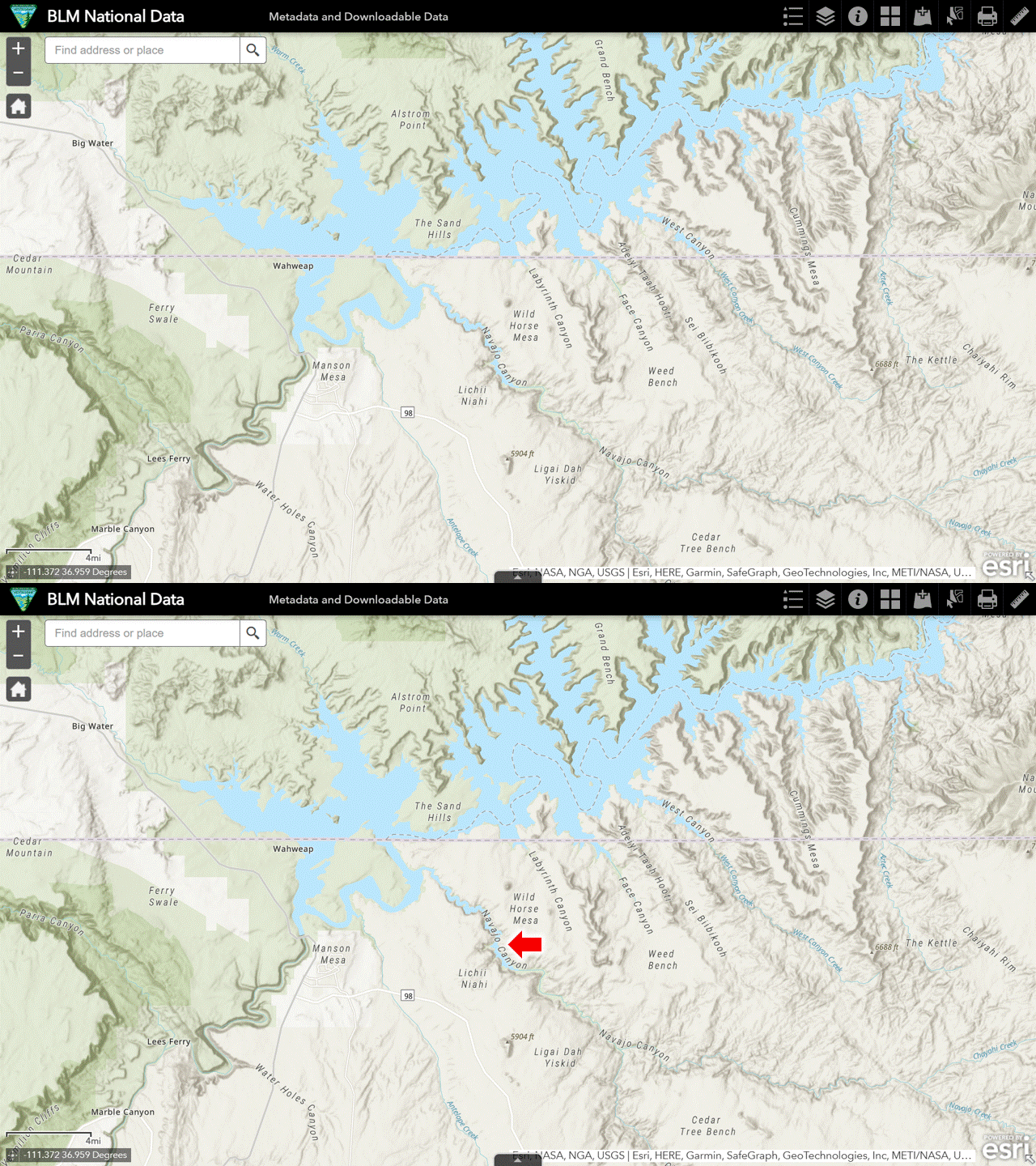
The horses were trapped on a beach in Navajo Canyon due to rising lake elevations and with food running out, the Park Service loaded them into a horse trailer on a boat and handed them off to Best Friends Animal Sanctuary in Kanab, UT.

NPS does not acknowledge the horses in its discussion of mammals in GCNRA, probably because it considers them to be non-native/invasive animals.

The National Data Viewer puts Navajo Canyon in Arizona near the Utah state line.

Navajo Canyon at Lake Powell 06-26-23

Little Book Cliffs Demographics

A dataset published by the advocates in January shows the name, sex, color and age of each horse in the WHR.

Sweetheart and Boone appear on rows 28 and 29.

The darting status of the mares was not provided.

Calculations added by Western Horse Watchers indicate 75 males, 108 females and 27 foals (born in 2022).

Females outnumber males by 1.4:1.

The average age of the males, including foals, is 8.3 years.

The average of the females is 9.3 years.

The over-20 category consisted of two males and fifteen females.

Foals represented 14.8% of the population, higher than expected, suggesting the herd is growing at a rate of nine to ten percent per year.

Data from last year, for roundups starting on or after July 1 (after foaling season), indicated a weighted average birth rate of 17.4%.

Roundup Data After 2022 Foaling Season 04-13-23

If the goal is to slow population growth or bring birth rates in line with death rates, the program is not very effective.

Perhaps it has been curtailed or shut off.

With birth rates and breeding patterns determined by the advocates, not nature, the herd is not wild and the area qualifies as a curated horse exhibit.

RELATED: The Sad Story of Sweetheart and Boone.

The Sad Story of Sweetheart and Boone

The Daily Sentinel of Grand Junction, CO deviates slightly from its anti-horse bias in this article about a Little Book Cliffs mare that roamed the WHR for an astonishing 30 years, thanks to—wait for it—a contraceptive drug.

If you’re up to speed in the wild horse world, you know the drug as PZP or Zonastat-H, an ovary-killing pesticide on the same EPA list as toxic chemicals.

You also recognize the advanced age as a symptom of an abnormal sex ratio, which the advocates and their dupes refer to as mares living longer.

The BLM-approved darting program, which appears at the top of the latest roundup schedule (for non-motorized removals), is carried out by Friends of the Ranchers, an advocacy group founded in 1982.

Curiously, they’ve scrubbed their site of all references to the product except for an old/inactive page about their organization.

Most wild horse advocates insist that pummeling the mares with pesticide-laced darts, which they describe as safe, proven and reversible fertility control vaccines, is harmless.
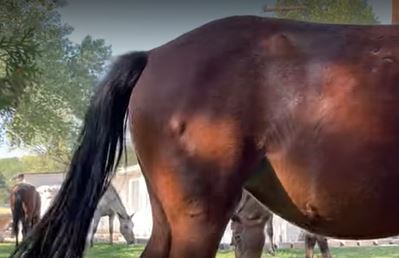
VR Darting Injury 09-15-21

Evidence to the contrary is on full display at Assateague Island and is now leaking out in Currituck County, NC.

Trends in Assateague Population 04-27-23

As for the ranchers, Little Book Cliffs is surrounded by BLM grazing allotments.

Little Bookcliffs Allotments 05-01-22

The horses don’t always respect the WHR boundaries, as noted in the story, so beating the population down with restricted-use pesticides protects resources assigned to the public-lands ranchers.

Unfortunately, application of PZP to control pests that interfere, or could interfere, with animal agriculture is not one of the approved uses.

If the advocates are ashamed of what they’re doing to the horses, how do you think they’ll feel when arrest warrants go out for unlawful use of pesticides?

Same for the bureaucrats and grunts.

In her later years, the mare had taken up with a black stallion and the pair were often spotted by hikers and motorists, but they produced no offspring, possibly due to natural causes but more likely because she had been isolated from the gene pool (sterilized, for those of you in Rio Linda) years earlier by the advocates.

“We give them better lives and longer ones,” one of them told the reporter, referring to the mares, not the stallions.

A two-foals-and-you’re-done policy is the goal according to the report.

This permanent condition will be achieved with the temporary contraceptive mentioned in the story, not by surgery.

The advocates can be more honest and open about their true intentions and loyalties now that the Colorado Wild Horse Project has become law.

As the American people realize they’re charlatans, and adjust their financial support accordingly, the state will fund such programs, going as far as paying people to hike the range and dart more mares.

As for the stallion, the advocates say he’s going to be lonely and may go downhill fast because of the loss.  He’s already 23 or 24.

Currituck Herd Adds New Filly

A visitor found her on a sound, according to a story by WCTI News of New Bern, NC, bringing the population to 101.

The population was 106 March 2022.

The miniscule birth rate, around five percent, indicates a small breeding population and poor genetic diversity, yet mares may outnumber stallions by an appreciable margin.

Another herd ruined by Zonastat-H?

The safe, proven and reversible darting program was shut off last year.

RELATED: Advocates, Not Climate Change, to Destroy Currituck Herd.

Foal-Free Friday, Snuffing Out New Life Edition

Helicopter roundups are the fastest and most efficient way of shifting food and water to the public-lands ranchers.

However, results decay with time as the herds respond to the losses.

Not so with the fertility control pesticides.

The BLM darting effort currently affects a small percentage of the herds but the agency has indicated that it will expand the program to slow herd growth.

In FY22, it completed a record 1,622 treatments and in FY23 1,541 animals will be hit, according to the on-range update for the next WHBAB meeting.  This would be the highest ratio of treatments to removals ever.

By comparison, volunteers with the Campaign Against America’s Wild Horses pelted 1,520 mares on the Virginia Range with 1,530 doses in FY23, according to the animal industry update for the June 9 Board of Agriculture meeting, proving that they are ready to take things to the next level.

They are not slowing herd growth.  They are reversing it, with a goal of shrinking the herd by 80% or more.

Progress will be slow but by the time the people realize what they’re doing, the mares will be sterile and the herd will be lost.

Assateague Island is proof of concept, a blueprint for wild horse eradication with ovary-killing pesticides.

RELATED: Foal-Free Friday, Shrinking the Breeding Population Edition.

More WHBAB Meeting Materials Posted

The list includes updates from the Forest Service and BLM for on-range and off-range programs.

The Facility Report shows 57,045 horses and 2,440 burros in off-range holding.

Heavy precipitation across the west alleviated the effects of drought but there are no remarks about winterkill.

A new contract for catch-treat-release goes into effect later this year.

A report showing forage allocations for livestock in the lawful homes of wild horses and burros was not provided.

There is no discussion regarding the use of ovary-killing pesticides to control horses and burros that interfere with animal agriculture, a purpose for which the products were not registered.

RELATED: WHBAB Meeting Agenda Posted.

Comment Period Extended for Proposed Public Lands Rule

The deadline has been moved from June 20 to July 5, according to a BLM news release dated June 15.

Click on the Browse Documents tab at the rulemaking docket for a link to the text and other functions such as viewing and submitting comments.

The BLM rulemaking page includes links to FAQs, handouts and the slide deck used in the presentations.

The proposed rule would designate conservation as a use within FLPMA’s multiple use and sustained yield framework, an attempt to amend the statute without going through the legislative process.

RELATED: Meeting Details Published for New Public Lands Rule.

How Many Wild Horses Can the Clan Alpine HMA Support?

There are three layers of forage demand in the HMA:

  • Wild horses
  • Livestock
  • Wildlife

To estimate the carrying capacity of the HMA—the number of horses it could support if it was managed principally for them as specified in the original statute—convert the livestock AUMs to horses and add the result to the AML.  This is the True AML.

The horse and livestock layers are compared in Table 7 of the Draft EA.

Table 7 Clan Alpine EA 06-18-23

Inspection of the table yields the following remarks:

  • The livestock layer can be assessed in a straightforward manner [unusual]
  • Horses receive more forage than livestock [unusual]
  • All of the HMA is subject to permitted grazing [typical]
  • The forage allocation for horses in Dixie Valley should be 4,740 [typo?]

Continuing with the task at hand:

1. Determine the forage assigned to livestock inside the HMA.

2,546 + 2,614 + 1,636 = 6,796 AUMs per year

2. Convert the livestock AUMs to horses.

6,796 ÷ 12 = 566.3

3. Add the result to the AML.

979 + 566 = 1,545

How many wild horses have been displaced from their lawful home by permitted grazing?  566.

How many horses can the HMA support if the ranchers were confined to their base properties in a year-round off-season?  1,545.

How many horses would be found in the HMA if the Wild Horse Fire Brigade was put into practice?  0.

What is the cost of holding those animals in contracted feedlots?

566 × 5 × 365 = $1,032,950 per year

How much does the BLM receive from the permittees?

6,796 × 1.35 = $9,174.60 per year

Would you say that’s a wise use of the public lands?  No.

Is the HMA overpopulated?  Given the current population of 1,688, yes.

How is the HMA managed?  The RMP pits 979 wild horses against livestock equivalent to 566 cow/calf pairs in a 12-month grazing season.

The Allotment Master Report puts all three allotments in the Improve category.

Figures like those in Table 7 should be published for every HMA and WHT, not in hard-to-find planning documents but in the home page for each area.

An assumption in the above calculations is that there is considerable dietary overlap between horses and livestock.

RELATED: Clan Alpine Pest Control Plan Out for Public Review.

Clan Alpine Pest Control Plan Out for Public Review

A story dated June 16 by KOLO News indicated that the project had moved to document review and that a Draft EA had been released for public consumption.

Western Horse Watchers was unable to find an announcement at the BLM news site.

Table 3 describes four options for wild horse management.

The Proposed Action, Alternative 1, features gathers and removals in and around the HMA to achieve low AML, sex ratio skewing in favor of males and poisoning of females with ovary-killing pesticides, over a ten-year period.

The final decision, the last major step in the process, could authorize the Proposed Action or a combination of elements from other alternatives, such as castration and ovariectomy.

The goal of this and other such projects is to ensure that ranchers receive their allocated share of the food and water on a day-in/day-out basis.

The HMA covers 302,226 total acres in central Nevada, including 298,064 public acres, according to the latest HA/HMA Report.

The AML, representing the number of horses allowed by plan, not the number of horses the land can support, ranges from 612 to 979.

Forage demand at the upper end of AML works out to 11,748 AUMs per year.

The stocking rate at the upper limit is 3.3 wild horses per thousand public acres, considerably higher than the target rate across all HMAs of one wild horse per thousand acres (27,000 animals on 27 million acres).

The HMA intersects three allotments, described in Table 1 of the EA.

The “Livestock AUMs” column shows headcounts, not authorized forage.

The National Data Viewer shows the arrangement.  Click on image to open in new tab.

Clan Alpine HMA with Allotments 06-17-23

The current population is thought to be 1,688.

The 1993 HMAP, which can only ratify and reinforce the resource allocations of the land-use plan, calls for

  • Maintaining the population at AML
  • Achieving a thriving ecological balance
  • Proactively managing the horse population

It is not the be-all/end-all for wild horses as the advocates would have you believe.

Comments can be submitted online through July 17.

The HMA is not on the latest roundup schedule.

RELATED: BLM Reopens Clan Alpine Scoping Period.

Thriving Ecological Balance-3