The incident occurred seven to ten days ago according to a news release by the Ochoco National Forest.
The WHT covers 25,434 acres 25 miles east of Prineville, OR and lies mostly within the Reservoir Allotment.


Western Horse Watchers Association
Exposing the Hypocrisy, Lies and Incompetence of the Wild Horse Advocates
On the range
The incident occurred seven to ten days ago according to a news release by the Ochoco National Forest.
The WHT covers 25,434 acres 25 miles east of Prineville, OR and lies mostly within the Reservoir Allotment.
The report for January 24, Day 16 of the roundup, said “Gather goal met,” which would be true if the target was 1,150, but the goal was 1,000.
As of today, there are 184 unaccounted-for animals.
Some will be shipped to Florence and some will be returned to the HMA following treatment with Zonastat-H, a fertility control pesticide endorsed by most advocates.
As of yesterday, the capture total exceeded the goal by eleven percent and there was no indication that gather operations had concluded.
RELATED: Black Mountain Roundup, Day 15.
The incident began on December 28. Results through January 23:
The figures in this post are based on the daily reports, not the totals posted by the BLM.
Helicopters did not fly on Day 27.
The death rate is 1.1%. All deaths are chargeable to the roundup.
The capture total includes 726 stallions, 811 mares and 218 foals. The sidebar at the gather page says 805 mares captured.
Youngsters represented 12.4% of the animals gathered, consistent with a herd growth rate of seven percent per year.
Of the adults, 47.2% were male and 52.8% were female, no evidence of an abnormal sex ratio.
The name of the contractor was not given and the location of the trap site was not disclosed.
Body condition scores averaged 3 on Day 26.
The sidebar puts the total shipped at 1,728.
The Complex is managed primarily for animal agriculture. The National Data Viewer shows habitat loss and grazing allotments. Click on image to open in new tab.
*According to advocates.

Day 27 ended with 6 unaccounted-for animals. The totals at the gather page show two more horses processed than captured.
There are no plans to treat any of the captured mares with fertility control pesticides and return them to the range.
Other statistics:
Overpopulation means more horses than allowed by plan, not necessarily more horses than the land can support.
The ability of the Complex to sustain wild horses has been limited by the bureaucrats, who have assigned most of their food to the public-lands ranchers.
Refer to these reports for an indication of the problem:
RELATED: East Pershing Roundup, Day 25.
The incident started on January 9. Results through January 23:
The figures in this post are based on the daily reports, not the totals in the sidebar.
The capture goal has been exceeded by 11.2%.
The death rate is 0.2%.
The capture total includes 445 jacks, 505 jennies and 162 foals.
Youngsters represented 14.6% of the animals gathered.
Of the adults, 46.8% were male and 53.2% were female.
The name of the contractor was not given and the location of the trap site was not disclosed.
The HMA is subject to permitted grazing.
The National Data Viewer shows habitat loss and overlapping allotments. Click on map to open in new tab.
The management plan assigns 2.5 times more forage to livestock than the burros.
The roundup supports three tenets of rangeland management.
*According to advocates
RELATED: Black Mountain Roundup, Day 13.

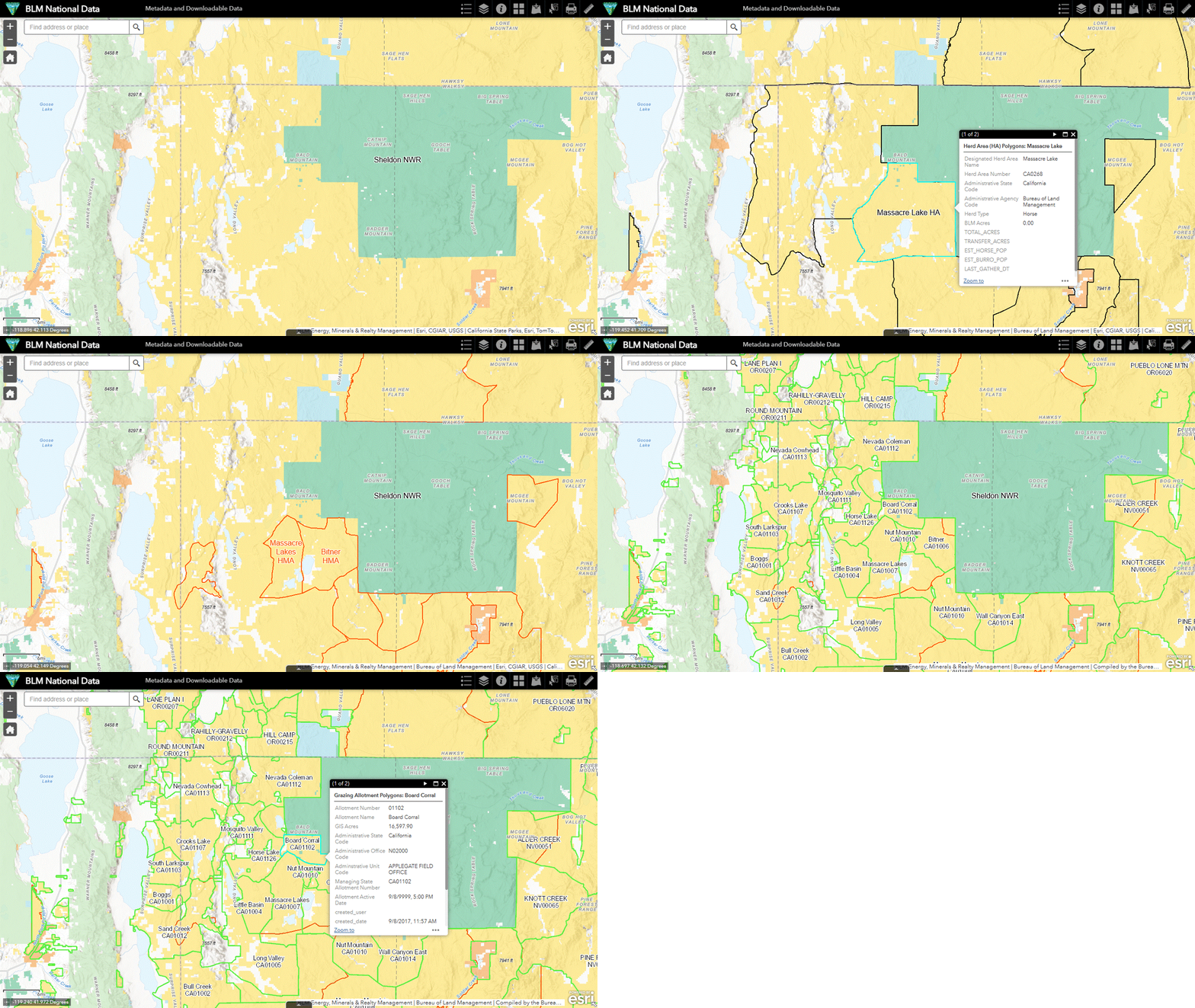
The project would implement virtual fencing in the Board Corral Allotment on the west side of Sheldon NWR to obtain a more uniform distribution of cattle and reduce grazing pressure on seeps, springs and wet meadow resources.
According to Section 3.1.1 in the Draft EA, livestock continually congregate, trample and utilize riparian areas and springs on the allotment. Many forgeable upland areas in the South Use Area receive little to no use due to water constraints, lack of boundaries and cattle attraction to the riparian corridor.
Under the Proposed Action, the BLM would purchase the base stations and the permittee would rent or purchase the livestock collars.
The allotment, in the Improve category, offers 690 active AUMs on 15,330 public acres, or 45.0 AUMs per year per thousand public acres, equivalent to 3.8 wild horses per thousand public acres.
Despite this, land managers insist that public lands in the western U.S. can only support one wild horse per thousand public acres (27,000 animals on 27 million acres).
The allotment overlaps the north end of the Massacre Lake HA, an area identified for wild horses but managed principally for livestock.
The EA was copied to the project folder with related documents.
Comments will be accepted through January 31.
RELATED: Virtual Fences Coming to a Pasture Near You?
The incident started yesterday with ten horses captured, none shipped, six released and no deaths.
The original gather page has been 404’d.
The HMA is managed principally for livestock. The horses receive an estimated 4.3% of the authorized forage, neglecting wildlife.
What would they get if they had an HMAP?
4.3%.
Pay no attention to the advocates, they are clueless.
RELATED: HMAPs Must Comply with RMPs.
The incident began on December 28. Results through January 21:
The figures in this post are based on the daily reports, not the totals posted by the BLM.
A stallion was put down on Day 24 due to a poorly healed nose injury, followed by another stallion and filly for blindness, lifting the death rate to 1.2%. They’d be alive today if there was no roundup.
The capture total includes 699 stallions, 774 mares and 204 foals. The sidebar at the gather page says 768 mares captured.
Youngsters represented 12.2% of the animals gathered, consistent with a herd growth rate of seven percent per year.
Of the adults, 47.5% were male and 52.5% were female, no evidence of an abnormal sex ratio.
The name of the contractor was not given and the location of the trap site was not disclosed.
Body condition scores ranged from 3 to 5 on Days 24 and 25.
The sidebar puts the total shipped at 1,480.
The Complex is managed primarily for animal agriculture. The National Data Viewer shows habitat loss and grazing allotments. Click on image to open in new tab.
*According to advocates.
Day 25 ended with 176 unaccounted-for animals.
There are no plans to treat any of the captured mares with fertility control pesticides and return them to the range.
Other statistics:
Overpopulation means more horses than allowed by plan, not necessarily more horses than the land can support.
The ability of the Complex to sustain wild horses has been limited by the bureaucrats, who have assigned most of their food to the public-lands ranchers.
Refer to these reports for an indication of the problem:
RELATED: East Pershing Roundup, Day 23.
Horses have the day off. At the Black Mountain HMA with ZacksRides.
The incident started on January 9. Results through January 21:
The figures in this post are based on the daily reports, not the totals in the sidebar.
A jack was put down on Day 12 due to a leg injury.
The death rate is 0.2%.
The capture total includes 404 jacks, 442 jennies and 140 foals.
Youngsters represented 14.2% of the animals gathered.
Of the adults, 47.8% were male and 52.2% were female.
The name of the contractor was not given and the location of the trap site was not disclosed.
The HMA is subject to permitted grazing.
The National Data Viewer shows habitat loss and overlapping allotments. Click on map to open in new tab.
The management plan assigns 2.5 times more forage to livestock than the burros.
The roundup supports three tenets of rangeland management.
The incident will likely conclude tomorrow.
*According to advocates
RELATED: Black Mountain Roundup, Day 11.
The incident started on January 9. Results through January 19:
The figures in this post are based on the daily reports, not the totals in the sidebar.
Helicopters did not fly on Day 11 due to maintenance.
The death rate is 0.1%.
The capture total includes 345 jacks, 375 jennies and 113 foals.
Youngsters represented 13.6% of the animals gathered.
Of the adults, 47.9% were male and 52.1% were female.
The location of the trap site was not disclosed.
The HMA is subject to permitted grazing.
The National Data Viewer shows habitat loss and overlapping allotments. Click on map to open in new tab.
The management plan assigns 2.5 times more forage to livestock than the burros.
The roundup supports three tenets of rangeland management.
The incident will likely conclude in three days.
*According to advocates
RELATED: Black Mountain Roundup, Day 9.
The incident began on December 28. Results through January 19:
The figures in this post are based on the daily reports, not the totals posted by the BLM.
A mare and stallion were dispatched on Day 22 for pre-existing conditions, followed by another stallion on Day 23, lifting the death rate to 1.1%.
The capture total includes 644 stallions, 706 mares and 185 foals. The sidebar at the gather page says 700 mares captured.
Youngsters represented 12.1% of the animals gathered, consistent with a herd growth rate of seven percent per year.
Of the adults, 47.7% were male and 52.3% were female, no evidence of an abnormal sex ratio.
The location of the trap site was not given.
Body condition scores ranged from 3 to 5 on Days 22 and 23.
The sidebar puts the total shipped at 1,394.
The Complex is managed primarily for animal agriculture. The National Data Viewer shows habitat loss and grazing allotments. Click on image to open in new tab.
*According to advocates.
Day 23 ended with 123 unaccounted-for animals.
There are no plans to treat any of the captured mares with fertility control pesticides and return them to the range.
Other statistics:
Overpopulation means more horses than allowed by plan, not necessarily more horses than the land can support.
The ability of the Complex to sustain wild horses has been limited by the bureaucrats, who have assigned most of their food to the public-lands ranchers.
Refer to these reports for an indication of the problem:
RELATED: East Pershing Roundup, Day 21.
The incident started on January 9. Results through January 17:
The figures above are based on the daily reports.
A burro was dispatched on Day 9. No details were given.
The death rate is 0.2%.
Youngsters represented 13.3% of the animals gathered.
Of the adults, 51.2% were male and 48.8% were female.
The location of the trap site was not disclosed.
The HMA is subject to permitted grazing.
The National Data Viewer shows habitat loss and overlapping allotments. Click on map to open in new tab.
The management plan assigns 2.5 times more forage to livestock than the burros.
The roundup supports three tenets of rangeland management.
*According to advocates
RELATED: Black Mountain Roundup, Day 7.
The incident began on December 28. Results through January 17:
The figures above are based on the daily reports, not the totals posted by the BLM.
A stallion was dispatched on Day 21 for club feet.
The death rate is 1.0%.
The capture total includes 601 stallions, 630 mares and 157 foals. The sidebar at the gather page says 624 mares captured.
Youngsters represented 11.3% of the animals gathered, consistent with a herd growth rate of six percent per year.
Of the adults, 48.8% were male and 51.2% were female, no evidence of an abnormal sex ratio.
The location of the trap site was not given.
Body condition scores ranged from 3 to 5 on Days 20 and 21.
The Complex is managed primarily for animal agriculture. The National Data Viewer shows habitat loss and grazing allotments. Click on image to open in new tab.
*According to advocates.
Day 21 ended with 98 unaccounted-for animals.
There are no plans to treat any of the captured mares with fertility control pesticides and return them to the range.
Other statistics:
Overpopulation means more horses than allowed by plan, not necessarily more horses than the land can support.
The ability of the Complex to sustain wild horses has been limited by the bureaucrats, who have assigned most of their food to the public-lands ranchers.
Refer to these reports for an indication of the problem:
RELATED: East Pershing Roundup, Day 19.
The action will protect wild horse and wildlife habitat within the Pryor Mountain Wild Horse Range for an additional 20-year term, according to a notice appearing this morning in the Federal Register.
The original withdrawal occurred under Public Land Order No. 7628.
The National Data Viewer puts the affected parcels at the southern end of the WHR.
Persons wishing to submit comments must send them in writing to the Billings Field Office as described in the announcement.

The BLM announced today the beginning of a public scoping period for the Pinyon Solar Project west of Maricopa, AZ.
The news release was the only document copied to the project folder.
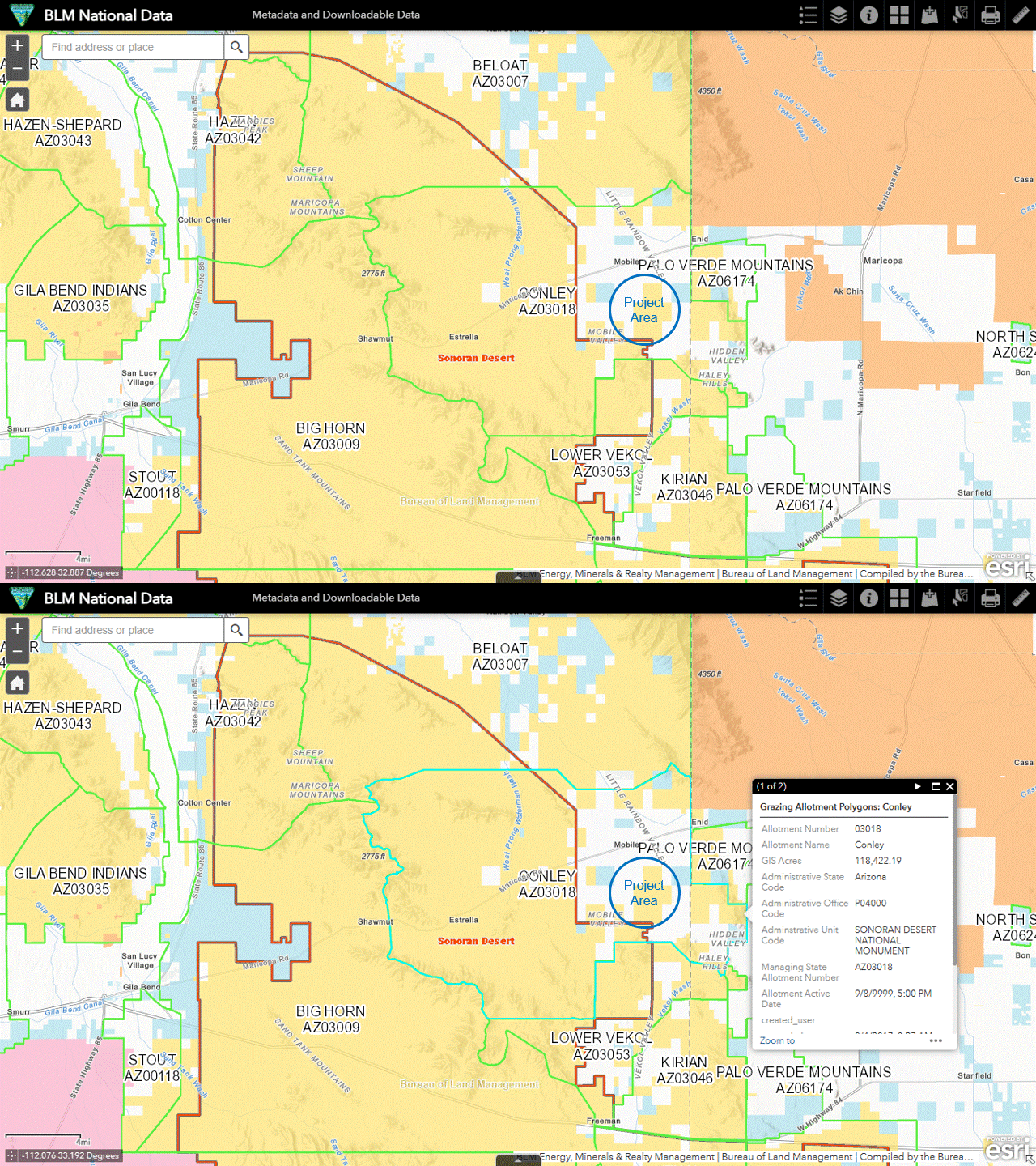
The map at ePlanning puts the project area, which consists of 1,730 acres of public land, at the edge of the Sonoran Desert National Monument.
The National Data Viewer puts it inside the Conley Allotment.
The allotment offers 4,158 active AUMs on 90,946 public acres, or 45.7 AUMs per year per thousand public acres, according to the Allotment Master Report.
Therefore, the facility will take an estimated 45.7 × 1,730 ÷ 1,000 = 79 AUMs per year out of action for the life of the project, assuming the resource is evenly distributed across the allotment.
That’s like turning six to seven wild horses loose in the allotment to rob forage from the poor rancher!
Livestock grazing inside the NM was authorized by the BLM in a 2020 decision.
The incident started on January 9. Results through January 15:
The figures above are based on the daily reports.
Youngsters represented 14.0% of the animals gathered.
Of the adults, 55.1% were male and 44.9% were female.
The location of the trap site was not disclosed.
The HMA is subject to permitted grazing.
The National Data Viewer shows habitat loss and overlapping allotments. Click on map to open in new tab.
The management plan assigns 2.5 times more forage to livestock than the burros.
The roundup supports three tenets of rangeland management.
*According to advocates
RELATED: Black Mountain Roundup, Day 5.
The incident began on December 28. Results through January 15:
The figures above are based on the daily reports, not the totals posted by the BLM.
Helicopters did not fly on Day 18.
The trap site has been moved to a new but undisclosed location.
The death rate is 1.0%.
The capture total includes 531 stallions, 578 mares and 136 foals. The sidebar at the gather page says 572 mares captured.
Youngsters represented 10.9% of the animals gathered, consistent with a herd growth rate of five to six percent per year.
Of the adults, 47.9% were male and 52.1% were female, no indication of an abnormal sex ratio.
The Complex is managed primarily for animal agriculture. The National Data Viewer shows habitat loss and grazing allotments. Click on image to open in new tab.
*According to advocates.
Day 19 ended with 114 unaccounted-for animals.
There are no plans to treat any of the captured mares with fertility control pesticides and return them to the range.
Other statistics:
Overpopulation means more horses than allowed by plan, not necessarily more horses than the land can support.
The ability of the Complex to sustain wild horses has been limited by the bureaucrats, who have assigned most of their food to the public-lands ranchers.
Refer to these reports for an indication of the problem:
RELATED: East Pershing Roundup, Day 17.
It’s the third of three HMAs in the East Pershing Complex, now subject to the largest roundup of FY24.
The HMA covers 178,927 total acres, including 176,800 public acres, and the 205 horses allowed by plan receive 2,460 AUMs per year.
The stocking rate allowed by plan is 1.2 wild horses per thousand public acres, in line with the target rate across all HMAs of one wild horse per thousand acres (27,000 animals on 27 million acres).
Table 8 in the Final EA for pest control and resource enforcement in the Complex shows seven allotments that intersect the HMA.
Three Field Offices are involved:
Three more steps are needed to determine the carrying capacity.
The overlap percentages in the table seem reasonable based on the arrangement in the National Data Viewer, except for Boyer Ranch and Copper Kettle.
The estimated overlaps for those two allotments are 20% and 25%, not 91% and 94% per table 8. These values will be used in the calculations.
The Allotment Master Report at RAS provides management status, acreage and active AUMs, with three iterations required (HRFO | MLFO | SFO).

Approximately 41% of the public acreage does not meet standards for rangeland health.
The allotments offer a weighted average 34.6 AUMs per year per thousand public acres, not very attractive from a ranching viewpoint.
The management plan assigns an estimated 4,212 AUMs per year to livestock inside the HMA, assuming the resource is evenly distributed across the allotments.
The number of wild horses displaced from their lawful home by permitted grazing is therefore 4,212 ÷ 12 = 351.
The True AML is 205 + 351 = 556, the number of horses the HMA could support is it was managed principally them as specified in the original statute.
As of today, it’s managed primarily for livestock.
The new AML can be achieved by confining the ranchers to their multi-million-dollar base properties in a year-round off season.
The private corrals operated by JS Livestock, destination of horses captured in the roundup, demonstrate the feasibility of this idea.
Instead of allowing the horses to fill their niche on public lands, the bureaucrats cram them into taxpayer-supported feedlots, while giving most of their food and water to the government dependents.
As a result, the agency collects 4,212 × 1.35 = $5,686 per year from ranching activity inside the HMA, while it spends 351 × 5 × 365 = $640,575 per year to care for the horses displaced thereby.
Would you say that’s a wise use of the public lands?
None of this is necessary according to the advocates. Just beat the horse populations down with ovary-killing pesticides and let the ranchers have their way. Problem solved.
RELATED: How Many Wild Horses Can the Augusta Mountains HMA Carry?

 Western Horse Watchers Association