Little Book Cliffs Decision Issued

The new management plan provides guidance for the Grand Junction Field Office to bring the size of the herd to within the appropriate management level of 90-150 wild horses and then regulate that population according to today’s news release.

The Decision Record authorizes the Proposed Action (Alternative B), discussed in Section 2.1.3 of the Final EA.

The DR and EA were copied to the project folder in ePlanning with other supporting documents.

The HMA was dropped from the FY24 roundup schedule in early June.

A preliminary schedule for FY25 has not been released.

RELATED: Colorado Lawmakers Upset with BLM’s Plan for Little Book Cliffs.

Swasey Roundup Over

The incident concluded yesterday with 189 horses captured, 188 shipped, none released and one dead.

There were no unaccounted-for animals.

The capture and removal goals were 166 and 154, respectively.

The death rate was 0.5%.

The average daily take was 31.5.

The capture total included 57 stallions, 99 mares and 33 foals.

Youngsters represented 17.5% of the animals gathered, consistent with a herd growth rate of 12% per year.

Of the adults, 36.5% were male and 63.5% were female, results that don’t correspond to a simple random process centered at 50% males / 50% females.

The Swasey sex ratio may be skewed in favor of females, a common problem in herds treated with PZP, but the HMA does not appear in the first part of the June 3 roundup schedule for nonmotorized removal.

The HMA is subject to permitted grazing.  The roundup liberated 2,268 AUMs per year, giving new hope to the poor ranchers.

The number of horses removed depends on the number returned.

The schedule indicates that up to 10 mares will be treated with GonaCon Equine and be returned to the range with up to 10 stallions.

A news release, if published, may clarify this.

RELATED: Swasey Roundup in Progress, No News Release.

Foal-Free Friday, Plausible Deniability Edition

The advocates are positioning themselves to avoid any responsibility for the destruction of the Salt River and Virginia Range herds, claiming they can apply as many doses of PZP as they want with no long-term effect on fertility.

They’ll go through the motions, applying more and more of the pesticide, although it’s really not necessary because the mares are sterile.

At that point the trend lines will go south even if the darting programs are shut off, just like the Maryland side of Assateague Island.

“We didn’t know, we thought it was harmless.”

They’re lying, of course.

The bureaucrats knew as well, that’s why they signed the agreements.

RELATED: Foal-Free Friday, Grounding the Helicopters Edition.

New Management Plan Targets Tassi-Gold Butte Burros?

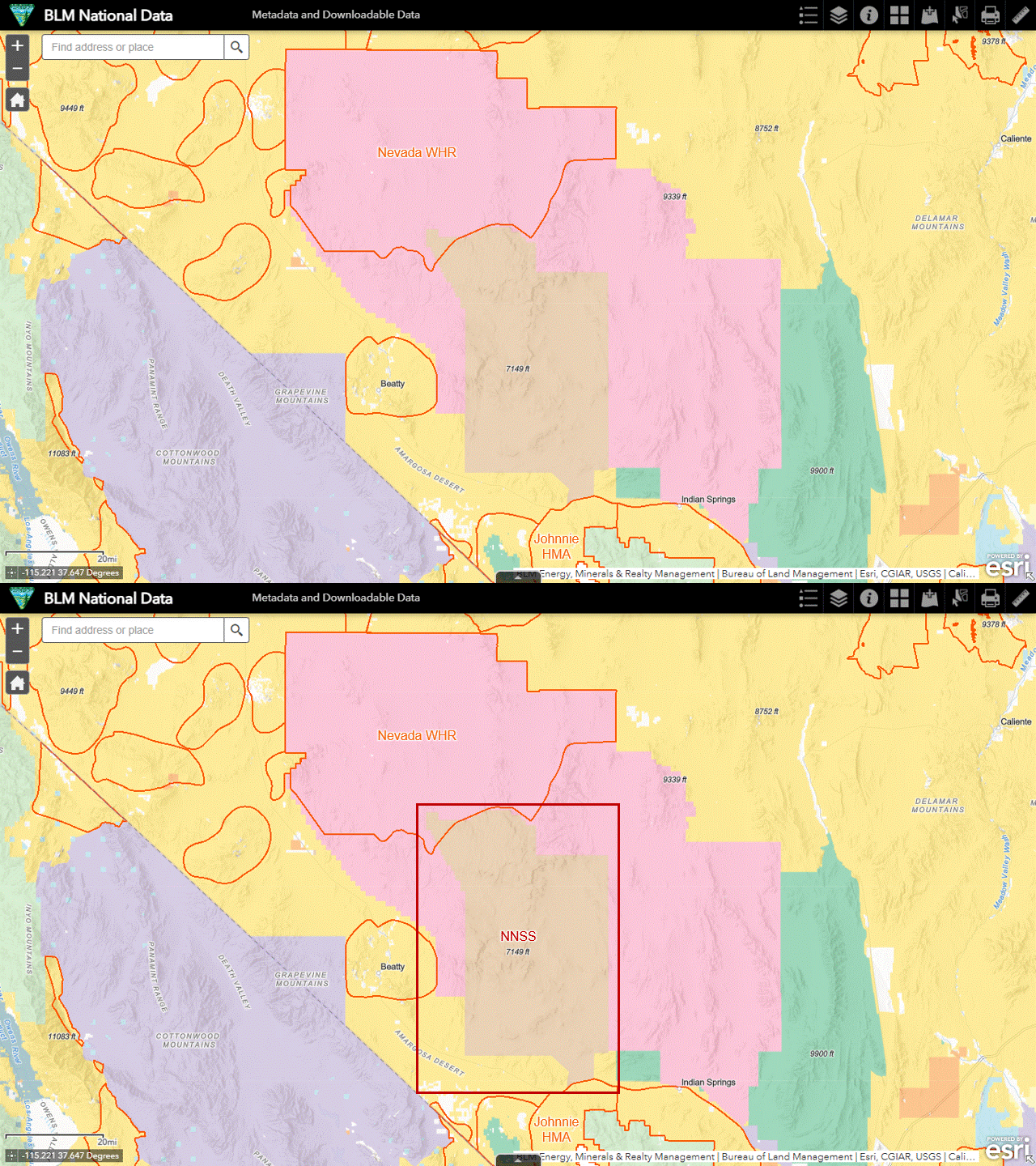
The project description says the BLM and NPS propose to gather and remove wild burros from within and outside the Tassi-Gold Butte HMA, which was zeroed out in 1998.

The National Data Viewer shows a Gold Butte HMA and Tassi-Gold Butte HA.

The HMA lies within the Gold Butte National Monument and the HA lies within the Grand Canyon Parashant National Monument.

No documents were copied to the project folder.

Tassi-Gold Butte HA with National Monuments 07-25-24

Swasey Roundup, Day 5

The incident started on July 20.  Results through July 24:

  • Scope: Swasey HMA
  • Target: Horses
  • AML: 100
  • Pre-gather population: 287
  • True AML: 749
  • Type: Planned
  • Method: Helicopter
  • Category: Cruel and costly (according to advocates)
  • Better way: Pummel mares with pesticide-laced darts (according to advocates)
  • Goals: Gather 166, remove 154
  • Captured: 157, up from 85 on Day 3
  • Shipped: 139, up from 71 on Day 3
  • Released: None
  • Deaths: None
  • Average daily take: 31.4
  • Unaccounted-for animals: 18

The figures above are based on the daily reports.

The capture total includes 50 stallions, 79 mares and 28 foals.

Youngsters represented 17.8% of the animals gathered.

Of the adults, 38.8% were male and 61.2% were female.

Body condition scores were not given.

The location of the trap site is not known.

The HMA is subject to permitted grazing.  Resources liberated to date:

  • Forage: 1,884 AUMs per year
  • Water: 1,570 gallons per day

The June 3 schedule indicates that 10 mares will be treated with GonaCon Equine and be returned to the range but this is not discussed at the gather page.

The roundup supports three tenets of rangeland management.

RELATED: Swasey Roundup, Day 3.

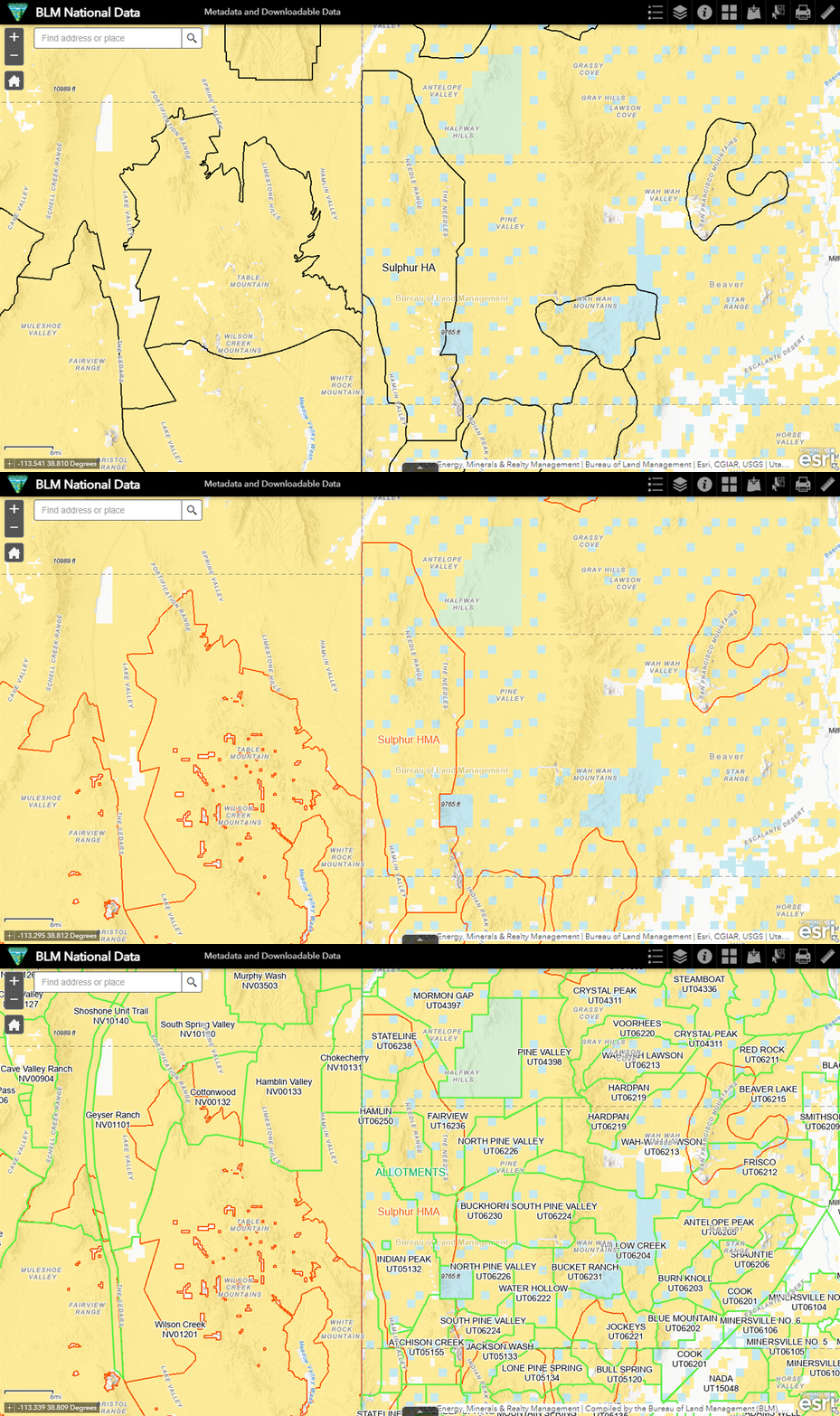
Swasey HMA with Allotmenmts 07-21-24

Blue Wing Roundup, Day 17

The incident started on July 8.  Results through July 24:

  • Scope: Blue Wing Complex
  • Target: Horses and burros
  • AML: 555 horses and 90 burros
  • Pre-gather population: 1,912 horses and 476 burros
  • Type: Planned
  • Method: Helicopter
  • Category: Cruel and costly (according to advocates)
  • Better way: Snuff out new life with PZP (according to advocates)
  • Goals
    • Horses: Gather 1,373 and remove 1,333
    • Burros: Gather 356 and remove 356
  • Captured
    • Horses: 1,061, up from 917 on Day 15
    • Burros: 360, no change from Day 15
  • Shipped
    • Horses: 923, up from 764 on Day 15
    • Burros: 353, no change from Day 15
  • Released
    • Horses: 2, no change from Day 15
    • Burros: None
  • Deaths
    • Horses: 23, no change from Day 15
    • Burros: 8, no change from Day 15
  • Average daily take
    • Horses: 62.4
    • Burros: 21.2
  • Unaccounted-for animals
    • Horses: 113
    • Burros: -1
  • Snippet from statute: It is the policy of Congress that wild free-roaming horses and burros shall be protected from capture, branding, harassment, or death

The figures above are based on the daily reports.

Horses

The death rate is 2.2%.

The capture total includes 428 stallions, 439 mares and 194 foals.

Youngsters represented 18.3% of the animals gathered, consistent with a herd growth rate of 13% per year.

Of the adults, 49.4% were male and 50.6% were female, results that could be produced by a simple random process centered at 50% males / 50% females.

Body condition scores were not given.

Burros

The capture goal has been reached.

More burros were processed than caught, throwing the numbers out of balance.

CapturedShippedReleasedDead = 360 – 353 – 0 – 8 = -1

The death rate is 2.2%.

The capture total includes 186 jacks, 152 jennies and 22 foals.

Youngsters represented 6.1% of the animals gathered.

Of the adults, 55% were male and 45% were female.

General

The location of the trap site is not known.  Five HMAs are involved.

The Complex is subject to permitted grazing.  Resources liberated to date:

  • Forage: 14,868 AUMs per year
  • Water: 12,390 gallons per day

The June 3 schedule indicates that 40 mares will be treated with a fertility control pesticide but this is not acknowledged at the gather page.

There are no such plans for the burros.

The roundup supports three tenets of rangeland management.

RELATED: Blue Wing Roundup, Day 15.

Blue Wing Complex with Allotments 05-02-24

North Lander Roundup Ends

The incident concluded on July 23 with 2,577 horses captured, 2,560 shipped, none released and 16 dead.

There was one unaccounted-for animal.

2,577 – 2,560 – 0 – 16 = 1

The capture and removal goals were 2,766 and 2,716, respectively.

The death rate was 0.6%.

The average daily take was 112.

The capture total included 1,005 stallions, 1,101 mares and 471 foals.

Youngsters represented 18.3% of the horses gathered, consistent with a herd growth rate of 13% per year.

Of the adults, 47.7% were male and 52.3% were female, results that could be produced by a simple random process centered at 50% males / 50% females.

The Complex is subject to permitted grazing.  The roundup liberated 30,924 AUMs per year, restoring the ranchers’ birthright.

The number of horses removed will depend on the number returned.

The June 3 schedule indicates that up to 20 mares will be treated with a fertility control pesticide of unspecified type and be returned to the range with up to 20 stallions.

The gather page will be updated when that process is complete.

RELATED: North Lander Roundup Pending.

UPDATE: The BLM news release confirms the use of pesticides but does not indicate the type, leaving open the possibility of another GonaCon crime scene.

Salt River Advocates Trying to Block Alpine Horse Removal?

The Salt River Wild Horse Darting Group and the Campaign Against America’s Wild Horses filed suit yesterday in U.S. District Court against the Johnson County Livestock Exchange, Rail Lazy H Contracting and Consulting, the United States Forest Service and United States Department of Agriculture according to a summary of the case at Justia.

A copy of the complaint was not attached.

They may be seeking a temporary restraining order to stop the removal of wild horses from the forest near Alpine, AZ.

RELATED: Advocates to ASNF: Let Us Fix Your Wild Horse Problem.

BLM Director Says Wild Horses a Big, Important, Hard Issue

The tree-spiker in charge was in Grand Junction this week for a series of meetings and spoke to a reporter for The Grand Junction Daily Sentinel about wild horses, among other things.

The overpopulation narrative permeated the discussion.

“With no natural predators on their ranges, wild horse population numbers would double every four years absent action by the BLM.”

That problem is man-made.  Predators are minimized, mostly at the state level, in favor of privately owned livestock.

An eighteen percent growth rate is needed for a herd to double in four years, according to the Rule of 72, which requires a birth rate of 23 to 24 percent per year, figures not seen in roundup data.

“There are horses out there with their ribs sticking out, there are horses who are dying on the range right now because they don’t have enough water, and it is our obligation to get them off the range so they don’t suffer.”

Most of the horses are in good condition, evident when body condition scores are reported during roundups.

The land can carry many more animals than the government admits.

The horses are removed from their lawful homes because the bureaucrats have given most of their food to nonnative species.

The Ranching Juggernaut works very hard to preserve the status quo and keep these truths from the American people.

RELATED: Why Are There So Many Wild Horses in Off-Range Holding?

Ranching Juggernaut 11-26-23

Blue Wing Roundup, Day 15

The incident started on July 8.  Results through July 22:

  • Scope: Blue Wing Complex
  • Target: Horses and burros
  • AML: 555 horses and 90 burros
  • Pre-gather population: 1,912 horses and 476 burros
  • Type: Planned
  • Method: Helicopter
  • Category: Cruel and costly (according to advocates)
  • Better way: Snuff out new life with PZP (according to advocates)
  • Goals
    • Horses: Gather 1,373 and remove 1,333
    • Burros: Gather 356 and remove 356
  • Captured
    • Horses: 917, up from 727 on Day 13
    • Burros: 360, no change from Day 13
  • Shipped
    • Horses: 764, up from 652 on Day 13
    • Burros: 353, no change from Day 13
  • Released
    • Horses: 2, no change from Day 13
    • Burros: None
  • Deaths
    • Horses: 23, up from 17 on Day 13
    • Burros: 8, no change from Day 13
  • Average daily take
    • Horses: 61.1
    • Burros: 24.0
  • Unaccounted-for animals
    • Horses: 128
    • Burros: -1
  • Snippet from statute: It is the policy of Congress that wild free-roaming horses and burros shall be protected from capture, branding, harassment, or death

The figures above are based on the daily reports.

Horses

A mare died on Day 14 due to a kick in the head.  Another mare was found dead on a truck when it arrived at off-range holding.  A third mare was dispatched for poor body condition.

On Day 15, a stallion was put down for lack of teeth, a mare was dispatched for excessive curvature of the spine and another stallion was euthanized for blindness in one eye, boosting the death rate to 2.5%.

The capture total includes 364 stallions, 377 mares and 176 foals.

Youngsters represented 19.2% of the animals gathered, consistent with a herd growth rate of 14% per year.  Land managers typically use 20% per year to predict herd sizes and management actions.

Of the adults, 49.1% were male and 50.9% were female.

Body condition scores were not given.

Burros

The capture goal has been reached.

More burros were processed than caught, throwing the numbers out of balance.

CapturedShippedReleasedDead = 360 – 353 – 0 – 8 = -1

The death rate is 2.2%.

The capture total includes 186 jacks, 152 jennies and 22 foals.

Youngsters represented 6.1% of the animals gathered.

Of the adults, 55% were male and 45% were female.

General

The location of the trap site is not known.  Five HMAs are involved.

The Complex is subject to permitted grazing.  Resources liberated to date:

  • Forage: 13,140 AUMs per year
  • Water: 10,950 gallons per day

The June 3 schedule indicates that 40 mares will be treated with a fertility control pesticide but this is not acknowledged at the gather page.

There are no such plans for the burros.

The roundup supports three tenets of rangeland management.

RELATED: Blue Wing Roundup, Day 13.

Blue Wing Complex with Allotments 05-02-24

Swasey Roundup, Day 3

The incident started on July 20.  Results through July 22:

  • Scope: Swasey HMA
  • Target: Horses
  • AML: 100
  • Pre-gather population: 287
  • True AML: 749
  • Type: Planned
  • Method: Helicopter
  • Category: Cruel and costly (according to advocates)
  • Better way: Pummel mares with pesticide-laced darts (according to advocates)
  • Goals: Gather 166, remove 154
  • Captured: 85, up from 36 on Day 1
  • Shipped: 71, up from zero on Day 1
  • Released: None
  • Deaths: None
  • Average daily take: 28.3
  • Unaccounted-for animals: 14

The figures above are based on the daily reports.

The capture total includes 24 stallions, 44 mares and 17 foals.

Youngsters represented 20% of the animals gathered.

Of the adults, 35.3% were male and 64.7% were female.

Body condition scores were not given.

The location of the trap site is not known.

The HMA is subject to permitted grazing.  Resources liberated to date:

  • Forage: 1,020 AUMs per year
  • Water: 850 gallons per day

The June 3 schedule indicates that 10 mares will be treated with GonaCon Equine and be returned to the range but this is not discussed at the gather page.

The roundup supports three tenets of rangeland management.

RELATED: Swasey Roundup in Progress, No News Release.

Swasey HMA with Allotmenmts 07-21-24

Swasey Roundup in Progress, No News Release

The incident started yesterday as planned, with 36 horses captured, none shipped, none released and no deaths.

The capture and removal goals are 166 and 154 according to the June 3 schedule.

Animals identified for removal will be taken to the Axtell Off-Range Corrals.

Up to ten mares will be treated with GonaCon Equine and be returned to the range.

The HMA is subject to permitted grazing.

Swasey HMA with Allotmenmts 07-21-24

North Lander Roundup, Day 21

The incident started on July 1.  Results through July 21:

  • Scope: North Lander Complex
  • Target: Horses
  • AML: 536
  • Pre-gather population: 3,035
  • True AML: 4,616
  • Type: Planned
  • Method: Helicopter
  • Category: Cruel and costly (according to advocates)
  • Better way: Sterilize mares with PZP (according to advocates)
  • Goals: Gather 2,766, remove 2,716
  • Captured: 2,576, up from 2,462 on Day 19
  • Shipped: 2,461, up from 2,424 on Day 19
  • Released: None
  • Deaths: 16, up from 14 on Day 19
  • Average daily take: 122.7
  • Unaccounted-for animals: 99

The figures above are based on the daily reports.

A foal was dispatched for a broken leg on Day 21.  A stallion was put down for a reproductive organ injury.  NOTE: All stallions identified for removal will have reproductive organ injuries.

The death rate is 0.6%.

The capture total includes 1,005 stallions, 1,101 mares and 470 foals.

Youngsters represented 18.2% of the animals gathered, consistent with a herd growth rate of 13% per year.  Land managers often use a growth rate of 20% per year to predict herd sizes and management actions.

Of the adults, 47.7% were male and 52.3% were female.

Body condition scores were not given.

The location of the trap site is not known.  Four HMAs are involved.

The Complex is subject to permitted grazing.  Resources liberated to date:

  • Forage: 30,912 AUMs per year
  • Water: 25,760 gallons per day

The June 3 schedule indicates that 20 mares will be treated with fertility control pesticides and returned to the range but this is not discussed at the gather page.

The roundup supports three tenets of rangeland management.

RELATED: North Lander Roundup, Day 19.

North Lander Allotments 06-27-24

Blue Wing Roundup, Day 13

The incident started on July 8.  Results through July 20:

  • Scope: Blue Wing Complex
  • Target: Horses and burros
  • AML: 555 horses and 90 burros
  • Pre-gather population: 1,912 horses and 476 burros
  • Type: Planned
  • Method: Helicopter
  • Category: Cruel and costly (according to advocates)
  • Better way: Snuff out new life with PZP (according to advocates)
  • Goals
    • Horses: Gather 1,373 and remove 1,333
    • Burros: Gather 356 and remove 356
  • Captured
    • Horses: 727, up from 638 on Day 11
    • Burros: 360, no change from Day 11
  • Shipped
    • Horses: 652, up from 531 on Day 11
    • Burros: 353, no change from Day 11
  • Released
    • Horses: 2, no change from Day 11
    • Burros: None
  • Deaths
    • Horses: 17, up from 13 on Day 11
    • Burros: 8, no change from Day 11
  • Average daily take
    • Horses: 55.9
    • Burros: 27.7
  • Unaccounted-for animals
    • Horses: 56
    • Burros: -1
  • Snippet from statute: It is the policy of Congress that wild free-roaming horses and burros shall be protected from capture, branding, harassment, or death

The figures above are based on the daily reports.

Horses

A stallion was put down on Day 12 for lameness along with a foal for deformed legs.  A filly died of a broken neck.

On Day 13 a stallion died of a broken neck, lifting the death rate to 2.3%.

The capture total includes 285 stallions, 299 mares and 143 foals.

Youngsters represented 19.7% of the animals gathered, consistent with a herd growth rate of 15% per year.  Land managers typically use 20% per year to predict herd sizes and management actions.

Of the adults, 48.8% were male and 51.2% were female.

Body condition scores were not given.

Burros

The capture goal has been reached.

More burros were processed than caught, throwing the numbers out of balance.

CapturedShippedReleasedDead = 360 – 353 – 0 – 8 = -1

The death rate is 2.2%.

The capture total includes 186 jacks, 152 jennies and 22 foals.

Youngsters represented 6.1% of the animals gathered.

Of the adults, 55% were male and 45% were female.

General

The location of the trap site is not known.  Five HMAs are involved.

The Complex is subject to permitted grazing.  Resources liberated to date:

  • Forage: 10,860 AUMs per year
  • Water: 9,050 gallons per day

The June 3 schedule indicates that 40 mares will be treated with a fertility control pesticide but this is not acknowledged at the gather page.

There are no such plans for the burros.

The roundup supports three tenets of rangeland management.

RELATED: Blue Wing Roundup, Day 11.

Blue Wing Complex with Allotments 05-02-24