SHOCKER: Advocates Don’t Know What to Do

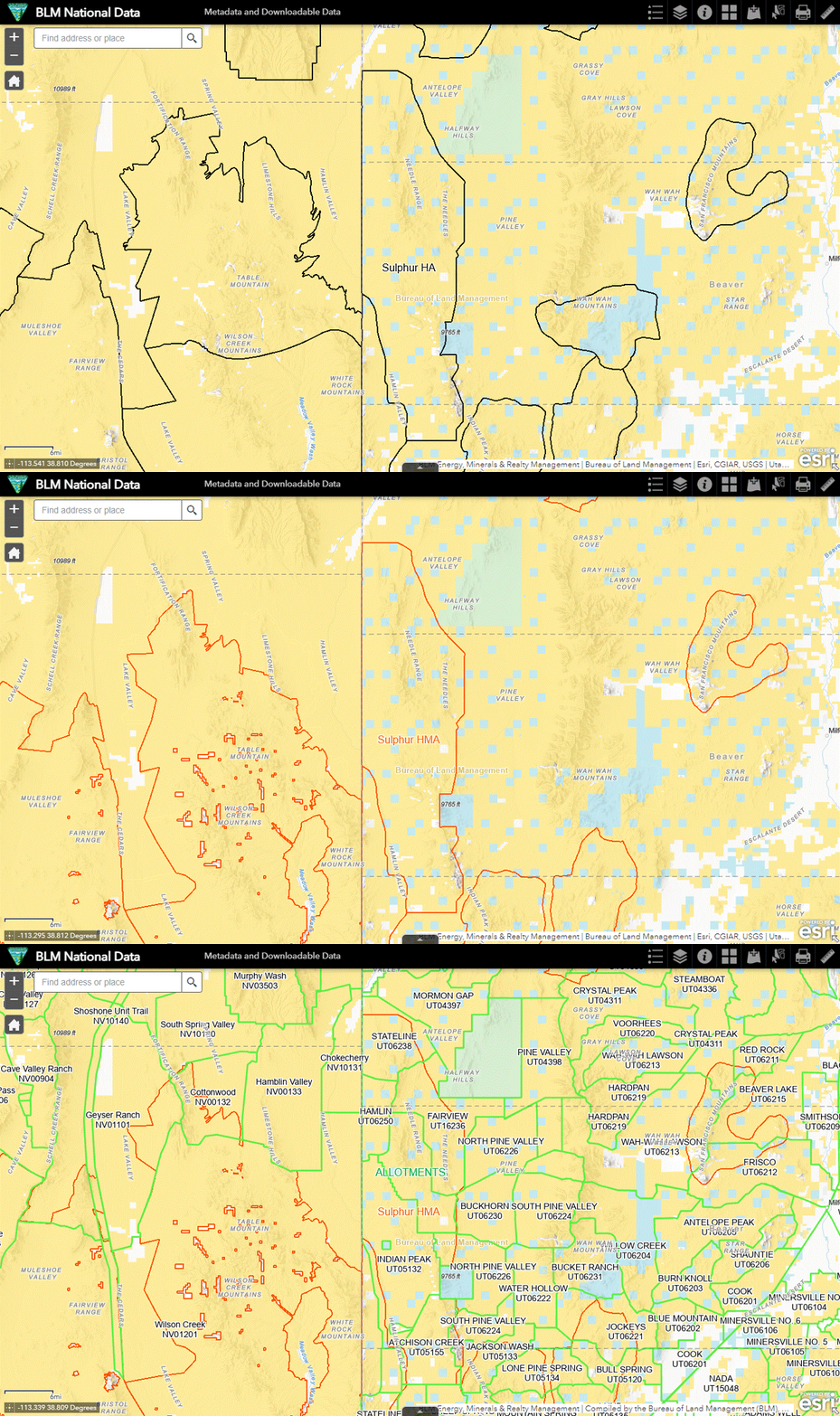
Let’s see, the WHB Act no longer affords the protections sought by Velma, roughly half of their land is managed principally for livestock and the other half is managed primarily for livestock, and you don’t know what to do?

An organizer of the Save Our Wild Horses conference told KRNV News in a story dated May 2 “We don’t know if [the horses] should be rounded up at all, but we also don’t know can we improve the range conditions and leave the horses on the range where it doesn’t cost the taxpayers any money?  Right now, we’re doing these expensive roundups, putting horses in holding where we’re keeping them.”

A schoolboy could figure this out but we’re not dealing with schoolboys.

If forage demand exceeds forage supply, you have a problem.

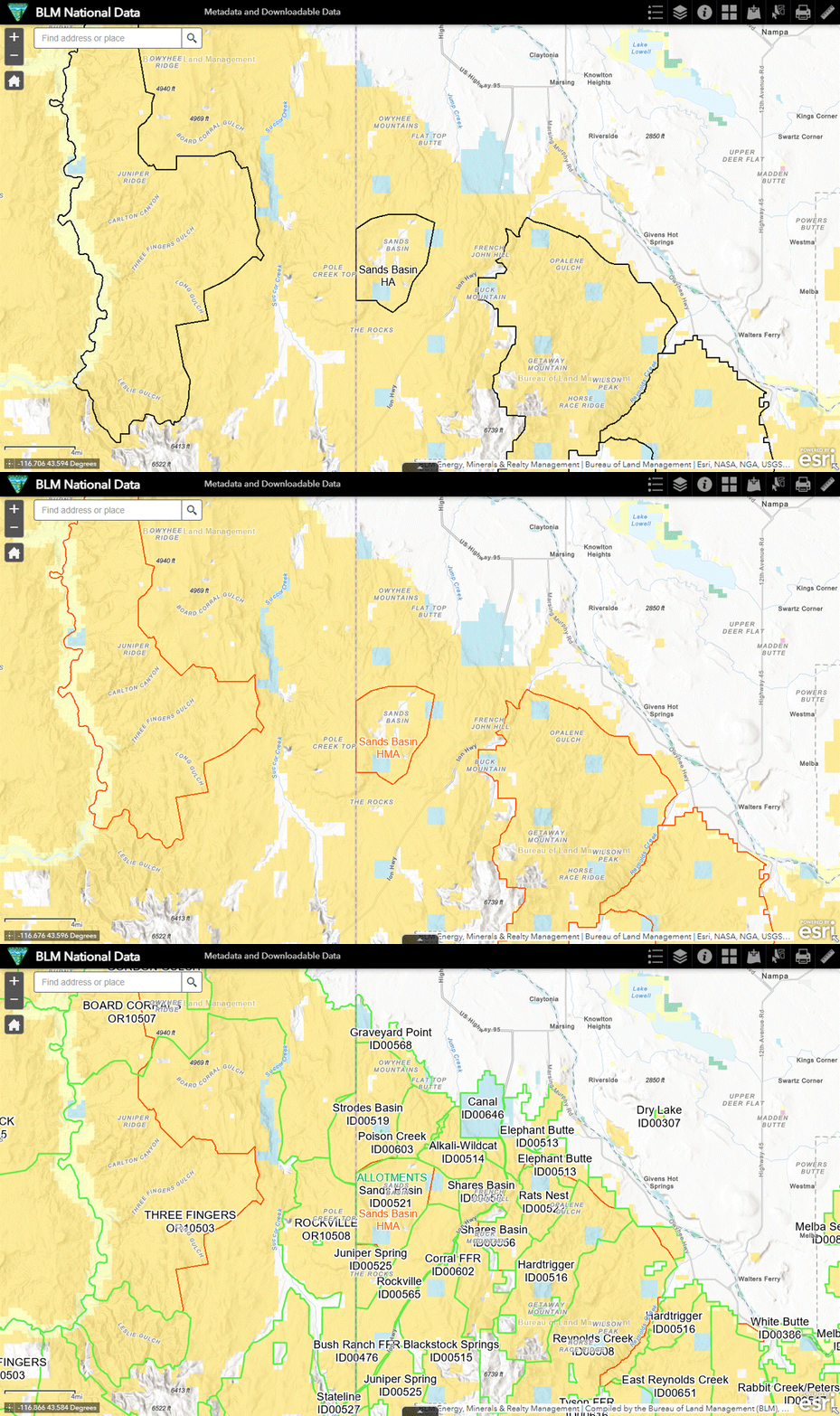
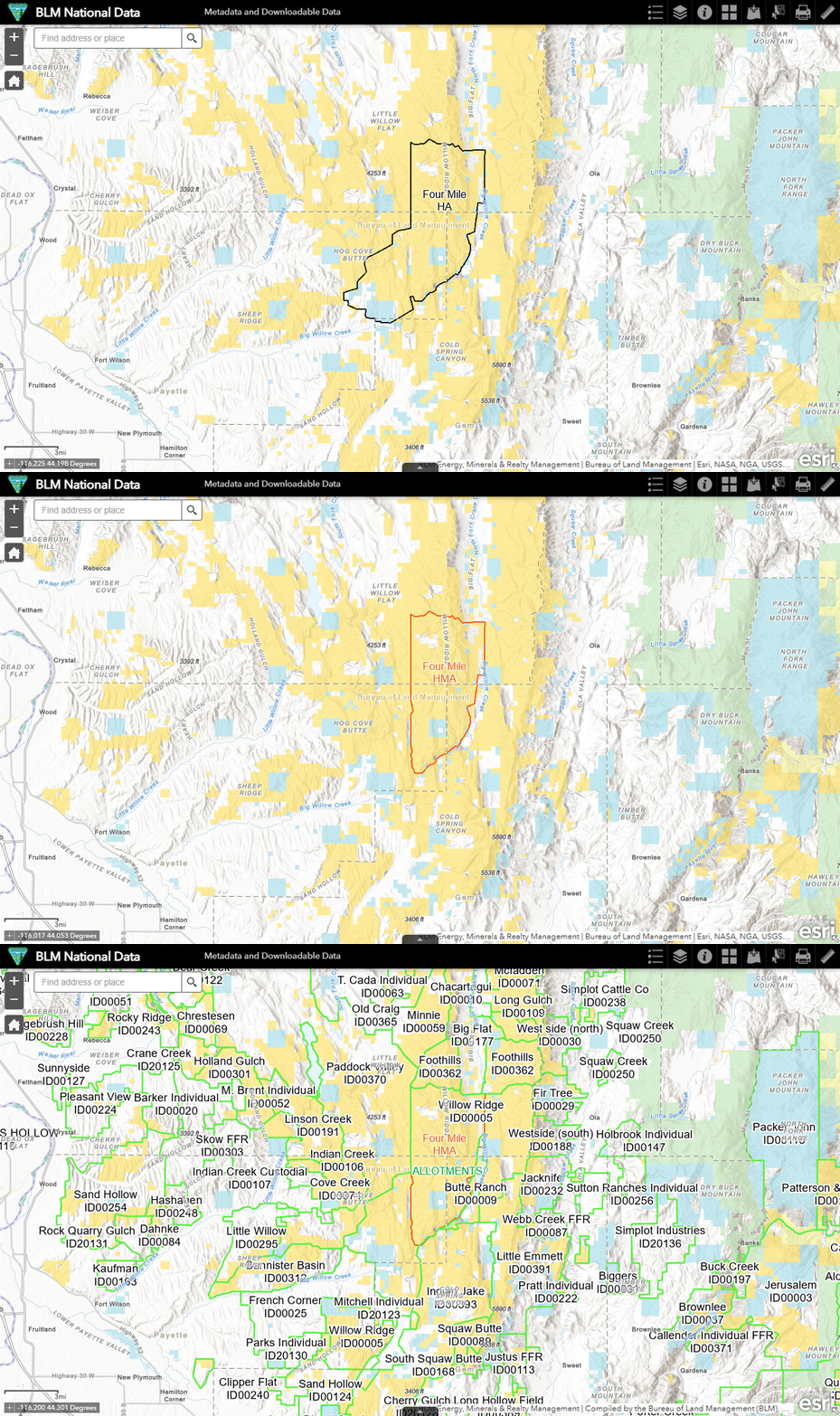
Once you understand that AMLs correspond to a small portion of the total authorized forage, and that most of the resource has been assigned to privately owned livestock, you’ll realize that public lands in the western U.S. can support many more horses than the bureaucrats and ranchers admit and that overpopulation is a myth.

RELATED: The Allotments Tell the Story: They’re Lying, All of Them.

History of Wild Horse and Burro Program 12-01-22

RTF Seeks PZP Darter, Launching Pest Control Business?

The signatory to the “Path Forward,” a 2019 plan for ranching superiority in the lawful homes of wild horses, has placed an undated job ad in High Country News for a wild horse population field coordinator and technician.

The successful candidate will report to Celeste Carlisle, RTF science advisor, chair of the Wild Horse and Burro Advisory Board and co-leader of the FREES Population Management Working Group.

In this role, you will work with RTF staff to identify wild equine herds in several herd management areas to determine tractability and appropriateness for current and future range projects.

You should be familiar with 4WD travel, firearms, hiking, camping, map reading, fixing flat tires and bringing survival gear into field, such as extra food and water, layers, batteries, flashlights, blankets or sleeping bags and first aid supplies.

In short, you’ll help RTF leadership transform the organization into a government contractor specializing in nonmotorized removal, just like the Campaign Against America’s Wild Horses.

Join the race to the bottom today!

RELATED: RTF: Surgical Sterilization Bad, Chemical Sterilization Good.

Working Together for a Horse-Free Future 12-21-22

Foal-Free Friday, Starting New Families Edition

A young bachelor stallion spends his days trying to steal mares from the family bands as discussed in the April edition of Horse Tales.  Go to “Wild Horse Tales” at the bottom of page 7.

It’s risky business and injuries do occur, but that’s how nature operates.

Speed, strength and shrewdness are passed on.  Weakness is not.

If he succeeds, he faces a more formidable challenge: The advocates.

They don’t like families.  They don’t like procreation.  They don’t like Velma, principal use and the 92nd Congress.

They like ranchers.  They like pesticides.  They like thriving ecological balances in the lawful homes of wild horses.

They rank among the lowest and sleaziest of the nonprofits.

They are phonies, leaders of the blind, irrelevant.

RELATED: Foal-Free Friday, Selecting for Weakness Edition.

Thriving Ecological Balance-3

Scoping Begins for Blue Wing HMAP

A new project has been created in ePlanning and three files have been placed in the documents folder.

The Scoping Statement brings forth certain requirements from the RMP that the new plan must satisfy.

The goal is to achieve and maintain a thriving ecological balance and multiple-use relationship on public lands, codewords for ranching superiority in the lawful homes of wild horses and burros.

The Blue Wing Complex consists of eleven HAs that were reconfigured into five HMAs lying within the Blue Wing / Seven Troughs Allotment.

The new HMAP cannot

  • Change forage allocations
  • Confine the ranchers to their base properties
  • Restore the original HAs

The advocates would have you believe it’s panacea for the Blue Wing horses and burros.

Comments will be accepted through June 1 according to today’s announcement.

RELATED: Blue Wing Legal Action Centers Around HMAPs.

Blue Wing Complex with Allotments 05-02-24

Red Rock Roundup, Day 3

The incident started on April 29.  Results through May 1:

  • Scope: Red Rock HMA
  • Target: Horses and burros
  • Type: Planned
  • Method: Bait
  • Goals: Gather 112 horses and remove 92, gather 70 burros and remove 70
  • Captured: 84 horses, up from 54 on Day 1
  • Shipped: 69 horses, up from zero on Day 1
  • Released: None
  • Deaths: None
  • Average daily take: 28.0
  • Unaccounted-for animals: 15

The figures above are based on the daily reports.

The capture total includes 39 stallions, 33 mares and 12 foals.

Youngsters represented 14.3% of the animals gathered.

Of the adults, 54.2% were male and 45.8% were female.

Body condition scores were not given.

The HMA is not subject to permitted grazing.

Up to ten mares will be treated with GonaCon Equine, a fertility control pesticide, and be returned to the range with up to ten stallions.

RELATED: Red Rock Roundup in Progress.

Red Rock HMA with Allotments 04-23-24

Caliente Roundup, Day 13

The incident started on April 16.  Results through April 28:

  • Scope: Caliente Complex
  • Target: Horses
  • Type: Planned
  • Method: Bait
  • Goals: Gather 350, remove 350
  • Captured: 115, no change from Day 11
  • Shipped: 112, up from 96 on Day 11
  • Released: None
  • Deaths: 3, no change from Day 11
  • Average daily take: 8.8
  • Unaccounted-for animals: None

The figures above are based on the daily reports.

The death rate is 2.6%.

The capture total includes 49 stallions, 51 mares and 15 foals.

Youngsters represented 13.0% of the animals gathered, consistent with a herd growth rate of eight percent per year.

Of the adults, 49.0% were male and 51.0% were female.

Body condition scores were not given.

The location of the trap site is not known.

The Complex is subject to permitted grazing.

  • Forage liberated to date: 1,380 AUMs per year
  • Water liberated to date: 1,150 gallons per day

There are no plans to treat any of the mares with fertility control pesticides and return them to the range.

The roundup supports three tenets of rangeland management.

RELATED: Caliente Roundup, Day 11.

Caliente Complex with Allotments 03-28-24

New Pest Control Plan for Little Book Cliffs WHR?

A new project has been created in ePlanning but the folder only contains maps.

The proposed plan includes forcible removal by helicopter, relocating some animals to other parts of the range to maintain herd genetic viability, selective return to maintain band integrity, and application of fertility control methods such as pesticides (which the advocates are already doing) and IUDs.

It would be effective for ten years.

The WHR covers 36,100 total acres northeast of Grand Junction, CO, including 35,178 public acres, and is not subject to permitted grazing.  Surrounding lands are.

The 150 horses allowed by plan require 1,800 AUMs per year and the stocking rate allowed by plan is 4.3 wild horses per thousand public acres, four times higher than the target rate across all HMAs.

The current population is thought to be 211 according to the latest HA/HMA Report.

A roundup is on the latest schedule with a start date of September 11.

Little Book Cliffs WHR with Allotments 04-28-24

Caliente Roundup, Day 11

The incident started on April 16.  Results through April 26:

  • Scope: Caliente Complex
  • Target: Horses
  • Type: Planned
  • Method: Bait
  • Goals: Gather 350, remove 350
  • Captured: 115, up from 103 on Day 9
  • Shipped: 96, up from 82 on Day 9
  • Released: None
  • Deaths: 3, no change from Day 9
  • Average daily take: 10.5
  • Unaccounted-for animals: 16

The figures above are based on the daily reports.

The death rate is 2.6%.

The capture total includes 49 stallions, 51 mares and 15 foals.

Youngsters represented 13.0% of the animals gathered, consistent with a herd growth rate of eight percent per year.

Of the adults, 49.0% were male and 51.0% were female.

Body condition scores were not given.

The location of the trap site is not known.

The Complex is subject to permitted grazing.

  • Forage liberated to date: 1,380 AUMs per year
  • Water liberated to date: 1,150 gallons per day

There are no plans to treat any of the mares with fertility control pesticides and return them to the range.

The roundup supports three tenets of rangeland management.

RELATED: Caliente Roundup, Day 9.

Caliente Complex with Allotments 03-28-24

Forest Service Mulls Wild Horse Removal at Mount Charleston?

Although there are no plans in place or a timeline for managing them, the agency says they’re outside their designated territory and they contribute to negative visitor impacts and unsafe interactions with wildlife.

That has the locals riled up and they’ve started a petition asking the Forest Service to establish an educational program to dissuade the public from feeding and petting them.

Those results will be presented to the Forest Service on May 30 according to a story by KTNV News of Las Vegas.

The Spring Mountains NRA, where the animals reside, is surrounded by BLM lands identified for wild horses and burros.

Spring Mountains NRA with HMAs 04-27-24

Lake Pleasant Roundup Ends

The incident concluded on April 20 with 401 burros captured, 397 shipped, none released and four dead according to figures on the sidebar.

The capture and removal goals were 400 each.

A freeze-marked horse was also caught and returned to its owner.

Data quality was poor.

The capture total included 178 Jacks, 186 jennies and 37 foals.

The daily reports indicated 161 jacks, 181 jennies and 37 foals, for a total of 379, with more animals processed than captured.

The death rate was 1% according to figures in the sidebar.

Foals represented 9.2% of the animals gathered.

Of the adults, 48.9% were male and 51.1% were female.

There were no plans to treat any of the jennies with fertility control pesticides and return them to the range.

The roundup supported three tenets of rangeland management.

RELATED: Lake Pleasant Roundup Begins, No News Release.

Foal-Free Friday, Selecting for Weakness Edition

From time to time, you hear about the birth of a foal in an area where the advocates are working vigorously to snuff out new life.

Simone Neterlands with Darting Rifle 09-02-23

They usually rely on predators to take out any youngsters that slip through their darting programs but those who survive may have faulty immune systems.

PZP tricks the immune system into attacking the ovaries.

The pesticide works best (sterilizes faster) on mares with strong immune systems.

They don’t bear fruit, while the immuno-compromised females keep producing foals who inherit that trait.

A herd being treated with PZP undergoes selective breeding for weak immunity, which puts the population—what’s left of it—at risk for disease and ultimately, extinction.

RELATED: Foal-Free Friday, Advocates, Assateague and Amnesia Edition.

Caliente Roundup, Day 9

The incident started on April 16.  Results through April 24:

  • Scope: Caliente Complex
  • Target: Horses
  • Type: Planned
  • Method: Bait
  • Goals: Gather 350, remove 350
  • Captured: 103, up from 91 on Day 7
  • Shipped: 82, no change from Day 7
  • Released: None
  • Deaths: 3, no change from Day 7
  • Average daily take: 11.4
  • Unaccounted-for animals: 18

The figures above are based on the daily reports.

The death rate is 2.9%.

The capture total includes 41 stallions, 48 mares and 14 foals.

Youngsters represented 13.6% of the animals gathered, consistent with a herd growth rate of eight percent per year.

Of the adults, 46.1% were male and 53.9% were female.

Body condition scores were not given.

The location of the trap site is not known.

The Complex is subject to permitted grazing.

  • Forage liberated to date: 1,236 AUMs per year
  • Water liberated to date: 1,030 gallons per day

There are no plans to treat any of the mares with fertility control pesticides and return them to the range.

The roundup supports three tenets of rangeland management.

RELATED: Caliente Roundup, Day 7.

Caliente Complex with Allotments 03-28-24

Putting Lipstick on the Zonastat Pig

A study of the Virginia Range darting program has yielded surprising new findings according to a story dated April 23 by This Is Reno: Herd size goes down when you poison the mares with ovary-killing pesticides.

The low birth rate and high death rate have resulted in negative population growth, providing further evidence of the feasibility of PZP fertility control as a viable alternative to helicopter roundups, according to representatives of the Campaign Against America’s Wild Horses, a leader in nonmotorized removal.

The article did not mention that the herd on Assateague Island continues to shrink eight years after the darting program was shut off, a pattern that will likely unfold on the Virginia Range.

RELATED: Virginia Range Darting Update for March 2024.

Red Rock Roundup Announced

It’s on the schedule with a start date of April 1 but that’s been moved to April 24 according to today’s news release.

The incident will be carried out with baited traps and operations will not be open to public observation.

The capture goal is 112 wild horses and 70 wild burros, and the removal goal is 92 horses and 70 burros.

Up to ten mares with be treated with GonaCon Equine, a fertility control pesticide, before being returned to the range with up to ten stallions.

The current population is thought to be 114 wild horses and 191 burros, not including this year’s foal crop.

The HMA lies within the Spring Mountain HA and covers 161,969 acres total acres west of Las Vegas, including 157,443 public acres.

The management plan allows 27 wild horses in the area along with 49 wild burros.

Red Rock HMA with Allotments 04-23-24

The HMA is not subject to permitted grazing.

Animals identified for removal will be taken to the Ridgecrest Off-Range Corrals.

Gather stats and daily reports posted to this page.

An emergency roundup took 237 wild horses off the range in 2019.

Caliente Roundup, Day 7

The incident started on April 16.  Results through April 22:

  • Scope: Caliente Complex
  • Target: Horses
  • Type: Planned
  • Method: Bait
  • Goals: Gather 350, remove 350
  • Captured: 91, up from 73 on Day 5
  • Shipped: 82, up from 62 on Day 5
  • Released: None
  • Deaths: 3, up from 2 on Day 5
  • Average daily take: 13.0
  • Unaccounted-for animals: 6

The figures above are based on the daily reports.

A stallion was intentionally killed on Day 7 because of a missing eye, lifting the death rate to 3.3%.

The capture total includes 37 stallions, 42 mares and 12 foals.

Youngsters represented 13.2% of the animals gathered, consistent with a herd growth rate of eight percent per year.

Of the adults, 46.8% were male and 53.2% were female.

Body condition scores were not given.

The location of the trap site is not known.

The Complex is subject to permitted grazing.

  • Forage liberated to date: 1,092 AUMs per year
  • Water liberated to date: 910 gallons per day

There are no plans to treat any of the mares with fertility control pesticides and return them to the range.

The roundup supports three tenets of rangeland management.

RELATED: Caliente Roundup, Day 5.

Caliente Complex with Allotments 03-28-24

How Many Wild Horses Can Public Lands Really Support?

Land managers say they can only sustain one wild horse per thousand acres (27,000 animals on 27 million acres).

The Allotment Information Report at RAS provides acreage. management status and active AUMs for BLM allotments in ten western states.

Here is an overview of the dataset.

BLM Allotment Data Summary 04-22-24

Public lands in Arizona support livestock equivalent to 53,662 wild horses.

In California, they sustain livestock equivalent to 26,409 wild horses.

The total across all ten states is 1,023,481 wild horses.

On a per acre basis, Montana was highest and Nevada was lowest.

Overall, public lands in the western U.S. are supporting livestock equivalent to seven wild horses per thousand public acres.

Given that the HMAs are a subset of the allotments, with a few exceptions, they should be able to support an average of 1 + 7 = 8 wild horses per thousand public acres, eight times higher than the bureaucrats admit.

That works out to a capacity of 8 × 27,000,000 ÷ 1,000 = 216,000 wild horses, enough to empty all of the off-range corrals and long-term pastures several times over, at great savings to American taxpayers.

The loss in grazing fees would be negligible.

As it is, for every wild horse allowed on public lands in the western U.S., seven have been consigned to off-range holding because of permitted grazing.

NOTE ON METHODOLOGY: The active AUMs were found by adding the values in column Q of each worksheet.  The public acres were found by removing rows with duplicate entries in column A and adding the remaining values in column E.

RELATED: Why Are There So Many Wild Horses in Off-Range Holding?