If Indian Creek Was a Wild Horse Area

It would have an AML of 710 and a stocking rate of three wild horses per thousand public acres.

The allotment offers 8,518 active AUMs on 234,680 public acres adjacent to Canyonlands National Park, according to the Allotment Master Report.

The bureaucrats and ranchers tell us that public lands in the western U.S. can only support one wild horse per thousand acres (27,000 animals on 27 million acres).

The advocates indicate their agreement through their darting programs.

If it was an HMA, the AML would be around 235 and 475 wild horses would be consigned to off-range holding because of permitted grazing.

The Nature Conservancy receives all of the authorized forage in the allotment, on which it runs cattle, probably in connection with Dugout Ranch.

RELATED: The Allotments Tell the Story: They’re Lying, All of Them.

Indian Creek Allotment 03-20-24

Two Men Admit Guilt in Deaths of SoCal Wild Burros

The incident occurred north of Yermo, CA in November 2021 and does not appear to be related to the loss of the Clark Mountain burros, investigation of which continues.

Three animals were killed according to a DOJ news release.

The pleas include one felony count of possession of an unregistered short-barreled rifle and one misdemeanor count of maliciously causing the death of a burro on public lands.

They face up to ten years in federal prison for the firearm charges and up to one year in federal prison for the burro deaths.

Sentencing was set for July 8.

If Mineral Range Was a Wild Horse Area

It would have an AML of 985 and a stocking rate of 7.9 wild horses per thousand public acres.

The allotment offers 11,830 active AUMs on 124,924 public acres in western Utah, according to the Allotment Master Report.

The bureaucrats and ranchers claim that public lands in the western U.S. can only support one wild horse per thousand acres (27,000 animals on 27 million acres).

The advocates give their concurrence through their darting programs.

If it was an HMA, the AML would be around 125 and 860 wild horses would be consigned to off-range holding because of permitted grazing.

RELATED: The Allotments Tell the Story: They’re Lying, All of Them.

Mineral Range Allotment 03-17-24

If Big Springs Was a Wild Horse Area

It would have an AML of 1,463 and a stocking rate of 7.8 wild horses per thousand public acres.

The allotment offers 17,556 active AUMs on 187,743 public acres in southwestern Idaho, according to the Allotment Master Report.

The bureaucrats and ranchers tell us that public lands in the western U.S. can only support one wild horse per thousand acres (27,000 animals on 27 million acres).

The advocates indicate their agreement through their darting programs.

If it was an HMA, the AML would be around 190 and 1,273 wild horses would be consigned to off-range holding because of permitted grazing.

RELATED: The Allotments Tell the Story: They’re Lying, All of Them.

Big Springs Allotment 03-16-24

CAAWH Promotes Unlawful Use of Pesticides

On March 8 their representative agreed there is a population problem in Nevada and told the Board of Wildlife Commissioners the answer is PZP.

Unfortunately, darting wild horses that are overpopulated, interfere with animal agriculture or pose safety hazards to motorists is not authorized by the EPA and constitutes unlawful use of the pesticide.

Read the label for yourself.

RELATED: Test Your Knowledge of RUPs.

If Salmon River Was a Wild Horse Area

It would have an AML of 2,275 and a stocking rate of 8.2 wild horses per thousand public acres.

The allotment offers 27,304 active AUMs on 278,157 public acres north of Wells, NV, according to the Allotment Master Report.

The bureaucrats and ranchers claim that public lands in the western U.S. can only support one wild horse per thousand acres (27,000 animals on 27 million acres).

The advocates give their assent through their darting programs.

If it was an HMA, the AML would be around 275 and 2,000 wild horses would be consigned to off-range holding because of permitted grazing.

RELATED: The Allotments Tell the Story: They’re Lying, All of Them.

Salmon River Allotment 03-15-15

McGee Mountain Roundup Starts Next Week

The incident will begin on or about March 18 according to today’s announcement.

The capture and removal goals are identical, 22 each.

There are no plans to treat any of the jennies with fertility control pesticides and return them to the range.

Operations will not be open to public observation.

Captured animals will be taken to the off-range corrals at Palomino Valley.

Gather stats and daily reports will be posted to this page.

The HMA has an AML of 41 and is subject to permitted grazing.

The HA was trimmed on the north and south sides to liberate two neighboring allotments from the wild horse and burro program.

RELATED: How Many Wild Burros Can the McGee Mountain HMA Support?

McGee Mountain HMA with Allotments 03-13-24

If Jordan Meadows Was a Wild Horse Area

It would have an AML of 977 and a stocking rate of 9.2 wild horses per thousand public acres.

The allotment offers 11,720 active AUMs on 106,495 public acres near McDermitt, NV, according to the Allotment Master Report.

This brings more distress to the bureaucrats and ranchers, who claim that public lands in the western U.S. can only support one wild horse per thousand acres (27,000 animals on 27 million acres).

The advocates give their assent through their darting programs.

If it was an HMA, the AML would be around 100, and 877 wild horses would be consigned to off-range holding because of permitted grazing.

RELATED: The Allotments Tell the Story: They’re Lying, All of Them.

Jordan Meadows Allotment 03-13-24

How Many Wild Burros Can the McGee Mountain HMA Support?

The tiny HMA, on the east side of Sheldon National Wildlife Refuge, is due for a roundup starting on March 15.

It covers 41,160 public acres and the 41 burros allowed by plan receive 246 AUMs per year.

The current population is unknown.

The stocking rate allowed by plan is one wild burro per thousand public acres, equivalent to 0.5 wild horses per thousand public acres.

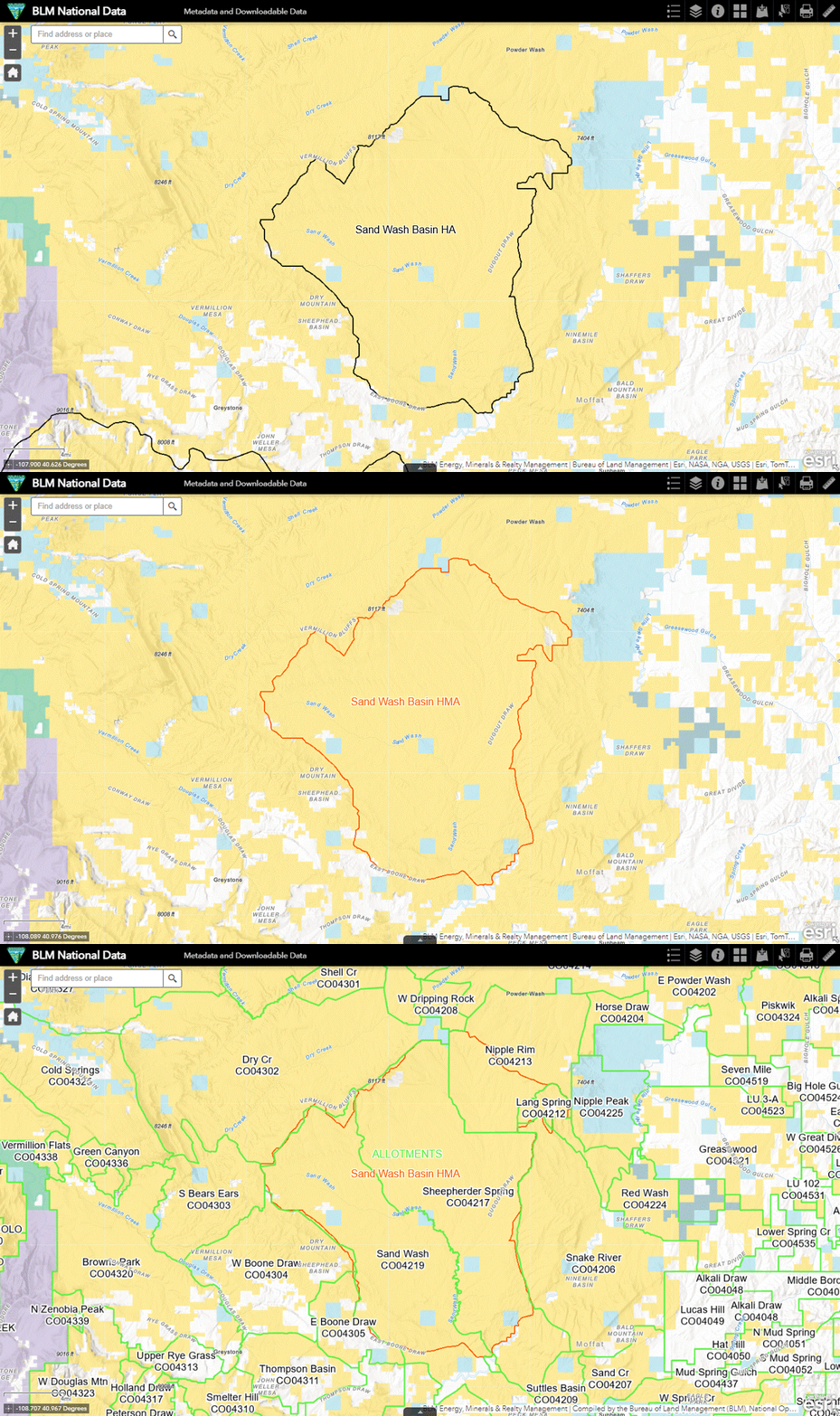
The National Data Viewer shows habitat loss and neighboring allotments.  Click on image to open in new tab.

The HMA overlaps the western side of Alder Creek, which offers 5,913 active AUMs on 123,363 public acres, according to the Allotment Master Report.

That works out to 47.9 AUMs per year per thousand public acres, enough to support eight wild burros per thousand public acres.

The number of burros displaced from their lawful home by permitted grazing is 8 × 41,160 ÷ 1,000 = 329, assuming that forage is evenly distributed across the allotment.

The True AML, the number of burros the HMA could support if it was managed principally for them as specified in the original statute, is 41 + 329 = 370.

The stocking rate at the new AML would be 370 ÷ 41,160 × 1,000 = 9 wild burros per thousand public acres.

This brings more embarrassment to federal land managers, who claim the HMA can only support one wild burro per thousand public acres.

Such statements are made in defense of ranching interests, not for the health of wild burros or the land they roam.

RELATED: The Allotments Tell the Story: They’re Lying, All of Them.

McGee Mountain HMA with Allotments 03-13-24

Highlights of Public Comments at Nevada Wildlife Commission

On March 8 the Nevada Board of Wildlife Commissioners heard testimony regarding a letter from the Coalition for Healthy Nevada Lands, Wildlife and Free-Roaming Horses seeking the removal of wild horses from public lands in Nevada.

It was item 8 on their agenda.

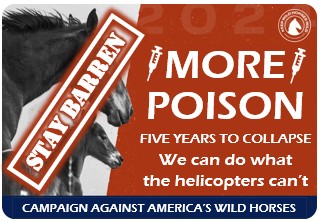
As if bringing a pinch of incense to the altar, a delegate from the Campaign Against America’s Wild Horses stated at 2:57:20 “We recognize that there is a population problem in Nevada, but wild horse roundups is not the solution.”

In an effort to promote her pesticide business, she mentions fertility control six times in six minutes.

If she believes that livestock are the primary reason for substandard conditions on Nevada’s public lands, why is she so eager to get rid of the horses?

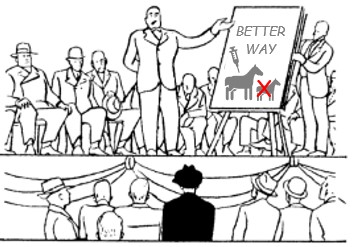
Craig Downer suggested that Reserve Design was the better way but was cut off for exceeding his time limit.

Another person commented on the WHB budget, PZP and public-lands ranching, claiming at 3:13:50 that permitted grazing is a right.

How do you know it’s not a right?  The government can take it away.  That’s why it’s called permitted grazing.

Comments starting at 3:22:00 pertained to the original statute, resource management and principal use.

Additional remarks can be found in an article dated March 12 by Nevada Current.

Video cued up to the mark.  Just hit Go.

RELATED: Ranchers Fighting Proxy War Through Wildlife Groups?

Ranchers Fighting Proxy War Through Wildlife Groups?

On March 8, the Nevada Board of Wildlife Commissioners voted unanimously to draft a cover letter in support of a letter written by the Coalition for Healthy Nevada Lands, Wildlife and Free-Roaming Horses asking the BLM to remove wild horses from public lands in Nevada, arguing that it’s consistent with Commission Policy 67.

This was item 8 on the agenda.

Testimony runs from 2:45:58 to 3:40:25, followed by Board discussion.

Video cued up to the mark.  Just hit go.

RELATED: Coalition Asks Wildlife Board to Support Anti-Horse Agenda.

McCullough Roundup Over

The incident concluded on March 9 with 90 horses captured, 39 shipped, 51 released and one dead.

The capture and removal goals were 80 and 35.

The numbers don’t balance.  More horses were processed than caught.

The death rate was 1.1%.

Body condition scores were not given.

The number of mares treated with fertility control pesticides was not specified.

The operation supported three tenets of rangeland management.

RELATED: McCullough Peaks Roundup Set for November 27.

Fish Springs Land Trust Helps Livestock or Wild Horses?

If you point the National Data Viewer to the area east of Minden, NV and turn on the Public Land Survey System, you’ll get a grid on which you can plot the parcels owned by the Campaign Against America’s Wild Horses.

The large divisions, denoted by heavy red lines, correspond to township/range blocks covering approximately 36 square miles.

The fine red lines denote sections within the blocks covering approximately one square mile (640 acres) each.

The small boxes inside the sections represent 40 acre lots.  There are 36 sections in a block and 16 lots per section.

CAAWH Land Trust with PLSS 03-10-24

The map shows the Pine Nut Mountains HA, denoted with a black border, and two allotments with green borders.

The Douglas County assessor’s office provides a map for each parcel, which helps you find them on the grid.  Click on image to open in new tab.

CAAWH Land Trust on NDV Grid 03-10-24

All of the acreage falls within the HA, which has an AML of zero and is managed principally for livestock.

A small herd lives in the area, to the chagrin of the BLM, but the Pine Nut advocates are driving the numbers down with their favorite pesticide, referred to by CAAWH as the Montana Solution.

Buckeye Creek runs through APNs 1321-00-001-024, 1322-00-001-034, 1322-00-002-005, 1322-00-002-067 and 1222-00-001-061, so they may qualify as a riparian zone.

Given that they’re in an area where livestock are welcomed but horses are not, who will benefit from conservation efforts?

RELATED: CAAWH Spends $3.6 Million on Fish Springs Land Grab.

CAAWH Land Trust 03-09-24

Wild Horses to Be Removed from Northern Cheyenne Reservation

Two tribal members have submitted bids in response to a Request for Feral Horse Roundup Services issued by the Grazing Board, according to a story dated March 8 by Native Sun News Today.

The current population is thought to be between 2,500 to 3,000 animals.

The horses rob forage, which sells for $26.75 per AUM, from livestock operators.

After the horses are gathered, the contractor will be responsible for transporting them to the tribal rodeo grounds for an impoundment process of at least five days.

Unclaimed animals will be sent to the Billings Livestock Commission for sale.

The reservation covers approximately 444,000 acres in southeastern Montana and is headquartered in Lame Deer.