Entrance Exam for WHB Program

On Day 3 of the WHBAB meeting in Boise (07/11/19), Fred Woehl, Jr. (Chair) suggested that anyone interested in working with the wild horse program should be able to answer three questions.  If they can, sign them up:

  • Which end of the horse gets up first?
  • How many teeth does a horse have?
  • Where is the frog located on the horse?

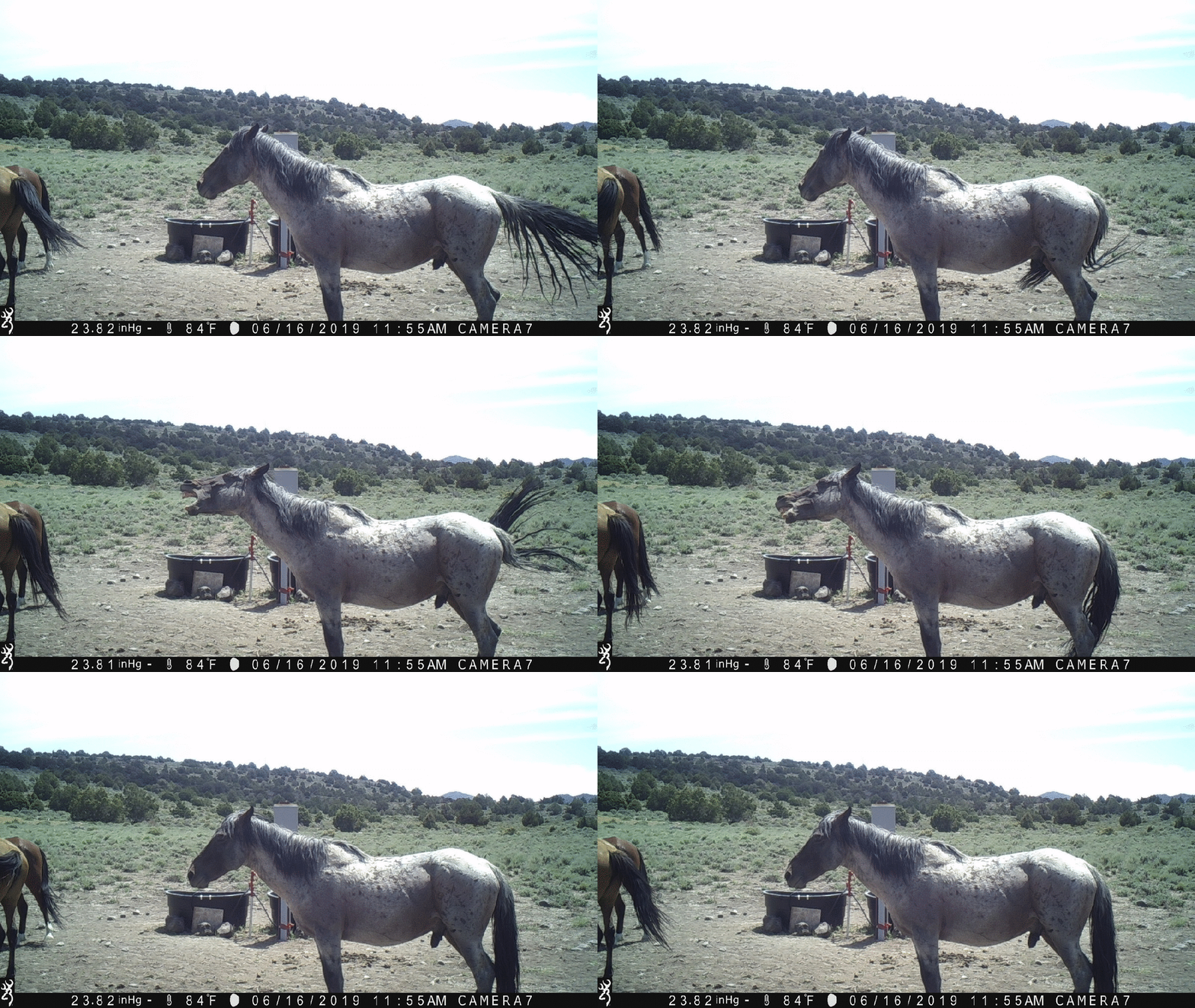
The following video by hea art will answer the first one.  Filmed on the Virginia Range, a few miles south of Virginia City, NV.

Triple B Horses Get Short End of Stick

Data from the news release announcing the roundup and final Gather Plan approved in December, 2017:

  • Current population 3,381 wild horses
  • Population target 472 – 889 wild horses
  • Available land 1,632,324 acres

The aimed-at population density for wild horses in the Triple B Complex is 0.5 animals per thousand acres, compared to the target density of one animal per thousand acres for all HMAs (the land—27 million acres—can only support 27,000 wild horses and burros per current narrative).

The 889 horses allowed by plan would consume 10,668 AUMs annually, assuming they graze 12 months per year.

The horses found in the Complex today would consume 40,572 AUMs per year, with a population density of 2.1 animals per thousand acres.

Land in and around the Triple B Complex is also used for domestic livestock grazing, with 27 allotments involved.  See Table 9 in the Gather Plan.

The forage allocated to livestock inside the Complex must be calculated because some of the allotments extend beyond its boundaries.  For example, Gold Canyon contributes 1,068 × 0.59 = 630 AUMs, because 59% of its land is inside the Complex (assuming that forage is uniformly distributed across the parcel).

The 27 fractions, added together, yield 49,188 AUMs for livestock inside the Complex.

If livestock graze an average of six months per year, the AUM budget yields 8,198 cow-calf pairs inside the Complex, which are equivalent to wild horses in terms of their resource loading.  The planned livestock density is 5.0 animals per thousand acres.

These results are summarized in the following charts.

Triple B Management Plan-1

Land that can only support 0.5 wild horses per thousand acres can support ten times as many cow-calf pairs.  That’s what you’d expect if it was managed principally but not necessarily exclusively for livestock, contrary to the WHB Act.

The following options were considered in the plan but rejected:

  • Manage the HMAs principally for wild horses
  • Remove or reduce livestock
  • Raise the AMLs

Note that the map on page 9 of the Gather Plan shows both the Antelope and Triple B Complexes.  Tables 1 and 8 could be used to generate the same charts and figures for Antelope.  Any volunteers?  The Antelope Complex contains the massive Spruce Allotment, site of the infamous Spruce-Pequop incident last August.

The gather that starts on Monday will shift 9,600 AUMs per year from the Horse column to the Cattle column, moving the plan one step closer to fruition.

RELATED: Triple B Gather Starts Next Week.

Unexpected Results from Seven Troughs Roundup

Gather stats indicate 128 jacks were removed from the HMA, along with 56 jennies, for a total of 184 wild burros.  Four foals were also captured but their gender was not given.

Seventy percent were males, thirty percent were females.

Do those numbers look like they came from a herd where males and females are evenly distributed?  The range of variation in these values attributable to natural causes can be found from some basic statistical formulas, where p = .50 and n = 184.

The following chart shows the range between jacks and jennies is larger than expected.

Seven Troughs p-Chart-1

Why would there be an assignably high number of males in the traps (or assignably low number of females)?

Are males and females evenly distributed in the herd?  If not, why?

Were there riders in the field steering the jacks toward the traps?  Do jennies have an innate ability to see danger ahead and move away?

What else could skew the results?

If 60% of the captured animals were male and 40% were female, you’d be wasting your time trying to explain the difference, because those results fall within the limits.

RELATED: Seven Troughs Gather Complete.

Triple B Gather Starts Next Week

BLM announced today that approximately 800 wild horses would be removed from the Triple B Complex in eastern Nevada starting on or about 07/08/19.

The roundup will prevent further degradation of public lands, according to the news release, by helping to balance herd size, suggesting there was something on the other side of the scales but did not say what.

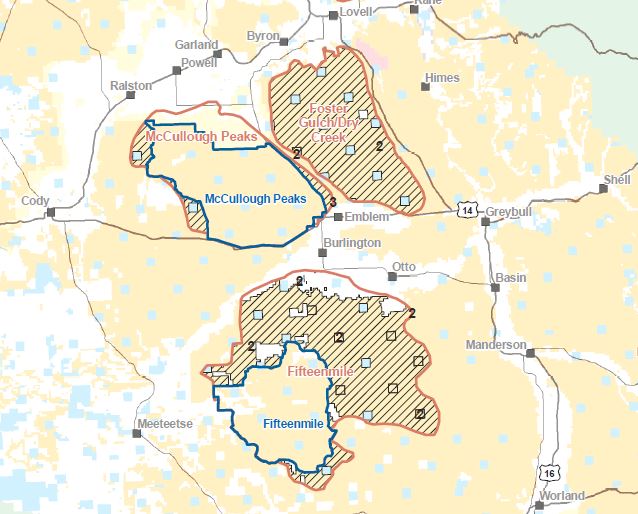
The complex consists of the Triple B HMA, Maverick Medicine HMA, Antelope Valley HMA west of Highway 93 and the Cherry Springs WHT, denoted in red on this map.

Triple B Complex Map-2

The event will be open to public observation and captured animals will be taken to the Palomino Valley Off-Range Corrals, about 20 miles north of Sparks.

Gather stats and daily reports will be posted here.

The Complex was the subject of a larger roundup in early 2018, with approximately 1,300 wild horses forced off their home range.  The map at this page indicates that it is subject to permitted livestock grazing.

RELATED: Livestock Grazing in Nevada, Economics of Wild Horse Gathers.

Walk On By

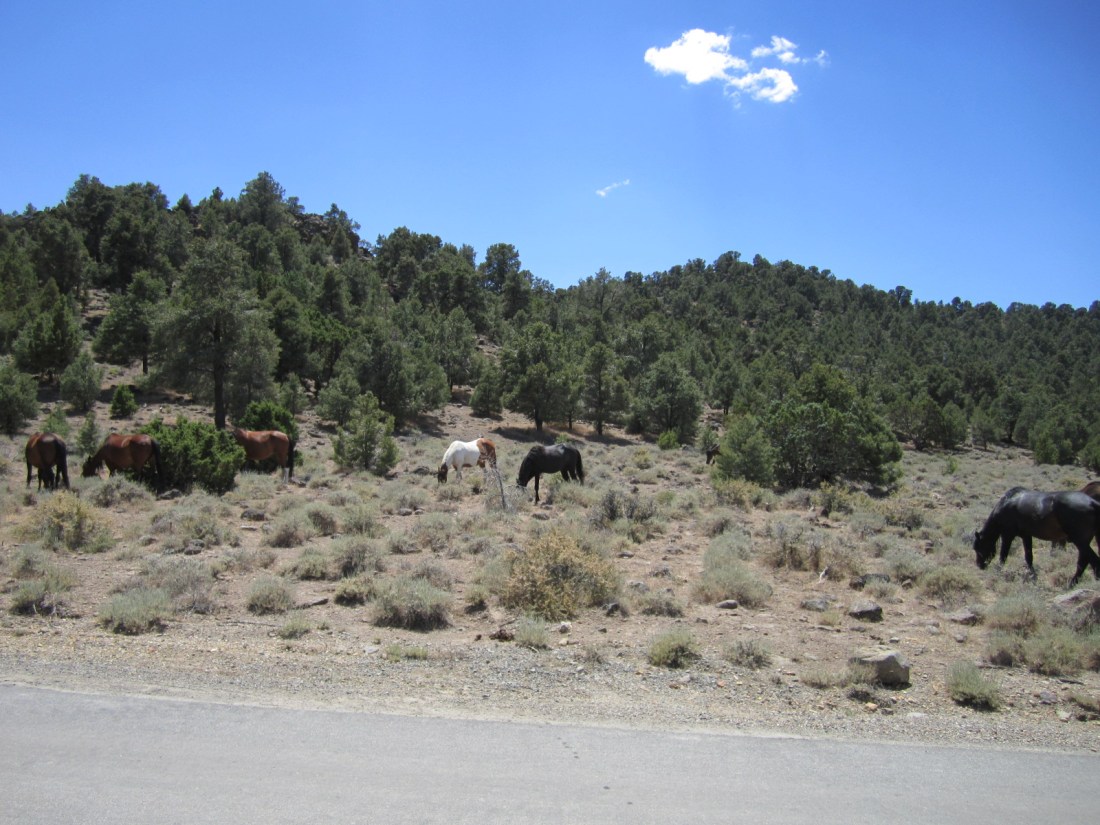
Two Virginia Range mustangs watch as another band passes by.  There is a hierarchy within the herd and each band knows when it’s their turn to visit the water hole.

The population density in this area is roughly ten horses per thousand acres, maybe a bit more, and as you can see from the condition of these two guys, that’s way too many.

The BLM allows an average of one horse per thousand acres on lands they manage.

Why such a low number?  Because it’s not about the horses, it’s about the livestock, privately owned, of course.  Never mind that the land was set aside for the horses.

Mustangs at Water Tanks 06-14-19

Alto Wild Horse Hit by Vehicle

A stallion was killed yesterday on New Mexico Highway 48, while attempting to cross it with some other horses.  Refer to this report by Ruidoso News, posted today.

Wild horses in this area were the subject of a two year court battle that ended last year, when a judge ruled the New Mexico Livestock Board had no authority in the case.

RELATED: Alto Horses Settling In, Alto Horses Get Temporary Warning Signs.

CANA Foundation Throws in with Public-Lands Ranchers

A news release posted today by EIN Presswire praises language in a draft appropriations bill for the Department of the Interior about the ‘rewilding’ of horses and burros.

The concept, which appears on page 15 of the proposed legislation, refers to the transfer of captured horses from government corrals and contracted pastures to private facilities, not their home range, just as the ranchers wanted.

The draft also includes $6 million for the first phase of the wild horse eradication plan, also favored by the ranchers.  See page 10.

RELATED: CANA Foundation: Don’t Give Them a Penny.