
Note the change in vegetation on the other side of the fence. What caused that?
Category: Range
On the range
Crooked Creek Fire Moving East
The burned area grew to 5,400 acres today, up from 5,200 acres yesterday.
Containment is now 20% and the cause is unknown.
The report at Inciweb says active spread to the east, taking the fire within a few miles of the wild horse range.
RELATED: Crooked Creek Fire Update.
Crooked Creek Fire Update
The fire expanded slowly over the past 24 hours, with 5,200 acres burned as of today, up from 5,100 acres yesterday.
Containment is now 10% and the cause has not been determined.
A new map shows the location of the fire relative to the wild horse range.
RELATED: Fire Near Pryor Mountain WHR.
McCullough Advocates Celebrate WHB50 by Getting Rid of Horses
Personnel with Friends of a Legacy, an advocacy group associated with the McCullough Peaks HMA in northwestern Wyoming, will be showing off their darting program at an event on July 2, according to an article by the Powell Tribune.
The HMA covers approximately 110,000 acres, according to Section 3.1 in a 2012 EA for resource enforcement actions in the area.
The current size is 120,000 acres, according to the HMA page, and the AML is 140, for a target stocking rate of 140 ÷ 120,000 × 1,000 = 1.2 wild horses per thousand acres.
The horses require 1,680 AUMs per year at the AML.
The HMA intersects five grazing allotments, listed in Section 3.2 of the EA.
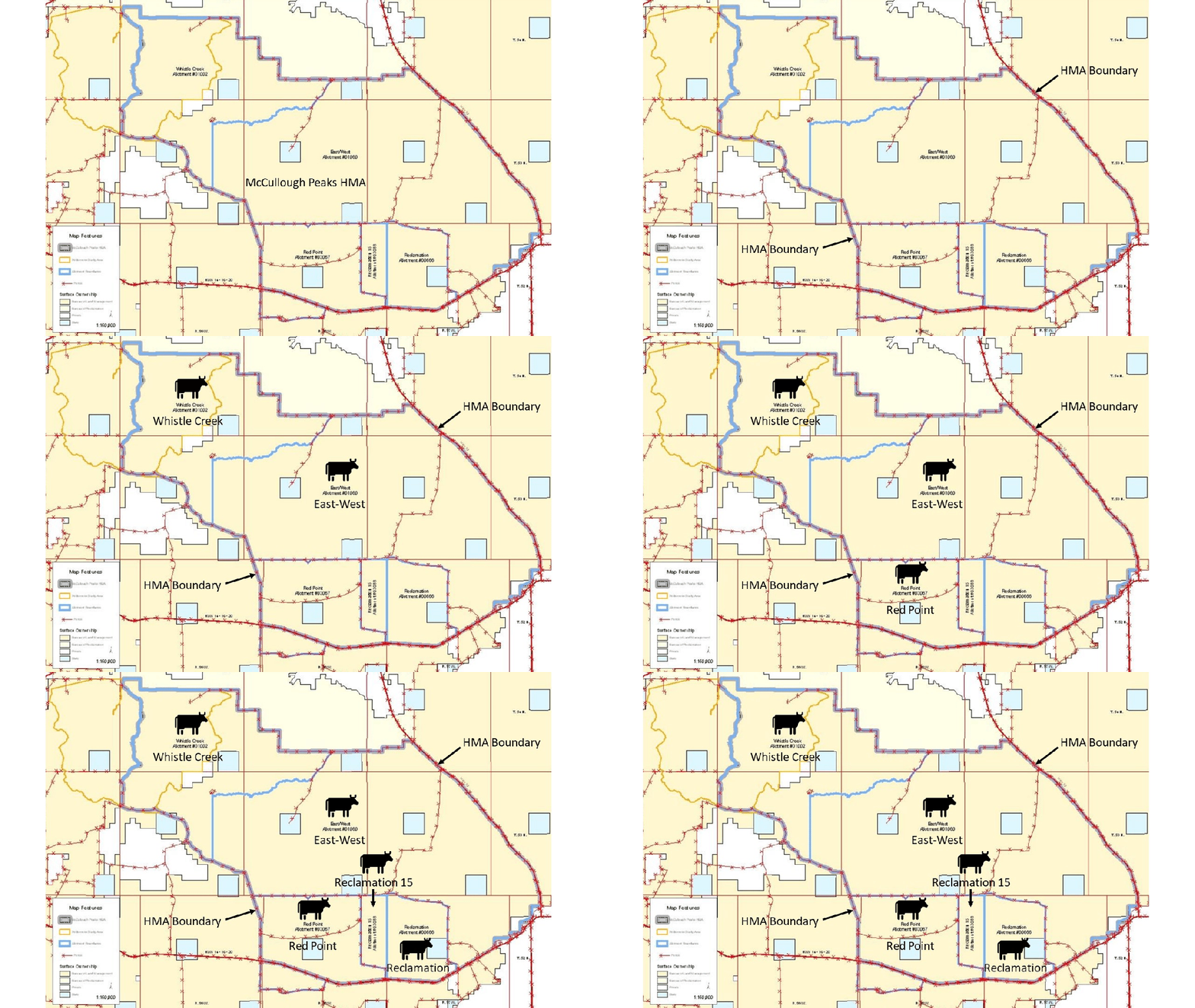
The Allotment Master report in RAS provides data for the allotments.
The forage assigned to livestock inside the HMA has increased slightly, compared to 2012. All five allotments are in the Improve category. Most of the active AUMs are held by the same permittee.
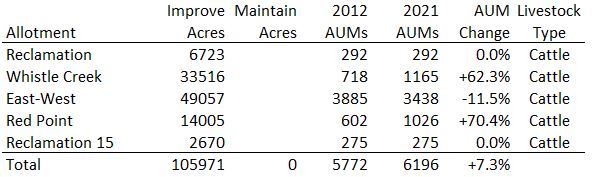
The southwest corner of Red Point extends beyond the HMA boundary, taking with it small part of the forage in the allotment, assumed to be 100 AUMs per year. The table above shows public acres only.
The total authorized forage inside the HMA, neglecting wildlife, is 1,680 + 6,196 – 100 = 7,776 AUMs per year.
The horses receive 1,680 ÷ 7,776 = 21.6% of that resource. The HMA is managed primarily for livestock.
The forage assigned to livestock would support an additional (6,196 – 100) ÷ 12 = 508 wild horses, for a True AML of 140 + 508 = 648.
With 508 wild horses cheated out of a spot in their home range by privately owned livestock, why do the advocates want to get rid of more? Is the current population greater than 648?
Why aren’t they demanding that the HMA be managed principally for wild horses, per the original statute?
The darting program ensures that the ranchers receive most of the resources—in an area set aside for wild horses.
Good work, guys.
Situation Going South at Sand Wash Basin HMA
Refer to this story by the Craig Press.
RELATED: Pond Dries Up at Sand Wash Basin HMA.
Rallying for Onaqui Wild Horses or Privately Owned Livestock?
The news release about the Onaqui rally said the horses receive between nine and fifteen percent of the resources on public lands, taken to mean nine to fifteen percent of the authorized forage in the HMA, with the balance is assigned to livestock. No other details were given.
Several questions come to mind:
- What is the total authorized forage?
- How many horses have been displaced by livestock?
- What is the True AML?
- How does that compare to the current population?
The AML ranges from 121 to 210, according to the HMA page, requiring 1,452 to 2,520 AUMs per year.
If the forage requirement at the low end of the AML is 9% of the total, then the authorized forage must be 1,452 ÷ .09 = 16,133 AUMs per year.
If the forage requirement at the high end of the AML is 15% of the total, then the authorized forage must be 2,520 ÷ .15 = 16,800 AUMs per year.
The two results are not identical but suggest the total is in the mid 16,000s so let’s assume it’s 16,500 AUMs per year, neglecting wildlife.
The forage assigned to livestock is 16,500 − 2,520 = 13,980 AUMs per year, which would support an additional 1,165 wild horses. That is, 1,165 wild horses have been displaced from the HMA by privately owned livestock.
The True AML is the horses allowed by plan plus the horses displaced by livestock, which is 210 + 1,165 = 1,375.
The current population is not known but is almost certainly less than 1,375. If there are no excess horses, there is no justification for a roundup and or fertility control program.
Why do the advocates want to dart the horses when the problem is domestic livestock?
RELATED: Onaqui Rally at State Capital.
Onaqui Rally at State Capital
The event will be held on July 2, followed by at trip to the HMA, according to a news release by Animal Wellness Action.
Opponents of the July 12 roundup said the horses should be kept on the land and managed with fertility control.
Undeniable Truth #2.
RELATED: Caving In to Ranching Agenda at Onaqui Mountain HMA?
Fire Near Pryor Mountain WHR
The Crooked Creek fire started June 15 and has consumed about 5,000 acres, according to a report by the Billings Gazette. A BLM spokesman said the wild horse herd would not be affected.
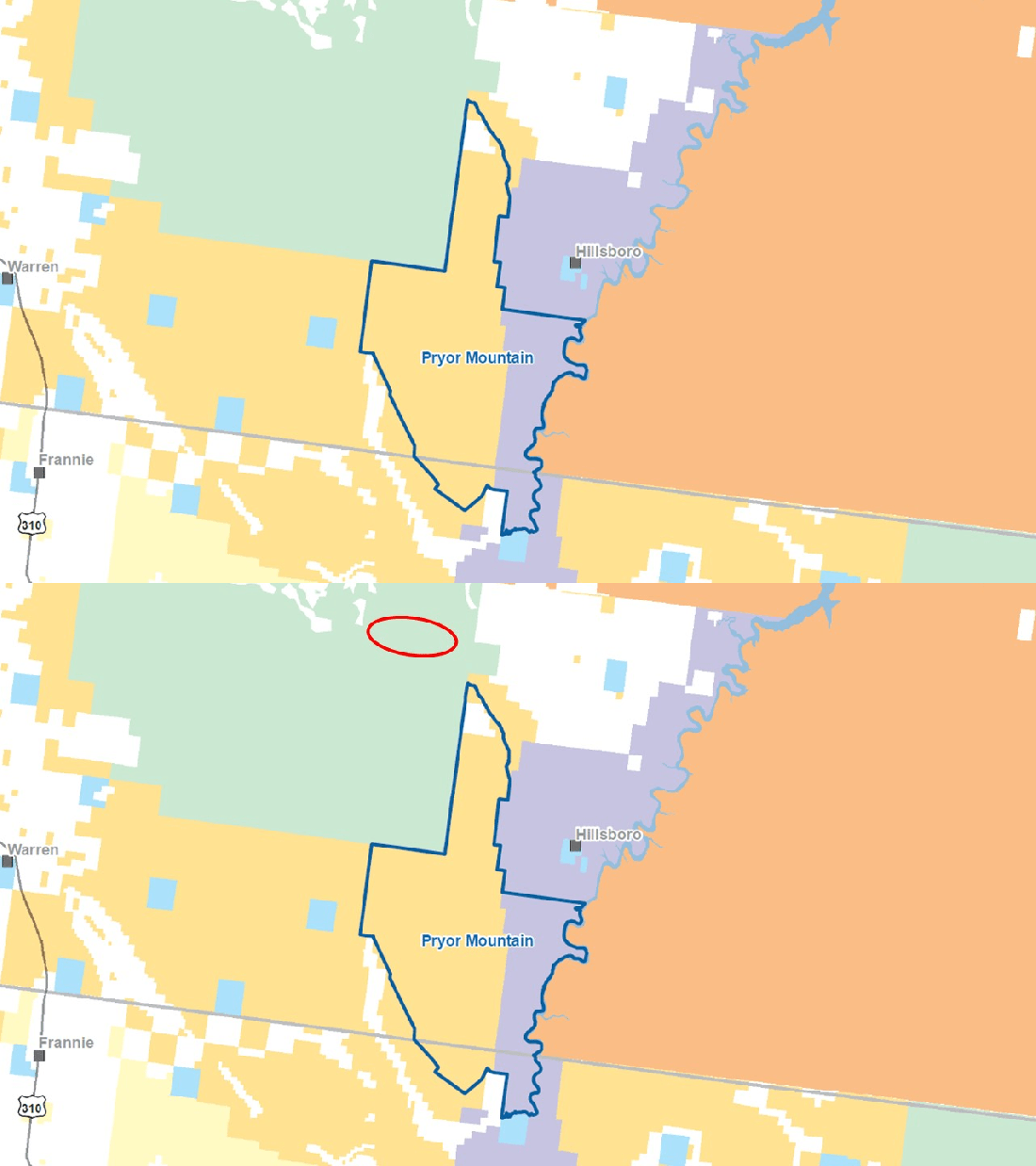
The forecast at Inciweb says growth will be to the north due to prevailing winds.
The cause of the fire is not known.
AJR-5 Hearing Postponed
The resolution has been dropped from the June 17 agenda.
A new date has not been set, according to the bill’s status.
RELATED: AJR-5 Hearing This Week.
Virginia Range Mustangs Invading Neighborhoods?
They’re coming out of the hills because there’s no water, according to a story by KOLO News of Reno.
For sure, seasonal ponds have dried up but there are springs in the higher elevations and homeowners who provide water in an effort to keep them out of populated areas.
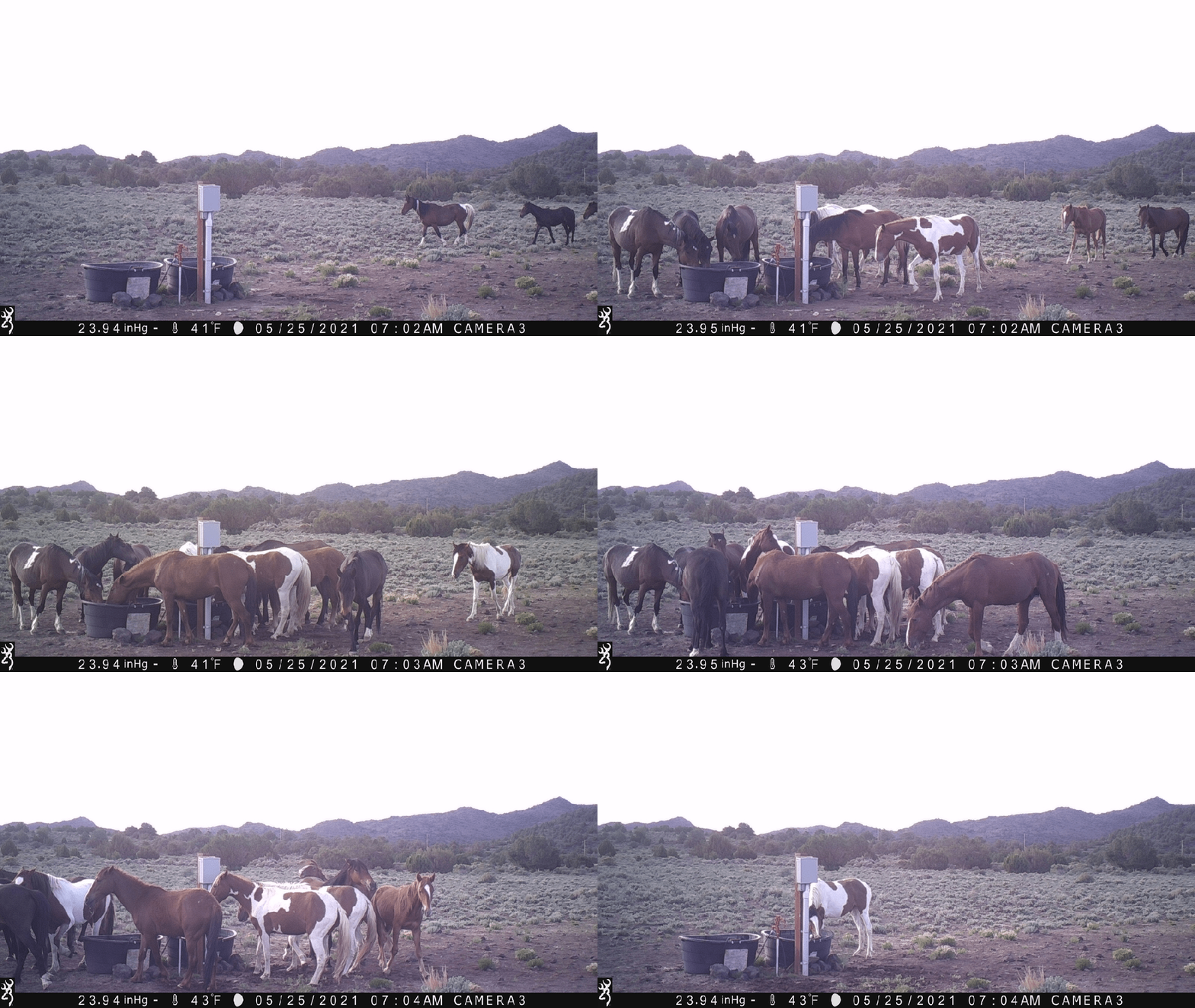
Notably absent in this example are the youngsters, thanks to the advocates.
Automatic Darting Machine to Ditch Microchips?
A grant from the National Science Foundation will fund the development of facial recognition technology, or similar algorithms, to identify wild horses for treatment, eliminating the need for RFID chips.
The system would provide a humane way to control population growth and keep the horses and other wildlife healthy, according to a story in today’s edition of the El Paso Herald-Post.
Benefits that might accrue to public-lands ranchers were not discussed.
FOA Files Suit to Stop AIP
If the case succeeds, BLM will will be forced to suspend the adoption incentive program indefinitely and do a proper NEPA analysis, according to a news release issued today.
Arizona Fire Restrictions Good News for Wild Burros?
The new rules, announced on June 11, apply to the Colorado River District, among others, which contains most of the HMAs in the state. Refer to the map at the Arizona HMA home page.
Prohibited activities include discharging a firearm, air rifle, exploding targets or gas gun, which may affect the delivery of population controls by darts.
Use of jabsticks would not be affected.
A four-year trial of PZP on Black Mountain burros, mentioned in Section 4.1 of the 2020 Final EA for resource enforcement actions in the HMA, ends this August.
AJR-5 Hearing This Week
The Committee on Water, Parks and Wildlife will consider the measure on June 17, according to the bill’s status.
More information, including a link to the livestream, can be found at the Committee’s hearings page (click on Show Details to see the agenda).
The resolution would ask the federal government to declare a moratorium on wild horse and burro roundups and urge the Bureau of Land Management and the Forest Service to restore the animals to their legal areas throughout the state of California.
RELATED: AJR-5 Amended.
Mustang Monday
In Dayton, NV with Taira Mulliken at Oro Vista Vineyard.
What Does ‘Above AML’ Mean?
It means there are more horses than allowed by plan and they’re trying to reclaim some of their food, which, in most cases, has been diverted to privately owned livestock.
Use of the term ‘overpopulated’ can only mislead the American people.
Installation of New Sand Wash Fence Begins This Month
A contractor will perform most of the work and it’s 100% funded by donations, according to a story posted today by Craig Press of Craig, CO.
RELATED: New Fence Coming to Sand Wash Basin.
Management Priorities at Twin Peaks HMA
One of the goals of the pilot episode of Wild Lands Wild Horses was to present the truth about America’s wild horses.
The documentary was filmed in and around the Twin Peaks HMA on the California-Nevada border and featured interviews with key stakeholders.
An equally admirable goal would be to present the truth about permitted grazing in areas set aside for wild horses, so let’s get to the numbers.
A 2019 Final EA for resource enforcement actions in the HMA provides data for horses, burros, cattle and sheep in Tables 1-1 and 3-2. Additional information was obtained from the Allotment Master report in RAS.
The management plan allows 758 wild horses and 116 wild burros in the HMA, for a total forage demand of 9,792 AUMs per year.
The plan currently assigns 26,803 AUMs per year to privately owned cattle and sheep, down slightly from the resource allocations in 2019.
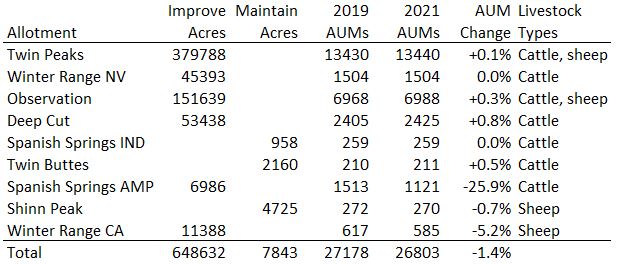
Approximately 99% of the public acres in the allotments do not meet standards for rangeland health. If those conditions can be associated with wild horses and burros, why are three of the allotments in the Maintain category? They’re all inside the HMA according to the map in Appendix H. (As of today, there is no category for blaming substandard conditions on wild horses and burros.)
Livestock receive 73% of the authorized forage, neglecting wildlife, with the balance going to horses and burros.
The forage assigned to livestock would support an additional 2,234 wild horses, or 2,200 wild horses and 68 wild burros, or any other combination as long as the total forage demand is 26,803 AUMs per year.
That means 2,234 wild horses have been displaced from the HMA by permitted grazing, a figure not in the film’s dataset.
The True AML would be 758 + (116 ÷ 2) + 2,234 = 3,050 for horses only, or 2,800 horses and 500 burros, or any other combination that requires 36,595 AUMs per year.
How can you justify a fertility control program in the area when that many animals have been cheated out of a spot on their home range? Only their enemies would endorse it.
Overall the film was enjoyable and worth the 50-minute viewing time.
RELATED: Wild Lands Wild Horses Pilot Episode Premieres This Week.
Pushing Wild Burro Populations Below 1971 Levels?
A guest column in today’s edition of the Washington Examiner says the goal is 2,600, down from the current level of 15,000.
When President Nixon signed the WHB Act into law, approximately 9,500 unbranded and unclaimed horses remained on public lands along with 11,000 free-roaming burros.
Legal Action Threatened Unless AIP Stopped
Abuse of the Adoption Incentive Program has prompted demands from Congress and advocacy groups to suspend the payments until an investigation cab be completed, according to a report by the Las Vegas Review-Journal.
RELATED: Adoption Incentive Backfiring or Working Exactly as Planned?

