No activity has been reported since June 6.
RELATED: Centennial Roundup Day 10.

Western Horse Watchers Association
Exposing the Hypocrisy, Lies and Incompetence of the Wild Horse Advocates
On the range
No activity has been reported since June 6.
RELATED: Centennial Roundup Day 10.
Probably what they’d do if they were at a pond.
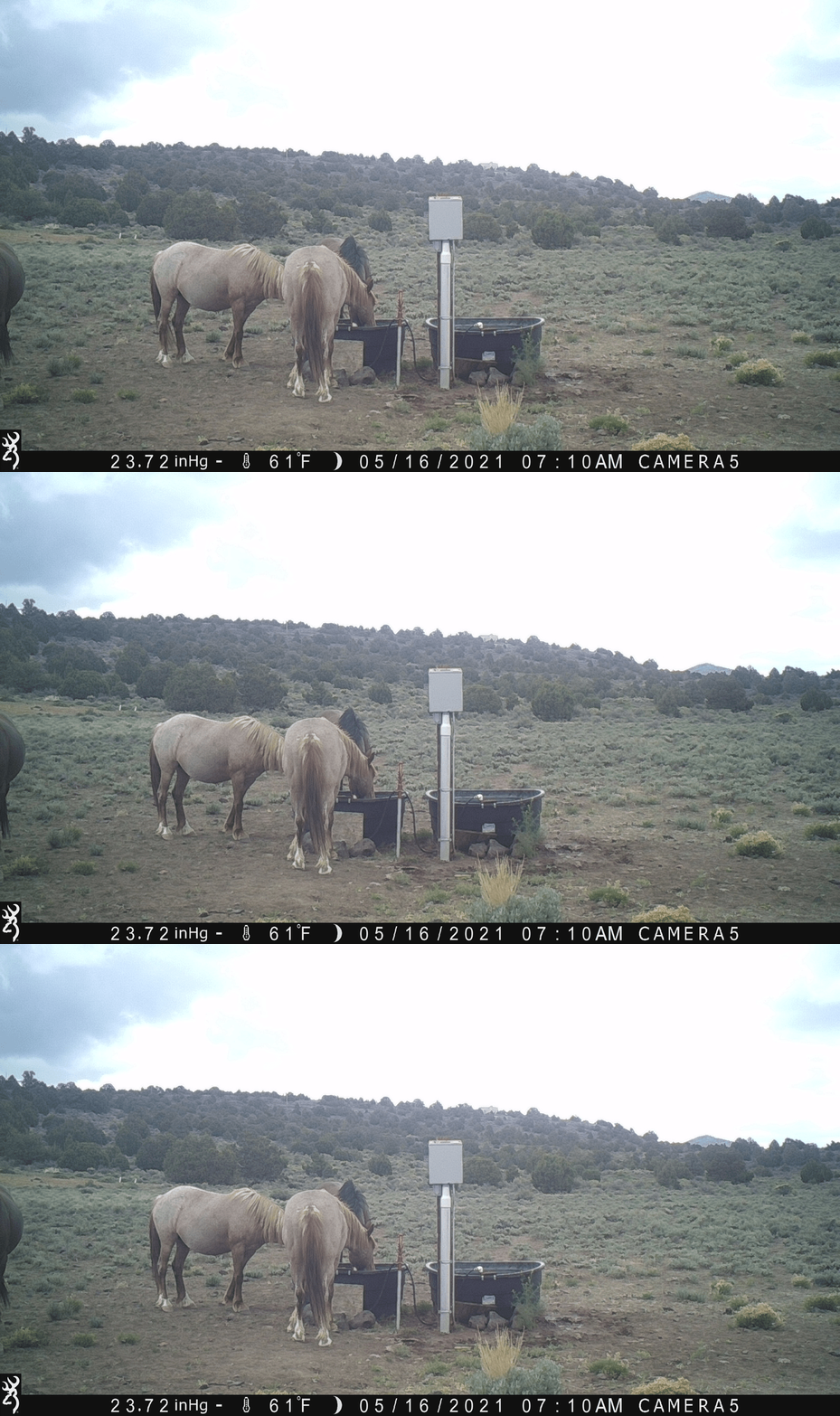
Time stamps about 6-1/2 hours slow. Filmed on the Virginia Range.

The video description says there is too much mud around the edge for the horses to get to the remaining water.
A similar pattern occurred three years ago, but the BLM said the springs are flowing and the wells are pumping, so water deliveries weren’t needed.
The situation deteriorated over the next few weeks, and the government gave the OK to haul water.
A report from 2018 said the horses are confined to the area by a fence.
She was freed when tour guides removed the rails separating her front and rear legs, according to a report by The News & Observer of Raleigh, NC.
An amendment to HR 3684, an infrastructure bill, would ban the transportation of horses across state lines or to Canada or Mexico for slaughter for human consumption, according to a news release by Animal Wellness Action.
The measure follows reports of ‘horse laundering‘ associated with the government’s adoption incentive program.
A related bill, the SAFE Act, has been stymied by agriculture interests and pro-slaughter members of Congress.
A range management specialist in the Worland Field Office received the award from the Wyoming Stock Growers Association, according to a BLM news release dated June 7.
So how’s the grazing program doing in that area?
The Allotment Information report in RAS yielded 516 rows, from which 73 duplicates were removed, leaving 443 records. The dataset was filtered by Allotment Number.
A pivot table summarized the results:
Custodial Category (condition unknown)
Improve Category
Maintain Category
Approximately 60% of the allotments in the Worland Field Office do not meet standards for rangeland health, along with 78% of the public acres. There are over six acres in the Improve category for every acre in the Maintain category.
The announcement said that strong working relationships with grazing permittees incentivize cooperative approaches that foster healthier rangelands, but that does not appear to be the case.
Perhaps the award was given for looking the other way.
RELATED: Status of Allotments in Wyoming, Allotment Categories Explained.
The following story aired June 2.
At 1:21: “We need the Bureau of Land Management to stop rounding up wild horses, to manage them on our federal public lands, humanely, and use birth control instead of rounding them up and removing them and then stockpiling them.”
At 2:51, in response to a question about hassling wild horses, “Because the livestock industry has a huge, um, huge amount of power, and money, and they want all the horses gone.”
If that’s true, why do you want to reduce the herds with birth control? Are you not cooperating with the ranchers? Do you want the horses limited to 20% or less of the available resources?
Undeniable Truth #2.
RELATED: Caving In to Ranching Agenda at Onaqui Mountain HMA?
The incident began on May 28. Gather stats through June 6:
The cumulative total on the gather page is 290, compared to 359 from the daily reports.
The breakdowns between jacks, jennies and foals have been provided for all days, not just the first three. There is a mismatch on May 31.
Foals accounted for 13.9% of the burros gathered. Of the adults, approximately 51% were male and 49% were female.
The number of burros shipped each day has not been reported, putting all of the animals in the unaccounted-for category.
Although the goal has been exceeded, the operation has not been marked complete.
RELATED: Centennial Roundup Day 7.
Refer to this announcement on EIN Presswire.
The documentary, situated in the Twin Peaks HMA, will be available on Youtube starting at 8:00 PM EDT June 9.
Near Round Spring in the Ozark National Scenic Riverways with clint3611.
No, they’re not escapees from the BLM off-range corrals. Probably Paiute (tribal).
Photo taken May 30, a few miles southeast of the corrals.
UPDATE: Video posted to YouTube.

The trailcams snapped about 4,000 photos between mid April and the end of May, which is when you see more of the Virginia Range mustangs at the higher elevations.
This scene is typical: They come in, drink and are gone in two minutes.
The situation might be different if the water source was a spring, as the vegetation might be more appealing.
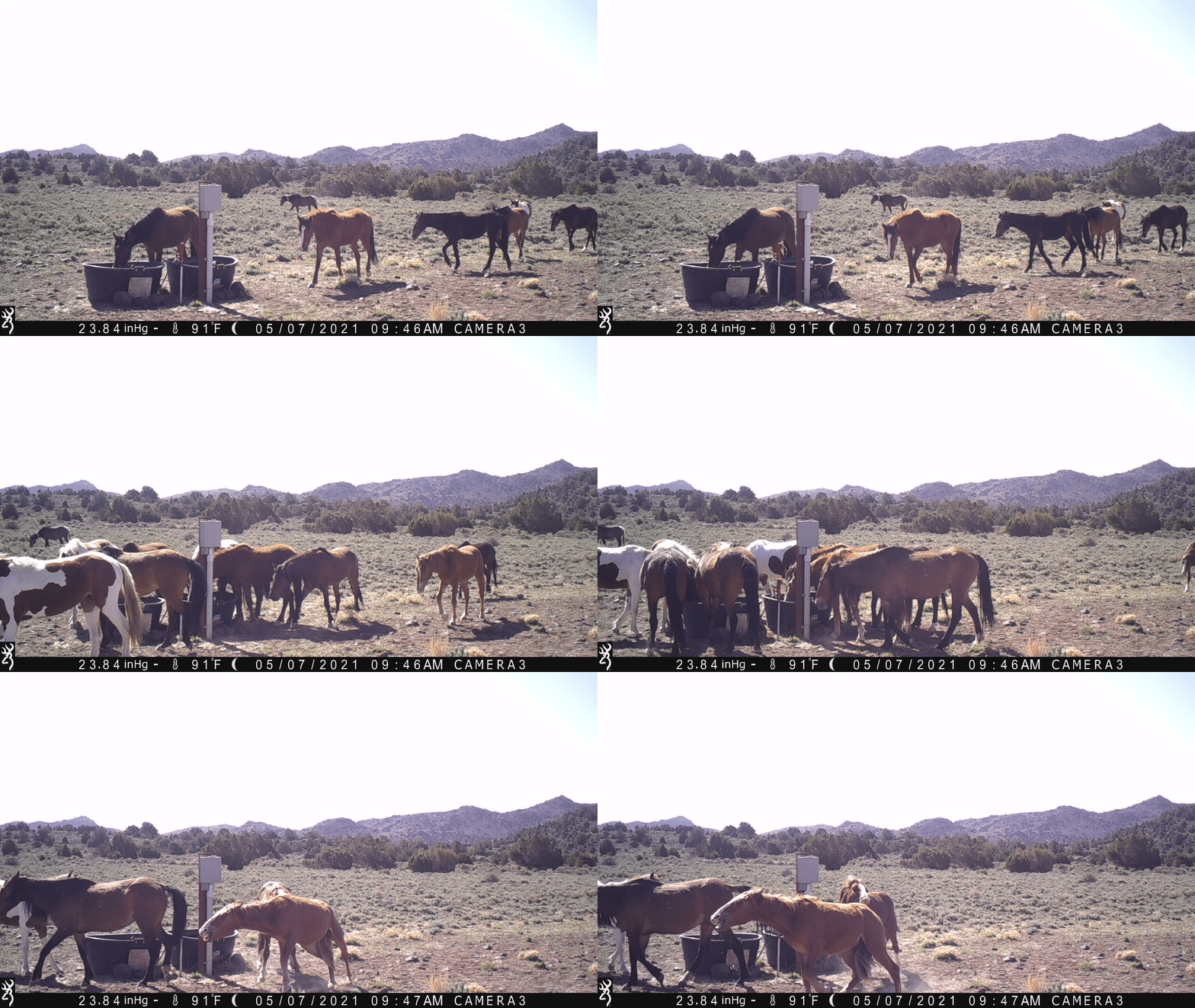
WARNING: Shows foals, might be offensive to some (most) advocacy groups.
Fertility control program shut off in 2016.
The incident began on May 28. Gather stats through June 3:
The cumulative total on the gather page is 230, compared to 300 from the daily reports.
Although the goal has been reached, the operation has not been marked complete.
The number of burros shipped each day has not been reported, putting all of the animals in the unaccounted-for category.
RELATED: Centennial Roundup Day 5
Thirty six photos in this sequence, ending with some snaking action in the background.
Timestamps are about 6-1/2 hours slow. Elevation 6,200 feet.

What is the historical name for the horse and where did this animal originate?
Why were thousands of free-roaming horses rounded up in the early 1900s?
Those are two of the Trivia Questions on page eight in the current edition of Horse Tales. Answers on page 19.
By the 1950s, their numbers had dropped to around 25,000. Who was hunting them from airplanes and poisoning their water holes?
You’ll have to go elsewhere for that answer.
The incident began on May 28. Gather stats through June 1:
The daily reports included a breakdown of jacks, jennies and foals through May 30 but only the totals after that.
Foals accounted for 13.9% of the animals caught though May 30.
The cumulative total on the gather page is 138, compared to 208 from the daily reports.
The number of burros shipped each day was not reported, putting all animals in the unaccounted-for category.
RELATED: SoCal Burro Removal Underway?
Alternative 1, the Proposed Action, has been approved for implementation, subject to a 30-day appeal period, according to a Decision Record signed on May 27.
The event was not announced on BLM’s news site.
Over the next ten years, the new resource enforcement plan will
Six HMAs are affected, as described in Section 1.2 of the Final EA.
The incident was set to begin on May 28 but the gather page has no data.
Operations today, not open to public observation, were to occur at the China Lake Naval Air Weapons Station.