Death Valley Auxiliary Roundup Day 3

The incident began on April 25.  Gather stats through April 27:

  • Target: Burros
  • Type: Planned
  • Method: Helicopter
  • Captured: 55, up from 13 on Day 1
  • Average daily take: 18.3
  • Capture goal: 490
  • Removal goal: 490
  • Returned: None
  • Deaths: None
  • Shipped: 55, up from 13 on Day 1

The cumulative total includes 23 jacks, 27 jennies and five foals.

Youngsters represented 9% of the animals captured.  Of the adults, 46% were jacks and 54% were jennies.

The location of the trap site was not provided.

Refer to Appendix B of the project documents for the location of gather activity relative to the park.  The Western Watersheds map does not show Herd Areas.

Death Valley Auxiliary Roundup Map 04-29-22

Day 3 ended with no unaccounted-for animals.

The number of burros removed to date is 55.

Other statistics:

  • AML: Zero
  • Forage assigned to burros: None
  • Pre-gather population: Unknown
  • Forage liberated to date: 330 AUMs per year
  • Water liberated to date: 275 gallons per day
  • Forage assigned to livestock: Unknown
  • Burros displaced from area by permitted grazing: Unknown
  • True AML: Unknown
  • Stocking rate at new AML: Unknown
  • Burros displaced from area by drilling and mining: Ask the advocates

RELATED: Death Valley Auxiliary Roundup in Progress.

Another Black Mountain Roundup Announced

More wild burros will be removed from the HMA starting on May 2, according to today’s news release.

Helicopters will push the animals into the traps and public observation may be available on a limited basis.

The incident was planned and appears on page two of the latest schedule.

The capture and removal goals are 1,080 each but the announcement said that jennies receiving the Montana Solution in the Humane Society PZP experiment will be treated again and released, and those in the control group will receive an initial dose, followed presumably by return to their home range.

Therefore, the removal goal should be less than the capture goal.

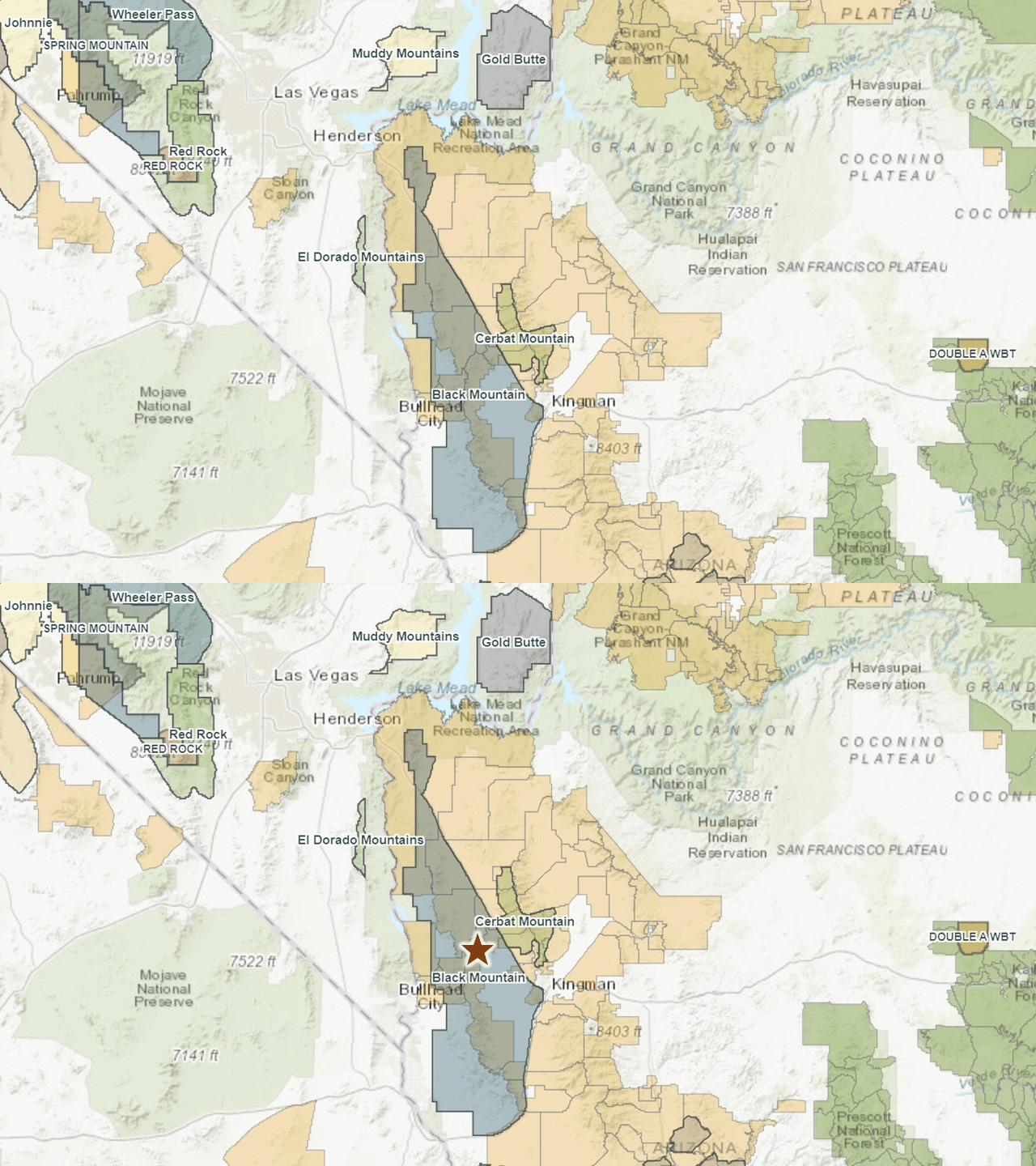
The HMA covers about one million acres in northwestern Arizona and has an AML of 478, for an aimed-at stocking rate of 0.5 burros per thousand acres.

The current population is thought to be around 3,000.

Black Mountain HMA Map 02-25-22

The HMA is subject to permitted grazing, with 72% of the authorized forage assigned to livestock, neglecting wildlife.

That resource would support an additional 1,222 burros, for a True AML of 1,700.

Sadly, the current population exceeds that value.

Captured animals will be taken to the off-range corrals in Florence.

A link to the gather stats and daily reports was not provided.

Burros were removed from the HMA in 2020, 2021 and early 2022 with bait traps.

The old mining town of Oatman, known for its furry panhandlers, is in the HMA.

UPDATE: Gather page found, not listed with other Arizona roundups.

Death Toll Still Climbing at Cañon City Off-Range Corrals

Ten horses have died in the past 24 hours, according to the April 28 update at the Colorado HMA page, bringing the total to 95.

The veterinarian’s report has been posted for public review.  The first death related to the illness may have occurred on April 18.

Today’s news release attributes the deaths to an equine influenza virus that has largely affected the horses captured from West Douglas last August.

RELATED: More Horses Dead at Cañon City Off-Range Corrals.

Sinbad Roundup Announced

The BLM will remove wild burros from public lands in and around the HMA starting on April 30.

Helicopters will push the animals into the traps, according to the news release, and the incident will be open to public observation.

The capture goal is 300 and the removal goal is 260.  Jennies returned to the range may be treated with GonaCon.

The roundup was planned and appears on page two of the latest schedule.

The 70 burros allowed by plan, equivalent to 35 wild horses, require 420 AUMs per year.  The HMA covers 99,241 total acres, for an equivalent stocking rate of 0.4 wild horses per thousand acres.  The target rate across all HMAs is one wild horse per thousand acres.

The current population is thought to be 328.

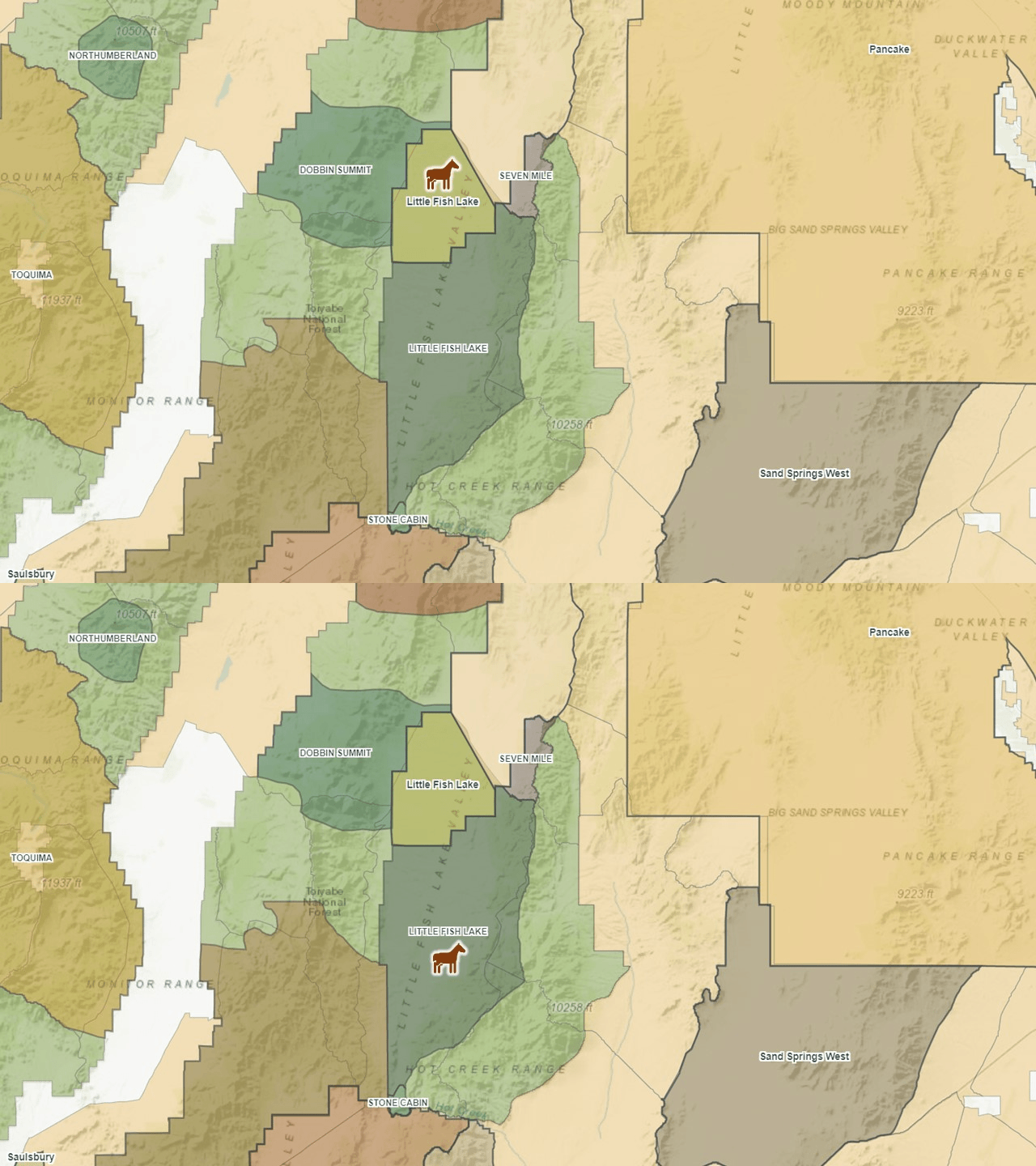
Sinbad HMA Map 04-27-22

The HMA is subject to permitted grazing.  The overlapping allotments offer 14,919 AUMs per year on 266,757 public acres, for an average forage density of 55.9 AUMs per year per thousand acres, 13 times higher than the forage density for burros.

The forage assigned to livestock would support 9.3 wild burros per thousand acres, on top of the 0.4 wild burros per thousand acres allowed by plan.

The True AML would be 9.7 × 99.241 = 962.  The current population is well within this range, so there are no excess animals.

The roundup has one goal: To protect the public-lands ranchers.

Captured animals will be taken to the off-range corrals in Axtell.

Gather stats and daily reports will be posted to this page.

RELATED: Sinbad Decision Announced.

UPDATE: The stocking rate allowed by plan is 0.7 burros per thousand acres, 0.4 is an equivalent rate for horses.  The forage assigned to livestock would support 9.3 wild burros per thousand acres, on top of the 0.7 animals per thousand acres allowed by plan, so the True AML would be (9.3 + 0.7) × 99.241 = 992, not 962.

Can Anything Good Come from Motorized Equipment Hearing?

No, because it’s focused on the wrong things.

Consider this example from the North Lander Complex:

  • Forage allocations before hearing – 11.5% to horses, 88.5% to livestock
  • Forage allocations after hearing – 11.5% to horses, 88.5% to livestock

A suite of tools will be needed to make this a reality for the ranchers and the Proposed Action in the new resource enforcement plan promises to do exactly that.

RELATED: Motorized Equipment Hearing Set for Today.

Motorized Equipment Hearing 04-26-22

Veterinarians Trying to Identify Cañon City Illness

BLM posting updates to this page.

Lab tests in progress.  No new deaths reported.

Horses showing signs of illness have been isolated from the population.

Some of the horses captured last August in the West Douglas roundup were tested for equine infectious anemia and were separated from other animals at the corrals until they were cleared of any infections.

RELATED: Cañon City Corrals on Lockdown, 57 Horses Dead.

Challis Roundup Complete

The incident concluded on April 14, according to a statement at the gather page, with 17 horses trapped, 17 shipped and no deaths.

Foals represented 12% of the animals captured.  Of the adults, 40% were male and 60% were female.

The capture goal was 70 and the removal goal was 39.  Mares returned to the area were to be treated with fertility control.

The pre-gather population was around 224, compared to an AML of 253.

The HMA is managed primarily for livestock, with 79% of the authorized forage directed to permitted grazing.

RELATED: Challis Roundup Announced.

BLM to Assist NPS in Death Valley Roundup

The incident will begin tomorrow, according to a news release dated April 22, with up to 490 burros gathered from three HAs on the west side of the park.  The removal goal was not specified but will likely be identical.

Refer to the maps in Appendix B of the project documents for the arrangement.

Helicopters will push the burros into the traps “at a slow pace” with “care and compassion” and the operation will be open to public observation.

Gather stats and daily reports will be posted to this page, which does not appear at the site for gathers and removals in California.

Captured animals will be taken to the off-range corrals at Ridgecrest.

Roundups in two of the HAs are listed on page 2 of the latest schedule.

The Decision Record authorizing the actions was signed a year ago.

RELATED: NPS Dissatisfied with Peaceful Valley Rescue, Orders Roundup?