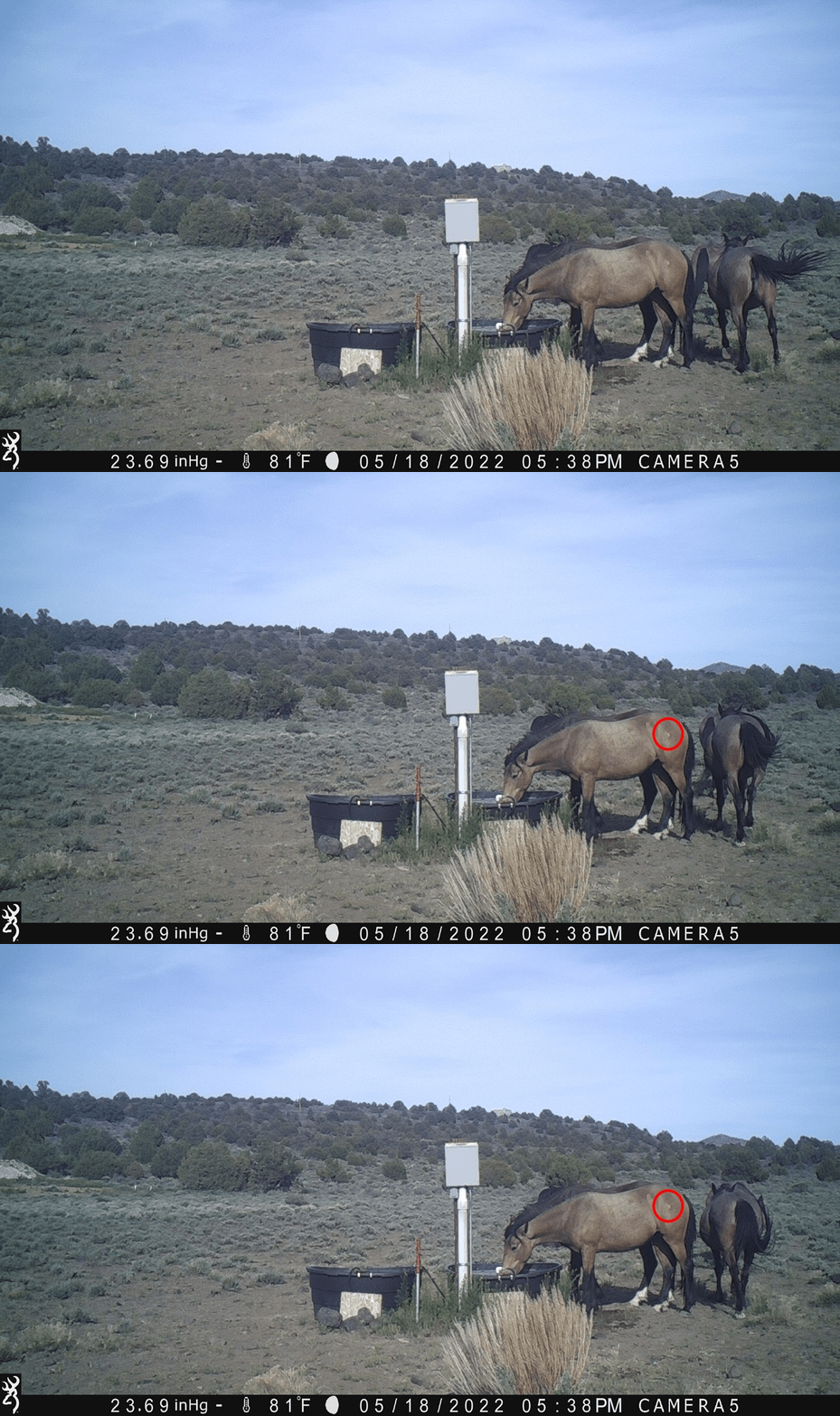
Black Mountain Roundup Day 7

The incident began on May 2.  Gather stats through May 8:

  • Target: Burros
  • Type: Planned
  • Method: Helicopter
  • Captured: 267, up from 124 on Day 3
  • Average daily take: 38.1
  • Capture goal: 1,080
  • Removal goal: 1,080
  • Returned: None
  • Deaths: None
  • Shipped: 173, up from 56 on Day 3

Reports for Days 4 to 7 were not posted until yesterday.  Helicopters did not fly on Day 7 due to high winds.

The cumulative total includes 100 jacks, 127 jennies and 40 foals.

Youngsters represented 15.0% of the animals captured.  Of the adults, 44.1% were male and 55.9% were female.

The herd can’t be growing at a rate of 20% per year with a birth rate of 15% per year.

Four PZP jennies have been caught to date, part of the Humane Society darting project.

The location of the trap site within the HMA was not disclosed.

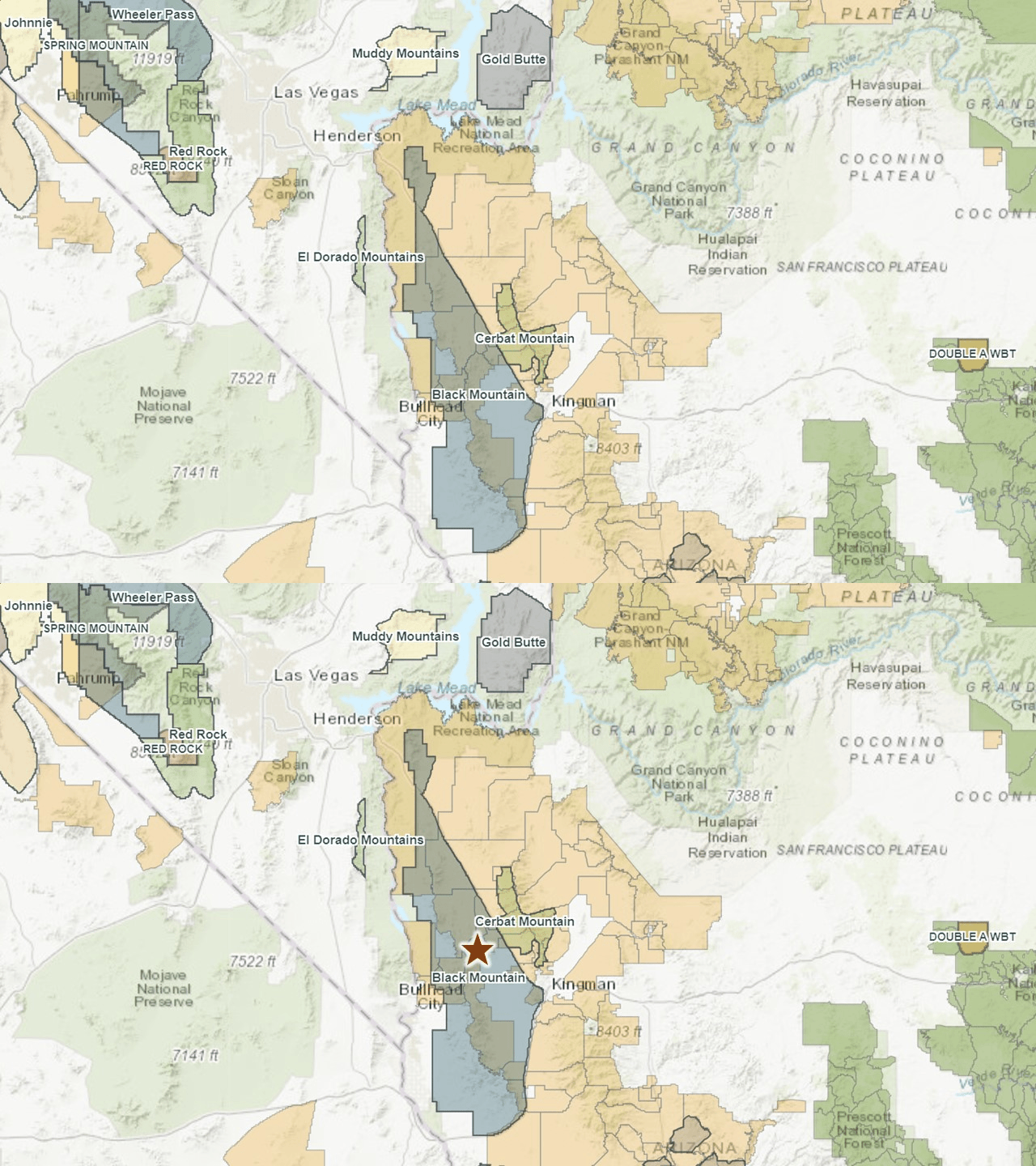
Black Mountain HMA Map 02-25-22

Day 7 ended with 94 unaccounted-for animals.

Other statistics:

  • AML: 478
  • Forage assigned to burros: 2,868 AUMs per year
  • Pre-gather population: 3,000
  • Forage liberated to date: 1,602 AUMs per year
  • Water liberated to date: 1,335 gallons per day
  • Forage assigned to livestock: 7,333 AUMs per year (estimated)
  • Burros displaced from HMA by permitted grazing: 1,222
  • True AML: 1,700
  • Stocking rate at new AML: 1.7 burros per thousand acres
  • Burros displaced from HMA by drilling and mining: Ask the advocates

RELATED: Black Mountain Roundup Day 3.

Protests Accumulating in Rock Springs RMP Amendments

Seven complaints have been submitted online as of this morning.  Objections can also be submitted by mail and these may not be reflected in the count.

The Proposed Action (Alternative D in the Final EIS) will close two of the four HMAs under consideration and downsize a third.  The fourth will remain intact but will be subject to population suppression of unspecified type.

In the Draft EIS, three would be closed and the fourth downsized.

Many of the horses in the area were removed in a roundup that ended in January.

RELATED: Paper Misleads Readers About Rock Springs RMP Protest.

Paper Misleads Readers About Rock Springs RMP Protest

An article posted today by the Wyoming Tribune Eagle says now is the time to speak up if you have any concerns about how the BLM responds to land issues involving wild horses in the state, which is not correct.

The protest period is not a public comment period.  Only those who participated in the planning process are eligible.

If you didn’t submit comments at the time don’t hit the Participate Now button!

Refer to the letter on page two of the Final EIS for more information.

RELATED: Protest Period Begins for Rock Springs RMP Amendments.

UPDATE: Link to article fixed.

Sinbad Roundup Ends Early

Operations concluded on May 5, according to a remark at the gather page, with 153 burros captured, 152 shipped and one dead.

The cumulative total included 75 jacks, 67 jennies and 11 foals.

Youngsters represented 7.2% of the burros captured.  Of the adults, 52.8% were male and 47.2% were female.

The herd can’t be growing at a rate of 20% per year with a birth rate of 7%.

The capture goal was 300 and the removal goal was 260.

The HMA is managed principally for livestock.

RELATED: Sinbad Roundup Announced.

Death Valley Auxiliary Roundup Ends Early

Operations concluded on May 5, according to a remark at the gather page, with 181 burros captured, 181 shipped and one dead.

The number of animals shipped is usually less than the number captured when deaths are reported.

The cumulative total included 76 jacks, 83 jennies and 22 foals.

Youngsters represented 12.2% of the burros captured.  Of the adults, 47.8% were male and 52.2% were female.

The herd can’t be growing at a rate of 20% per year with a birth rate of 12%.

The capture and removal goals were 490 each.

Three HAs were involved in the roundup.

RELATED: BLM to Assist NPS in Death Valley Roundup.

Protest Period Begins for Rock Springs RMP Amendments

The original project in ePlanning has been superseded by a new project, to which the Final EIS and Notice of Availability were posted.

The protest period runs from May 6 to June 6.

The BLM will release a Record of Decision after the protest period, presumably after objections have been screened for validity and merit.

If approved, management actions analyzed in the EIS would amend the 1997 Green River RMP and the 2008 Rawlins RMP.

Any person or organization that participated in the planning process and has an interest that would or may be adversely affected by the decision may protest.

The protesting party may raise only the issues they submitted for the record during the planning process leading up to the publication of the Proposed RMP Amendments.

New issues may not be brought into the record at the protest stage.

The final decision may be subject to a 30-day appeal period.

RELATED: Decision Pending in Rock Springs RMP Amendments.

Decision Pending in Rock Springs RMP Amendments

An announcement appeared today in the Federal Register.

Under the proposed amendments,

  • The Rock Springs Field Office portion of the Adobe Town HMA would no longer be designated as an HMA and would be managed for zero wild horses.  For the Rawlins Field Office portion of the HMA, all checkerboard land and the portion of the HMA north of the existing Corson Springs southern allotment boundary fence would no longer be designated as an HMA and would be managed for zero wild horses.  The remainder of the HMA would be retained and managed with an AML of 259-536
  • The Great Divide Basin HMA would no longer be designated as an HMA and would be managed for zero wild horses
  • The Salt Wells Creek HMA would no longer be designated as an HMA and would be managed for zero wild horses
  • The boundary of the White Mountain HMA would remain the same and would continue to include checkerboard land

The changes will likely be subject to a protest period before becoming permanent.

The project, instigated by the Rock Springs Grazing Association, will rank among the greatest losses for America’s wild horses if approved.

RELATED: EIS for Rock Springs RMP Amendments Turns 2 Today.

UPDATE: BLM just issued news release.

New Resource Enforcement Plan for Little Fish Lake JMA?

A new project appeared in ePlanning yesterday but no documents were posted.

The comment period for the Draft EA would run from May 11 to June 10.

The Proposed Action would remove excess horses and apply population suppression of unspecified type to reduce growth rates.

The scope may include the Little Fishlake HMA, managed by the BLM, and the Little Fishlake WHT, managed by the Forest Service.

The Joint Management Area covers approximately 104,000 acres west of the Pancake HMA in central Nevada and has a combined AML of 132.

The stocking rate allowed by plan is 1.3 horses per thousand acres, in line with the target rate of one wild horse per thousand acres (27,000 animals on 27 million acres).

Little Fishlake JMA Map 05-06-22

The Western Watersheds map indicates both areas are subject to permitted grazing.

An announcement soliciting public input may or may not appear on the BLM news site.

The WHT is in the Humboldt-Toiyabe National Forest.

Black Mountain Roundup Day 3

The incident began on May 2.  Gather stats through May 4:

  • Target: Burros
  • Type: Planned
  • Method: Helicopter
  • Captured: 124, up from 17 on Day 1
  • Average daily take: 41.3
  • Capture goal: 1,080
  • Removal goal: 1,080
  • Returned: None
  • Deaths: None
  • Shipped: 56, up from 17 on Day 1

The cumulative total includes 45 jacks, 58 jennies and 21 foals.

Youngsters represented 16.9% of the animals captured.  Of the adults, 43.7% were male and 56.3% were female.

The herd can’t be growing at a rate of 20% per year with a birth rate of 17% per year.

The location of the trap site within the HMA was not disclosed.

Black Mountain HMA Map 02-25-22

Day 3 ended with 68 unaccounted-for animals.

The number of burros removed to date is 124.

Other statistics:

  • AML: 478
  • Forage assigned to burros: 2,868 AUMs per year
  • Pre-gather population: 3,000
  • Forage liberated to date: 744 AUMs per year
  • Water liberated to date: 620 gallons per day
  • Forage assigned to livestock: 7,333 AUMs per year (estimated)
  • Burros displaced from HMA by permitted grazing: 1,222
  • True AML: 1,700
  • Stocking rate at new AML: 1.7 burros per thousand acres
  • Burros displaced from HMA by drilling and mining: Ask the advocates

RELATED: Black Mountain Roundup Begins.

Sinbad Roundup Day 6

The incident began on April 30.  Gather stats through May 5:

  • Target: Burros
  • Type: Planned
  • Method: Helicopter
  • Captured: 153, up from 123 on Day 3
  • Average daily take: 25.5
  • Capture goal: 300
  • Removal goal: 260
  • Returned: None
  • Deaths: 1, up from zero on Day 3
  • Shipped: 152, up from 123 on Day 3

A jack died on Day 5 trying to evade capture.  The death rate is 0.7%.

The cumulative total includes 75 jacks, 67 jennies and 11 foals.

Youngsters represented 7.2% of the animals captured.  Of the adults, 52.8% were male and 47.2% were female.

The herd can’t be growing at a rate of 20% per year with a birth rate of 7% per year.

The location of the trap site within the HMA was not disclosed.

Sinbad HMA Map 04-27-22

Day 6 ended with no unaccounted-for animals.

The number of burros removed to date is 153.

Other statistics:

  • AML: 70
  • Forage assigned to burros: 420 AUMs per year
  • Pre-gather population: 328
  • Forage liberated to date: 918 AUMs per year
  • Water liberated to date: 765 gallons per day
  • Forage assigned to livestock: 5,547 AUMs per year (estimated)
  • Burros displaced from HMA by permitted grazing: 922
  • True AML: 992
  • Stocking rate at new AML: 10 burros per thousand acres
  • Burros displaced from area by drilling and mining: Ask the advocates

RELATED: Sinbad Roundup Day 3.