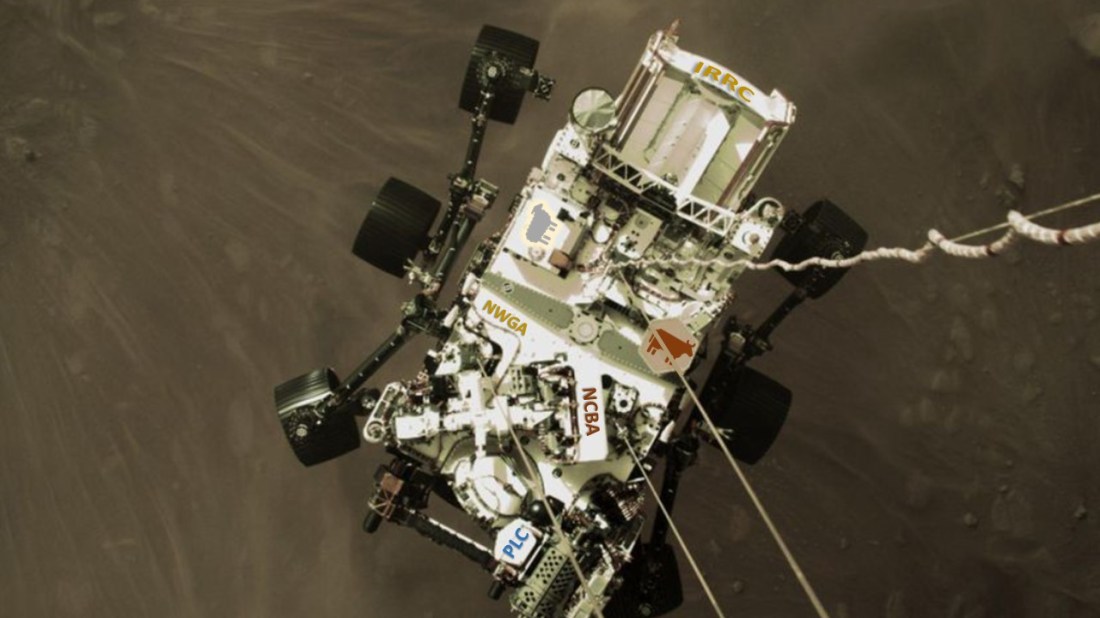
In a first-of-its-kind mission, an American spacecraft has designated a large swath of the Martian surface for livestock grazing, before any horses can escape or be turned loose by explorers from Earth.
The vehicle touched down in an area known as Ubiquitous Valley, aptly named for a practice that’s devoured hundreds of millions of acres in the western U.S.
Two ‘advocacy’ groups have asked DOI nominee Deb Haaland to stop the sterilization of mares from the Confusion HMA, according to a news release in Horse Nation, while concurring with her vision of ‘humane management’ of wild horse herds—code words for PZP fertility control.
Managing HMAs and WHTs primarily for livestock must be an acceptable practice to these people, perhaps the preferred practice. Instead of pushing back against the ranchers, they push back against the horses.
Allowing four permittees to utilize most of the resources in the Piceance-East Douglas HMA does not conform to the mandates of 16 USC 30, an act of Congress, according to comment #69 in the appendices of the EA for resource enforcement actions therein.
Western Horse Watchers refers to the practice as ‘managing primarily for livestock.’
In response, the government stated that the ‘principally but not necessarily exclusively’ language of the statute applies only to areas known as Wild Horse Ranges, not to HMAs in general, pointing to 43 CFR 4710.3-2, a rule created by the unelected bureaucracy.
Areas that no longer qualify as HMAs are managed almost exclusively for livestock.
These are the defining issues of the wild horse world.
Can regulations override statutes? Is the government trying to sidestep the law in favor of a special interest? Where is the consent of the governed?
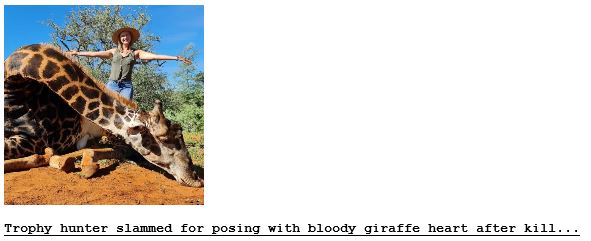
This is how it looked today on Drudge. The link pointed to a story by The Sun, a British tabloid.
Western Horse Watchers is probably to the right of everyone reading these pages, but does not see the benefit of killing these animals. The fee? Over 2,000 US dollars.
The one-horse pony held a moment of silence and candle-lighting ceremony today at the White House, marking 500,000 deaths over the past year, according to a story by AP News.
During that same time, approximately twice as many pre-born kids were killed in their mother’s wombs.
The report noted that the U.S., with less than five percent of the world’s population, accounts for 20% of the world’s corona deaths.
Pearson, a Beaver County commissioner, presumably lives in Beaver County, UT.
The BLM state map puts the county in the Color Country District, Cedar City Field Office.
Western Horse Watchers was able to find ‘Pearson Ranch’ in the Operator Information report from RAS, authorization #4304328. A page on socialist media refers to the Pearson Ranch and current residence in Minersville, UT, which match the name and address in RAS.
The Allotment Information report ties the authorization number to the Minersville #5, Smithson and Beaver Lake allotments.
The Allotment Master report has two in the Improve category and one in the Custodial category. Pearson holds most of the active AUMs in Minersville and all of the active AUMs in Beaver Lake and Smithson.
In the custodial allotment, public lands represent 42% of the total area and 61% of the total AUMs. It’s not clear how it qualifies for that classification, which conceals its true condition.
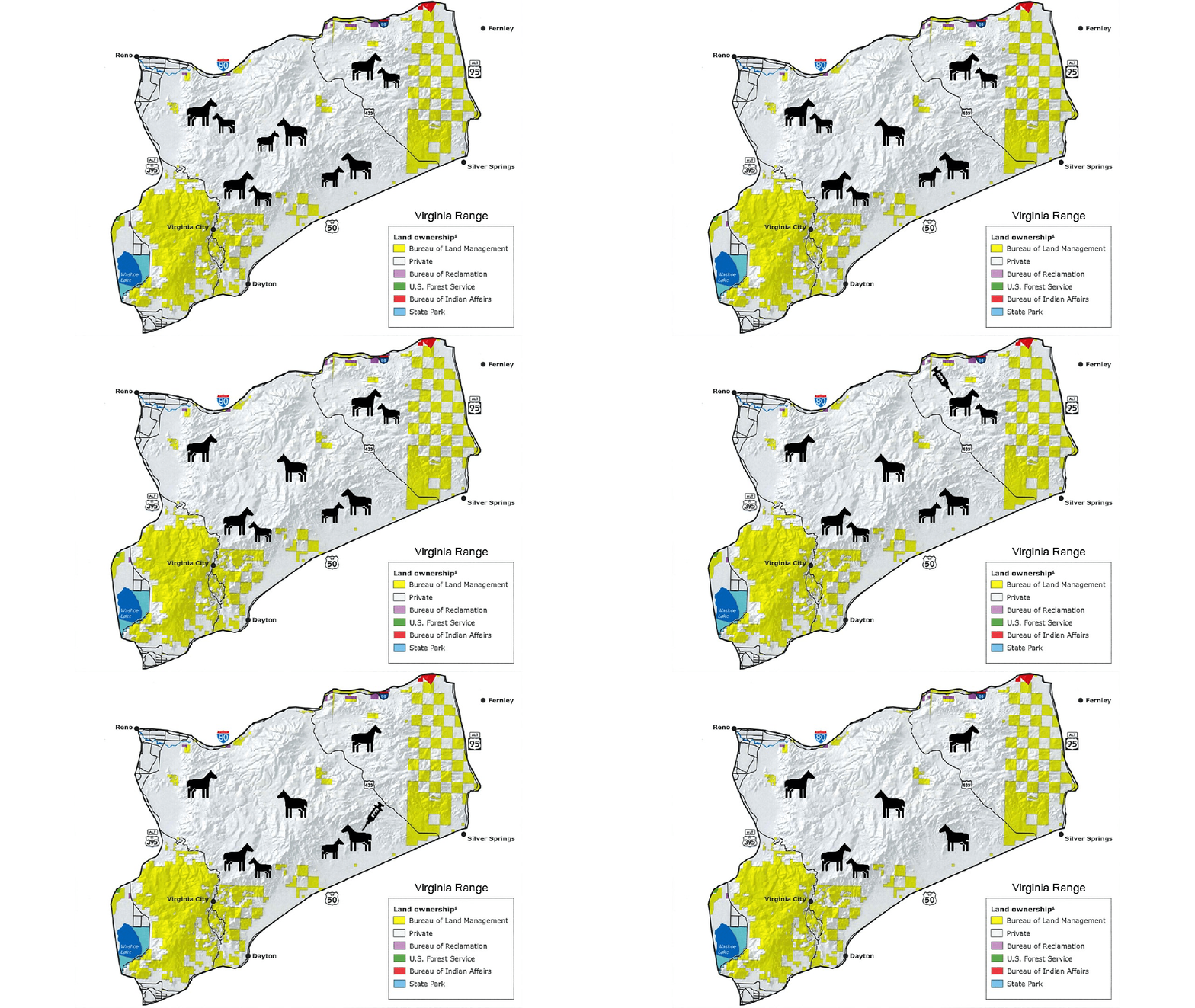
Although AWHC may be doing something useful here—pushing back against the ranching cabal—it does not absolve them from their ruinous darting programs on the Virginia Range and elsewhere.
Every year, wild horses are killed in accidents with vehicles.
“Around 600, right?” No, that’s the number of Virginia Range mustangs the PZP zealots got rid of in 2021.
How many years would you have to go back to count that many collisions?
If you get rid of them with helicopters, bullets or sterilization, that’s bad. But if you get rid of them with clipboards and darting rifles, that’s good.
The greatest threat to wild horses, next to the public-lands ranchers and their allies in government, is not the oil companies, not the mining companies, but the so-called advocacy groups.
The 2021 Silver King roundup ended with 284 horses gathered, 256 shipped, 25 returned and three deaths.
Wild horses require 12 AUMs per year of forage and ten gallons of water per day, on average. The resource requirements of wild burros are about half of those for horses.
Water liberated = (Horses gathered – Horses returned) × 10
The roundup reduced forage consumption by (284 – 25) × 12 = 3,108 AUMs per year and reduced water consumption by (284 – 25) × 10 = 2,590 gallons of water per day.
Roundups usually occur when the horses are consuming more than their allocated share of the resources, not because they are outpacing resource availability.
That is the working definition of ‘overpopulation.’
The missing elements are wildlife and other mandated uses of public lands—code words for privately owned cattle and sheep.
The management plan for the typical HMA assigns four to five time as much forage to livestock as it does for horses, with a small amount reserved for wildlife.
Resources consumed by ‘excess’ horses can be shifted back to their rightful owners, the public-lands ranchers.
The same concept applies to wild horses eliminated by contraceptives, IUDs, sex ratio skewing and sterilization.
Not because most of the land is privately owned or that the horses are managed at the state level, but because of the stocking rate.
The article in Tahoe Quarterly noted that a survey conducted in early 2018 (when the Nevada Department of Agriculture wanted to transfer ownership of the horses to a private entity) found approximately 2,900 wild horses in the area. The article also noted that the Virginia Range covers around 300,000 acres.
Those numbers yield a stocking rate of roughly ten wild horses per thousand acres.
NDA says the range can support 600 horses at most, with 300 horses representing the ideal amount, according to the story.
That last figure yields a stocking rate of one wild horse per thousand acres, in line with the target rate for wild horses on federal lands.
Now you have a driver for a fertility control program—in lieu of roundups.
And the turncoats at AWHC were only too eager to help.
One woman, commenting on the use of PZP in a Facebook page for the Fish Springs horses, located a few miles south of the Virginia Range, said “Hey, look at it this way, they get more sex without the consequences!”
This is what passes for advocacy in the wild horse world.
You can’t have government telling the people that the land can only support one wild horse per thousand acres when the Virginia Range is carrying ten. Not when you’re biased in favor of ranching interests.
The program is a disgrace and an insult to Velma’s legacy.
The Rock Springs Grazing Association, petitioner in the consent decree and instigator of the RMP amendments, owns some of the land it uses in the Wyoming checkerboard and leases other parcels, originally from the Anadarko Corporation, which was acquired by Occidental Petroleum. Occidental sold the land to Orion Mine Finance in 2020.
What would happen if Orion told RSGA that the land is designated for wild horses?
The Virginia Range is ‘ground zero’ in the wild horse preservation movement.
Today, it is home to the largest darting effort in the country, sponsored by the ringleader and standard-bearer of the wild horse prevention movement, the American Wild Horse Campaign.
An undated article appearing in the winter 2020-2021 edition of Tahoe Quarterly leads the reader from Velma’s first encounter with the mustangers in 1950 to the current fertility control program, which has no adverse effects according to an adherent interviewed for the story (see trailcam photos below).
Along the way, it considers rangeland health, including comments by J.J. Goicoechea, a proponent of the rancher-friendly ‘Path Forward,’ a plan for achieving and maintaining AMLs on public lands inhabited by wild horses.
That means eighty to ninety five percent of the forage going to the ranchers.
Western Horse Watchers was able to find two grazing allotments associated with Mr. Goicoechea and his father, Pete, one managed by BLM’s Tuscarora Field Office and the other by the Bristlecone Field Office.
The Allotment Master reports [Tuscarora | Bristlecone] show both in the Improve category, with the Goicoecheas holding most of the active AUMs in each allotment.
The voters did not remove Donald Trump from office, they affirmed his second term.
Nobody’s doing anything about it. You’re not even allowed to talk about it.
Just like the wild horse world.
Be a good advocate. Don’t talk about privately owned cattle and sheep. Forget about resource allocations and management priorities on western rangelands.
Keep pushing for contraceptives, sanctuaries and relocation of wild horses into remote wilderness areas, so their food can be sold to public-lands ranchers.
Everybody wants to bash the BLM for mismanagement of America’s wild horses and burros, and rightly so.
Eighty percent or more of their food diverted to public-lands ranchers, with numerous roundups and growing numbers in long-term holding as a consequence.
Nobody wants to point a finger at the PZP zealots, and the so-called advocacy groups, who rank #2 in terms of their impact on those animals.
One such discovery was the subject of an episode several years ago of the now-defunct Mustang Matters radio program hosted by America Matters Media. The remains were found during road construction in Nevada and were quickly disappeared.
Classifying horses as an indigenous species would change many things, especially on western rangelands.



 Western Horse Watchers Association