On Assateague Island with Ann Czeiner.
Author: Western Horse Watchers
Grazing Program Ancillaries
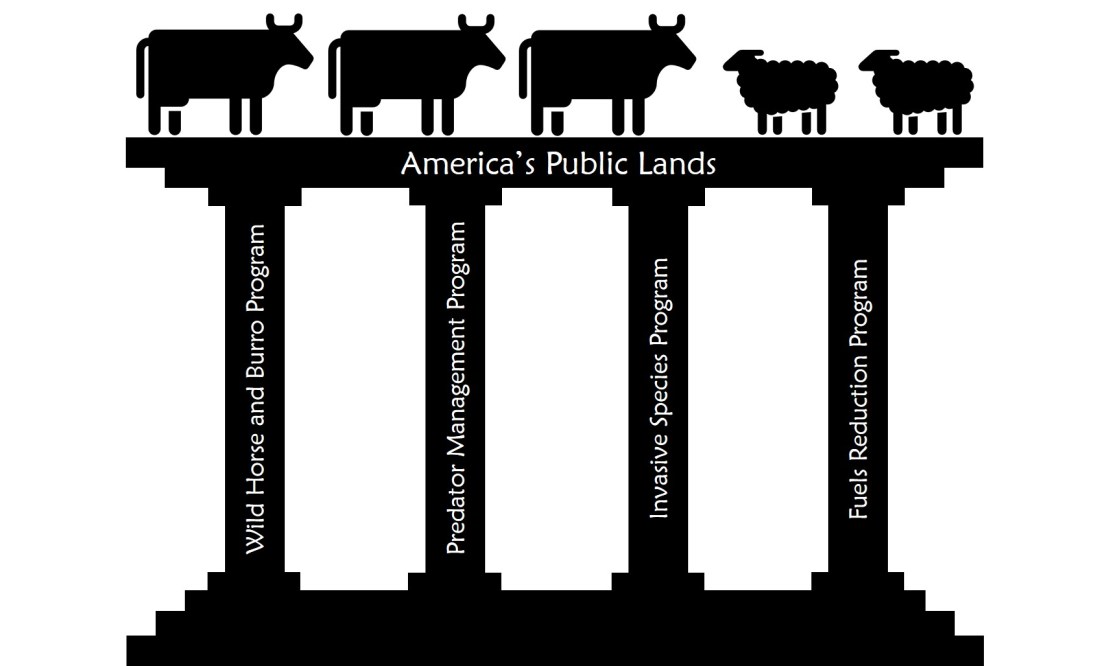
What do they have in common? They work together to give ranchers unfettered access to cheap feed on America’s public lands.
- Wild Horse and Burro Program – Remove animals that rob forage from privately owned livestock
- Predator Management Program – Remove animals that prey on privately owned livestock
- Invasive Species Program – Remove trees that squeeze out forage for privately owned livestock
- Fuels Reduction Program – Remove vegetation that might burn in wildfires with privately owned livestock
You don’t have a horse problem on western rangelands, you have a ranching problem, and it is huge.
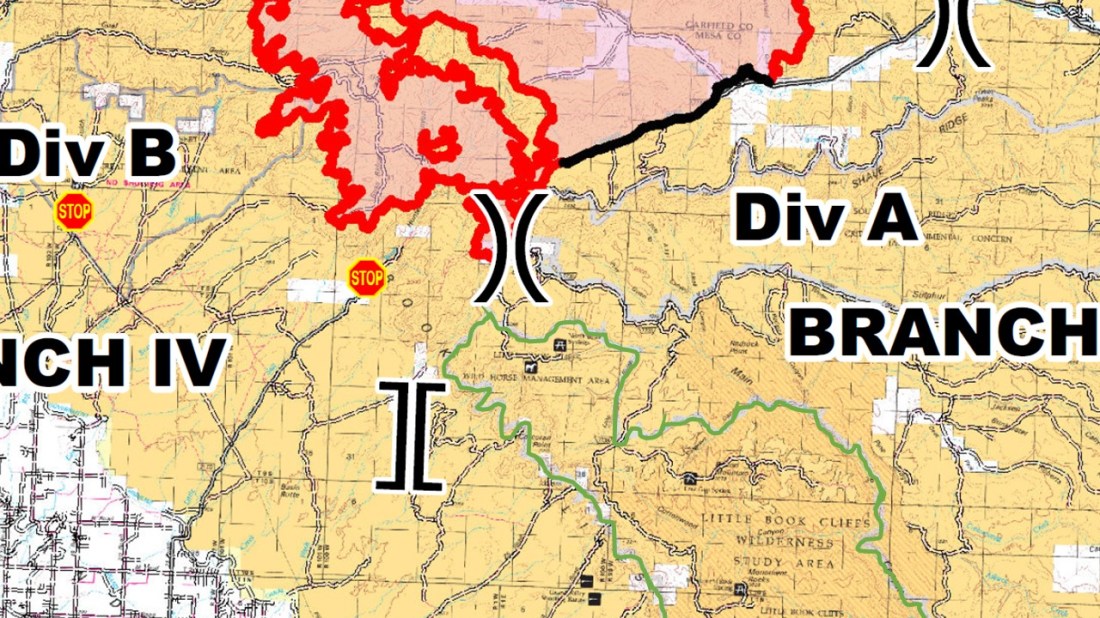
Pine Gulch Fire Approaching Little Bookcliffs WHR
The map posted this morning suggests the fire has made an end run around a previously burned area, at the Division B/A break (denoted by back-to-back parentheses in the following image), and is now about a mile from the north end of the WHR.
Today’s report does not acknowledge this.
Winds will be out of the north this afternoon with gusts to 14 mph. Rain showers are in the forecast for next week.
The area burned since July 31 has increased to approximately 129,700 acres, up from 126,600 acres yesterday. Containment holding at 19%.
Reports at InciWeb have not indicated if the lands surrounding the WHR are subject to permitted livestock grazing.
NOTE: The previously burned area, from the Hunter Fire, is mentioned at 1:35 in this briefing from August 18.
RELATED: Weather Cooperating with Pine Gulch Fire Fighters.
Sulphur Roundup, Day 8
Gather stats through August 22:
- Horses captured: 348
- Goal: 600
- Deaths: 5
Two studs were put down on August 21 due to pre-existing conditions and another horse was lost to colic.
Foals represented 18.1% of the horses captured.
Body condition scores over the last two days ranged from 3 to 5.
The forage assigned to livestock in the HMA would support an additional 855 wild horses, for a new AML of 1,105. The stocking rate would be 4.2 animals per thousand acres, slightly lower than predicted by the Rule of 5.
RELATED: Sulphur Roundup, Day 6.
Don’t Forget the Laramie County CAFO!
The announcement earlier this week of three new off-range corrals and the expansion of a fourth complements the announcement earlier this year of the closure of three HMAs and downsizing of a fourth.
These short-term holding facilities are sometimes referred to as ‘concentrated animal feeding operations’ or ‘high-density feeding operations.’
Another such facility may be in the works, thanks to a rule change in Laramie County, WY that will streamline the approval of a CAFO near Burns. Residents near the proposed feedlot opposed the change, along with the county planning commission.
The facility would have a capacity of 5,000 wild horses.
Weather Cooperating with Pine Gulch Fire Fighters
Today’s report shows 126,600 acres burned since July 31, compared to 124,900 acres yesterday, with 19% containment. Light winds generally out of the north with a slight chance of afternoon thunderstorms.
The southern edge of the fire is about three miles north of the Little Bookcliffs WHR, according to the latest map. The horses may be affected by smoke and ash—assuming they haven’t wandered off the reservation.
Crews have been removing fuel ahead of the fire to reduce its spread.
RELATED: Pine Gulch Fire Creeping.
Shawave Roundup, Day 19
Gather stats through August 21:
- Horses captured: 1,315
- Burros captured: 220
- Animal deaths: 9
Helicopters were grounded August 20 due to smoke from wildfires.
Captured mares now outnumber studs by 106. Foals accounted for 18.9% of the total.
No deaths were reported over the last two days. Body condition scores have not been provided in this roundup.
The 44 mares treated with contraceptives on or about August 5 will receive boosters after 30 days followed by return to the HMA.
RELATED: Shawave Roundup, Day 17.

New WHB Off-Range Corrals in the News
An article published today by AP News notes that they are the “next step” in carrying out the rancher-friendly ‘Path Forward.’
The Decision Records are posted with other project documents at BLM’s NEPA site.
RELATED: BLM Expands Off-Range Holding.

Pine Gulch Fire Creeping
Today’s 10 AM report said most of the activity has been on the south side of the fire, which is now about three miles away from the north end of the Little Bookcliffs WHR.
That part of the fire has not been contained, according to the latest map, but it may stall as it moves into a previously burned area.
To date, roughly 124,900 acres have burned, compared to 121,800 acres yesterday.
RELATED: Pine Gulch Fire Correction.

BLM Seeks New Off-Range Corrals in Eastern U.S.?
Refer to these reports
- Posted August 19 by the Chatham Star Tribune of Chatham, VA.
- Posted today by WBIW Radio of Bedford, IN.
They are likely related to a BLM news release dated July 31.
Apparently, the agency has floated a ‘trial balloon’ to gauge interest in new waypoints for wild horses and burros heading to adoption/sale events in that part of the country.
Sulphur Roundup, Day 6
Gather stats through August 20:
- Horses captured: 273
- Goal: 600
- Deaths: 2
A stud was put down on August 19 due to a pre-existing condition.
Foals represented 17.2% of the horses captured.
Body condition scores over the last two days ranged from 3 to 4.
The management plan for the HMA assigns 3.4 times as much forage to privately owned livestock as it does to horses.
The grazing allotments are shown on this map. All are active except Mountain Home, according to the Final EA for wild horse management actions in the HMA.
The issues to be addressed by those actions, listed on page 5 of the EA (page 9 in the pdf), do not involve drilling, mining or logging.
RELATED: Sulphur Roundup, Day 4.
Little Bookcliffs WHR Closed Due to Pine Gulch Fire?
Shawave Roundup, Day 17
Gather stats through August 19:
- Horses captured: 1,151
- Burros captured: 220
- Animal deaths: 9
Helicopters were grounded yesterday while a new trap was set up.
Mares outnumbered studs by 80. Foals represented 19.0% of the horses captured.
The original goal was 1,600 horses removed along with 200 burros.
RELATED: Shawave Roundup, Day 15.
Triple B Roundup Ends
The operation concluded today, according to a BLM news release, with 390 wild horses removed from their home range. Nine deaths were reported, with four horses put down on August 18 due to pre-existing conditions, including blindness.
The action was prompted by insufficient water and declining health of the animals.
The original goal was 360.
RELATED: Triple B Emergency Wild Horse Roundup Begins This Week.
Pine Gulch Fire Correction
The 10 AM report said growth was minimal overnight. The burned area was revised from yesterday’s 125,100 acres to 121,800 acres.
Containment has increased to 14%. Storms may move across the fire again today, producing gusty winds and rapid spread.
Another online meeting will be held tonight at 6 PM MDT.
RELATED: Pine Gulch Fire Accelerates.
What Happened to the Saylor Creek Mares?
They dropped off the radar screen on August 11. From that date onward, only ‘adults’ were captured.
Perhaps some of them transitioned but are still in the process of coming out. Maybe the traditional stud / mare binary is just too damn divisive? Or it doesn’t accommodate the full spectrum of possibilities?
As of today, the gather stats show 78 stallions, four horses with a cervix and 14 foals.
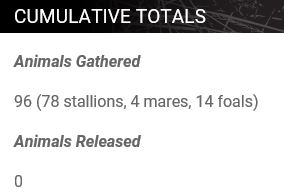
So much for transparency. These data can’t be can’t be produced by a simple random process centered at 50% males / 50% females. Try tossing a coin 82 times and coming up with no more than four tails.
Emergency Roundup Scorecard
- Animals gathered: 5 horses, 43 burros
- Goal: 50 horses, 25 burros
- Animals shipped: 2 horses, 43 burros
- Animal deaths: 0
- Method of capture: Bait trap
- Last update: August 17 (No activity since August 4)
- Gather stats
Triple B / Maverick-Medicine HMAs
- Animals gathered: 327 horses
- Goal: 360 horses
- Animals shipped: 273
- Animal deaths: 5
- Method of capture: Bait trap
- Last update: August 17
- Gather stats
RELATED: Emergency Roundup Scorecard, August 14.
BLM Expands Off-Range Holding
The agency announced today it would be awarding contracts for three new short-term holding facilities and the expansion of a fourth, subject to a 30-day appeal period.
The corrals will be located in Colorado, Utah and Wyoming and will house wild horses and burros on their way to long-term pastures or adoption/sale events. They will have a combined capacity of 8,500 animals.
RELATED: BLM Seeks Off-Range Corrals for Short-Term Holding.
Pine Gulch Fire Accelerates
The 10 AM report puts the burned area at 125,100 acres, the largest one-day jump since the fire started on July 31. Yesterday’s total was 87,200 acres.
The rapid growth was caused by 40 mph winds from a thunderstorm.
The map at InciWeb shows the fire has spread to the northwest, away from the Little Bookcliffs WHR.
Containment holding at 7%.
RELATED: Pine Gulch Fire Still Active.
Medical Waste Facility a Threat to Virginia Range Mustangs?
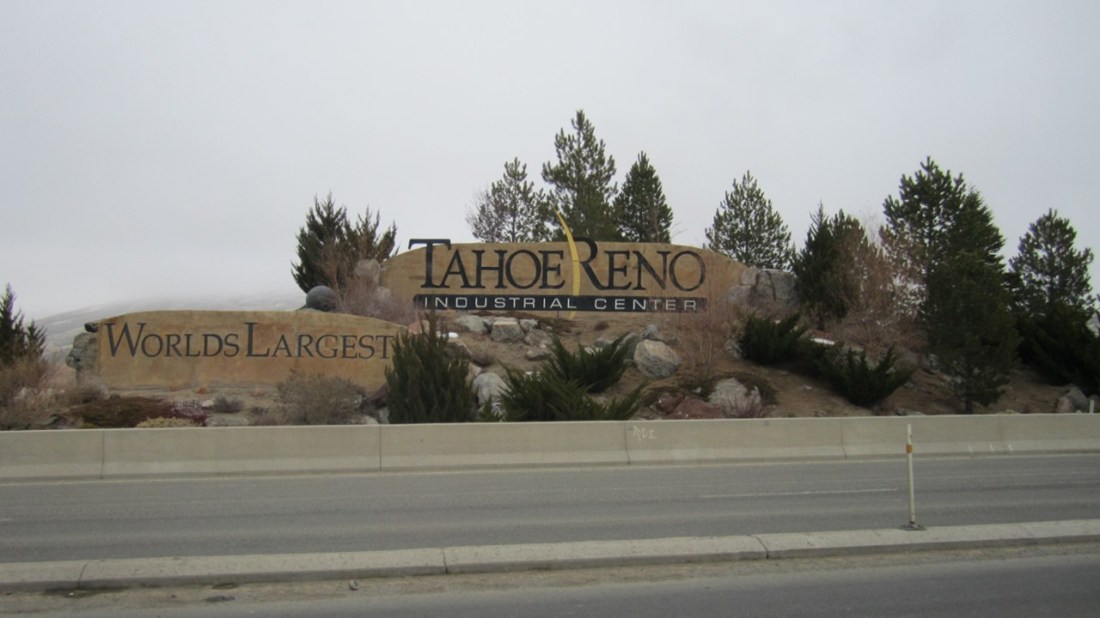
The proposed incinerator, to be built in the Tahoe Reno Industrial Center on the north end of the Virginia Range, was approved this week by Storey County Commissioners, according to a report published this morning by The Nevada Independent.
The project was questioned last month in a planning commission meeting about emissions, traffic and possible collisions with wild horses.
Who raised the concerns? Who’s worried about the impact on horses?
The PZP zealots, whose war on the Virginia Range mustangs has already caused more loss of life than an incinerator ever could.