Investigators Unable to Identify Cause of Waipio Horse Deaths

Experts cannot explain the deaths of thirteen wild horses on the Big Island of Hawaii in June and July of this year, according to a news release posted today by the Department of Agriculture.

All of the sick horses were from one band on the west side of the Waipio Valley.  None of the other bands in the area or any of the trail riding horses were affected.

See also this story in West Hawaii Today.

RELATED: Illness Affecting Waipio Valley Horses Still Not Identified.

Warm Springs Gather to Yield Test Subjects for Spay Research

BLM announced yesterday that it will remove 652 excess wild horses from the Warm Springs HMA in southeastern Oregon, beginning in early October, to thin the herd and collect test subjects for sterilization research.  Refer to the news release issued by the Burns office.

Helicopters will be used to drive the horses into the traps and the operation will be open to public observation.

The HMA covers 475,460 acres and has an AML of 202, for an aimed-at population density of 0.42 animals per thousand acres.  The average density across all HMAs is one animal per thousand acres.  (The lower the density the higher the wild horse dispersion, which pleases the public-lands ranchers, their cheerleaders, and overlords in the livestock industry.)

Warm_Springs_HMA_Map-1

The news release stated that the AML was 178, which differs from the figure at the HMA description.

Warm_Springs_HMA_AML-1

The new AML means even greater wild horse dispersion (0.37 animals per thousand acres, almost nothing).  The announcement did not indicate if livestock were present on the HMA or surrounding lands but a reduction in AML, if true, would further pacify the government dependents and will probably be overlooked by the public.

Captured animals will be taken to the Wild Horse Corral Facility in Hines, OR, where they will be prepared for adoption, or in the case of some of the mares, placed into the hands of the on-site Mengeles, who have been tasked with removal of their ovaries.

Gather stats and daily reports can be found on this page.

This so-called research sets a low-water mark for the BLM, an unelected bureaucracy acting against the wishes of the American people.  They have their fanboys however, who see this effort as another step in the process of nullifying the WHB Act.

When is a Wild Horse ‘Excess?’

Answer: When he competes with privately owned livestock for food and water—on lands set aside for him.  The term is often used to justify roundups.

“The BLM plans to gather and remove approximately 300 excess wild horses.”

An article published yesterday by the left-leaning digital news service Circa, offers a lengthy discussion of the issues on western rangelands.  As usual, the debate revolves around the horses for most of the story (overpopulation, mismanagement, excessive costs and what to do about them).

The issue of public-lands ranching is not reached until the end of the report.

“Grazing on public land costs cattle farmers a tiny fraction of what they’d pay on private farms.”

The amount of land available to the horses has been going down.  The number of cattle and sheep has been going up.  What could possibly go wrong?

The ranchers—along with their overlords, cheerleaders and political allies—are not going to let some pesky advocates interfere with this gravy train.

Florence Reaches Outer Banks

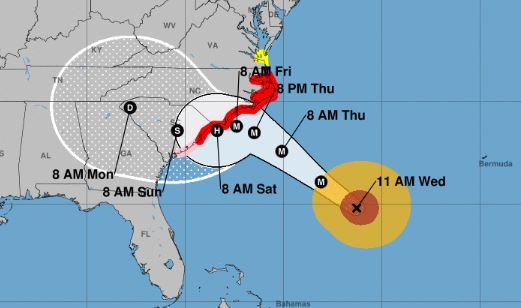
Rain bands are now dumping water on the Banker Horses, as the storm pushes the sea inland.  Conditions will deteriorate as the day progresses.

Florence_Track_09-13-18_AM-1

The track has straightened out a bit and the storm should move inland before drifting to the west.  Flooding and flying objects remain the greatest threat to persons (and horses) in the Outer Banks.  Escape routes will soon be cut off.

RELATED: Left Turn Ahead for Florence.

More Land for Pryor Mountains Wild Horse Range?

Ginger Kathrens of The Cloud Foundation hopes to expand the wild horse herd and the land available to them.

“We want to expand the range so we can have a bigger population.  One hundred fifty horses are the bare minimum, genetically.”

See the report posted today by KTVQ in Billings, MT.

RELATED: How Large Should HMAs Be?, Judge Orders Two Week Delay in Pryor Mountains Gather.

Left Turn Ahead for Florence

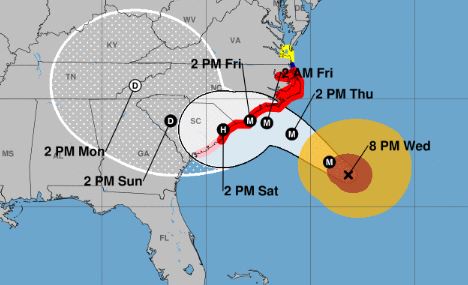
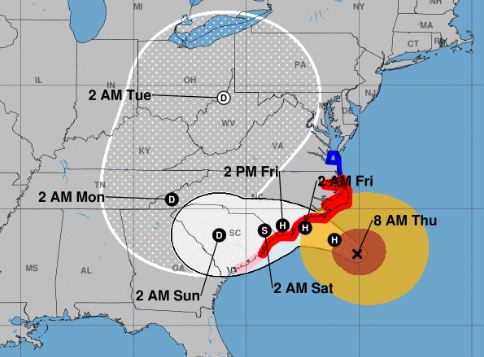
The Banker horses will probably be feeling the full effects of the storm Thursday evening, with high winds and major flooding.  Flying debris and falling trees may also be a problem.  Inland waterways probably started to rise today.  Tides will be a factor.

Florence_Track_09-12-18_PM-1

There may be a high pressure system to the north, impeding forward movement and steering the storm down the coast.  The map above, from the NHC, suggests it will retain hurricane strength until Saturday.

RELATED: Florence Landfall Moving South.

Last One Out Leave Some Hay for the Horses

Many residents and visitors have evacuated the barrier islands, trying to avoid an uninvited guest named Florence, leaving the horses behind.  This story by WRAL-TV in Raleigh, NC, posted today, is typical of the reporting on these animals last 24 hours.

The storm has deviated slightly from the predicted track, taking it away from the Outer Banks, but it will still have a major impact on the area.

Florence Landfall Moving South

The track has shifted further southward, compared to last night, with landfall now approaching the North/South Carolina state line.  The Banker Horses will still be in the northeast quadrant of the storm, subject to flooding and flying debris, although perhaps with a bit less severity, due to the greater distance from the eye.

Florence_Track_09-12-18_AM-1

Wild horses on the southern end of the Outer Banks, near Cape Lookout (Rachel Carson Reserve and Shackleford Banks), are at greatest risk.

RELATED: Florence Still a Threat to Banker Horses.

Spruce-Pequop Gather Ends

Bait trapping ended 09/09/18, with 371 wild horses removed from the Spruce-Pequop HMA in western Nevada, according to a news release issued yesterday.  Nine deaths were reported (2.4%) and no animals were returned to the range.

A foal was born at the temporary holding facility (trap site) on 09/04/18.

Five horses were euthanized due to blindness.

A mare died in the trap after hitting a panel, apparently breaking her neck.

Five geldings were gathered and shipped to Fallon, to be handed over to the State of Nevada as estray animals (which means they will probably be taken to auction and picked up by kill buyers, after attempting to find their owners).

No cattle were harmed in the process?

Gather stats and daily reports can be found at this page.

These actions are not being done out of concern for the horses but for loyalty to the public-lands ranchers and their overlords in the livestock industry.

Links are never provided for applicable grazing allotments and other documentation showing allocation of resources, so interested parties could determine which species is consuming more than its fair share of the available forage, on lands set aside for wild horses and burros.

RELATED: BLM Starts Emergency Gather at Spruce-Pequop.

Florence Still a Threat to Banker Horses

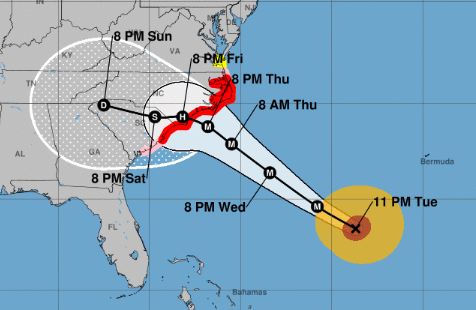
The storm track has shifted a bit to the south, taking a little pressure off the OBX horses, but they are still in danger.  The models are now saying that landfall will be near Wilmington, NC.  Refer to the latest NHC map, which updates every three hours.

Florence_Track_09-11-18_PM-1

The Outer Banks are now under hurricane warnings.  The track at Day 4 and Day 5 has bent to the west, carrying the storm into South Carolina.

RELATED: Florence Aimed at Mid NC Coast.

Emergency Gather Starts This Week at Eagle HMA

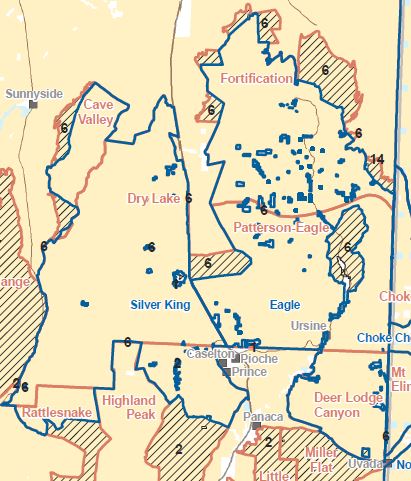
BLM will remove 300 wild horses from the Eagle HMA, beginning September 13, according to a news release issued today.  Helicopters will be used to push the horses into the traps.  The HMA is in eastern Nevada, on the Utah border, about 60 miles south of Ely.

The stated reason for the roundup is insufficient water.  If an advocacy group came forward with a desire to haul water, would they allow it?  Would they let the horses stay on the range?  Or is there another reason for removal?

The gather will be open to public observation.

The HMA covers 660,610 acres and has an AML of 210, for an aimed-at population density of 0.32 animals per thousand acres.  The announcement indicated that 1,559 wild horses would remain when the operation is finished, for a post-gather density of 2.36 animals per thousand acres.

Eagle_HMA_Map-1

The Virginia Range, on the western side of the state, has a population density of ten animals per thousand acres, maybe a bit more.

Captured animals will be taken to the Palomino Valley WHB facility near Reno, NV, where they will checked be a veterinarian and prepared for adoption (even though the market has likely been saturated by all the roundups this year).

Gather stats and daily reports can be found at this page.

The announcement suggested that livestock were present on the HMA but did not say if they were affected by lack of water.  Drought seems to be highly selective on western rangelands, affecting mostly horses and burros.  Public-lands ranchers, of course, are allowed to install water systems and make other improvements, WHB advocates are generally not.

Florence Aimed at Mid NC Coast

Projected path, as of this morning, puts the storm onshore somewhere between Wilmington and Jacksonville, NC.  People (and wild horses) living near the coast, northeast of landfall, will be hit with the surge.  Refer to this map from NHC.

OBX now under hurricane watch.  The system may increase water levels in that area by six to twelve feet, according to a report posted earlier today by the Charlotte Observer.

RELATED: Florence to Pound OBX?

Gather at Little Bookcliffs in Progress, with Aid of ‘Advocates’

Twelve horses have been lured into traps at the Little Bookcliffs Wild Horse Range, according to a report issued today by The Daily Sentinel in Grand Junction, CO, with nine permanently removed from the range.  Volunteers with ‘Friends’ of the Mustangs are helping the BLM with the roundup.

“The horses have been cooperative and they’ve been taking our bait.”

Body condition scores have been fours and fives, which contradict claims that the horses did not have enough to eat (due to overpopulation and ongoing drought).

“They’re in good condition.  They look healthy.”

The real concern, of course, is not for the welfare of the horses, but for the prosperity of the government serfs who run their livestock on surrounding lands.

RELATED: It’s ‘Go Along to Get Along’ at Little Bookcliffs WH Range.