
On the Maryland side of Assateague Island with Hiking Outdoor Family.
Category: Range
On the range
Surprise Roundup Over
The incident concluded today, with 484 horses captured, 468 shipped, none released and 16 dead.
Fifteen burros were also taken but their disposition was not given.
The capture total included 200 stallions, 232 mares and 52 foals.
Youngsters represented 10.7% of the horses captured, consistent with a herd growth rate of 6% per year.
Of the adults, 46.3% were male and 53.7% were female.
Three HMAs were affected.
Some mares will be treated with GonaCon Equine and returned to the area.
The Complex is subject to permitted grazing.
FY24 Roundup Schedule Posted
The upper section covers nonmotorized removals, the domain of the advocates.
The lower section covers motorized removals, usually carried out by legacy contractors.
The new plan supports three tenets of rangeland management:
- Pest control
- Resource enforcement
- Rancher protection
The action kicks off October 1 at Bordo Atravesado in New Mexico.
The largest removal will occur at the East Pershing Complex near Winnemucca, NV, which consists of three HMAs and four HAs.
The last big roundup of FY23 is set to begin today at the Calico Complex.
Foal-Free Friday, Learning about Horses Edition
The real estate agent and PZP darter in the Minden/Gardnerville area suggests in the September edition of Horse Tales that you drive into desert to observe wild horses in their natural habitat if you are serious about riding or training.
But how far would you have to go and what area would you choose to find a herd that hasn’t been altered or ruined by the advocates?
Signs that you’ve entered the wrong area:
- Barren mares
- Confused stallions
- Shrinking herds
- Injuries and infections
- Abnormal sex ratios
- Increasing death rates
- Tiny breeding populations
- Loss of genetic diversity
- Sterility
- Acclimation to people
- Prevalence of livestock
If you find the right herd and are patient, you’ll realize the advocates are full of crap and that they’re working not in the best interests of the horses, but of their enemies.
RELATED: Foal-Free Friday, They’re Vaccines not Pesticides Edition.

Man Arrested for Killing Virginia Range Stallion
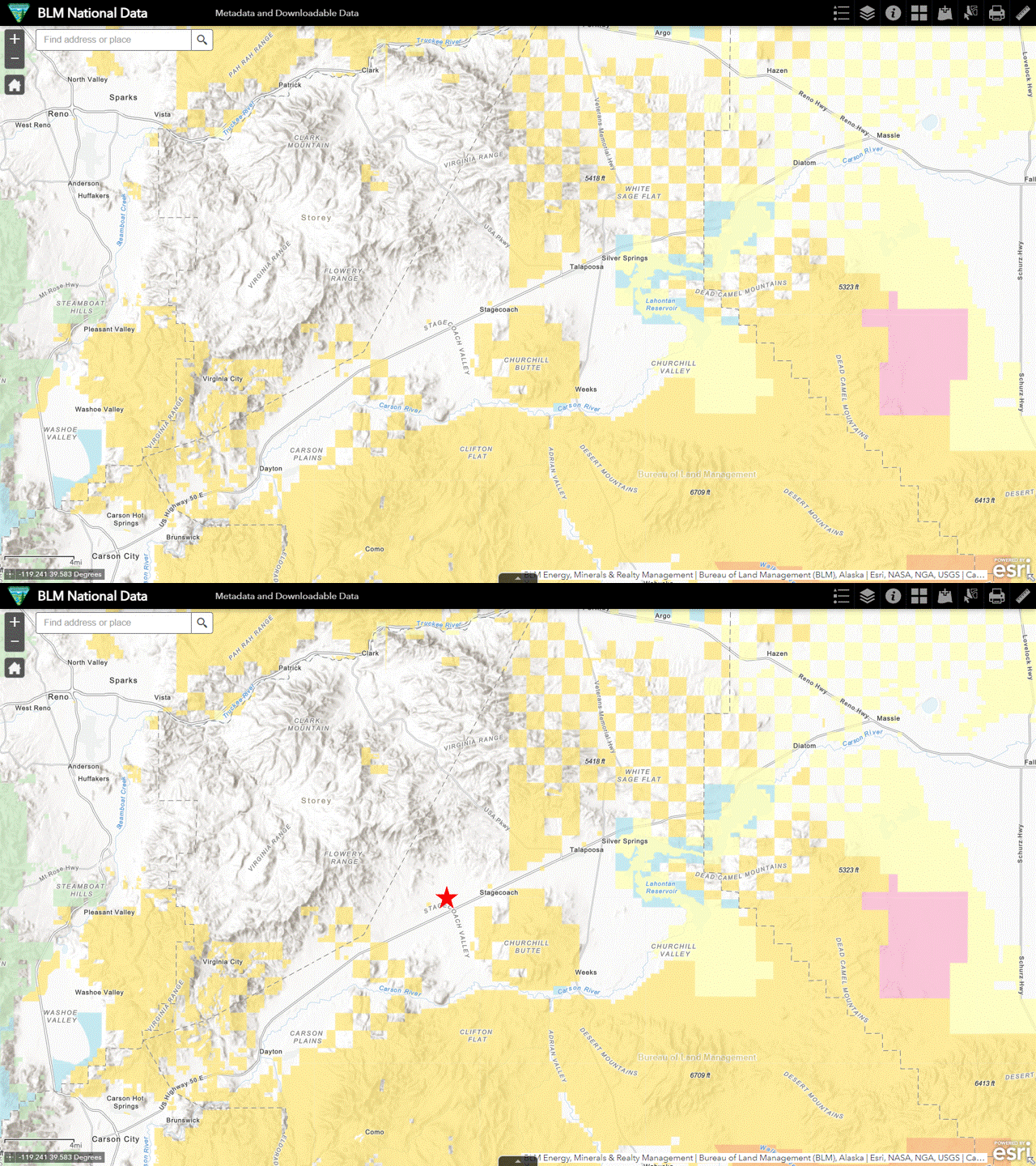
The incident occurred on Iroquois Trail in Stagecoach, NV, according to a story dated September 28 by KOLO News of Reno.
The animal was shot with a crossbow.
The suspect was charged with unlawful and malicious killing of a wild horse.
Advocates with the Campaign Against America’s Wild Horses are getting rid of hundreds of Virginia Range mustangs every year with Zonastat-H, a restricted-use pesticide on the same EPA list as toxic chemicals.
Who’s the greater threat to wild horses?
Surprise Roundup, Day 9
The incident began on September 18. Results through September 26:
- Scope: High Rock, Fox Hog, Wall Canyon HMAs
- Purpose: Pest control, resource enforcement, rancher protection
- Target: Horses
- Type: Planned
- Method: Helicopter
- Category: Cruel and costly*
- Better way: Poison mares with ovary-killing pesticides*
- Captured: 381, up from 325 on Day 7 (does not include 15 burros taken on Day 6)
- Average daily take: 42.3
- Capture goal: 494
- Removal goal: 404
- Returned: None
- Deaths: 14, up from 13 on Day 7
- Shipped: 177, up from 96 on Day 7
The figures above are based on the daily reports, not the totals posted by the BLM.
The sidebar at the gather page says 331 horses shipped.
Trapping occurred outside Fox Hog on Day 9. The location for Day 8 was not given.
A mare was put down on Day 8 because of a leg injury.
The death rate is 3.7%.
The capture total includes 162 stallions, 180 mares and 39 foals.
Youngsters represented 10.2% of the animals gathered, consistent with a growth rate of 5% per year.
Of the adults, 47.4% were male and 52.6% were female.
Body condition scores ranged from 4 to 5.
The HMAs and surrounding lands are subject to permitted grazing.
*According to advocates.

Day 9 ended with 190 unaccounted-for animals, a figure affected by the discrepancy in animals shipped.
Mares returned to the Complex will be treated with GonaCon Equine, a fertility control pesticide.
Other statistics:
- Forage liberated to date: 4,572 AUMs per year
- Water liberated to date: 3,810 gallons per day
- Forage assigned to livestock: Undetermined
- Horses displaced from area by permitted grazing: Undetermined
- True AML: Undetermined
- Stocking rate at new AML: Undetermined
- Horses removed because of drilling and mining: Ask the advocates
Overpopulation means more horses than allowed by plan, not necessarily more horses than the land can support.
There’s plenty of food and water in the Complex but most of the resources have been devoted to animal agriculture.
RELATED: Surprise Roundup, Day 7.
Fox News Looks at Salt River Darting Program
Managing humanely means poisoning the mares with Zonastat-H, an ovary-killing pesticide on the same EPA list as toxic chemicals.
Long-term use (more than five consecutive years) ends in sterility.
Note the lump at 1:01. Darting injury? Unlawful of pesticides at 3:42.
The advocates have prevented 500 horses from being born!
Only one last year and two this year. In a herd of 313.
The herd is shrinking, there’s no turning over of the genetic soil, the breeding population is nearly zero and natural selection has been stalled.
The Salt River Wild Horse Darting Group is an affiliate of the Campaign Against America’s Wild Horses, a leader in nonmotorized removal.
As for the Apache-Sitgreaves, much of the land has been dedicated to livestock grazing, a government giveaway the Forest Service is trying to protect.
Surprise Roundup, Day 7
The incident began on September 18. Results through September 24:
- Scope: High Rock, Fox Hog, Wall Canyon HMAs
- Purpose: Pest control, resource enforcement, rancher protection
- Target: Horses
- Type: Planned
- Method: Helicopter
- Category: Cruel and costly*
- Better way: Poison mares with ovary-killing pesticides*
- Captured: 325, up from 197 on Day 5 (does not include 15 burros taken on Day 6)
- Average daily take: 46.4
- Capture goal: 494
- Removal goal: 404
- Returned: None
- Deaths: 13, up from 7 on Day 5
- Shipped: 96, no change from Day 5
The figures above are based on the daily reports, not the totals posted by the BLM.
Data quality has gone south. The sidebar at the gather page says 181 horses shipped.
Trapping occurred at High Rock and Fox Hog on Days 6 and 7.
Fifteen burros were picked up on Day 6.
Four horses were put down on Day 6 for physical defects, followed by two more on Day 7.
The death rate is 4.0%.
The capture total includes 133 stallions, 155 mares and 37 foals.
Youngsters represented 11.4% of the animals gathered, consistent with a growth rate of 6% per year.
Of the adults, 46.2% were male and 53.8% were female.
Body condition scores ranged from 4 to 5.
The HMAs and surrounding lands are subject to permitted grazing.
*According to advocates.
Day 7 ended with 216 unaccounted-for animals, a figure inflated by the discrepancy in animals shipped.
Mares returned to the Complex will be treated with GonaCon Equine, a fertility control pesticide.
Other statistics:
- Forage liberated to date: 3,900 AUMs per year
- Water liberated to date: 3,250 gallons per day
- Forage assigned to livestock: Undetermined
- Horses displaced from area by permitted grazing: Undetermined
- True AML: Undetermined
- Stocking rate at new AML: Undetermined
- Horses removed because of drilling and mining: Ask the advocates
Overpopulation means more horses than allowed by plan, not necessarily more horses than the land can support.
There’s plenty of food and water in the Complex but the bureaucrats have dedicated most of the resources to animal agriculture.
RELATED: Surprise Roundup, Day 5.
TRNP EA Out for Public Review
The Park Service designated Alternative C as the proposed action during the scoping period, but no such choice was indicated in the Draft EA.
If you can’t access the document, click here.
The three alternatives are discussed in Chapter 2.
A keyword search of the document produced no results for “Sitting Bull.”
A virtual public meeting will be held at 6:00 PM Mountain Time on October 3, according to the project home page.
Comments will be accepted through October 25.
RELATED: TRNP Comment Report Shows Strong Support for Wild Horses?
BLM to Revive Palmerita Ranch Grazing Permit?
The comment period ends September 27 and as of today, the project tops the most active list in ePlanning.
Under the Proposed Action, described in Section 2.1 of the Draft EA, the agency would issue a grazing permit for a period of ten years, subject to terms and conditions.
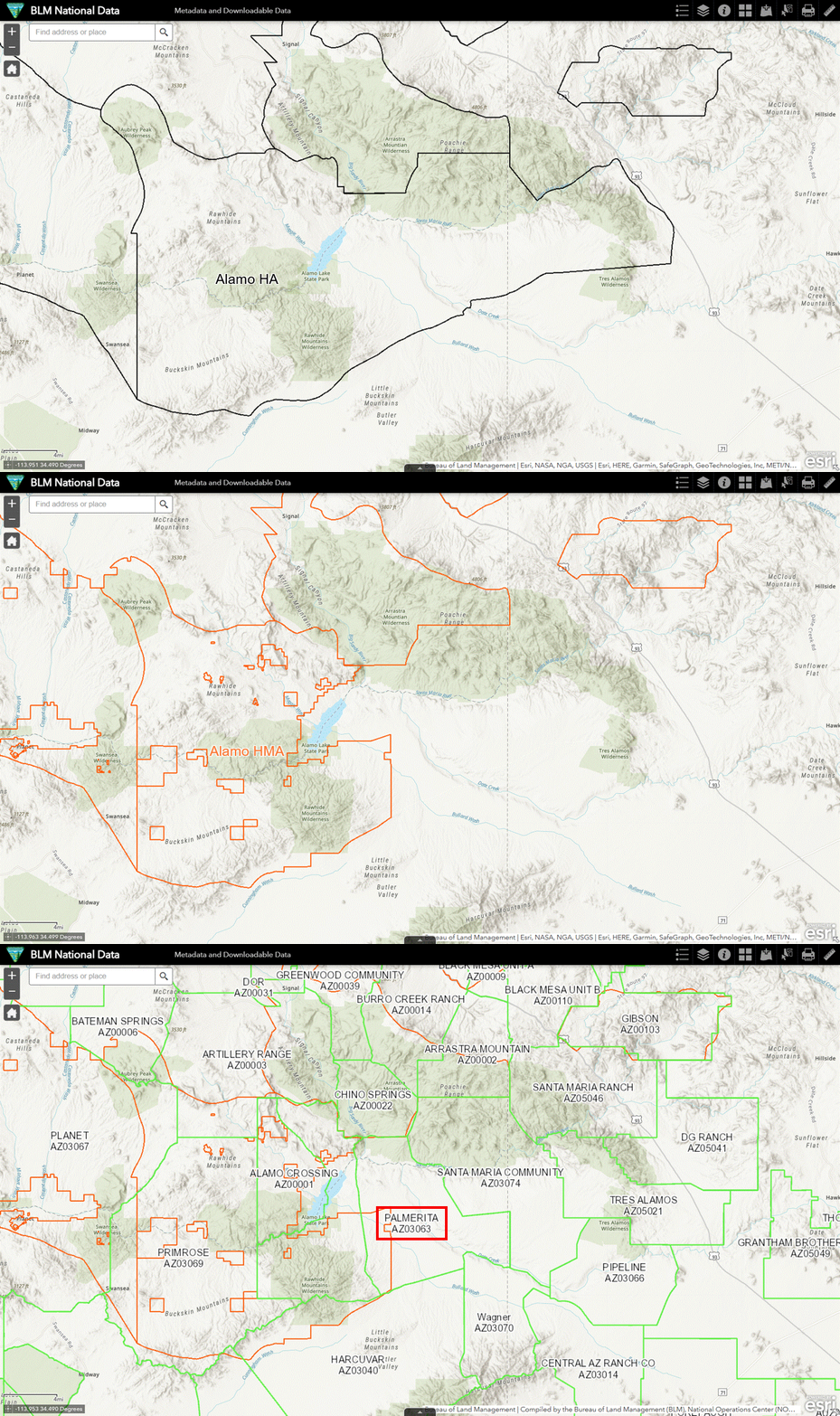
The allotment lies mostly within the Alamo HA, the lawful home of wild burros, as shown in the following image from the National Data Viewer.
It overlaps the Alamo HMA on the east side.
The permit would offer 927 AUMs per year on a 12-month grazing season, enough to support 154 burros.
The advocates may see an opportunity to help the rancher by poisoning the jennies with Zonastat-H, a fertility control pesticide on the same EPA list as toxic chemicals.
A new pest control plan was released two weeks ago covering three HMAs in the area, including Alamo.
UPDATE: RAS was down when this post went live. The Allotment Master Report puts Palmerita Ranch in the Improve category with one permittee.
Mustang Monday
Near the Salt River in the Tonto National Forest with markstorto.
Not all mares respond to the Montana Solution, to the dismay of the advocates.
Surprise Roundup, Day 5
The incident began on September 18. Results through September 22:
- Scope: High Rock, Fox Hog, Wall Canyon HMAs
- Purpose: Pest control, resource enforcement, rancher protection
- Target: Horses
- Type: Planned
- Method: Helicopter
- Category: Cruel and costly*
- Better way: Poison mares with ovary-killing pesticides*
- Captured: 197, up from 96 on Day 3
- Average daily take: 39.4
- Capture goal: 494
- Removal goal: 404
- Returned: None
- Deaths: 7, up from 6 on Day 3
- Shipped: 96, up from 33 on Day 3
The figures above are based on the daily reports, not the totals posted by the BLM.
Data quality has been good so far.
Trapping occurred outside High Rock on Day 4 and inside on Day 5.
A blind foal was put down on Day 5.
The death rate is 3.6%.
The capture total includes 68 stallions, 105 mares and 24 foals.
Youngsters represented 12.2% of the animals gathered, consistent with a growth rate of 7% per year.
Of the adults, 39.3% were male and 60.7% were female.
The HMAs and surrounding lands are subject to permitted grazing.
*According to advocates.
Day 5 ended with 94 unaccounted-for animals.
Mares returned to the Complex will be treated with GonaCon Equine, a fertility control pesticide.
Other statistics:
- Forage liberated to date: 2,364 AUMs per year
- Water liberated to date: 1,970 gallons per day
- Forage assigned to livestock: Undetermined
- Horses displaced from area by permitted grazing: Undetermined
- True AML: Undetermined
- Stocking rate at new AML: Undetermined
- Horses removed because of drilling and mining: Ask the advocates
Overpopulation means more horses than allowed by plan, not necessarily more horses than the land can support.
That’s why body condition scores are high and the horses are in good health.
There’s plenty of food and water but the bureaucrats have dedicated most of the resources to animal agriculture.
RELATED: Surprise Roundup, Day 3.
Homeschooler Writes New Book about Assateague Herd
Her family has traveled to the island six times in the past two years, according to a story by Lake Placid News.
She started putting words on paper after a stallion was removed for aggressive behavior.
The book can be ordered from AIA for $15.
The island was a test bed for Zonastat-H, a fertility control pesticide applied by researchers for over 20 years.
Although the darting program was shut off in 2016, the herd has failed to rebound, suggesting that many of the mares are sterile.
Exposing the dangers of the product and the frauds who promote it, an ongoing effort by your host, would be a good topic for a second book.
AIA has not updated their census since July.
In years past, the Park Service published census results every two months but stopped when the destruction became apparent.
Today the herd is known for loss of genetic diversity, diminished breeding population and abnormal sex ratio, among other things.
RELATED: Assateague Pony Census, July 2023.

West Douglas Still Not a Horse-Free Area?
It’s like waking up from cancer surgery and being told “We didn’t get all of it.”
If you’re a Twin Buttes permittee, that is.
Now what?
The BLM has a planned inventory later this year to see how many horses remain, according to a story by The Daily Sentinel, and at some point will try to remove them.
RELATED: West Douglas HA Unfit for Wild Horses but not for Livestock.

McCullough Herd to Achieve AML on its Own?
With an aging population and most of the mares inhibited by pesticide-laced darts, bait-trapping may not be necessary according to comments 198 – 218 in the Final EA.
The project received over 4,000 responses in July and August.
AMLs are small relative to the available resources because the bureaucrats have assigned most of them to privately owned livestock.
The advocates aid in the mismanagement of these areas by beating the populations down with “safe, proven and reversible fertility control.”
Comment 300 indicates that at least seven mares have never foaled.
The pesticide of choice at McCullough Peaks is PZP.
RELATED: McCullough Decision Published.

Foal-Free Friday, They’re Vaccines not Pesticides Edition
Zonastat and GonaCon can’t be pesticides because they don’t kill their targets.
Wrong!
A pesticide is any substance or mixture of substances intended for preventing, destroying, repelling or mitigating any pest, according to the EPA.
The intended effect of the two leading pesticides for wild horses is contraception, not death, according to the Final EA for management actions in the McCullough Peaks HMA. Go to the bottom of page nine in the pdf.
Adverse reactions may kill a few animals but that is not the intent.
By snuffing out new life, driving breeding populations to zero and shutting down natural selection, the chronic effect is extermination.
They won’t admit it but you have to give them credit for playing the long game.
Forget about Section 4.4.6.3 in the WHB Handbook.
Everyone in the Love Triangle is culpable.
RELATED: Foal-Free Friday, Permittees for Pesticides Edition.

Surprise Roundup, Day 3
The incident began on September 18. Results through September 20:
- Scope: High Rock, Fox Hog, Wall Canyon HMAs
- Purpose: Pest control, resource enforcement, rancher protection
- Target: Horses
- Type: Planned
- Method: Helicopter
- Category: Cruel and costly*
- Better way: Poison mares with ovary-killing pesticides*
- Captured: 96, up from 44 on Day 1
- Average daily take: 32.0
- Capture goal: 494
- Removal goal: 404
- Returned: None
- Deaths: 6, up from 2 on Day 1
- Shipped: 33, up from zero on Day 1
The figures above are based on the daily reports, not the totals posted by the BLM.
Trapping occurred at Wall Canyon on Day 2 and outside High Rock on Day 3.
A stallion was euthanized for poor body condition and a pre-existing injury on Day 2.
A female with eye cancer was put down on Day 3, along with an emaciated mare and a colt with a spinal defect.
The death rate is 6.3%.
The capture total includes 37 stallions, 47 mares and 12 foals.
Youngsters represented 12.5% of the animals gathered.
Of the adults, 44.0% were male and 56.0% were female.
The HMAs and surrounding lands are subject to permitted grazing.
*According to advocates.
Day 3 ended with 57 unaccounted-for animals.
Mares returned to the Complex will be treated with GonaCon Equine, a fertility control pesticide.
Other statistics:
- Forage liberated to date: 1,152 AUMs per year
- Water liberated to date: 960 gallons per day
- Forage assigned to livestock: Undetermined
- Horses displaced from area by permitted grazing: Undetermined
- True AML: Undetermined
- Stocking rate at new AML: Undetermined
- Horses removed because of drilling and mining: Ask the advocates
Overpopulation means more horses than allowed by plan, not necessarily more horses than the land can support.
RELATED: Surprise Roundup in Progress.
McCullough Decision Published
The FONSI, DR and Final EA were copied to the project folder today.
The Cody Field Office authorized Alternative 2 in the EA, the Proposed Action, which features bait trap removals of excess horses, continued use of PZP and application of GonaCon-Equine to mares that don’t respond it, over a ten-year period.
The HMA is subject to permitted grazing.
The new plan supports three goals of rangeland management:
- Pest control
- Resource enforcement
- Rancher protection
The BLM continues to ignore the 2017 labeling amendment for GonaCon-Equine that extended the interval between primers and boosters from 30 days to 90 days.
“GonaCon-Equine is approved for use by authorized federal, state, tribal, public and private personnel, for application to wild and feral equids in the United States (EPA 2013, 2015).”
Bait trapping may occur this year according to the news release.
The agency is not in bed with the livestock industry because Nevada State Senator Hansen said so at the September 7 “Dust Up” debate in Elko.
RELATED: Draft EA for McCullough Pest Control Out for Review.
Surprise Roundup in Progress
The incident started yesterday as scheduled, with 44 horses taken from the Wall Canyon and High Rock HMAs, none shipped, none released and two dead.
RELATED: BLM Announces Surprise-Calico Wild Horse Roundups.
West Douglas HA Unfit for Wild Horses but not for Livestock
There were an estimated 450 wild horses living in the area before the 2021 roundup.
The contractor took 457 off the range.
End of story?
Nope, another roundup was ordered this year, removing 122 more.
Where did they come from?
The BLM is not in bed with the livestock industry because Nevada State Senator Hansen said so at the September 7 “Dust Up” debate in Elko.
RELATED: How Many Wild Horses Can the West Douglas HA Support?

