The governor announced today the approval of a $325,000 grant for a comprehensive study by Northern Arizona University and the University of Arizona, with assistance from wild horse experts at the US Geological Survey.
The news release did not indicate if the goal was to provide an accurate picture of genetic health today or an honest projection of genetic health ten to fifteen years out, now that the advocates have sterilized the mares, destroyed the breeding population and ended genetic mixing.
Snippet from statute: It is the policy of Congress that wild free-roaming horses and burros shall be protected from capture, branding, harassment, or death
Snippet from manual: To protect wild horses and burros from unauthorized capture, branding, harassment or death
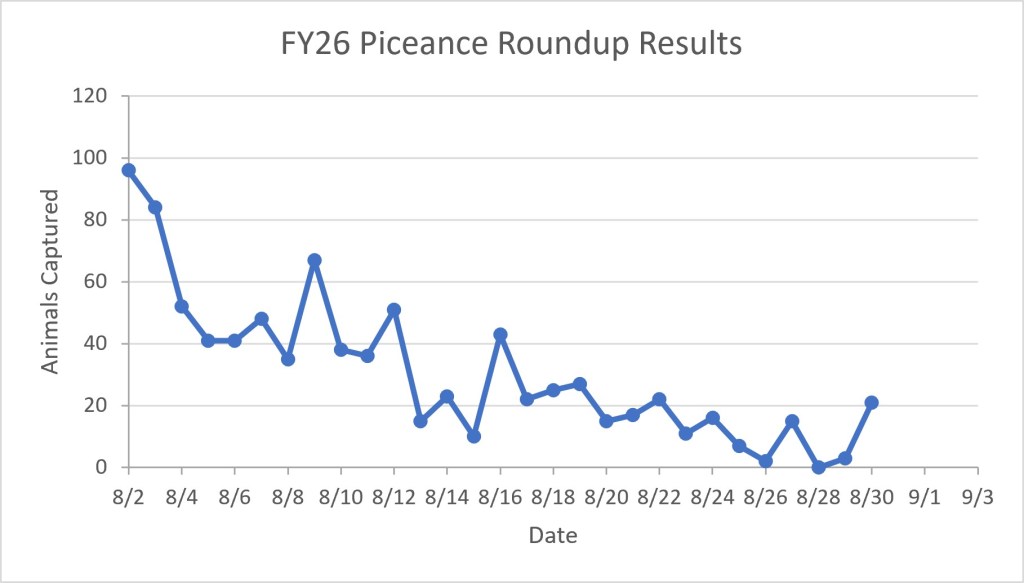
The figures above are based on the daily reports.
A mare was dispatched for a fractured left scapula on Day 29.
The death rate is 0.9%.
Excess animals have been hard to find. The target completion date was September 1.
The capture total included 351 stallions, 364 mares and 168 foals.
Youngsters represented 19.0% of the animals gathered, enough to support a herd growth rate of 14% per year.
Snippet from statute: It is the policy of Congress that wild free-roaming horses and burros shall be protected from capture, branding, harassment, or death
Snippet from manual: To protect wild horses and burros from unauthorized capture, branding, harassment or death
The figures above are based on the daily reports.
A stallion was released (escaped from trap?) on Day 7.
A mare died of a fractured neck on Day 7.
The death rate is 0.4%.
The capture total includes 110 stallions, 114 mares and 36 foals.
Youngsters represented 13.8% of the animals gathered, enough to support a herd growth rate of 8% per year.
All forms of public access and entry will be controlled within two miles of trap locations and public viewing areas according to the Decision Record, which was copied to the project folder in ePlanning with two other documents.
The exception is contractor personnel and observers escorted by BLM staff.
The incident, set to begin on September 9, will be carried out by Cattoor.
The capture and removal goals are 281 and 146 respectively.
Snippet from statute: It is the policy of Congress that wild free-roaming horses and burros shall be protected from capture, branding, harassment, or death
Snippet from manual: To protect wild horses and burros from unauthorized capture, branding, harassment or death
The figures above are based on the daily reports.
The capture total includes 82 stallions, 84 mares and 27 foals.
Youngsters represented 14.0% of the animals gathered, enough to support a herd growth rate of 9% per year.
Of the adults, 49.4% were male and 50.6% were female, no indication of an abnormal sex ratio.
Body condition scores were not given.
The location of the trap site was not disclosed.
The contractor is Sampson and the contract amount is $235,536 according to a report at USA Spending.
There are no plans to treat any of the mares with fertility control pesticides and return them to the range.
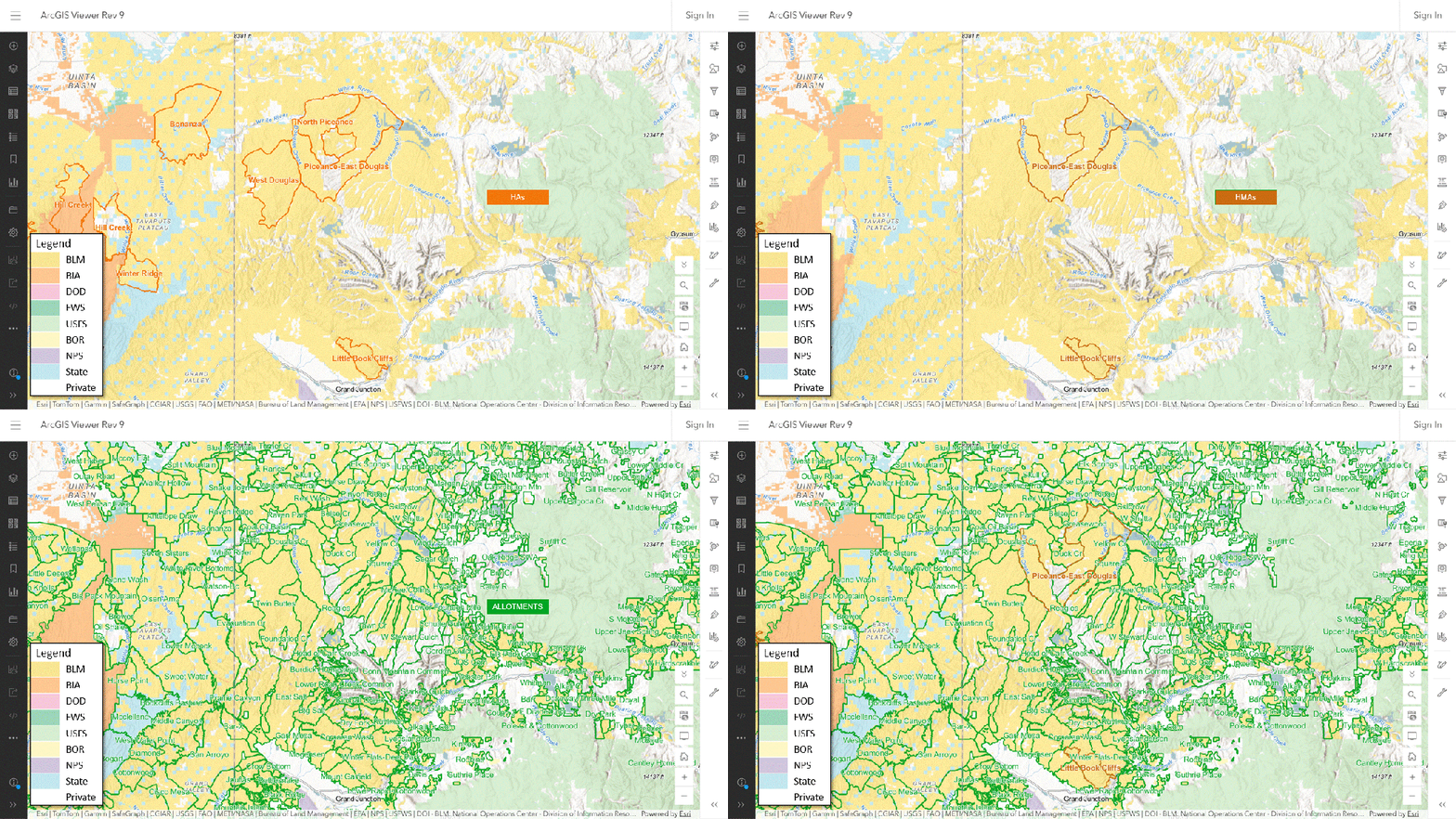
The HMA is subject to permitted grazing. Resources liberated to date:
Snippet from statute: It is the policy of Congress that wild free-roaming horses and burros shall be protected from capture, branding, harassment, or death
Snippet from manual: To protect wild horses and burros from unauthorized capture, branding, harassment or death
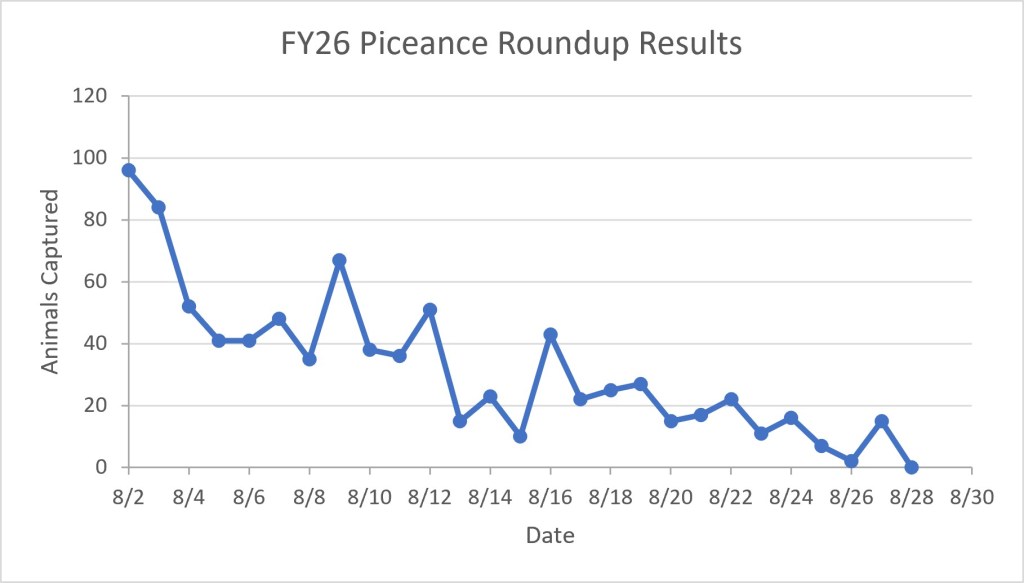
The figures above are based on the daily reports.
The death rate is 0.8%.
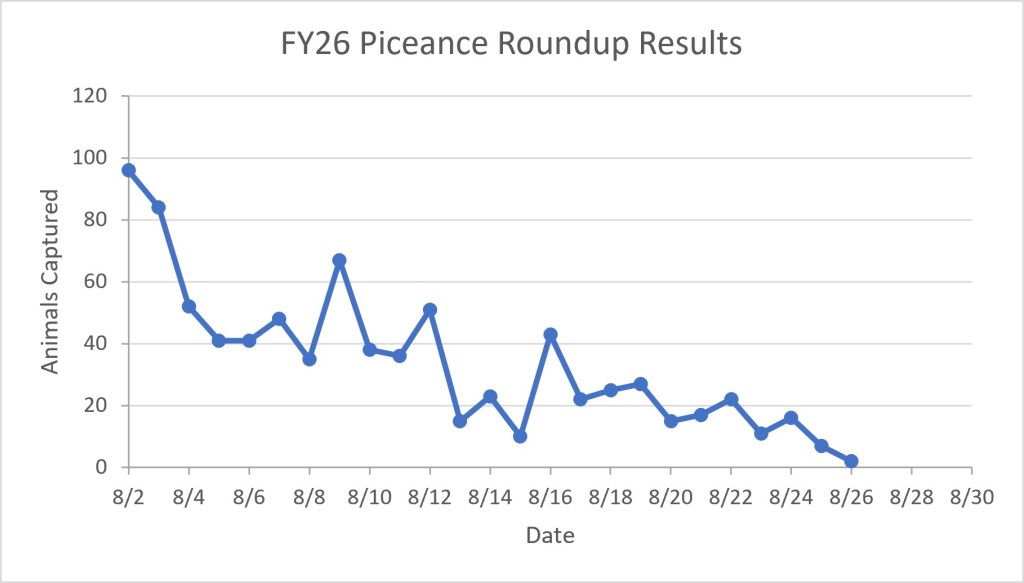
Productivity hit a new low on Day 27 with no horses captured.
The capture total included 343 stallions, 353 mares and 163 foals.
Youngsters represented 19.0% of the animals gathered, enough to support a herd growth rate of 14% per year.
The advocates continue to lie about the reversibility of their favorite pesticide, evident in the public comments for the Stone Cabin EA. Refer to item 20 in Appendix K of the final planning documents.
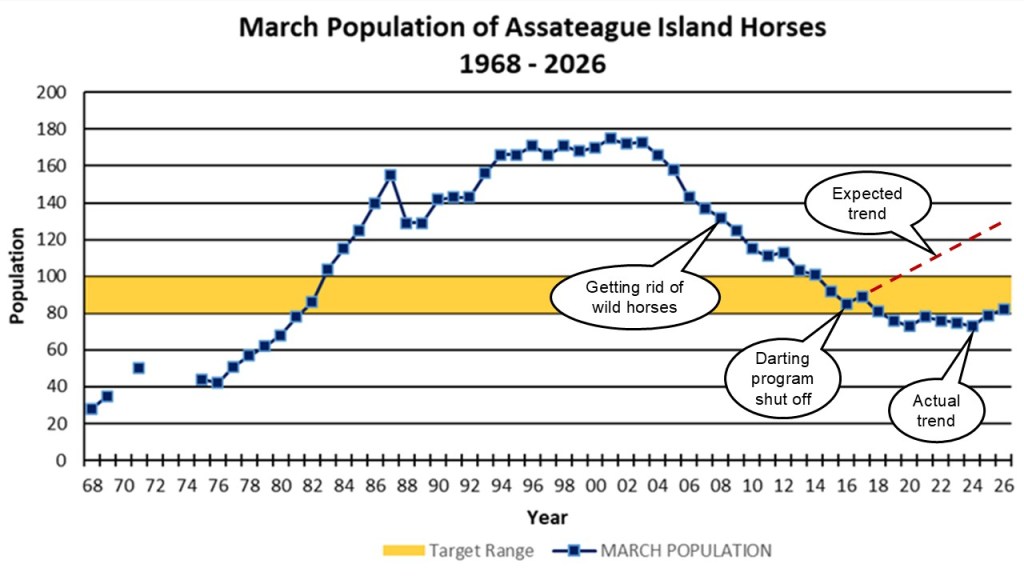
The trend chart for the Maryland side of Assateague Island tells a different story.
If PZP was reversible, and the sperm-blocking theory was true, the herd should have quadrupled in the ten years since the darting program was shut off.
Snippet from statute: It is the policy of Congress that wild free-roaming horses and burros shall be protected from capture, branding, harassment, or death
Snippet from manual: To protect wild horses and burros from unauthorized capture, branding, harassment or death
The figures above are based on the daily reports.
The capture total includes 54 stallions, 53 mares and 18 foals.
Youngsters represented 14.4% of the animals gathered.
Of the adults, 50.5% were male and 49.5% were female.
Body condition scores were not given.
The location of the trap site was not disclosed.
The contractor is Sampson and the contract amount is $235,536 according to a report at USA Spending.
There are no plans to treat any of the mares with fertility control pesticides and return them to the range.
The HMA is subject to permitted grazing. Resources liberated to date:
Snippet from statute: It is the policy of Congress that wild free-roaming horses and burros shall be protected from capture, branding, harassment, or death
Snippet from manual: To protect wild horses and burros from unauthorized capture, branding, harassment or death
The figures above are based on the daily reports.
The death rate is 0.8%.
Productivity hit a new low on Day 25 with two horses captured.
The capture total includes 334 stallions, 349 mares and 161 foals.
Youngsters represented 19.1% of the animals gathered, enough to support a herd growth rate of 14% per year.
The incident has not been announced but it’s on the schedule with a start date of September 15.
The contractor is Sampson and the contract amount is $198,732 according to a report at USA Spending.
The roundup will leave around 100 wild horses to repopulate the HMA, a necessary condition for genetic diversity.
The advocates want permanent change, to be achieved through permanent infertility, sometimes referred to as destroying the breeding population with PZP.
Snippet from statute: It is the policy of Congress that wild free-roaming horses and burros shall be protected from capture, branding, harassment, or death
Snippet from manual: To protect wild horses and burros from unauthorized capture, branding, harassment or death
The figures above are based on the daily reports.
On Day 22 a colt was found dead at temporary holding.
On Day 23, a stallion was dispatched for a neck injury that did not heal properly.
The death rate is 0.8%.
The capture total includes 331 stallions, 344 mares and 160 foals.
Youngsters represented 19.2% of the animals gathered, enough to support a herd growth rate of 14% per year.
Snippet from statute: It is the policy of Congress that wild free-roaming horses and burros shall be protected from capture, branding, harassment, or death
Snippet from manual: To protect wild horses and burros from unauthorized capture, branding, harassment or death
The figures above are based on the daily reports.
The death rate is 0.6%.
The capture total includes 316 stallions, 335 mares and 157 foals.
Youngsters represented 19.4% of the animals gathered, enough to support a herd growth rate of 14% per year.