What Do AMLs Tell You About Wild Horse Growth Rates?

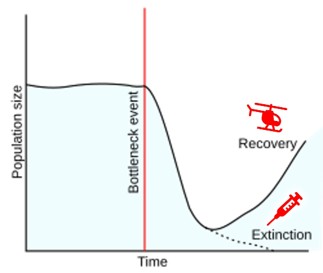
The AML for the Pryor Mountain HMA did not increase in the updated management plan but the interval between high and low decreased, suggesting the birth rate will be going down and the death rate will be going up (as the age of the herd increases).

The range between the endpoints is usually based on a doubling of herd size every four to five years, which might make sense in areas where nature is allowed to run its course.

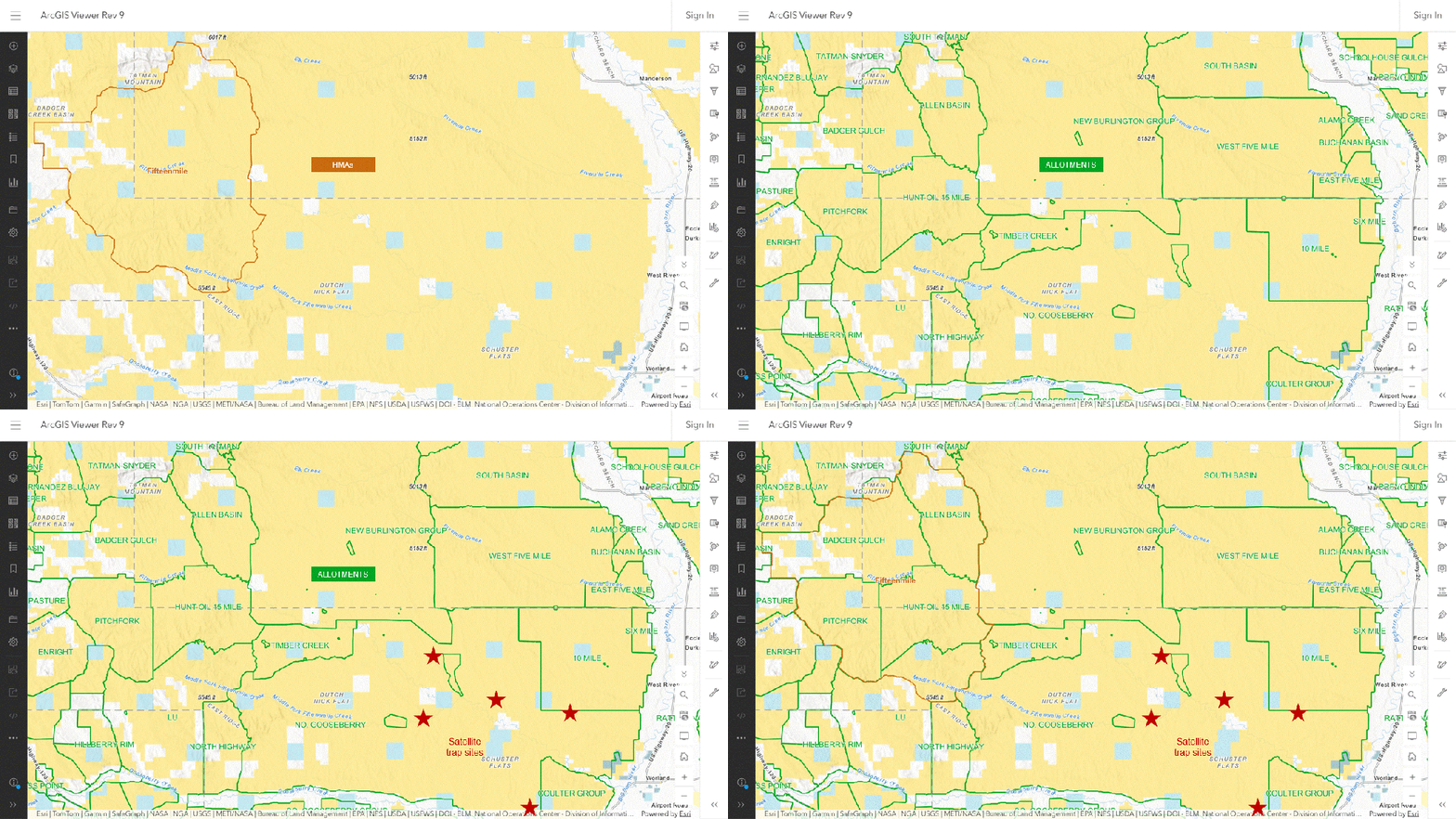
For example, at the Fifteenmile HMA in Wyoming, the AML is 100 to 230.

What about HMAs where the advocates are involved?

At Stewart Creek, where WYWHIP poisons the mares with PZP, the range is 125 to 175.

The closer the endpoints the lower the growth rate.

The previous AML at Pryor, 90 to 120, yields a growth rate of roughly 5.9% per year for five years.

The new AML, 107 to 120, yields a growth rate of 2.3% per year over the same period.

You can determine the growth rate by solving this relationship for GR, where AMLH is upper endpoint, AMLL is the lower endpoint, GR is the growth rate in percent and n is the period in years.

AMLH=AMLL(1+GR/100)nAML_H = AML_L (1 + GR/100)^n

Or you can use this spreadsheet.

You can check the calculation by plugging the results into the formula.

107(1+2.3/100)5=120107(1 + 2.3/100)^5 = 120

How will the new AML be achieved?

Long-term use of PZP, much to the delight of the advocates, with the inevitable result of permanent infertility and herd collapse.

► Get the truth about wild horses and the wild horse advocates at westernhorsewatchers.com.

Palomino Valley Corrals Threatened by Wildfires?

The Bug Fire is a few miles to the west and the Stallion Fire is a few miles to the east according to the August 13 map at Inciweb.

Both fires are believed to be human caused.

A report by KRNV News says that over 1,600 wild horses and burros will remain at the facility, the safest option for their welfare according to a BLM spokesperson.

► Get the truth about wild horses and the wild horse advocates at westernhorsewatchers.com.

Pryor Roundup Announced

Removal of 40 wild horses is not in the FY26 schedule, but that’s the plan according to yesterday’s news release.

The capture goal may be higher because some of the mares with be treated with fertility control and returned to the range.

The current population is thought to be 187.

A start date was not given.

Animals will be drawn into the traps with bait.

Operations will probably not be open to public observation.

Horses identified for removal may be taken to the holding facility at Britton Springs but the ultimate destination was not specified.

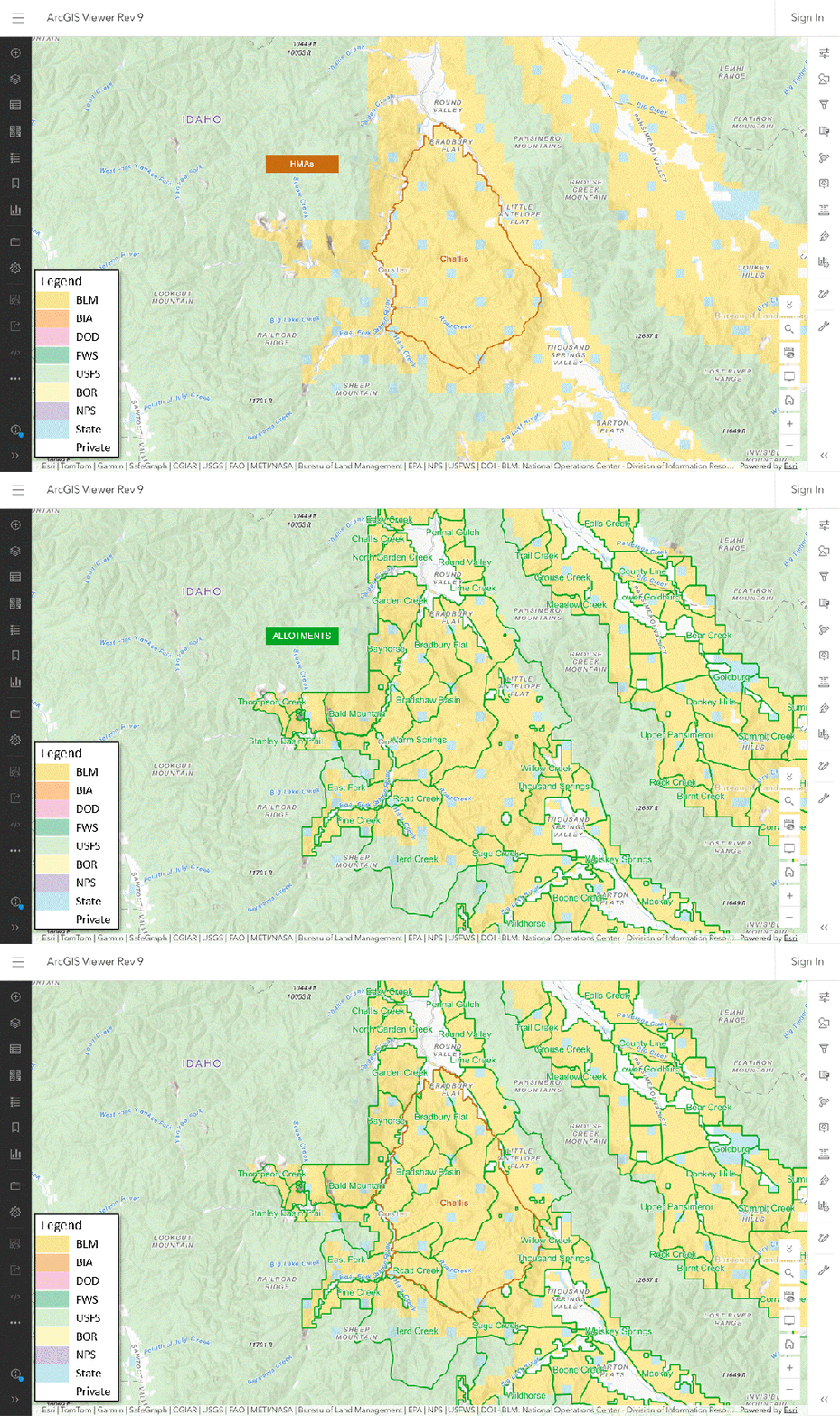
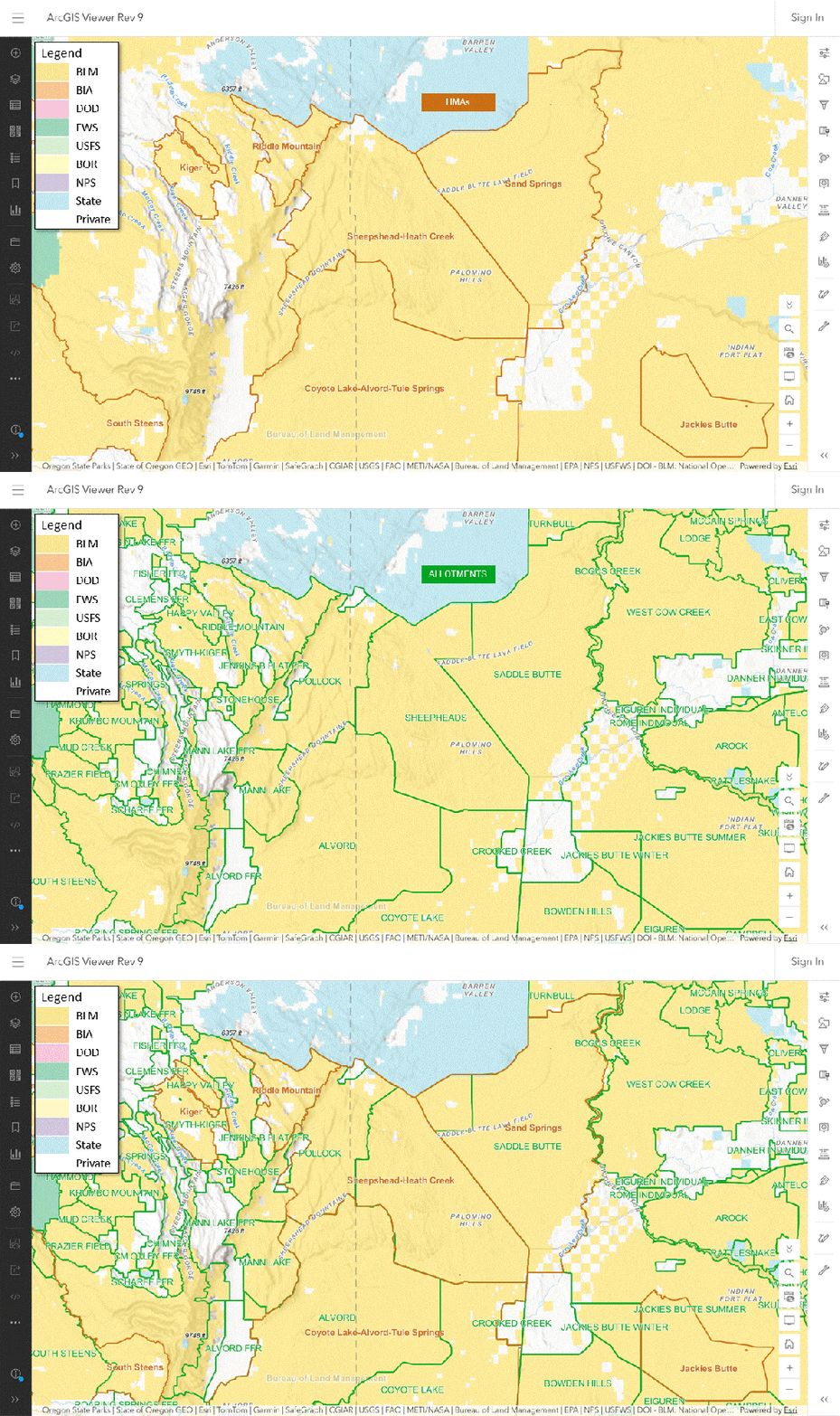
The HMA is not subject to permitted grazing but is surrounded by allotments on all but the east side.

The announcement contains two incompatible statements:

  • The AML is 107 to 120 horses
  • The gather will help ensure the herd remains healthy and genetically diverse

The narrow range of the AML implies heavy use of fertility control, as discussed previously, which destroys the breeding population and ends genetic mixing.

Removal of horses cannot improve or maintain genetic diversity if the remnant is too small and/or the mares have been ruined with PZP, which is the case at Pryor.

The advocates, evil beyond imagination, are 100% on board with the idea.

RELATED: BLM Issues Final Planning Docs for Pryor HMAP and AML.

► Get the truth about wild horses and the wild horse advocates at westernhorsewatchers.com.

Bible Springs Roundup, Day 11

The incident started on August 2.  Results through August 12:

  • Scope: Bible SpringsFour Mile, Tilly Creek HMAs, Blawn Wash HA
  • Target: Horses
  • AML: 170
  • Pre-gather population: 961
  • Type: Planned
  • Method: Helicopter
  • Category: Cruel and costly (according to advocates)
  • Better way: Sterilize the mares with PZP (according to advocates)
  • Capture goal: 800
  • Removal goal: 800
  • Captured: 367, up from 282 on Day 9
  • Shipped: 269, up from 221 on Day 9
  • Released: None
  • Deaths: 3, up from 2 on Day 9
  • Average daily take: 33.4
  • Unaccounted-for animals: 95
  • Snippet from statute: It is the policy of Congress that wild free-roaming horses and burros shall be protected from capture, branding, harassment, or death
  • Snippet from manual: To protect wild horses and burros from unauthorized capture, branding, harassment or death

The figures above are based on the daily reports.

A horse was euthanized on Day 10 for a preexisting condition.  No details were given.

The death rate is 0.8%.

The capture total includes 123 stallions, 161 mares and 83 foals.

Youngsters represented 22.6% of the animals gathered, enough to support a herd growth rate of 17% per year.

Of the adults, 43.3% were male and 56.7% were female, no indication of an abnormal sex ratio.

Body condition scores were not given.

The location of the trap site was not disclosed.

The contractor is Sampson Livestock and the contract amount is $497,130 according to a report at USA Spending.

There are no plans to treat any of the mares with fertility control pesticides and return them to the range, a huge disappointment to the advocates.

The HMAs are subject to permitted grazing.  Resources liberated to date:

  • Forage: 4,404 AUMs per year
  • Water: 3,670 gallons per day

The Blawn Wash HA is unfit for wild horses, supposedly, and has no AML.

PREVIOUS: Bible Springs Roundup, Day 9.

► Get the truth about wild horses and the wild horse advocates at westernhorsewatchers.com.

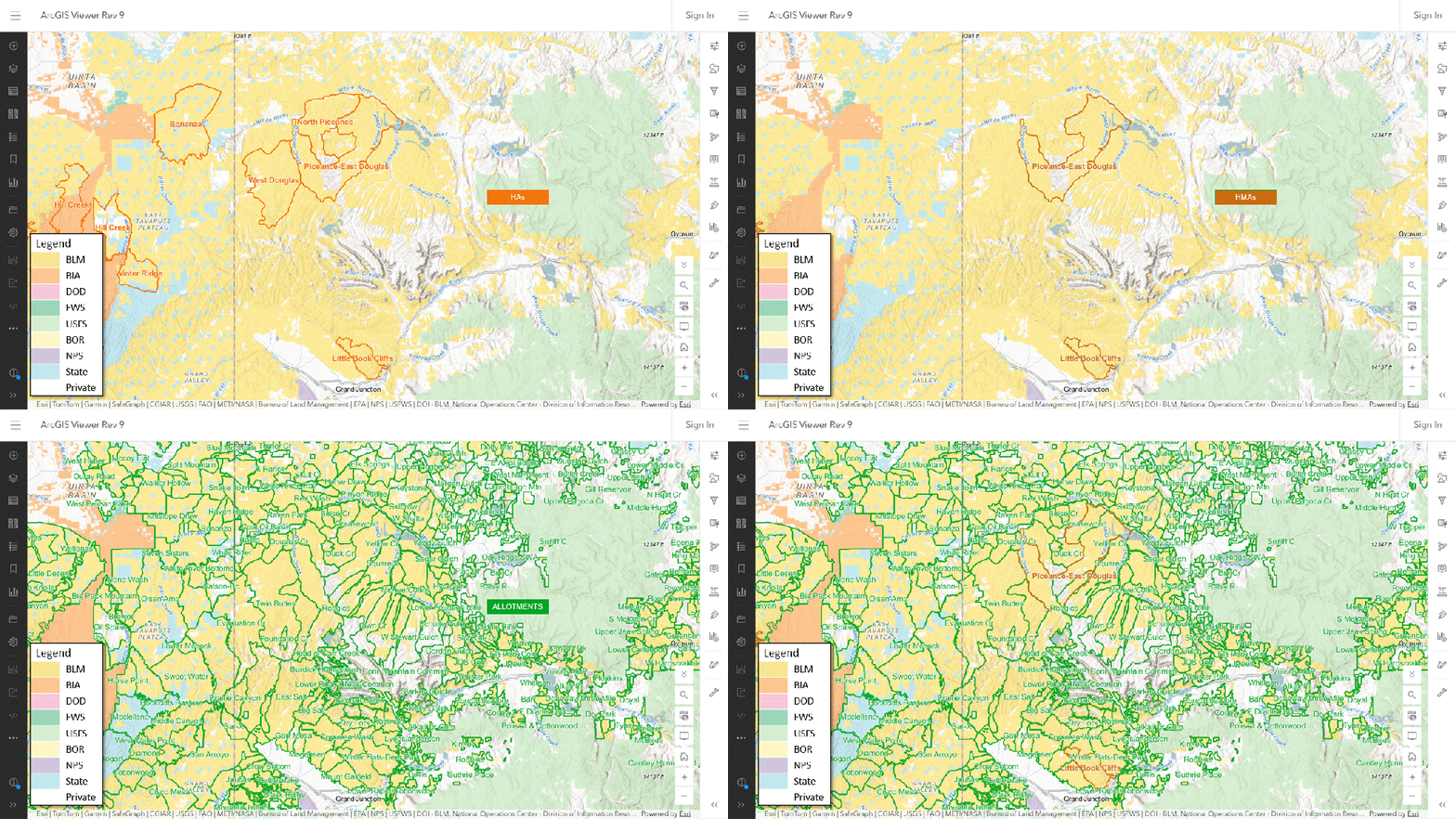
Piceance Roundup, Day 11

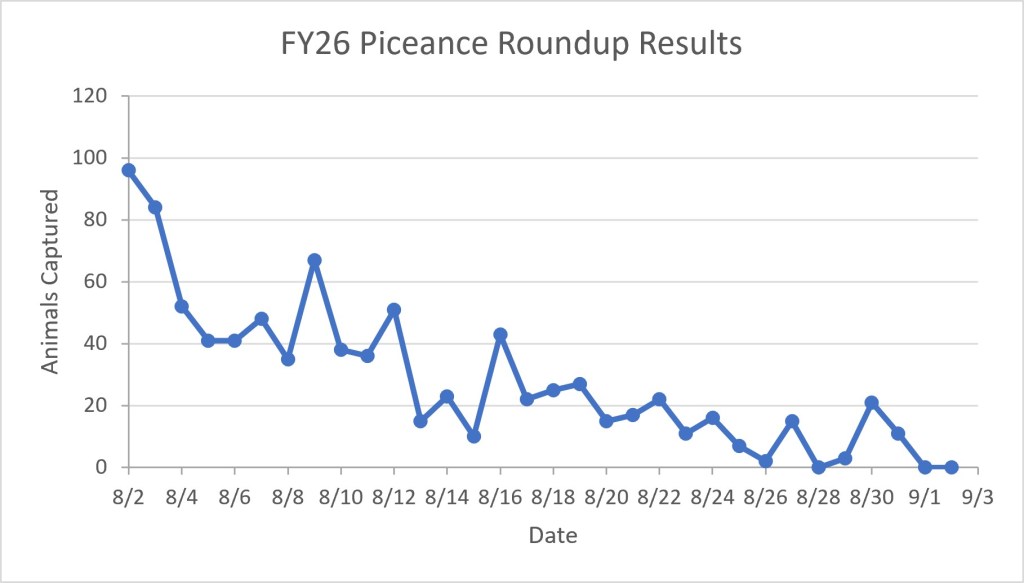
The incident started on August 2.  Results through August 12:

  • Scope: Piceance-East Douglas HMA, West Douglas HA
  • Target: Horses
  • AML: 235
  • Pre-gather population: 1,145
  • Type: Planned
  • Method: Helicopter
  • Category: Costly and inhumane (according to advocates)
  • Better way: Eliminate the breeding population with PZP (according to advocates)
  • Capture goal: 1,025
  • Removal goal: 1,011
  • Captured: 589, up from 502 on Day 9
  • Shipped: 500, up from 416 on Day 9
  • Released: None
  • Deaths: 4, up from 3 on Day 9
  • Average daily take: 53.5
  • Unaccounted-for animals: 85
  • Snippet from statute: It is the policy of Congress that wild free-roaming horses and burros shall be protected from capture, branding, harassment, or death
  • Snippet from manual: To protect wild horses and burros from unauthorized capture, branding, harassment or death

The figures above are based on the daily reports.

A stallion was dispatched on Day 11 for a preexisting condition.

The death rate is 0.7%.

The capture total includes 227 stallions, 246 mares and 116 foals.

Youngsters represented 19.7% of the animals gathered, enough to support a herd growth rate of 15% per year.

Of the adults, 48.0% were male and 52.0% were female, no indication of an abnormal sex ratio.

Body condition scores on Days 10 and 11 ranged from 3 to 4.

The location of the trap site was not disclosed.

The contractor is CD Warner Livestock and the contract amount is $679,249, based on a report at USA Spending.

The area is subject to permitted grazing.  Resources liberated to date:

  • Forage: 7,068 AUMs per year
  • Water: 5,890 gallons per day

The West Douglas HA is unfit for wild horses, supposedly, and has no AML.

PREVIOUS: Piceance Roundup, Day 9.

► Get the truth about wild horses and the wild horse advocates at westernhorsewatchers.com.

Wild Horse Mesa Flies Under Colorado’s Darting Radar?

Like the Virginia Range, where the horses roam mostly on private land, the San Luis herd is not protected by the WHB Act.

They exist in a legal no-man’s land, living by the goodwill of off-grid homesteaders and the tolerance of ranchers according to a story by The Colorado Springs Gazette.

Judy Barnes, their caretaker for nearly 30 years, says they’ve survived because they’re overlooked.

She is opposed to any intervention by the BLM, which she sees as an enemy of wild horses.

What about CDA and its legal mandate to provide resources and support for humane management—a codeword for mass sterilization—in the state’s four HMAs?

Consider the experience of TJ Holmes, the pesticide pusher at Spring Creek Basin who sits on the Wild Horse Advisory Committee.

The herd, in her estimation, is now on the edge of continued genetic viability.

The article said she has brought in mares from other areas to strengthen the gene pool, which is the only way to save other herds ruined by the advocates.

Pure fiction.

They, and their darting programs, are a dead end for America’s wild horses.

RELATED: Explosion Spares Life of Spirit of the Wild Horse Director.

► Get the truth about wild horses and the wild horse advocates at westernhorsewatchers.com.

Bible Springs Roundup, Day 9

The incident started on August 2.  Results through August 10:

  • Scope: Bible SpringsFour Mile, Tilly Creek HMAs, Blawn Wash HA
  • Target: Horses
  • AML: 170
  • Pre-gather population: 961
  • Type: Planned
  • Method: Helicopter
  • Category: Cruel and costly (according to advocates)
  • Better way: Eliminate genetic mixing with PZP (according to advocates)
  • Capture goal: 800
  • Removal goal: 800
  • Captured: 282, up from 223 on Day 7
  • Shipped: 221, up from 171 on Day 7
  • Released: None
  • Deaths: 2, no change from Day 7
  • Average daily take: 31.3
  • Unaccounted-for animals: 59
  • Snippet from statute: It is the policy of Congress that wild free-roaming horses and burros shall be protected from capture, branding, harassment, or death
  • Snippet from manual: To protect wild horses and burros from unauthorized capture, branding, harassment or death

The figures above are based on the daily reports.

No animals were taken on Day 8.

The death rate is 0.7%.

The capture total includes 104 stallions, 119 mares and 59 foals.

Youngsters represented 20.9% of the animals gathered, large enough to support a herd growth rate of 16% per year.

Of the adults, 46.6% were male and 53.4% were female, no indication of an abnormal sex ratio.

Body condition scores were not given.

The location of the trap site was not disclosed.

The contractor is Sampson Livestock and the contract amount is $497,130 according to a report at USA Spending.

There are no plans to treat any of the mares with fertility control pesticides and return them to the range, a huge disappointment to the advocates.

The HMAs are subject to permitted grazing.  Resources liberated to date:

  • Forage: 3,384 AUMs per year
  • Water: 2,820 gallons per day

The Blawn Wash HA is unfit for wild horses, supposedly, and has no AML.

PREVIOUS: Bible Springs Roundup, Day 7.

► Get the truth about wild horses and the wild horse advocates at westernhorsewatchers.com.

Piceance Roundup, Day 9

The incident started on August 2.  Results through August 10:

  • Scope: Piceance-East Douglas HMA, West Douglas HA
  • Target: Horses
  • AML: 235
  • Pre-gather population: 1,145
  • Type: Planned
  • Method: Helicopter
  • Category: Costly and inhumane (according to advocates)
  • Better way: Beat the numbers down with PZP (according to advocates)
  • Capture goal: 1,025
  • Removal goal: 1,011
  • Captured: 502, up from 397 on Day 7
  • Shipped: 416, up from 333 on Day 7
  • Released: None
  • Deaths: 3, up from 1 on Day 7
  • Average daily take: 55.8
  • Unaccounted-for animals: 83
  • Snippet from statute: It is the policy of Congress that wild free-roaming horses and burros shall be protected from capture, branding, harassment, or death
  • Snippet from manual: To protect wild horses and burros from unauthorized capture, branding, harassment or death

The figures above are based on the daily reports.

Two stallions were put down on Day 8 for preexisting conditions.  No details were given.

The death rate is 0.6%.

The capture total includes 194 stallions, 211 mares and 97 foals.

Youngsters represented 19.3% of the animals gathered, large enough to support a herd growth rate of 14% per year.

Of the adults, 47.9% were male and 52.1% were female, no indication of an abnormal sex ratio.

Body condition scores on Days 8 and 9 ranged from 3 to 4.

The location of the trap site is not known.

The name of the contractor was not specified.

The contract amount was not disclosed.

The area is subject to permitted grazing.  Resources liberated to date:

  • Forage: 6,024 AUMs per year
  • Water: 5,020 gallons per day

The West Douglas HA is unfit for wild horses, supposedly, and has no AML.

PREVIOUS: Piceance Roundup, Day 7.

UPDATE: The contractor is CD Warner Livestock and the contract amount is $679,249, based on a report at USA Spending.

► Get the truth about wild horses and the wild horse advocates at westernhorsewatchers.com.

Bible Springs Roundup, Day 7

The incident started on August 2.  Results through August 8:

  • Scope: Bible SpringsFour Mile, Tilly Creek HMAs, Blawn Wash HA
  • Target: Horses
  • AML: 170
  • Pre-gather population: 961
  • Type: Planned
  • Method: Helicopter
  • Category: Costly and inhumane (according to advocates)
  • Better way: Snuff out new life with PZP (according to advocates)
  • Capture goal: 800
  • Removal goal: 800
  • Captured: 223, up from 146 on Day 5
  • Shipped: 171, up from 81 on Day 5
  • Released: None
  • Deaths: 2, up from 1 on Day 5
  • Average daily take: 31.9
  • Unaccounted-for animals: 50
  • Snippet from statute: It is the policy of Congress that wild free-roaming horses and burros shall be protected from capture, branding, harassment, or death
  • Snippet from manual: To protect wild horses and burros from unauthorized capture, branding, harassment or death

The figures above are based on the daily reports.

A foal was found dead in temporary holding on Day 6.

The death rate is 0.9%.

The capture total includes 79 stallions, 98 mares and 46 foals.

Youngsters represented 20.6% of the animals gathered, large enough to support a herd growth rate of 15% per year.

Of the adults, 44.6% were male and 55.4% were female, no indication of an abnormal sex ratio.

Body condition scores were not given.

The location of the trap site is not known.

The name of the contractor was not specified.

The contract amount was not disclosed.

There are no plans to treat any of the mares with fertility control pesticides and return them to the range.

The HMAs are subject to permitted grazing.  Resources liberated to date:

  • Forage: 2,676 AUMs per year
  • Water: 2,230 gallons per day

The Blawn Wash HA is unfit for wild horses, supposedly, and has no AML.

PREVIOUS: Bible Springs Roundup, Day 5.

► Get the truth about wild horses and the wild horse advocates at westernhorsewatchers.com.

Piceance Roundup, Day 7

The incident started on August 2.  Results through August 8:

  • Scope: Piceance-East Douglas HMA, West Douglas HA
  • Target: Horses
  • AML: 235
  • Pre-gather population: 1,145
  • Type: Planned
  • Method: Helicopter
  • Category: Costly and inhumane (according to advocates)
  • Better way: Destroy the breeding population with PZP (according to advocates)
  • Capture goal: 1,025
  • Removal goal: 1,011
  • Captured: 397, up from 314 on Day 5
  • Shipped: 333, up from 209 on Day 5
  • Released: None
  • Deaths: 1, no change from Day 5
  • Average daily take: 56.7
  • Unaccounted-for animals: 63
  • Snippet from statute: It is the policy of Congress that wild free-roaming horses and burros shall be protected from capture, branding, harassment, or death
  • Snippet from manual: To protect wild horses and burros from unauthorized capture, branding, harassment or death

The figures above are based on the daily reports.

The death rate is 0.3%.

The capture total includes 149 stallions, 167 mares and 81 foals.

Youngsters represented 20.4% of the animals gathered, large enough to support a herd growth rate of 15% per year.

Of the adults, 47.2% were male and 52.8% were female, no indication of an abnormal sex ratio in the population.

Body condition scores on Days 6 and 7 ranged from 3 to 4.

The location of the trap site is not known.

The name of the contractor was not specified.

The contract amount was not disclosed.

The area is subject to permitted grazing.  Resources liberated to date:

  • Forage: 4,764 AUMs per year
  • Water: 3,970 gallons per day

The West Douglas HA is unfit for wild horses, supposedly, and has no AML.

PREVIOUS: Piceance Roundup, Day 5.

► Get the truth about wild horses and the wild horse advocates at westernhorsewatchers.com.

BLM Releases Jackson Mountains Final Planning Documents

Three new documents have been copied to the project folder.

The Decision Record authorizes Alternative A, the Proposed Action, discussed in section 2.0 of the Final Environmental Assessment.

  • Implement new HMAP
  • No changes to AML
  • Forcible removal to low AML
  • Application of fertility control pesticides
  • Return of sterilized males and females to range
  • Sex ratio adjustments favoring males

The EA analyzed the direct, indirect and cumulative effects of implementing the HMAP on the lands, resources and wild horses within the HMA according to the news release.

The Finding of No Significant Impact asserts that no further analysis is needed.

PREVIOUS: Jackson Mountains Planning Documents Out for Review.

► Get the truth about wild horses and the wild horse advocates at westernhorsewatchers.com.

Foal-Free Friday, Connecting the Dots Edition

The advocates, blinded by ideology, cannot see the relationship between their fertility control programs and genetic diversity.

Consider this example from Appendix XII, response to public comments, in the North Complex Wild Horse Gather Plan.

Item 15 concerns AMLs and genetic viability:

Item 17, submitted by the same person, concerns fertility control:

BLM Handbook H-4700-1 says in section 4.4.6.3 that a minimum population size of 50 effective breeding animals (i.e., a total population size of about 150-200 animals) is recommended to maintain an acceptable level of genetic diversity.

The guideline applies to reproducing populations.

Apparently, the advocates think that genetic health can be achieved and maintained by reducing or eliminating genetic mixing.

It is they, not the BLM, that have some explaining to do.

PREVIOUS: Foal-Free Friday, Beating a Dead Horse Herd Edition.

► Get the truth about wild horses and the wild horse advocates at westernhorsewatchers.com.

Bible Springs Roundup, Day 5

The incident started on August 2.  Results through August 6:

  • Scope: Bible SpringsFour Mile, Tilly Creek HMAs, Blawn Wash HA
  • Target: Horses
  • AML: 170
  • Pre-gather population: 961
  • Type: Planned
  • Method: Helicopter
  • Category: Costly and inhumane (according to advocates)
  • Better way: Stop the transmission of life with PZP (according to advocates)
  • Capture goal: 800
  • Removal goal: 800
  • Captured: 146, up from 50 on Day 3
  • Shipped: 81, up from zero on Day 3
  • Released: None
  • Deaths: 1, up from zero on Day 3
  • Average daily take: 29.2
  • Unaccounted-for animals: 64
  • Snippet from statute: It is the policy of Congress that wild free-roaming horses and burros shall be protected from capture, branding, harassment, or death
  • Snippet from manual: To protect wild horses and burros from unauthorized capture, branding, harassment or death

The figures above are based on the daily reports.

A mare was found dead in temporary holding on Day 4.

The death rate is 0.7%.

The capture total includes 52 stallions, 61 mares and 33 foals.

Youngsters represented 22.6% of the animals gathered, large enough to support a herd growth rate of 17% per year.

Of the adults, 46.0% were male and 54.0% were female, no indication of an abnormal sex ratio.

Body condition scores were not given.

The location of the trap site is not known.

The name of the contractor was not specified.

The contract amount was not disclosed.

There are no plans to treat any of the mares with fertility control pesticides and return them to the range.

The HMAs are subject to permitted grazing.  Resources liberated to date:

  • Forage: 1,752 AUMs per year
  • Water: 1,460 gallons per day

The Blawn Wash HA is unfit for wild horses, supposedly, and has no AML.

PREVIOUS: Bible Springs Roundup, Day 3.

► Get the truth about wild horses and the wild horse advocates at westernhorsewatchers.com.

Piceance Roundup, Day 5

The incident started on August 2.  Results through August 6:

  • Scope: Piceance-East Douglas HMA, West Douglas HA
  • Target: Horses
  • AML: 235
  • Pre-gather population: 1,145
  • Type: Planned
  • Method: Helicopter
  • Category: Costly and inhumane (according to advocates)
  • Better way: Sterilize the mares with PZP (according to advocates)
  • Capture goal: 1,025
  • Removal goal: 1,011
  • Captured: 314, up from 232 on Day 3
  • Shipped: 209, up from 166 on Day 3
  • Released: None
  • Deaths: 1, up from zero on Day 3
  • Average daily take: 62.8
  • Unaccounted-for animals: 104
  • Snippet from statute: It is the policy of Congress that wild free-roaming horses and burros shall be protected from capture, branding, harassment, or death
  • Snippet from manual: To protect wild horses and burros from unauthorized capture, branding, harassment or death

The figures above are based on the daily reports.

A mare died on Day 5 during trailer transport.

The death rate is 0.3%.

The capture total includes 117 stallions, 134 mares and 63 foals.

Youngsters represented 20.1% of the animals gathered, large enough to support a herd growth rate of 15% per year.

Of the adults, 46.6% were male and 53.4% were female, no indication of an abnormal sex ratio.

Body condition scores on Days 4 and 5 ranged from 3 to 4.

The location of the trap site is not known.

The name of the contractor was not specified.

The contract amount was not disclosed.

The area is subject to permitted grazing.  Resources liberated to date:

  • Forage: 3,768 AUMs per year
  • Water: 3,140 gallons per day

The West Douglas HA is unfit for wild horses, supposedly, and has no AML.

PREVIOUS: Piceance Roundup, Day 3.

► Get the truth about wild horses and the wild horse advocates at westernhorsewatchers.com.

Second Flat Fire Stopped Short of Oregon ORC

The fire covered 105,462 acres as of August 4 with 55% containment.

The August 4 map shows a black border near the corrals, indicating little if any spread is expected in that area.

Not shown are the grazing allotments, both BLM and USFS, affected by the incident.

The nearest HMA was Palomino Buttes, a few miles west of the corrals.

RELATED: Second Flat Fire Approaching Oregon ORC?

► Get the truth about wild horses and the wild horse advocates at westernhorsewatchers.com.

Bible Springs Roundup, Day 3

The incident started on August 2.  Results through August 4:

  • Scope: Bible SpringsFour Mile, Tilly Creek HMAs, Blawn Wash HA
  • Target: Horses
  • AML: 170
  • Pre-gather population: 961
  • Type: Planned
  • Method: Helicopter
  • Category: Costly and inhumane (according to advocates)
  • Better way: Snuff out new life with PZP (according to advocates)
  • Capture goal: 800
  • Removal goal: 800
  • Captured: 50, up from 19 on Day 1
  • Shipped: None
  • Released: None
  • Deaths: None
  • Average daily take: 16.7
  • Unaccounted-for animals: 50
  • Snippet from statute: It is the policy of Congress that wild free-roaming horses and burros shall be protected from capture, branding, harassment, or death
  • Snippet from manual: To protect wild horses and burros from unauthorized capture, branding, harassment or death

The figures above are based on the daily reports.

The capture total includes 20 stallions, 18 mares and 12 foals.

Youngsters represented 24% of the animals gathered.

Of the adults, 52.6% were male and 47.4% were female.

Body condition scores were not given.

The location of the trap site is not known.

The name of the contractor was not specified.

The contract amount was not disclosed.

There are no plans to treat any of the mares with fertility control pesticides and return them to the range.

The HMAs are subject to permitted grazing.  Resources liberated to date:

  • Forage: 600 AUMs per year
  • Water: 500 gallons per day

The Blawn Wash HA is unfit for wild horses, supposedly, and has no AML.

PREVIOUS: Bible Springs Roundup Begins.

► Get the truth about wild horses and the wild horse advocates at westernhorsewatchers.com.

Piceance Roundup, Day 3

The incident started on August 2.  Results through August 4:

  • Scope: Piceance-East Douglas HMA, West Douglas HA
  • Target: Horses
  • AML: 235
  • Pre-gather population: 1,145
  • Type: Planned
  • Method: Helicopter
  • Category: Costly and inhumane (according to advocates)
  • Better way: Beat the population down with PZP (according to advocates)
  • Capture goal: 1,025
  • Removal goal: 1,011
  • Captured: 232, up from 96 on Day 1
  • Shipped: 166, up from zero on Day 1
  • Released: None
  • Deaths: None
  • Average daily take: 77.3
  • Unaccounted-for animals: 66
  • Snippet from statute: It is the policy of Congress that wild free-roaming horses and burros shall be protected from capture, branding, harassment, or death
  • Snippet from manual: To protect wild horses and burros from unauthorized capture, branding, harassment or death

The figures above are based on the daily reports.

The capture total includes 81 stallions, 105 mares and 46 foals.

Youngsters represented 19.8% of the animals gathered.

Of the adults, 43.5% were male and 56.5% were female.

Body condition scores on Days 2 and 3 ranged from 3 to 4.

The location of the trap site is not known.

The name of the contractor was not specified.

The contract amount was not disclosed.

The area is subject to permitted grazing.  Resources liberated to date:

  • Forage: 2,784 AUMs per year
  • Water: 2,320 gallons per day

The West Douglas HA is unfit for wild horses, supposedly, and has no AML.

PREVIOUS: Piceance Roundup in Progress.

► Get the truth about wild horses and the wild horse advocates at westernhorsewatchers.com.

Cedar Mountain DNA Out for Review

One document has been uploaded to the project folder with comments due by September 3.

The Proposed Action is to remove up to 500 wild horses from the Cedar Mountain HMA.

The news release said the current population is nearly twice the number the range can sustain, which might be true if the land was managed principally for wild horses.

A roundup, if approved, would occur in FY27.

PREVIOUS: BLM Assessing NEPA Adequacy at Cedar Mountain?

► Get the truth about wild horses and the wild horse advocates at westernhorsewatchers.com.