
Would you be surprised if a manufacturer of antiparasitics sounds the alarm about a threat to the nation’s beef supply when a solution is in the final stages of development?
Consider a September 15 guest column in the Mesa Valleys Progress, submitted in response to a previous column about wild horses in Nevada and written by one of the participants in the secretive Wild Horse and Burro Roundtable.
Addressing Nevada’s wild horse population requires scientifically defensible population objectives, honest examination of livestock forage allocations, sustained fertility control, protection of genetically viable herds, and replacement of routine helicopter roundups with humane, on-range management strategies.
On-range management is a codeword for fertility control, the subject of the roundtable.
The technique interferes with genetic mixing, the source of genetic diversity.

Sustained fertility control is continual application of PZP, an ovary-killing pesticide that gradually creates genetic bottlenecks with no possibility of recovery.
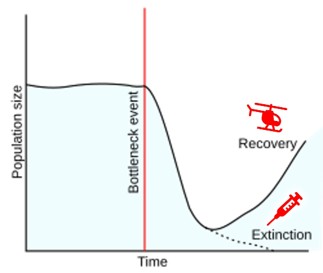
The Salt River is one example. The only way to save the herd is to bring in mares from other areas.
Why didn’t the writer address these issues?
- Managing HMAs principally for wild horses
- Restoring HAs and managing them principally for wild horses
- Purging the bureaucracies of ranchers and ranching sympathizers
- Zeroing out allotments and converting them to wild horse preserves
- Purchasing base properties and converting the preference to wild horses
It’s unlikely that he would have taken a different approach if his NGO was not involved in the roundtable.
They are already predisposed to the idea, evident in the mass sterilization program on the Virginia Range, the largest attempted eradication of wild horses in Nevada.

► Get the truth about wild horses and the wild horse advocates at westernhorsewatchers.com.

