
On Pine Nut Mountains HA.
Category: Range
On the range
VR RFP Deadline Approaches
Proposals for transferring ownership of the Virginia Range horses are due tomorrow, 04/16/18, at 2:00 PM Pacific time.
These guys belong out here.

Freedom Restored
Video from 2012 showing the return of wild horses to Stone Cabin HMA. Their crime? They entered the country by birth.
The Stone Cabin Greys are noted for their change in color from black or bay when young, to grey, to white or almost white in adulthood.
The first wild horse gather was carried out at this HMA in 1975, under the watchful eye of Velma Johnston. Helicopters and motor vehicles were not allowed at the time but were authorized a year later by the Federal Land Policy and Management Act. Johnston died in 1977.
The Cost of Range-Fed Beef
It’s not $1.41 per animal unit month, the fee for grazing on public lands administered by the BLM in 2018.
Compare that to the cost of feeding a horse at your ranch. One bale per week @ $20 per bale, plus some grain @ $20 per sack and you’re pushing $100 per AUM.
One AUM = one cow and calf = one horse = five sheep or goats for a month.
The cost to feed cattle on a ranch is probably less but it’s not $1.41 per AUM. That explains why the ranchers want access to the HMAs. There may be other benefits as well, such as the quality and taste of range-fed beef. (That seems to be the case for free-range eggs, a topic for another post.)
What about the costs of gathers, fertility control, adoption programs, long-term holding and other activities associated with the downsizing of WHB on public lands?
Not to mention the unknown and unknowable costs of losing these icons of freedom, ruggedness and self-reliance.
Those must be added to the basic fee.
An infographic by The Cloud Foundation shows the numbers in 2014.
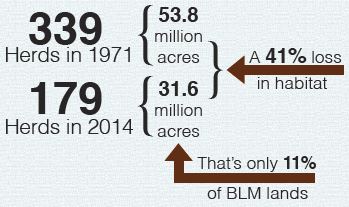
In 2017, there were 177 HMAs in ten western states covering 26.9 million acres, with 73,000 animals on the range and 44,000 in long-term holding. BLM spends roughly $50 million per year to care for the animals in holding. Refer to the presentation by John Ruhs, State Director for BLM in Nevada, at this post.
You won’t be able to reverse the decline by voting for liberals. They don’t like the idea of private property, they want Americans dependent on government. In the case of ranching, that means more cattlemen earning a living off public lands, which means greater demand for the removal of WHB on HMAs.
The answer is self-reliance. Ranchers working their own land. Horses and burros running wild and free on public lands set aside for them in 1971.
2018 Foals – Pine Nut Mountains
More newly minted symbols of freedom, ruggedness and self-reliance.
Yes, we want these guys kept on public lands—minus the ‘humane’ management practices.
Comstock Journalism
The early years of Mark Twain’s writing career are presented in this episode of Bonanza.
Includes some tall tales, literary predecessors of today’s ‘fake news.’
Originally aired 1959. H/T Rope and Wire.
Mustang Monday
Rush Hour on the Virginia Range
Don’t you wish you had a counter-commute?

See for Yourself
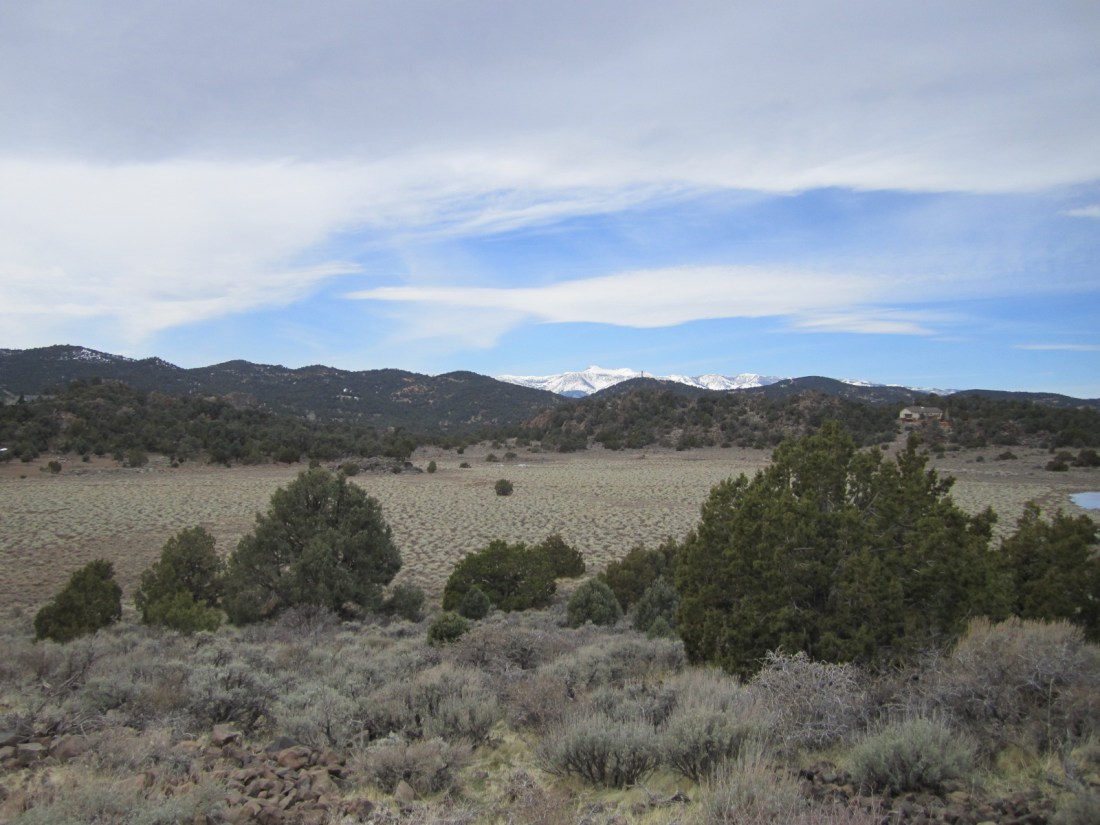
Welcome to the Virginia Range. Here’s what 9.4 horses per thousand acres looks like, roughly ten times the population density of your average HMA.
Photo taken 03/31/18, Mt. Rose in the distance.
Solving Problems That Don’t Exist
What do you get when local ranchers join forces with the BLM to fix the ‘wild horse problem’ on Beatys Butte HMA? The Beaty Butte Wild Horse Training Facility.
Next, add a trainer with experience in the horse racing industry. Throw in bits and shoes for good measure and you’ve got utopia, everything those mustangs dreamed of while on the range.
Finally, justify all of it by ‘the growing list of uses’ of the HMA.
Like the Wild Spayed Filly Futurity, it has its share of clapping seals.
The upper value of the AML yields a stocking rate of 1748 acres per horse (roughly 0.6 horses per thousand acres), almost nothing.
But horses will be gathered annually and fertility control will be applied.
The program started with a 100% gather in 2015, followed by selective return.
The first annual adoption will be held April 13-14 2018 in Adel, OR.
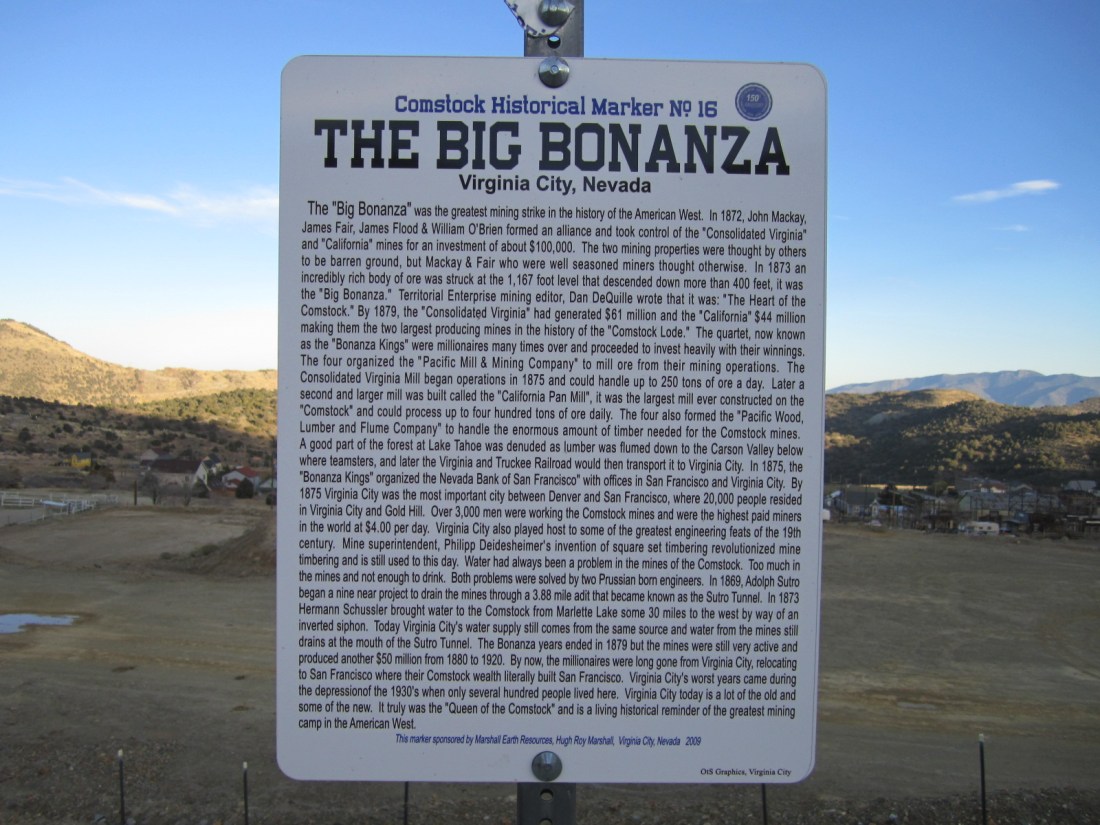
The Big Bonanza
The greatest ore discovery on the Comstock, 1873. Now you know why they call it ‘The Silver State.’ What else is on the reverse side of the Nevada State Quarter? Wild horses, of course.
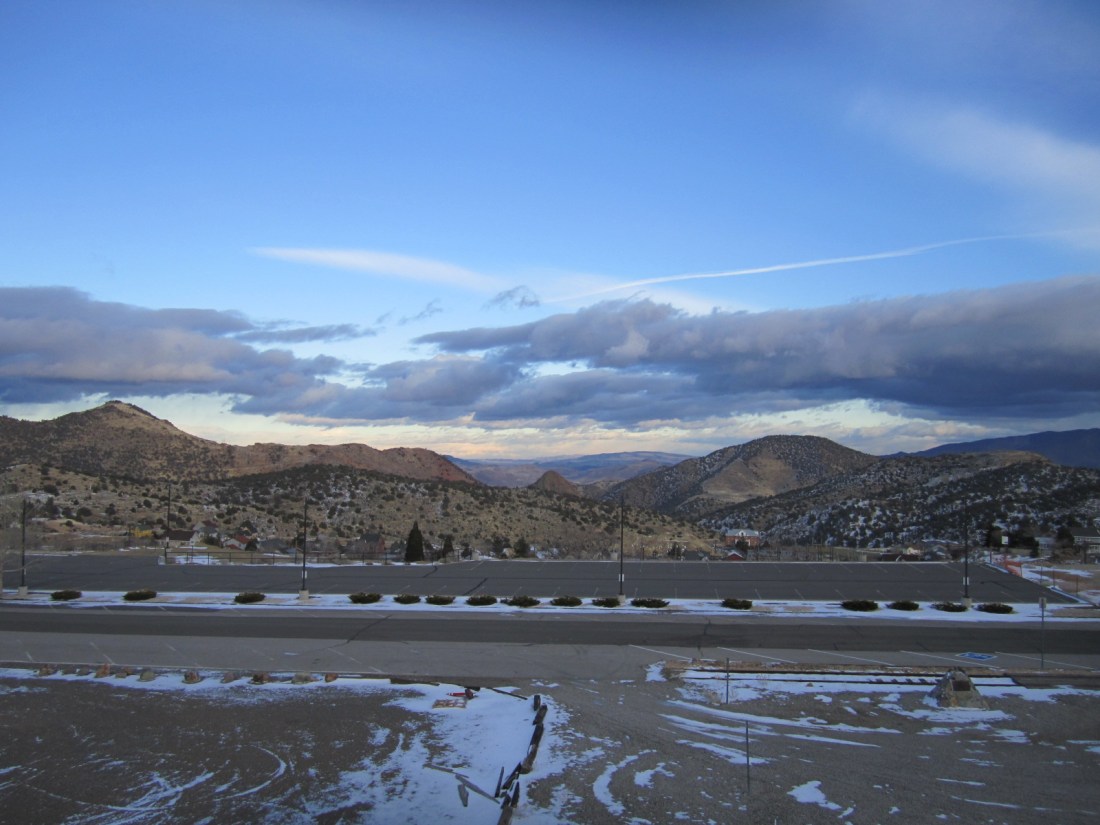
Looking east across the Virginia Range to Flowery Peak (left) and Emma Peak (right) from Virginia City, 02/24/18.
The cover photos at St. Mary’s FB page show many scenes in and around town. Click the photo on this page to start the slide show. Note the man-made hills (mine tailings).
Mustang Monday
On Theodore Roosevelt National Park, south unit.
Update 05/01/18: Video has been removed or marked private.
Q&A #2 for VR RFP Posted
Answers to the second round of questions for transfer of ownership of the Virginia Range horses have been posted. More discussion this time.
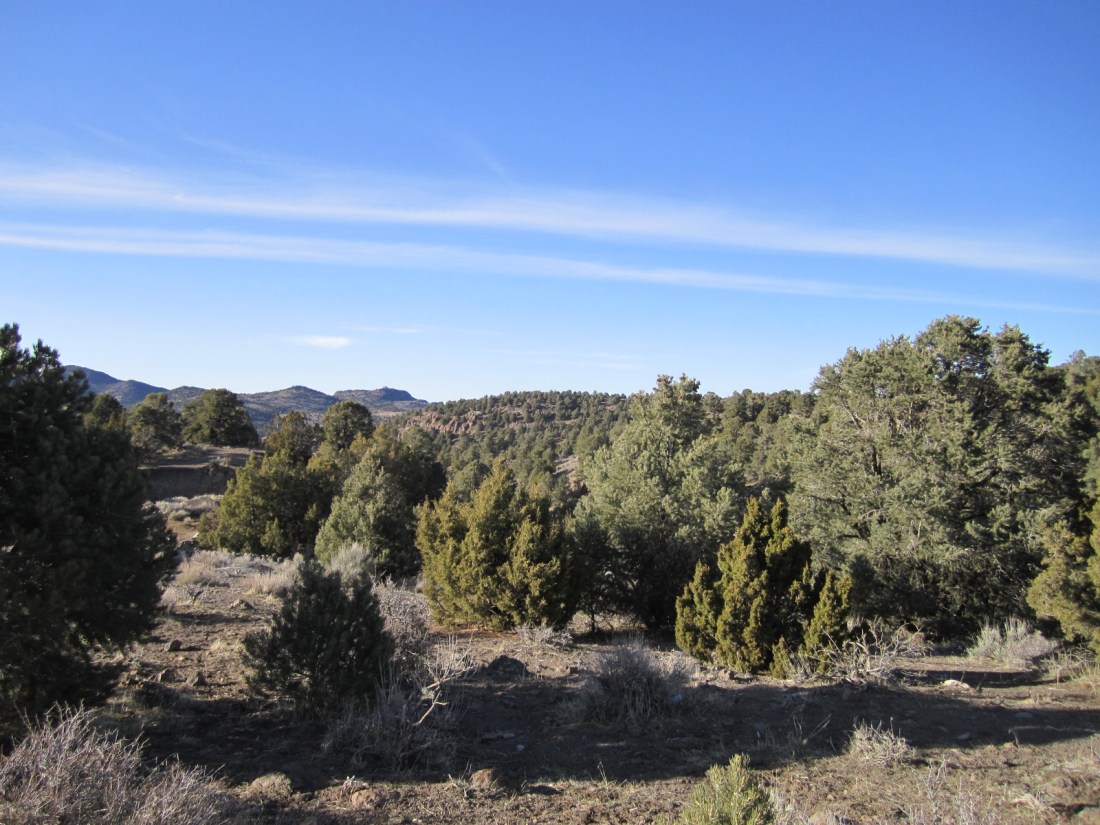
2018 Foals – Virginia Range
A few miles north of Virginia City, 03/31/18.
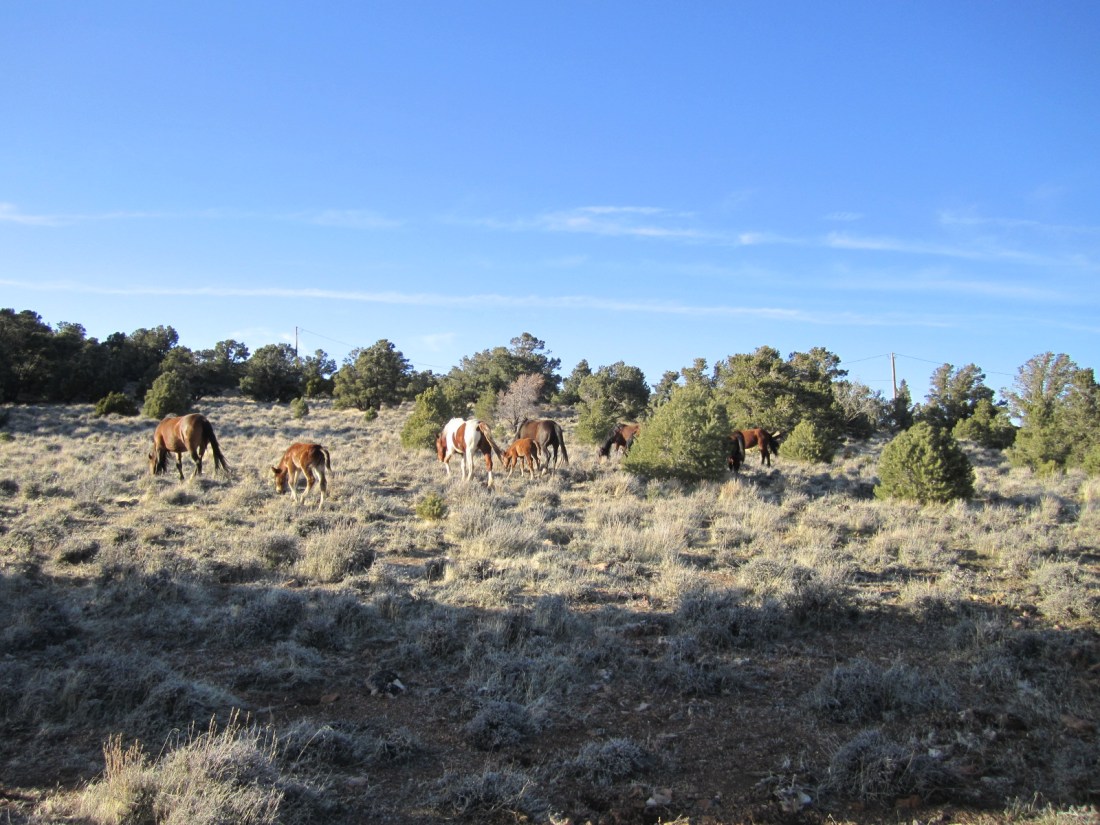
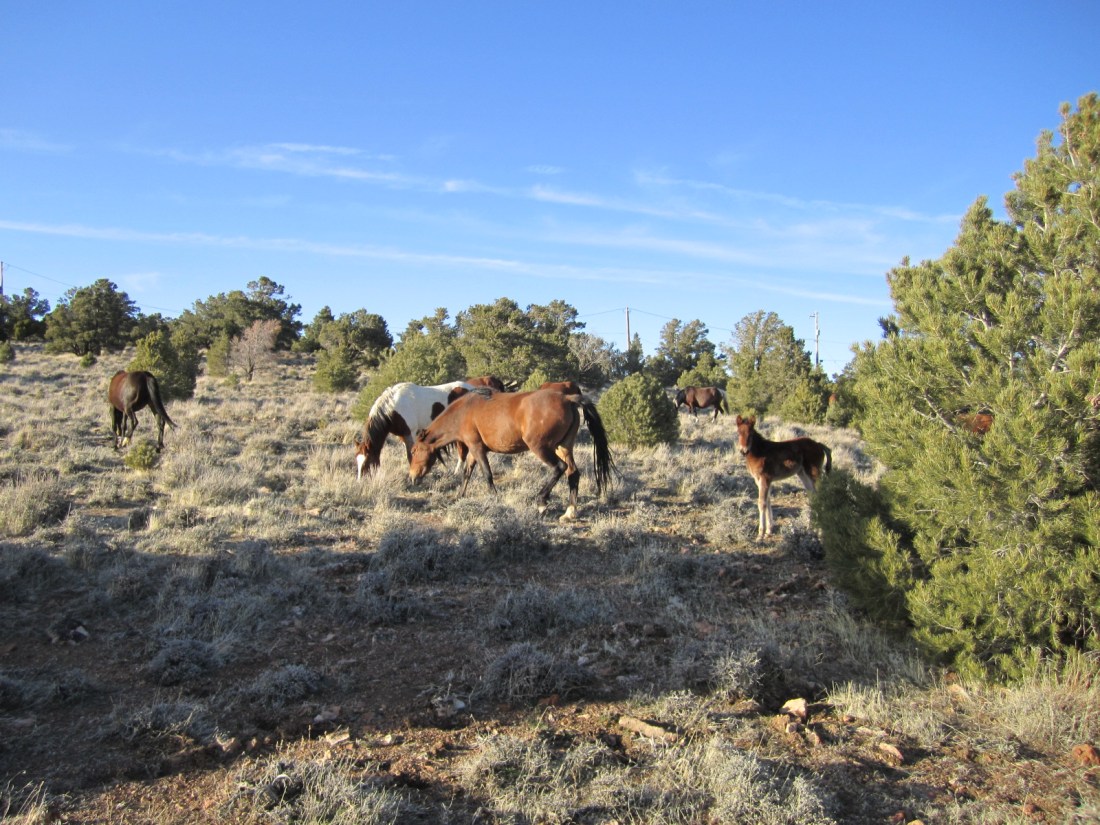
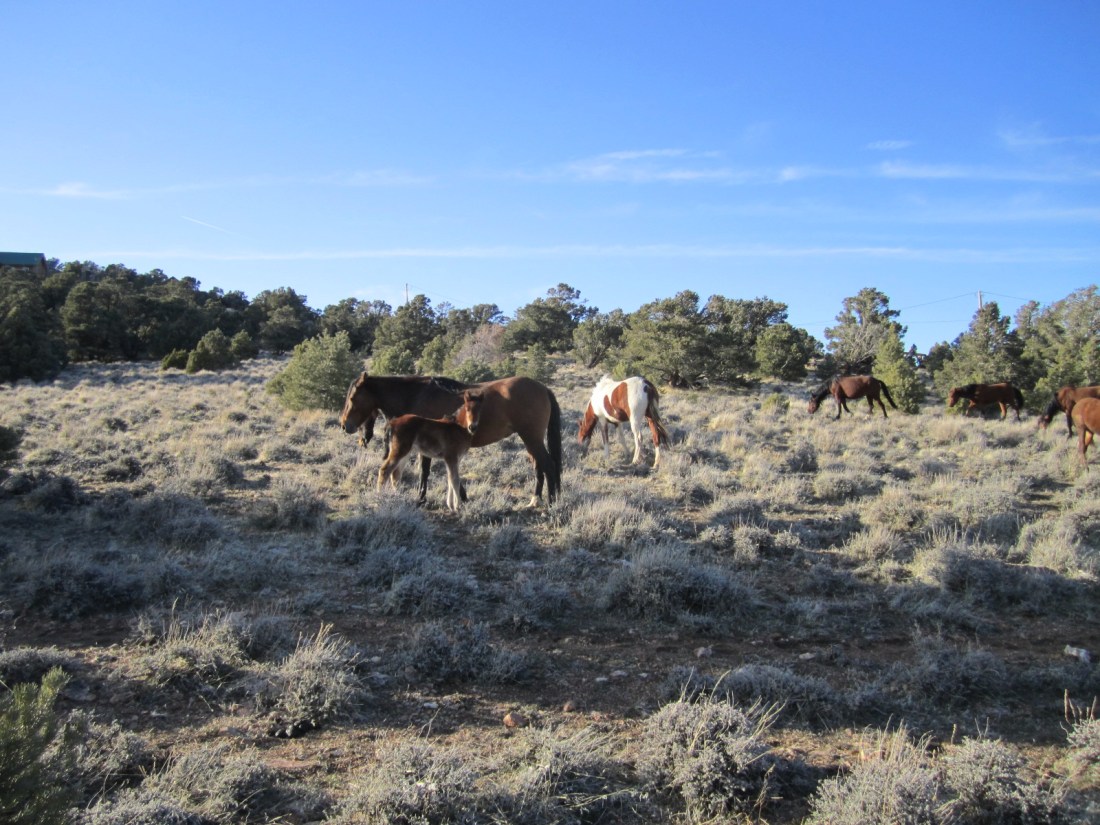
Mustang Monday
AWHC Takes Legal Action to Stop NDA Plan for VR Horses
The American Wild Horse Campaign has filed a lawsuit in the Nevada First Judicial District Court to stop the Nevada Department of Agriculture from transferring ownership of the Virginia Range horses to a non-profit advocacy group, according to a press release dated 03/19/18.
Trailcam image below shows some VR horses just before sunset on 06/05/17.

Wild Horses in Virginia?
Yep, in Mt. Rogers National Recreation Area. Refer to this article in Smithsonian.com.
Like most wild horses, they are beneficiaries of humane management practices.
Where to see them? This post in Southeastern Traveler has some suggestions.
Horses of the Badlands
On the north side of I-94, near the town of Medora, ND, you’ll find Theodore Roosevelt National Park. It consists of three areas: North Unit, South Unit, Elkhorn Ranch Unit.
A video overview appears on this page.
Wild horses roam the South Unit, along with bison and other wildlife. The horses, of course, are subject to ‘humane’ management practices. Excess horses are offered for adoption through the General Services Administration. The North Dakota Badlands Horse Registry maintains a database of adopted horses and advocates for WH preservation in TRNP.
The park is managed by the NPS, not the BLM.
Public Comment on VR RFP
Follow-up to the post of 03/13/18 regarding the potential for public comment on the RFP for the Virginia Range horses at the next Board of Agriculture meeting. Remarks begin at 0:03:55 in the following video and continue for about 22 minutes.
2018 Foals – South Steens
Check out the newly minted symbols of freedom, ruggedness and self-reliance at this FB page.

