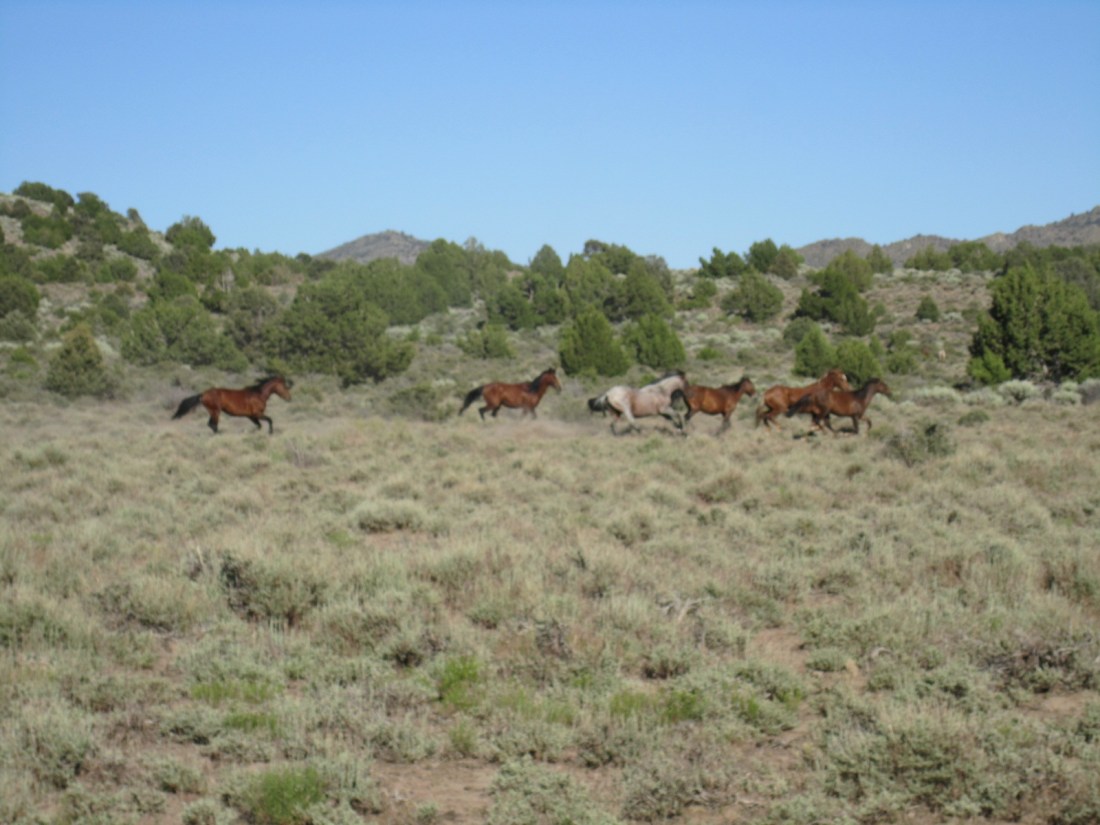
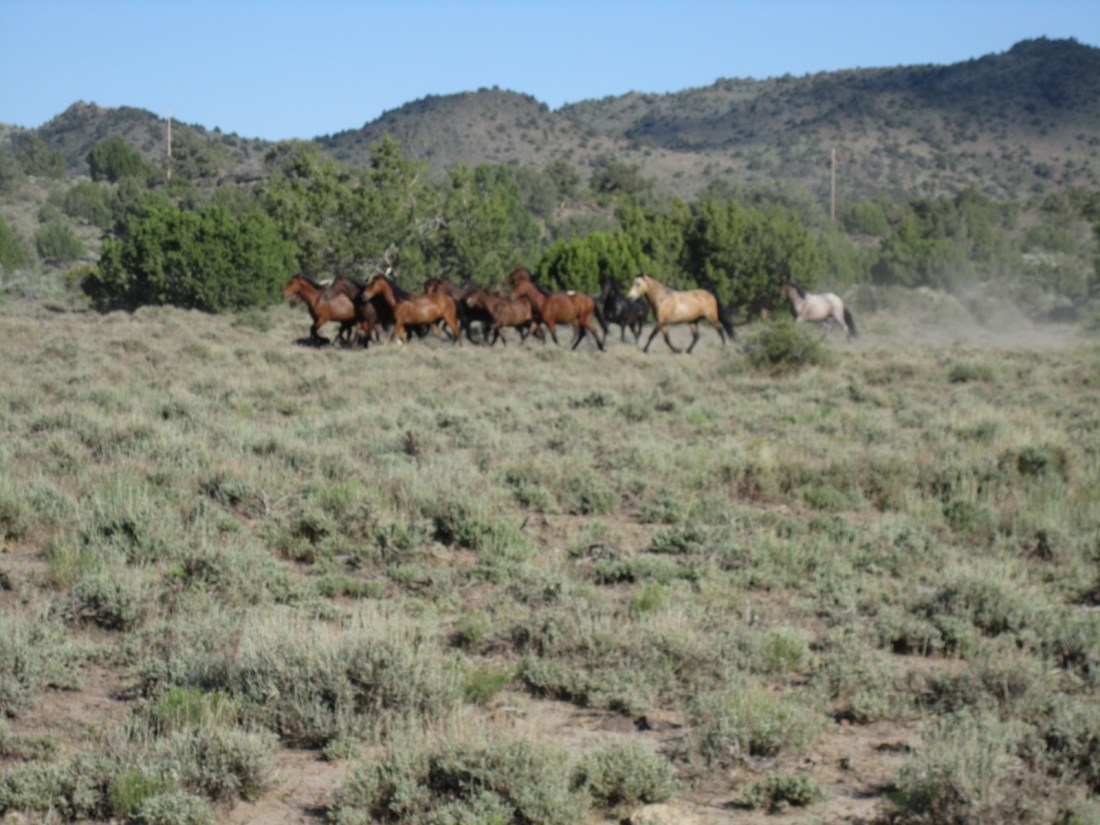
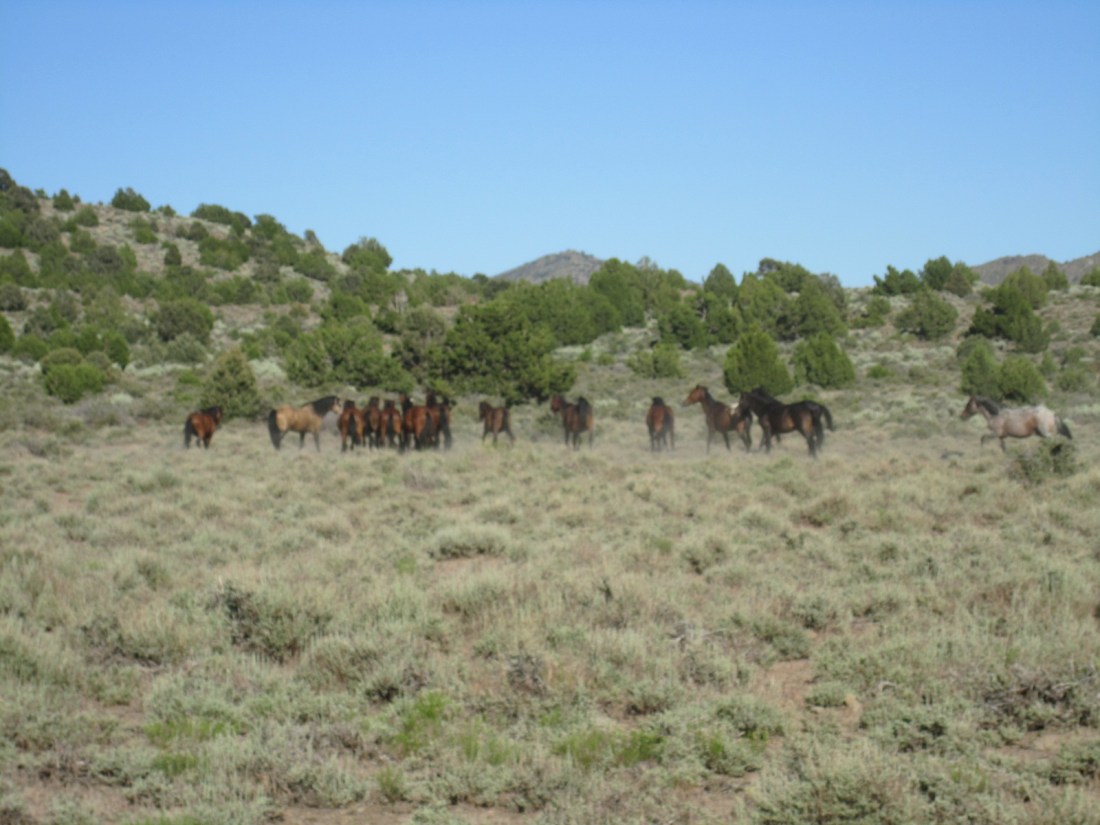
Bachelors playing on the Virginia Range 06/29/18.

Western Horse Watchers Association
Exposing the Hypocrisy, Lies and Incompetence of the Wild Horse Advocates
On the range
Bachelors playing on the Virginia Range 06/29/18.
Sometimes it’s better to watch a TV program several years after it was broadcast, because you can see what’s changed. Consider this documentary by Oregon Public Broadcasting, originally aired February, 2014.
At the time it was filmed, wild horses and burros inhabited 32 million acres. Today, that figure is 27 million acres.
When the video was produced, there were 179 HMAs across ten western states, now there are 177. Back then, Oregon had 19 HMAs, today it’s 18.
Some things haven’t changed. In 2014, the carrying capacity of the land for WHB (based on upper value of AMLs) was about 26,000 animals. Ditto for today.
Rancher sentiment hasn’t changed. They still think wild horses and burros are destroying western rangelands and consuming forage that belongs to them.
But there is hope. The BLM corral facility in Hines, OR, may soon become Auschwitz of the West, where the Josef Mengeles of the of the wild horse world perform gruesome experiments on mares to find the best method of sterilization.
Stay tuned folks, you won’t want to miss it.
Report posted earlier today by 13News Now, the ABC affiliate in Hampton Roads, VA.
The horses in the story are thought to be descendants of those brought to the New World by Spanish explorers 500 years ago.
See also this article in Smithsonian.com on the best places to see wild horses.
RELATED: Wild Horse Hit by Truck in Outer Banks, NC.
Family unit passing by on 06/29/18. These bands are usually a bit more quiet and subdued, compared to the bachelors.

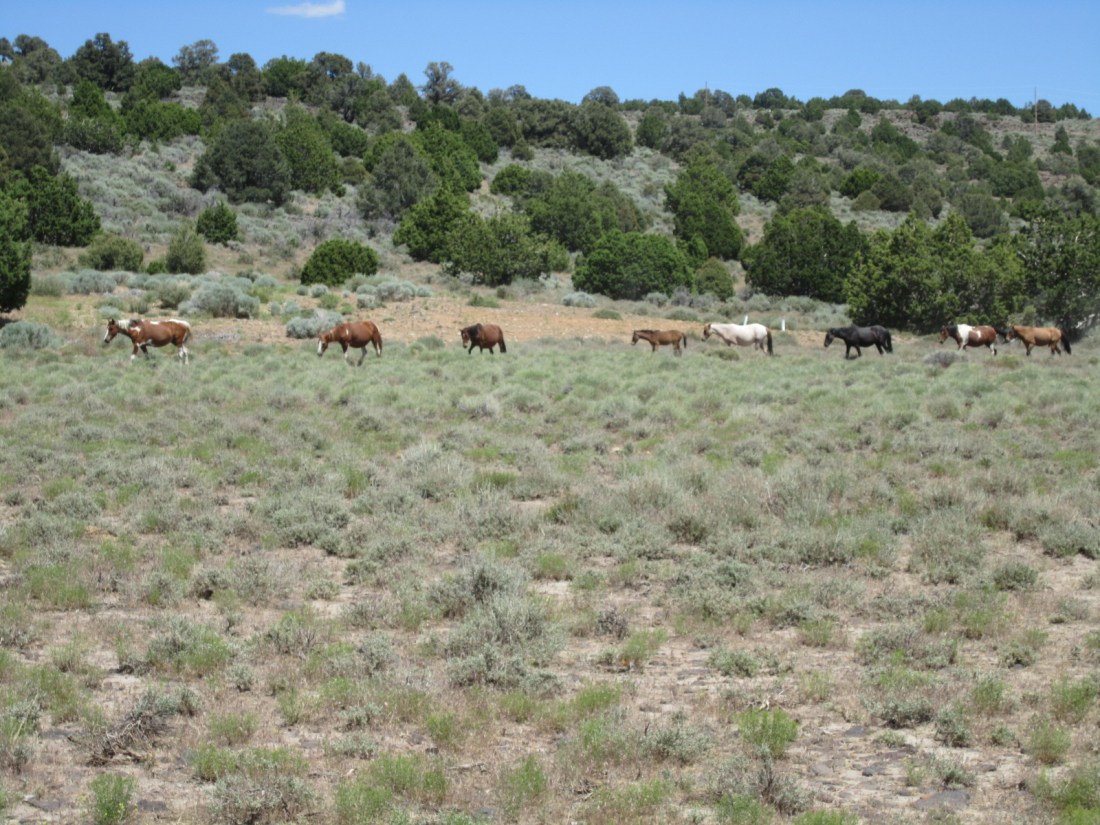

On Heber WHT. Many of the trees in the area were destroyed by a fire in 2002.
Update on the horses in this post. Tried to get some photos of the mares with welts but the stud wouldn’t have it. No improvement on the mare with the smaller welt. Unable to see the mare with the larger welt (third photo in original post). Inflammation due to bites or stings should have resolved by now. These photos taken 06/29/18.
The pond seen in the photos from 06/15/18 has lost quite a bit of water, which increases the concentration of dissolved minerals, making it unfit for animal consumption.
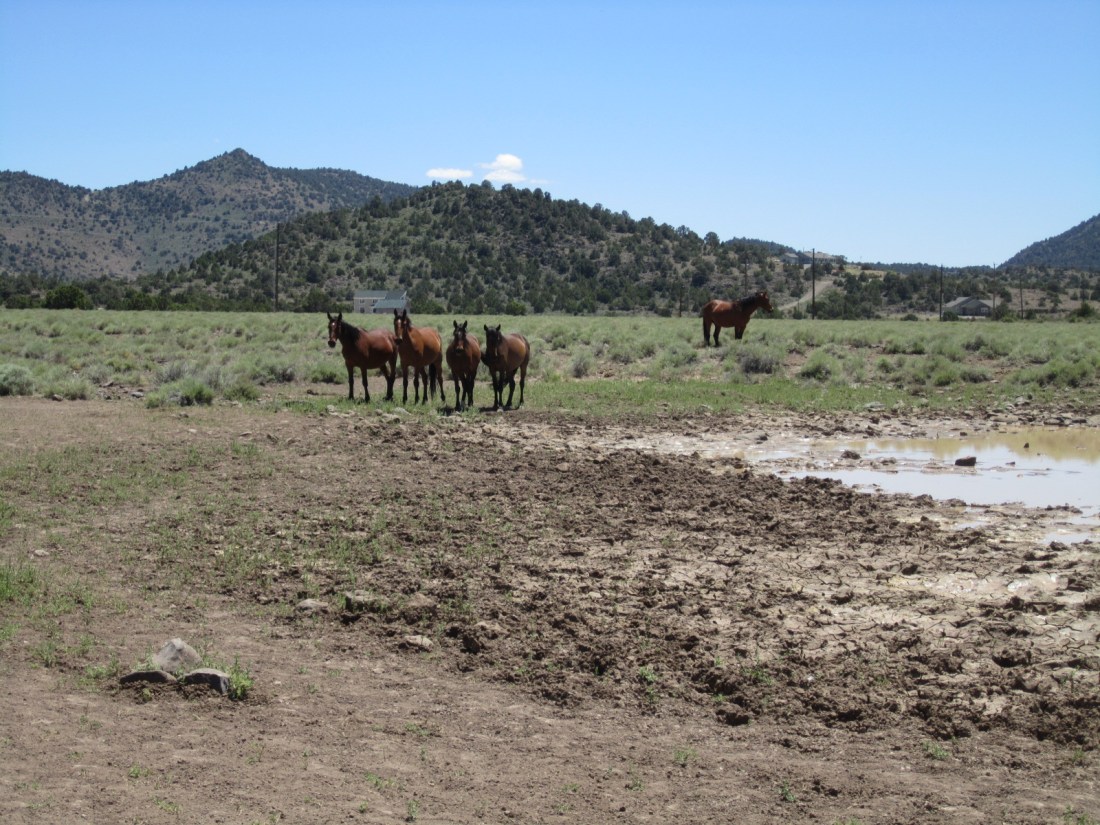
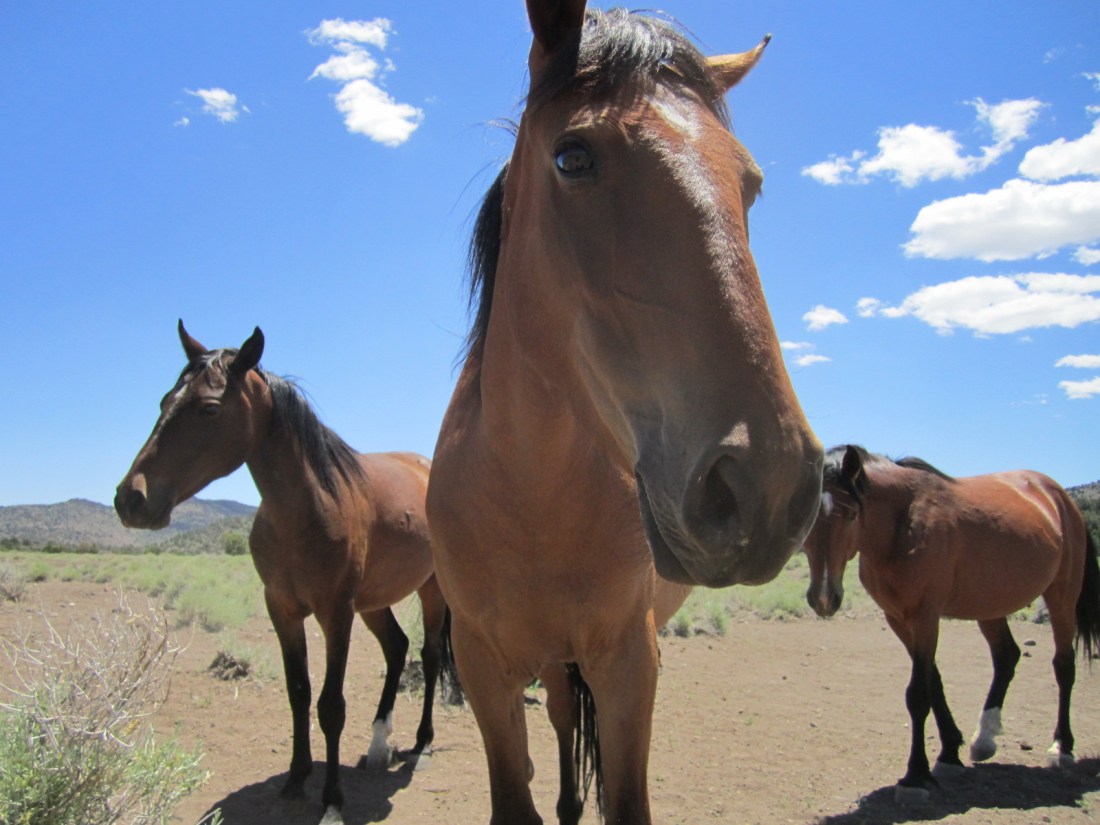
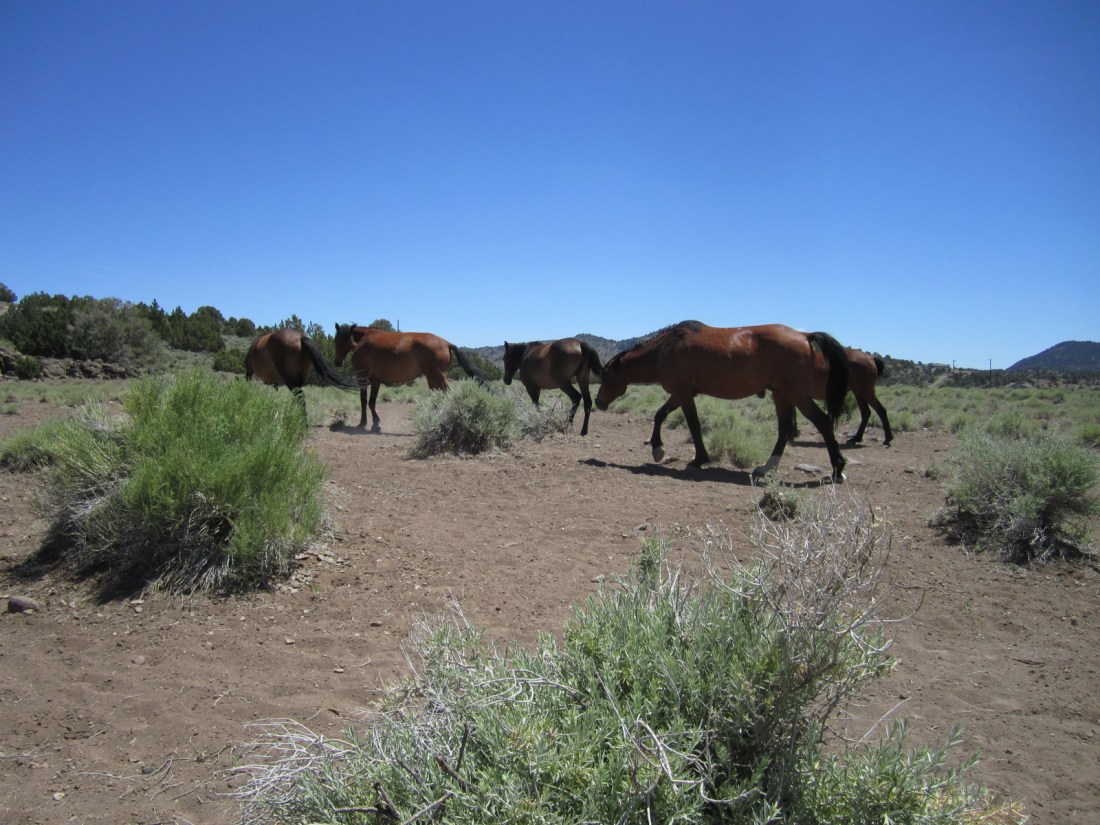
Yesterday the bachelors took center stage on the Virginia Range.
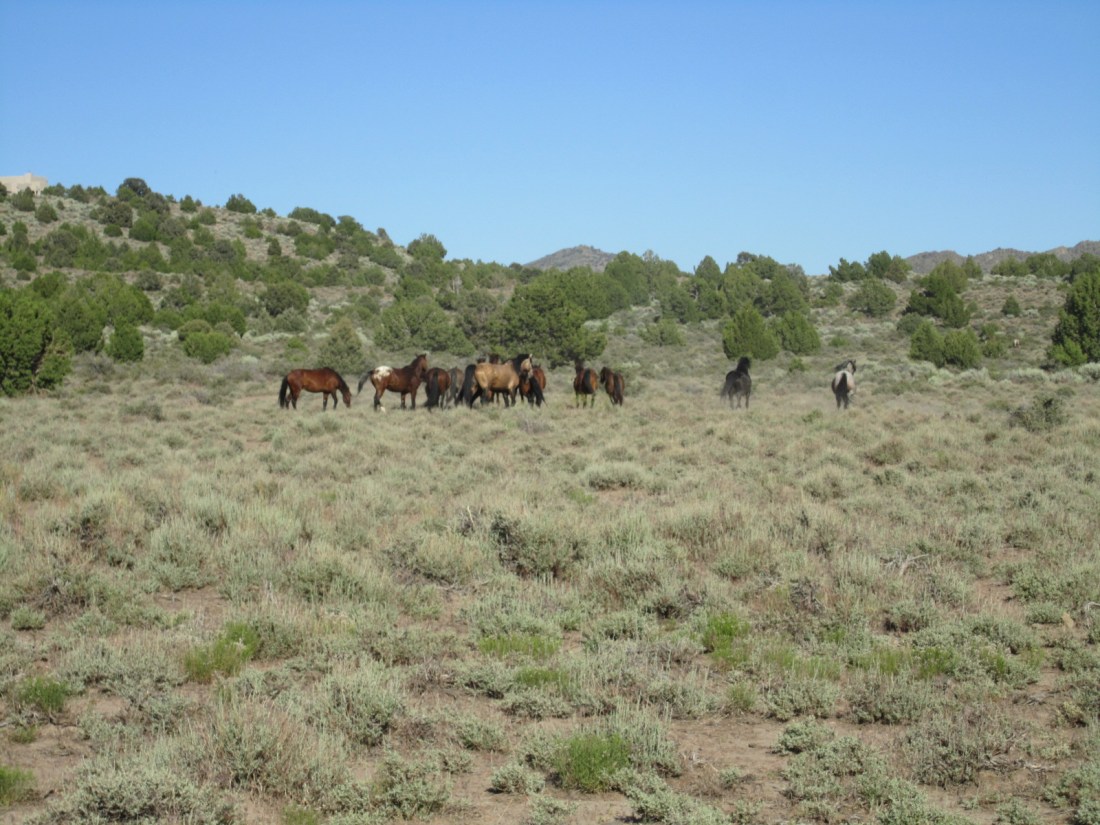


Two boys exchange pleasantries at a stud pile? Filmed on Spring Creek Basin HMA in western Colorado. Follow the action at Spring Creek Basin Mustangs.
See the report published 06/29/18 by ABC 15 in Phoenix.
Stallion, age 7. Sad, but at least he had a chance at life. The PZP zealots, hell-bent on spreading the serpent’s venom across the fruited plain, won’t even allow that.
Another horse was injured in the same area after colliding with a car the following day.
Refer to this story by KJZZ 91.5 FM in Tempe, AZ.
[Good grief, you’d think parts of it were written by the BLM: “…thousands of horses that damage the land and compete with livestock for food and water” and “…partner with outside groups to round up horses and adopt them out as well as administer contraception.”]
RELATED: Wild Horses Suffering Because of Climate Change?
An advocacy group near Corolla, NC recently installed a billboard reminding tourists not to feed the horses that roam the area. It’s part of a campaign to educate visitors about the dangers of human interaction with the wild herd.
Yes, wild horses should eat food from their natural habitat, such as beach grass, but carrots and apples are not going to kill them.
The problem is hand feeding, not apples and carrots. Bananas and fig newtons, not covered by the initiative, should be offered instead?
RELATED: How to Make Your Horse Pushy and Disrespectful
RELATED: A Word about Hand-Feeding Your Horse
RELATED: What the Heck Is That?
RELATED: Keeping a Safe Distance
No start date was given for the bait-trapping operation, announced in a news release dated 06/28/18. Approximately 100 horses will be removed from lands in and around the Range Creek HMA, northeast of Sunnyside, UT on Hwy 123.
The gather was prompted by letters from private landowners and the Utah Department of Natural Resources.
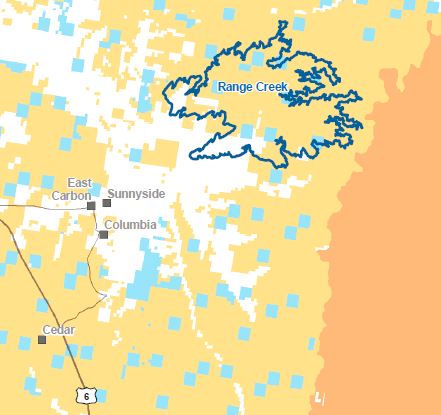
The HMA covers 83,410 acres and has a target population of 125 (upper end of AML), for a population density of 1.5 animals per thousand acres.
This year marks the 50th anniversary of the Pryor Mountains Wild Horse Range and celebrations have already started, as explained in a story dated 06/28/18 in the Lovell Chronicle.
Friday, June 29th is Wild Horse Watcher Day at the Pryor Mountain Wild Mustang Center and Bighorn Canyon National Recreation Area.
Events associated with Lovell Mustang Days will continue through the weekend.
See this headline at E&E News dated 06/27/18. No other details known at this time, more info as story develops.
UPDATE 1: Refer to this story in Courthouse News Service dated 06/28/18. Includes link to complaint filed in U.S. District Court. Also this news release from Western Watersheds Project dated 06/27/18.
UPDATE 2: Added map. Affected area is Caliente HA Complex, consisting of Applewhite, Blue Nose Peak, Clover Creek, Clover Mountains, Delamar Mountains, Little Mountain, Meadow Valley Mountains, Miller Flat and Mormon Mountains Herd Areas. Between I-15 and Hwy 93 in eastern Nevada.

No AMLs for these areas, not managed for WHB due to inadequate resources. But the horses are there. Go figure.
The chart below shows the stocking rate in animals per thousand acres as a function of land area for HMAs in Oregon. Stocking rates are based on the upper values of the AMLs (mostly horses, a few burros and mules).
Three observations from the chart:
The Cold Springs HMA has the largest stocking rate.
The largest HMA is Coyote Lake / Alvord Tule Springs, the smallest is Hog Creek.
The average stocking rate for the state is 0.97 animals per thousand acres (1031 acres per animal).
The Kiger and Riddle Mountain HMAs, which produce the popular dun-factor horses, have stocking rates of 2.3 and 2.0 animals per thousand acres, respectively. The next gather of these animals will probably be in the third quarter of 2019.
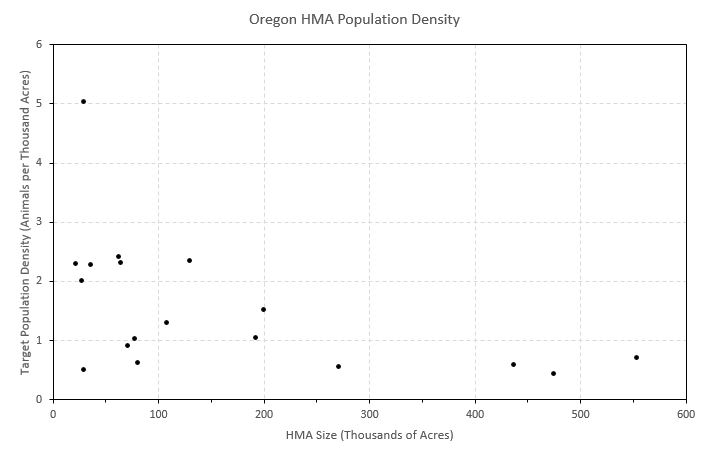
Given that the HMAs are fairly close to each other in the southeastern corner of the state, if a smaller parcel can sustain two or more animals per thousand acres, why can’t the larger ones?
The Beaty’s Butte HMA, one of the largest in the state, has a population density of just 0.57 animals per thousand acres. Could it be the government serfs who run cattle on public rangelands put pressure on the BLM to reduce the number of horses in the area? The same ranchers who pushed for the Beaty’s Butte Wild Horse Training Facility?
Anyone with information leading to the prosecution of the person or persons who illegally removed a twelve-foot sign from the Saylor Creek HMA is asked to call the BLM at 208-735-4600, according to a news release dated 06/27/18.
The Saylor Creek HMA lies about fifteen miles south of Glenns Ferry, ID, covers 101,876 acres, and has a population density of 0.49 horses per thousand acres.
Today marks the 41st anniversary of her passing.

Deaths attributed to drought in southwestern U.S. See the report dated 06/26/18 in Grand Canyon News. They were not wild horses but were probably roaming the area in search of water. Owner not known. Incident occurred along the south rim.
On the Outer Banks of North Carolina (Corolla).
The chart below shows the population target for HMAs in Oregon as a function of HMA size.
The chart yields three conclusions:
Imagine a line starting at (0, 0) and extending diagonally to the right. The average size of HMAs less than 100,00 acres is about 50,000 acres. The average AML for that subgroup is roughly 85 animals. Therefore, line would pass through (50, 85).
Now let x = 500. The proportional AML should be ten times larger, y = 10 × 85 = 850, establishing another point at (500, 850). The three HMAs close to x = 500 have AMLs far less than 850.
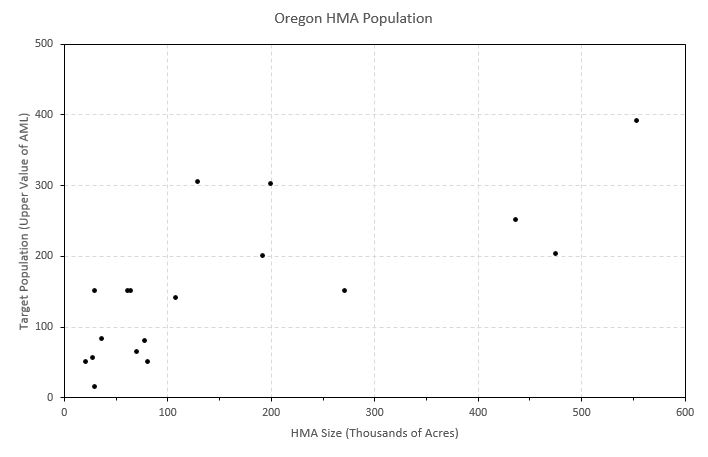
This leads to the topic of population density (subject of next post in the series). If you’re expecting to find some of the smaller densities (animals per thousand acres) on the larger HMAs, you’d be right. That is the same pattern observed in Nevada.
RELATED: Oregon HMA Stats.

