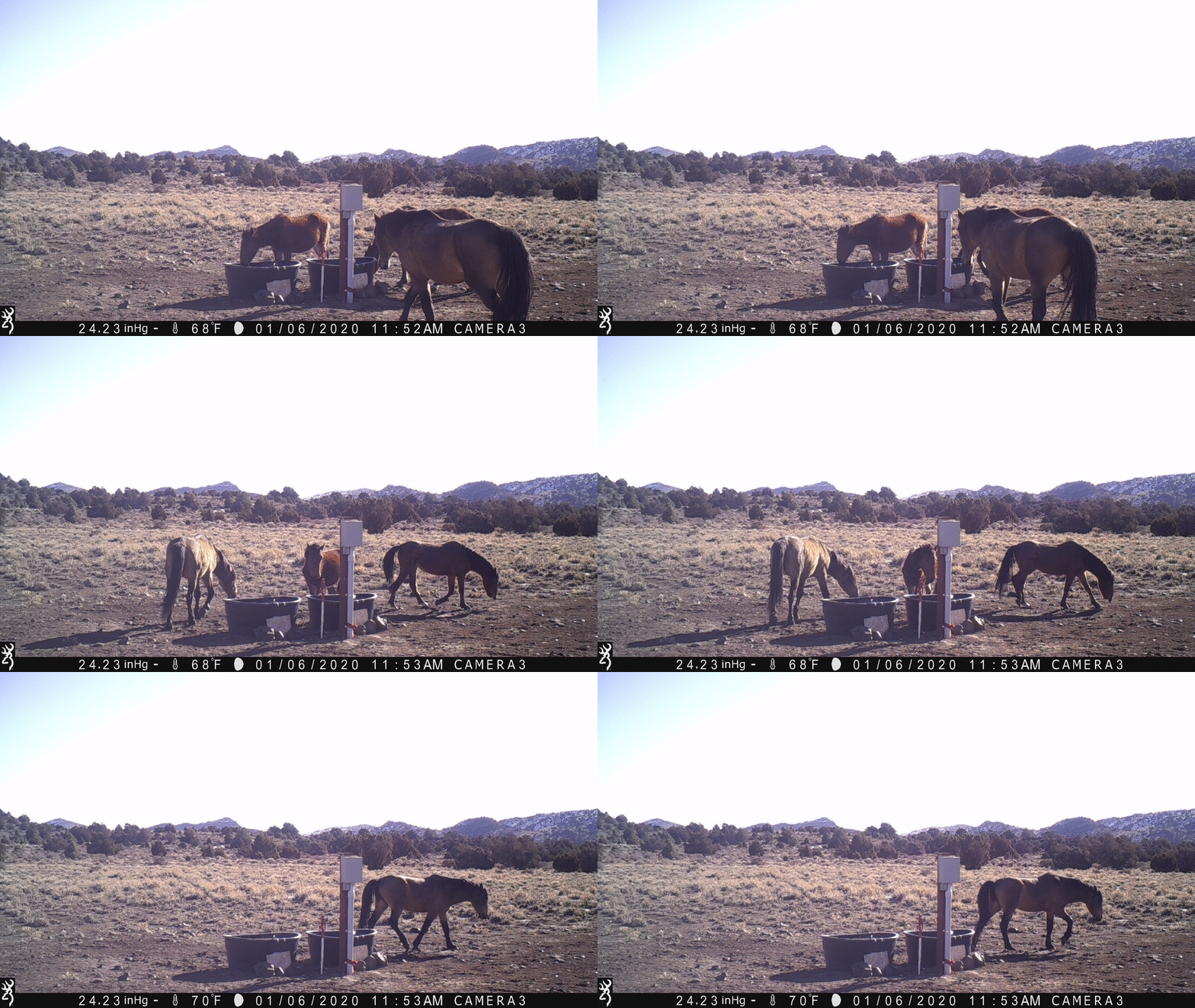
Virginia Range mustangs stop by for a drink but the system is still off for the season.


Western Horse Watchers Association
Exposing the Hypocrisy, Lies and Incompetence of the Wild Horse Advocates
On the range
Virginia Range mustangs stop by for a drink but the system is still off for the season.
“What controls will be put in place to make sure the unallocated forage doesn’t go to public-lands ranchers?”
Project documents can be found here.
RELATED: Heber Forage Allocation?
Cumulative totals through 02-20-20, per the BLM roundup page for the Eagle Complex:
A five year old stud was put down on day 36 due to injuries sustained while sorting.
The proportions of mares and studs are still outside of statistical limits corresponding to n = 1,651 and p-bar = .50. The operation has removed a large number of mares from the complex, relative to studs. The difference cannot be attributed to chance, but to one or more assignable causes.
The thriving ecological balance has been achieved, save for the removal of a few dozen more, followed by selective return.
Clearly, the WHB Act no longer affords the protections sought by Velma.

RELATED: Eagle Roundup Day 34, Eagle Wild Horses Get Short End of Stick.
Fencing damaged by hurricane Dorian still hasn’t been repaired, so the ponies have been migrating from the 4WD area north of town into the village. But they are escorted back to their home territory on a daily basis, according to a report posted today by The Virginian-Pilot of Norfolk, VA.
Same woman, different venue.
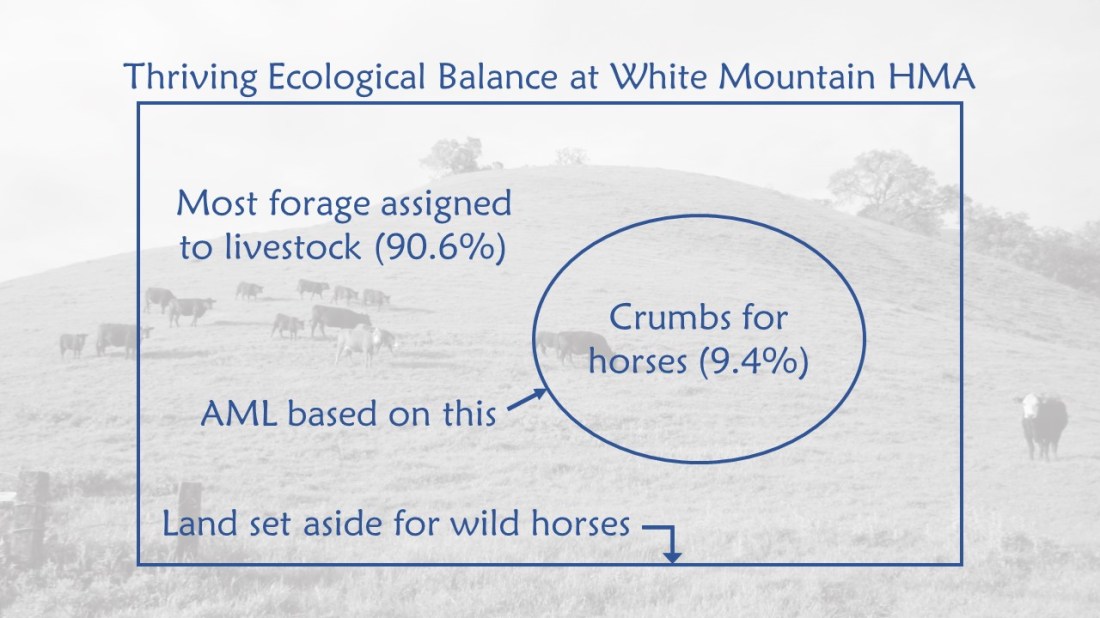
They’re not overpopulated, not even close. The government has diverted most of their food to privately owned livestock, on territory set aside for them. That’s why you’re seeing so many roundups and adoption events.
If you don’t think that’s true, read any of the posts on the right in the section titled ‘Short End of Stick.’
RELATED: Lies at Pauls Valley, BLM News Release.
Cumulative totals through 02-18-20, per the BLM roundup page for the Eagle Complex:
A 20 year old mare was put down on day 34 due to injuries sustained during sorting.
The proportions of mares and studs are still outside of statistical limits corresponding to n = 1,531 and p-bar = .50. If the herd is growing at a rate of 20% per year, where are the little ones? Coming soon to Palomino Valley?
The thriving ecological balance is now only 64 wild horses away.
RELATED: Eagle Roundup Day 32, Eagle Wild Horses Get Short End of Stick.
The rationale document for setting the AML on the Heber WHT says 50.0% of the forage will be allocated to horses, 25.6% to privately owned livestock and 24.4% for wildlife or “for future adjustments in the livestock grazing level.” See page 36.
Does that sound like a pledge to manage the WHT primarily for wild horses, as required by the statute?
Or are those weasel words that allow the forest supervisor to change the management strategy in favor the public-lands ranchers, without going through the customary reviews and approvals?
See page 19 in the draft management plan for the proposed granting of that authority.
RELATED: New Heber Management Plan Puts Supervisor in Charge?
The daily reports ended on February 12, with 113 horses gathered, 74 shipped and no deaths. Thirty nine horses were returned to their home range, including 22 mares that were treated with contraceptives.
Of the horses shipped, 43 were studs and 31 were mares. Do those results look like they came from a process that produces 50% males and 50% females?
Hint: The gather was classified as selective removal.
Captured animals were taken to the Indian Lakes Off-Range Corrals in Fallon, NV.
RELATED: Reveille Roundup Approved.

On the Salt River with MyKeyBee Photography.
Q.
Trap Town NCS
Good video! Keep it up! Would you like to be YouTube friends? 🙂
A.
Dear Trap Town NCS,
If you’ve got four hooves and eat hay then yeah.
Regards,
Western Horse Watchers
Some Virginia Range mustangs enjoy a brief respite from the snow. Water system off for the season. Elevation 6,200 feet.
What matters is the number of wild horses allowed by plan relative to wildlife and privately owned livestock.
RELATED: Draft Management Plan for Heber WHT Released.
Today the Forest Service released a draft management plan for the Heber WHT, marking the beginning of a 30-day comment period, according to a story posted this morning by the White Mountain Independent of Show Low, AZ.
The WHT covers approximately 19,700 acres and the proposed AML is 50 to 104, for an aimed-at stocking rate of 5.3 horses per thousand acres. The rationale for setting the AML is presented in this document.
The WHT intersects two grazing allotments. Data in Table 11 of the rationale document suggest that the horses will receive twice as much forage as livestock and that the WHT might be managed primarily for horses.
Substantive comments can be submitted at this page.
An initial comment might involve document quality. The files appear to be scanned images of the originals and are not searchable.
The size of the Salt River herd should be reduced by 80%, according to the writer of an opinion piece appearing today in Phoenix-based AZCentral.
The ‘collaborative’ pushing for the change includes members from a stock grower’s association and a sportsmen’s group.
The writer describes the current situation as 100 guests at a party with just two large pizzas but it’s really two wolves and a lamb voting on what to have for lunch.
It’s not about healthy horses on healthy rangelands and it’s not about public safety.
It’s about forage consumed by the horses, and managing it to an ‘acceptable’ level.
Cumulative totals through 02-13-20, per the BLM roundup page for the Eagle Complex:
The range between males and females is still outside of statistical limits corresponding to n = 1,283 and p-bar = .50. Why are there more mares in the traps than studs? ♥
The thriving ecological balance is now only 312 wild horses away (1,700 horses to be gathered − 100 to be returned − 1,288). ♥
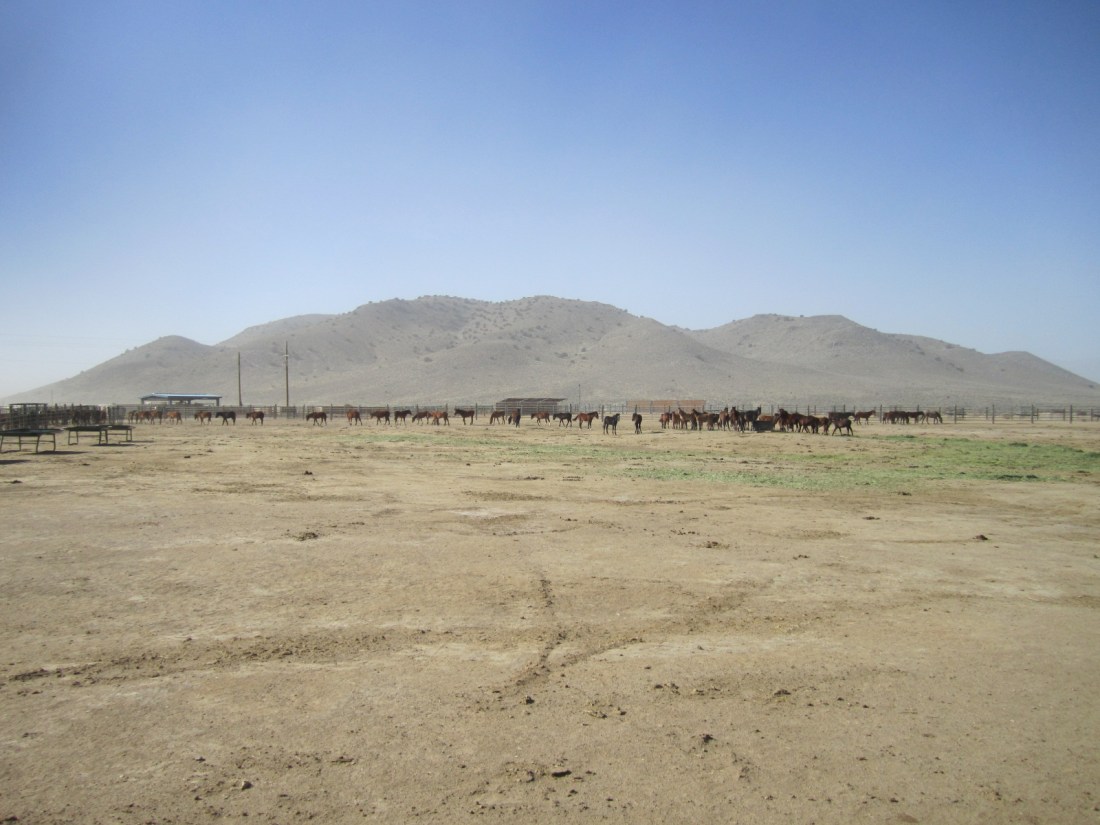
Photo: Youngsters from the Eagle Complex, Palomino Valley corrals, 02-08-20. ♥
RELATED: Eagle Roundup Day 26, Eagle Wild Horses Get Short End of Stick.
Water system still off for the season. Mustangs few and far between.
RELATED: Coyotes at Water Tanks.

Cumulative totals through 02-10-20, per the BLM roundup page for the Eagle Complex:
The variation between males and females is outside of statistical limits corresponding to n = 1,258 and p-bar = .50. The difference cannot be attributed to chance.
The thriving ecological balance is now only 337 wild horses away (1,700 horses to be gathered − 100 to be returned − 1,263).
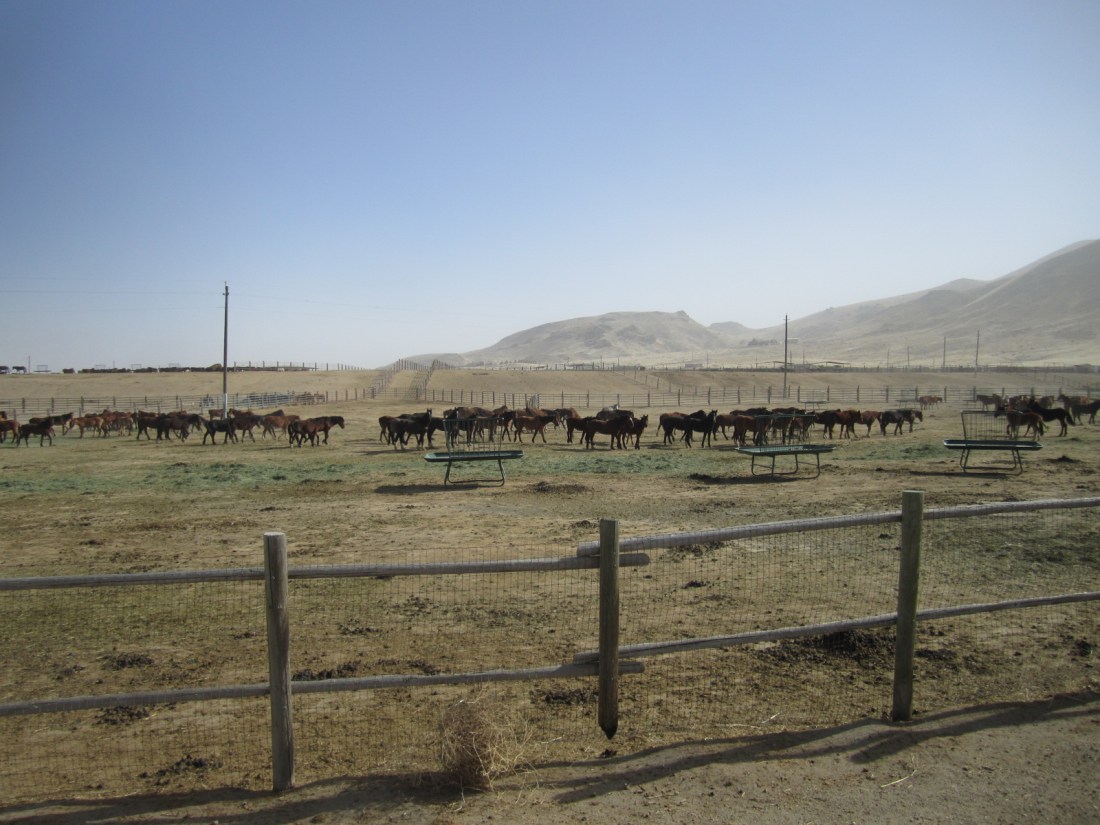
Photo: Studs from the Eagle Complex at Palomino Valley off-range corrals, 02-08-20.
RELATED: Eagle Roundup Day 23, Eagle Wild Horses Get Short End of Stick.
Wow, a report that mentions their tribal ancestry. They’re not the horses of Theodore Roosevelt National Park, they’re the former horses of TRNP.
RELATED: Story of the Nokota Horses.
The Tier 1 analysis in Appendix A of the draft EIS for the Rock Springs RMP amendment provides data for current conditions at White Mountain HMA.
The HMA is to be managed principally for wild horses per paragraph 1332(c) of the statute, but do the numbers reflect that?
The EIS did not provide allotment sizes, grazing seasons and the type of animals allowed on the HMA. The grazing season on some of the allotments is three months, according to Section 3.10 of the EIS, and on others it’s four to six months, so an average grazing season of four months was assumed.

Forage requirements and stocking rates for livestock were computed for cow/calf pairs, whose resource requirements are said to be equivalent to those of wild horses, allowing a side-by-side comparison. The grazing permits may allow other animals.
The results are presented in the following charts.

The horses have a much smaller footprint and environmental impact than livestock, but under the RMP amendment, the HMA will be eliminated and the land will be managed exclusively for livestock.
The government will pay between $500 and $1,000 to remove and process each horse from the area, plus another $730 per year to hold him in an off-range pasture, so it can collect $16 per year from the public-lands rancher to whom his food is sold.
It’s crazy. Nobody in the private sector would do that.
RELATED: Salt Wells Horses Get Short End of Stick, Rock Springs EIS Posted, So Long, Pilot Butte Wild Horse Scenic Loop?
On Paynes Prairie State Park with Rambling Tim.

