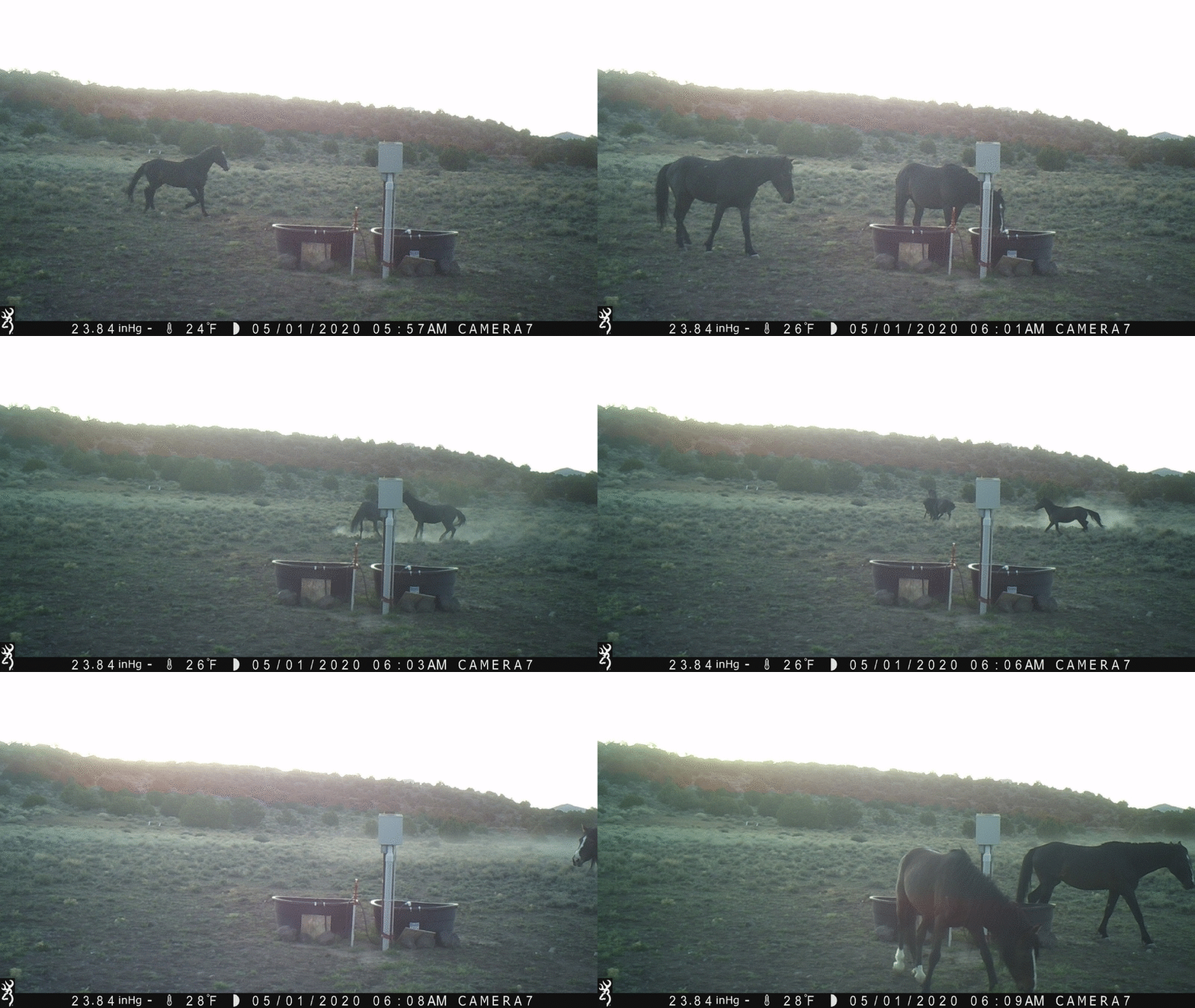
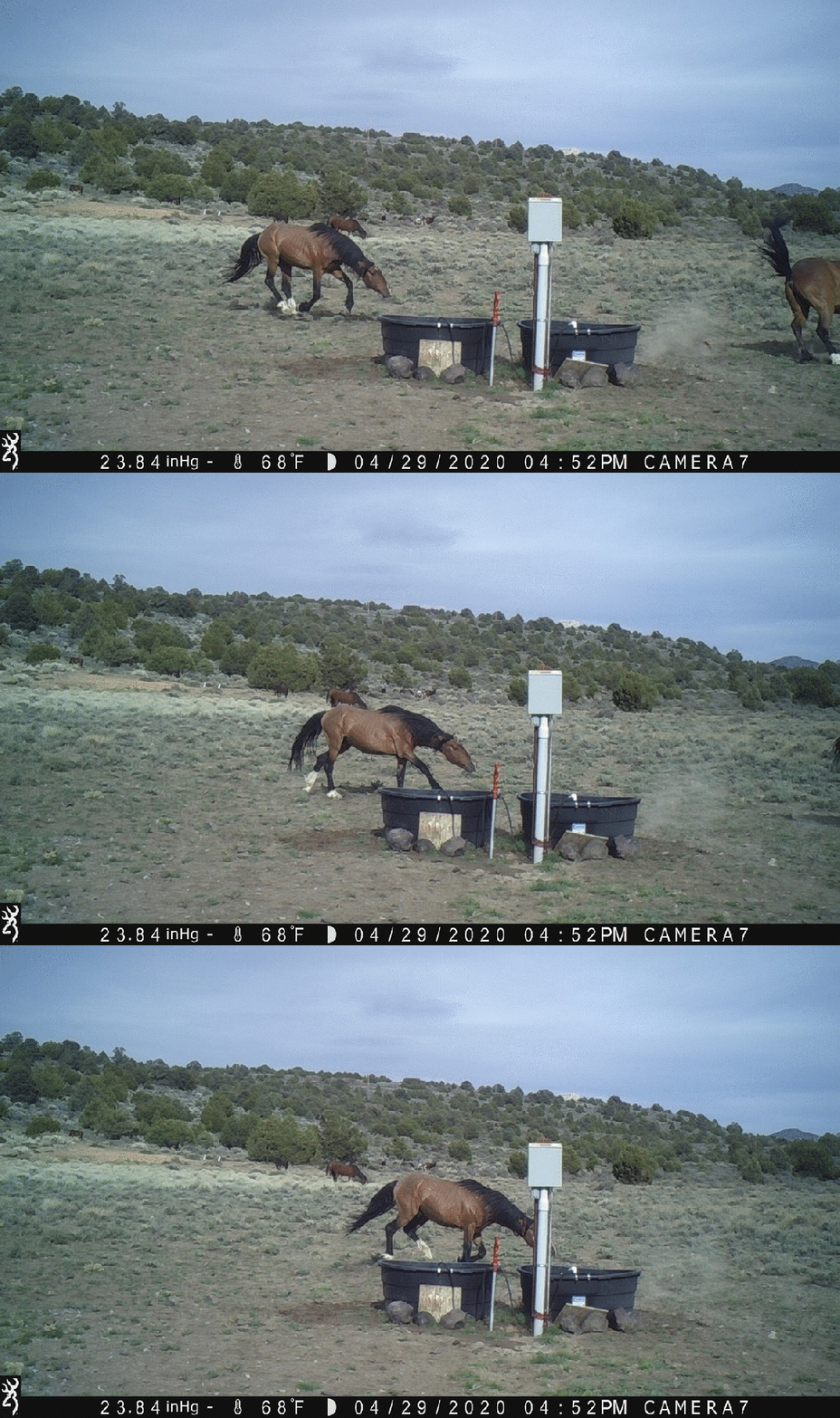
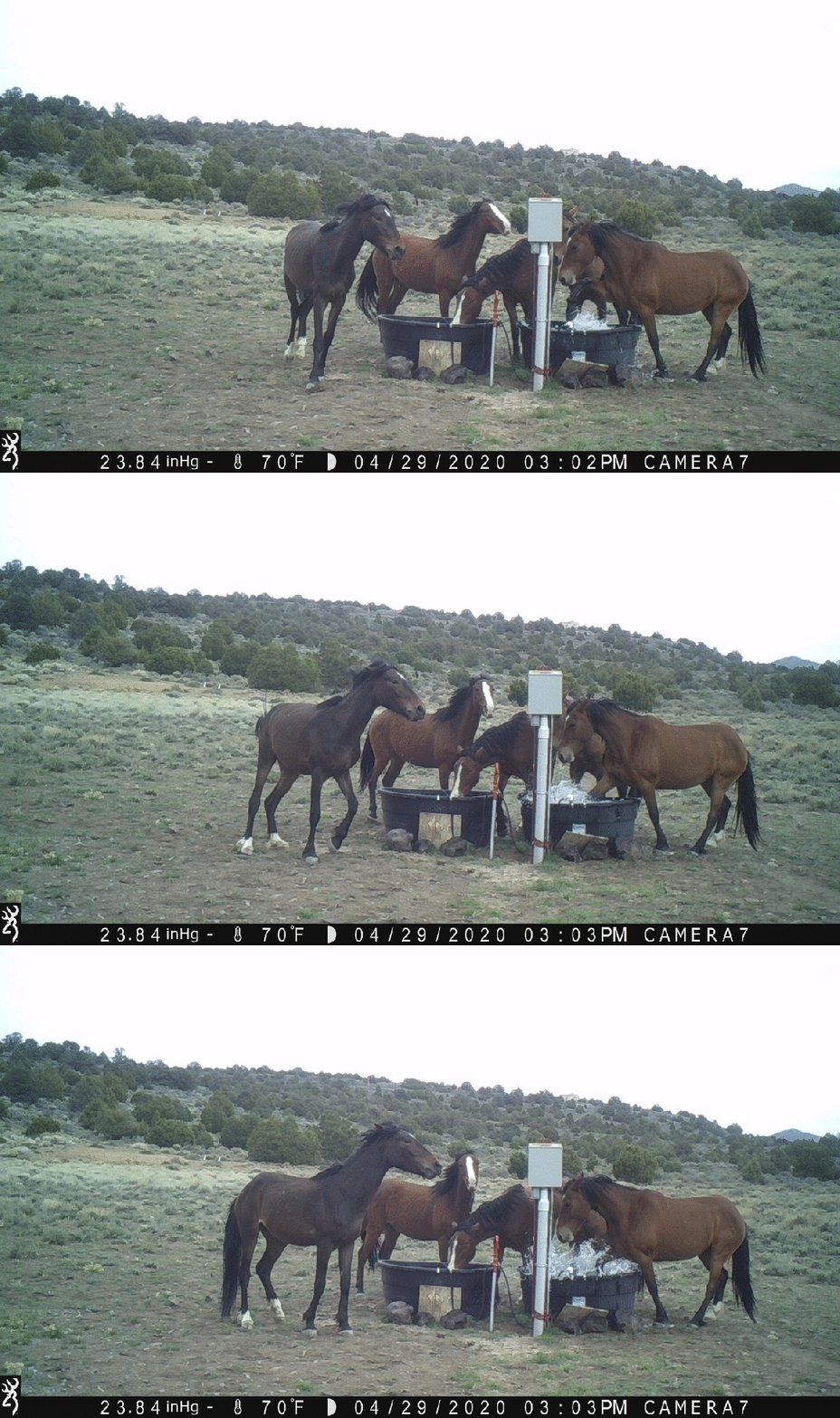
Same band as this morning’s post, different camera. These guys don’t fit the narrative pushed by the PZP zealots and their ranching allies.

Western Horse Watchers Association
Exposing the Hypocrisy, Lies and Incompetence of the Wild Horse Advocates
On the range
Same band as this morning’s post, different camera. These guys don’t fit the narrative pushed by the PZP zealots and their ranching allies.

Trailcam photos of some Virginia Range mustangs, at a time of year when they tend to be thin. Is this what you’d expect to see for a herd that’s overpopulated?
At a stocking rate of approximately ten wild horses per thousand acres, you’d have to search one square mile to see six or seven of them. Maybe.
And that’s ten times higher than your typical HMA.
Some ‘advocacy’ groups push contraceptives not because they care about the horses, but because they’re frauds.
RELATED: Virginia Range Darting Program in the News.

A new filly joined the herd about a week ago, according to a report posted today by WVEC News of Norfolk, VA. Color is black with no dilution factors and no markings.
RELATED: Corolla Herd Adds New Foal.
Earlier this week the Forest Service announced a proposed update of the management plan for wild horses at the Big Summit WHT, according to a report by KTVZ News of Bend, OR. The preferred option will reduce the AML from 55 – 65 to 12 – 57.
The WHT covers 25,434 acres in central Oregon. The current AML yields a stocking rate of 2.6 wild horses per thousand acres. The target rate across all areas managed for wild horses is one per thousand acres.

Management actions for controlling the herd size include gathers and contraceptives.
The management plan allocates 2,322 AUMs per year to livestock, compared to 780 AUMs per year for horses under the current AML. Refer to Table 21 in the draft EA.
The disparity will be greater under the preferred option, with 77% of the forage going to livestock and 23% to the horses. On land to be managed principally for the horses.
Project documents are posted here. A link to the online comments form can be found on this page. Comments can be submitted through May 18.
Refer to this report by WITN News of Greenville, NC.
The Carolina Coast Online said today that 111 wild horses were living on Shackleford Banks at the end of 2019, with 38% males and 62% females. Ten foals were born and fourteen deaths occurred.
The best way to protect the herd is public education, according to the story.
The report by NPS said contraceptives had been in use on the island since 2000.
The disparity between males and females, noted as longevity of mares and not mortality of stallions, was linked to the fertility control program.
Unlike the Assateague horses, these results could be produced by a simple random process centered at 50% males / 50% females.
Posting without comment.
There are approximately 3,000 wild horses roaming an area that can only support 700, according to a story posted today by Nevada Current.
Sound familiar?
How did they come up with 700? With a stocking rate of roughly ten wild horses per thousand acres, the Virginia Range sticks out like a sore thumb compared to public lands managed for wild horses by the federal government.
It doesn’t fit the narrative. The people might even think the government is lying.
Therefore, we have to bring the number down. The involvement of a so-called advocacy group makes the project seem legitimate.
RELATED: The Experiment Is a Success!
On the Salt River with Deni Seymour.
BLM announced today the opening of a comment period for proposed management actions on the Pryor Mountains WHR.
With goals involving horse color, age, bloodlines, size, growth rates, dispersion and sex ratios, the proposed plan is anything but management at the minimum feasible level, per Section 1333(a) of the statute.
The area would be closed from April 15 to June 15, according to the proposal, to protect the horses and their young during foaling season.
Comments can be submitted at this page.
Seven more are on the way, according to a report posted this morning by the Maryland Coast Dispatch.
The fertility control program was suspended in 2016, according to the story, as park managers realized the herd was too small.
The report did not mention the high mortality rate of the stallions, the highly skewed sex ratio of the herd, and the possible lack of genetic diversity—hallmarks of a successful management program, according to the PZP zealots.
Eight foals would put the growth rate at just 11% this year, four years into the ‘adaptive phase,’ making slow recovery another hallmark of the program.
RELATED: Assateague Herd Declines in Latest Census, New Assateague Foal.
BLM announced again today the availability of two allotments for cattle grazing near Sturgis, SD. The previous announcement was on February 6.
The minimum bid is $29.50 per AUM, considerably higher than the $1.35 per AUM paid by public-lands ranchers in the western U.S.
Does that mean that forage in South Dakota is overpriced?
Or could it be that the grazing fee is stuck in a time capsule and that the United States is not receiving fair market value for the use of those lands, as required by FLPMA?
The maximum stocking rate on the Fort Meade allotment is 49 head per thousand acres and 76 head per thousand acres on the Bear Butte allotment, a bit higher than the rates seen in and around the Great Basin.
RELATED: Grazing Fee Defies FLPMA.
On the Onaqui Mountain HMA with Emily Carter Mitchell.
“They have a right to be here,” according to the narrator of a video about Sand Wash Basin HMA, an area set aside for wild horses but shared with privately owned sheep.
Seriously? You have a right to place your property on land you don’t own?
Since when do you need a permit to enjoy your rights?
My truck has been out in the rain for years but it didn’t have to be that way. All I needed to do was to go next door and demand my rights.
Livestock grazing on public lands is a privilege, not a right. What the government gives, the government can take away. Please read The Bill of No Rights.
The remarks run from 09:16 to 12:11 in the video. Would sympathies for the ranchers correlate with participation in fertility control programs?
You bet it would.
RELATED: Ties Between PZP Zealots and Public-Lands Ranchers Revealed.
BLM announced today the completion of an Environmental Assessment (EA) and Finding of No Significant Impact (FONSI) for management actions involving wild horses and burros in the Southern Nevada District.
The decision authorizes the removal of those animals on public and private lands to (1) mitigate safety concerns near roads, (2) reduce landowner complaints, and (3) respond to emergencies.
The scope does not include the removal of horses and burros to achieve AML, but does include the removal of excess horses and burros outside of HMAs and HAs.
Section 1.4 in the final EA says that wild horses and burros will be removed from private property after “reasonable efforts to restrict the animals…have failed,” suggesting that state fence-out rules are a factor in responding to landowner complaints.
RELATED: Comments Invited on Southern Nevada Nuisance Gather Plan.
The Virginian-Pilot reported the arrival of new foal, spotted this morning in a wooded area of the Currituck Outer Banks. Observers were unable to determine the sex of the youngster, according to the story.
The Livestock Probability Map, supplied with other scoping documents for permitted grazing on the Sonoran Desert National Monument, says this about the “limited mobility” of cattle on page 5 (citations omitted):
The location of water and salt play a large role in the movement of cattle across a landscape. In general, livestock do not travel more than 2 miles from water on flat terrain and no more than 1 mile in rough terrain. Distance from water and slope are two common variables used to predict livestock distribution in almost every environment. Furthermore, range condition is generally related to the distance from livestock water points.
And you thought only wild horses and burros were responsible for rangeland impacts near water sources?
What about the last statement ? How does rangeland health vary with respect to distance from water? The farther the better?
If that’s true, animals with greater mobility (and lower stocking rates), such as wild horses and wildlife, would be expected to have a smaller impact.
RELATED: Management of Western Rangelands in 2018.
On the Kiger HMA with Matt.Cook.Oregon.
Is that horse poop at 3:13? Or could it be from other users of public lands?
On Assateague Island (Virginia side) with A Papp.
Yesterday’s post about wild horses denied a spot on their home range only considered areas currently designated for horses.
What about areas no longer designated? There are many of them, but let’s take a look at the Caliente Complex in eastern Nevada, which consists of nine former HMAs.
An estimated 39,920 AUMs per year have been diverted to privately owned livestock.
How do you determine the number of horses that the resource could support?
Horses graze twelve months per year, so divide the livestock AUMs by 12.
In this example, 3,327 horses have been denied a place on their home range.
That brings the total in yesterday’s post to 40,000, which accounts for 80% of the horses in off-range holding.
Contraceptives are not the answer. The problem is public-lands ranching.