Too Many Horses in Elko County?

Two of the five HMAs located within the county are below their AMLs, according to an opinion piece posted yesterday by the Elko Daily Free Press, but three are way above their government-mandated limits.

The overpopulated HMAs belong to the Antelope Complex, reviewed on these pages back in August, where the management plan assigns 89% of the forage to livestock.

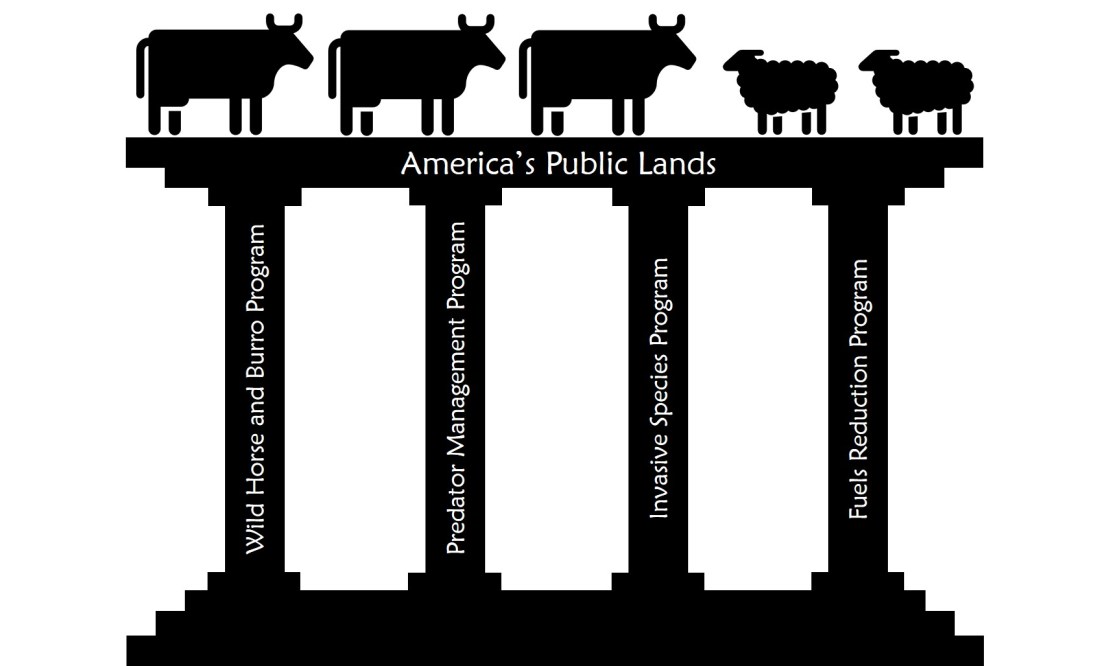
That tells you that the available resources are far greater than those required by the AMLs.  In other words, AMLs represent the number of wild horses the land can support after most of the resources have been diverted to privately owned cattle and sheep.

That’s what makes the writer grumpy: He can’t stand the thought of horses roaming freely on lands designated for them, enjoying resources that were set aside for them.

Such a waste!

The Spruce-Pequop HMA, one of the offending areas, was the scene of a wild horse shooting at the beginning of a gather in 2018.  Multiple rounds to the abdomens.

BLM knows who did it but to my knowledge there have been no arrests in the case.

The HMA intersects the massive Spruce Allotment, to which Madeleine Pickens has grazing preference.  Not for cattle but for wild horses.  Initially the BLM agreed with the plan but has since blocked every attempt to effect it.  Because of the crybaby ranchers.

The AML for Spruce-Pequop yields a stocking rate of 0.3 wild horses per thousand acres, almost nothing, which is what you’d expect for an area where most of the food has been allocated to public-lands ranchers.

Horses on the Goshute HMA, which is 1,184% over AML (not 1,284% as stated in the article) must be skin and bone.

Same for the Antelope Valley horses, which are 272% over the limit (not 372%).

Except they’re not.  Resources are more than adequate.  They’re just not being distributed in a manner that satisfies the ranchers.

Time Running Out for Comments on Rock Springs Amendments

An editorial posted this morning by the Rocket Miner of Rock Springs, WY says “It’s time for a roundup.”  Wild horses are robbing the poor ranchers of their birthright.

These animals have been set up to fail, by the government agencies entrusted with their care.  Yes, Virginia, it’s sabotage.

The management plan for the affected HMAs allocates 86% of the forage to privately owned livestock—on lands set aside for the horses.  This is now—before the plan is amended to satisfy a rancher-friendly court order!

Would that explain the movement of horses off their HMAs?  Would it account for complaints about wild horses on private property and safety issues attributed to the animals near roads and highways?

The ranchers, who believe they have a right to place their property on land they don’t own, cluttering it with various ‘improvements’ that allow them to strip away a sizeable portion of the resources, are the problem.  Never mind that the fees they pay have been stuck in time capsule since the 1960s.

Nobody’s trying to force them off their own land.  But they do need to be confined to it.

Many of the wild horse ‘advocates’ buckle at the idea, because they have ranching backgrounds or ties to the ranching industry.  They’d rather give aid and comfort to the government serfs through application of contraceptives.

The 50,000 wild horses in long-term holding can be explained by the misappropriation of forage on just a few dozen HMAs.

Payments by the ranchers ($1.35 per AUM) don’t even come close to the cost of feeding those animals ($60 per AUM).  There is no payout and no rate of return for removing wild horses from their home range.  Like other government programs, it’s negative cash flow all the way, with the shortfall covered by taxpayers.

Meanwhile, the ranchers and contractors get rich.

The wild horse outplacement program, with its adoption events, financial incentives and training programs is necessary because the WHB Act—altered at the behest of ranching interests—no longer functions as Velma intended.

It’s not time for a roundup.  It’s time to end public-lands ranching and restore the Act to its original form.

RELATED: Rock Springs AML Amendments, Defending the Ranchers.

PSA 12-03-19

The Experiment Is a Success!

So says the writer of an opinion piece appearing today in the Reno Gazette-Journal.

He’s talking about a Virginia Range darting program that started a year ago.  To date, his ‘volunteers’ have ‘treated’ over 950 mares with PZP.

At least he didn’t refer to them as ‘advocates,’ because they aren’t, and neither is he.

The Virginia Range, with a stocking rate of approximately ten wild horses per thousand acres, refutes the claim by the BLM that western rangelands can only support one wild horse per thousand acres.

And these idiots are destroying it.  Whose side are they on?

The author says “PZP doesn’t hurt horses.”  Apparently, he hasn’t looked at the data for the Assateague herd, where it has been applied for many years.

The EPA was recently ordered to review new evidence of the detrimental effects of the pesticide, that may lead to the withdrawal of its registration.

But he describes the affair as a model for humane management of wild horse herds.

The organization backing the venture is the American Wild Horse Campaign.

Solving Wild Horse ‘Problem’ Will Be Hard Pill to Swallow

So says the writer of an opinion piece that appeared last week in the East Oregonian.

The solution “will require the removal of at least 60,000 horses, most of them through killing, and a commitment to remove by one means or another 5,000 per year to maintain an appropriate level.”

That’s about 70% of the horses currently on public lands in the western U.S., in line with the rancher-friendly ‘Path Forward.’

After all, the government just killed hundreds of bison in Yellowstone National Park to protect cattle, so why not horses?

The population limit set by the government, approximately 27,000 wild horses and burros on 27 million acres (which works out to one animal per thousand acres), is not a function of available resources.  Rather, it is the number of animals the land can support after diverting most of the food and water to privately owned cattle and sheep—on lands set aside for the horses and burros.

If you don’t think that’s true, just look at this example.  If you do believe it, you’re just seeing a “nefarious motive,” according to the author.  Leave the poor ranchers alone.

The fences that hold livestock in also keep horses out.  That may not be a problem on allotments with grazing seasons of two or three months per year, but what about areas that are in use for eight to twelve months per year, with stocking rates five to ten times higher than the horses?

Would that explain the movement of horses off their HMAs?

Would it account for conditions that don’t meet standards for rangeland health?

Have the most productive areas been given to the public-lands ranchers?

Stop imagining things!!!  There is no nefarious motive (even though it looks like sabotage).  If anything, it’s just an ‘unintended consequence’ of the grazing program.

WHB Act Has Been Nullified

On the Little Bookcliffs WHR in western Colorado, one of four areas set aside for wild horses and burros (out of roughly 200) that’s managed principally for wild horses and burros, per the statute.

The denominator doesn’t include areas where WHB were found in 1971 that have been commandeered for other mandated uses of public lands.

What about the other 196 areas set aside for WHB?  Most of the resources have been diverted to the other mandated users, a truly sad state of affairs for these animals.

The roundups, adoption incentives, training programs, off-range warehousing, darting programs, sterilization research, sanctuaries and preserves reflect that reality.

RELATED: Suggestion for the Big-Name Advocacy Groups, Hypothesis Revisited.

EPA Ordered to Reconsider PZP Registration

A U.S. District Court Judge ruled yesterday in favor of Friends of Animals regarding the detrimental effects of PZP, a pesticide applied to wild horses and burros to reduce herd sizes.  Long-term use can result in sterilization.

Many of the so-called advocacy groups accept and promote wild horse fertility control, with some of them actually providing it, to the delight of the public-lands ranchers.

A news release by FOA said that the EPA will now be required to review the “evidence of unintended—and previously undisclosed—side effects on both targeted mares and wild horses in general.”

Stallions on the Maryland side of Assateague Island. where contraceptives have been applied for many years, have a high mortality rate, the sex ratio of the herd is far from normal and genetic diversity may be compromised.  But the PZP zealots point to it as a model of wild horse management.

RELATED: Assateague Herd Declines in Latest Census.

Suggestion for the Big-Name Advocacy Groups

Many of the areas currently set aside for wild horses and burros are managed primarily for cattle and sheep, privately owned of course.

Other areas, where horses and burros were found in 1971, don’t have enough food and water to support them, although other users of public lands seem to do quite well.

Paragraph 1332(c) of the WHB Act says the land will be devoted principally for horses and burros.

CFR 4710.3-2 says “We’ll do that if we feel like it.”

Which viewpoint prevails?

Only four of the areas currently designated for wild horses and burros are managed primarily for them, out of roughly 200 areas so designated (HMAs and WHTs).

Here is the issue in a nutshell:

Can a federal regulation supersede a duly enacted statute?

Can the unelected bureaucracy override the legislative process?

That is for the court to decide.

A ruling in favor of the advocacy groups wouldn’t improve anything: It would only put things back where they should have been in the first place.

After that, the hard work begins.

Wild Horses on Arctic Tundra?

Herds of wild horses, reindeer, bison and other large herbivores could pack down the earth and any snow on top of it, keeping the permafrost cold and reducing the risk of carbon emmissions, according to an article in Scientific American.

After all, they roamed the area thousands of years ago.

What a bunch of garbage.  Scientific American used to be a respectable publication but now it’s a left-wing propaganda organ.

Why not open it up to public-lands ranching?  Cut the grazing fee to 29¢ per AUM.

Cattle, being sedentary animals, will do a better job of packing down the soil and snow.

Remove them from western rangelands, ship them all up north and return warehoused horses to their home range.

End Public-Lands Ranching

The enterprise has outlived its usefulness.  The west is settled.

Privately owned livestock, the objects of individual and corporate profits, belong on private land.

Public lands set aside for wild horses and burros are managed primarily for cattle and sheep, with few exceptions.

Proponents of contraception, sterilization, sanctuaries and preserves subscribe to that paradigm.

Signatories to the rancher-friendly ‘Path Forward’ are of no use to the effort.

Others, who want to see the horses wild and free, don’t understand the problem.

We have to retrace the steps that destroyed the WHB Act and reverse those changes.

That will happen when you, and millions of others, demand it—the same principle that put the Act on the books in the first place.

Green River Editorial Misses the Point

Refer to this opinion piece posted March 11 by the Green River Star of Green River, WY.

There’s nothing we can do.  The closure of three HMAs in the Wyoming Checkerboard is inevitable, along with the downsizing of a fourth.

“We can’t keep things the same as they have been [on public lands] because the Rock Springs Grazing Association [a private entity] won’t allow it.”

Maybe the White Mountain horses could be managed as a non-reproducing herd.

Nonsense!

The ranchers have outlived their usefulness, as well as the government incentives that keep them in place.

The grazing program overhaul should be the grazing program phase-out.

It’s time to end public-lands ranching and restore the WHB Act to its original form.

RELATED: Rock Springs AML Amendments.

PSA 12-24-19

Note to Sportsmen

A smaller but not insignificant voice against wild horses is that of the outdoorsmen, who argue that the horses are stealing resources from game animals.

In Section 3 of the original WHB Act, Congress ordered the Secretaries of Interior and Agriculture to work with state wildlife agencies to balance the needs of the horses with those of wildlife, especially endangered species.

That language is now in paragraph 1333(a) of the current statute.

Lands set aside for wild horses and burros are to be managed principally for those animals, according to paragraph 1332(c), but only four of them are.

What happened?  Refer to CFR 4710.3-2: The requirement was nullified by the unelected bureaucracy.  Management plans for those areas put the horses in the minority.  That’s why so much money is being spent on roundups, adoption incentives, training programs, fertility controls, off-range pastures, sanctuaries and preserves.

Can a federal regulation trump a duly enacted statute?  If you look at current practices, the answer must be “Yes.”  (If that’s true, our most cherished principles are now on very shaky ground.)

The HMAs and WHTs reviewed on these pages (sidebar on the right under ‘Short End of Stick’) intersect multiple grazing allotments, with most of the resources consigned to privately owned cattle and sheep.  Would you be surprised to learn that most of them are managed that way?

Would the fences that confine the livestock to their allotments impede the movement of horses and wildlife, limiting their access to critical resources?

How many free-roaming horses and burros have to move off their designated areas to find enough food and water?

What types of diseases are transmitted to wildlife by privately owned livestock?

Perhaps the outdoorsmen should look at the data before criticizing the horses.

RELATED: Pneumonia Killing Off Bighorn Sheep in Nevada?

Managed Primarily for Livestock

Refer to this guest column posted today by The Salt Lake Tribune.  If AWHC understands that most of the forage on HMAs has been consigned to privately owned cattle and sheep, why do they keep pushing fertility control?

Contraceptives drive wild horse numbers down—a technique you’d apply if you wanted to manage the land primarily for livestock.

RELATED: Grazing Program Overhaul, Management of Western Rangelands in 2018.

Heber Comment Period Drawing to a Close

Comments on the draft management plan will be taken until March 16, after which it will be finalized by the Forest Service, according to a report posted this morning by the White Mountain Independent of Show Low, AZ.

A problem with the plan is the amount of land dedicated to the WHT—it’s only half the size of the tiny Pryor Mountains WHR in Montana.

If the land can support a stocking rate of five wild horses per thousand acres, and the minimum herd size is 150 per Section 4.4.6.3 the Management Handbook, then the WHT should contain at least 30,000 acres, with an AML of 150.

Public-lands ranchers, referred to by some as “stewards of the forest,” would oppose any such move.  They are trying to paint themselves as victims of the process, typical for government dependents.

Groups that represent them were unwilling to go on record for the article.

Some advocates say the plan is nothing more than a thinly veiled attempt to eradicate the herd.

One thing is for sure: Unlike the ranchers, wild horses have no friends in government.

RELATED: Disposition of Heber ‘Excess’ Horses?

What Can the BLM Do With an Extra $21 Million?

Back in December, Congress awarded an additional $21 million to the BLM to further address the wild horse ‘problem,’ courtesy of the ill-conceived ‘Path Forward.’

Keep in mind that most of the affected lands were set aside for the horses and that the agency involved is responsible for their protection.

Q. How many wild horses could be removed with the additional funding?

A. Given a cost of roughly $1,000 to gather and process one animal, as many as 21,000 could be removed beyond what the BLM had already anticipated in FY 2020.  This does not mean the agency has the capacity in its outplacement programs to handle that many horses.  Probably not.  So let’s reduce the number to 10,000.

Q. Which areas would be targeted first?

A. Given the agency’s bias toward livestock grazing, which existed before FLPMA, HMAs where the poor ranchers are suffering from AUM cutbacks (because of the horses) would likely be at the top of the list.

Q. What economic benefits might accrue from the $21 million expenditure?

A. The government could receive up to $162,000 per year in incremental grazing fees from the ranchers to whom the ‘liberated’ forage is sold (10,000 horses × 12 months per year × $1.35 per AUM).

Q. Are there any other economic benefits?

A. Not to the government, only the cost of warehousing that many more horses, about $2 per day per head.  The ranchers would benefit, of course, but they’re not the ones spending the $21 million.  Think of it as redistribution of wealth: From your pocket to theirs, assuming you pay federal taxes.

Q. Could the expenditure be described as an investment in America’s future?

A. No.  There is no payout and no rate of return.  It’s negative cash flow all the way.  You don’t spend $21 million up front so you can spend an additional $7.1 million annually after that ($162,000 per year – 10,000 horses × $2 per day × 365 days per year).

Q. I thought the ‘Path Forward’ would cut costs and reduce government spending?

A. It’s not about saving money.  There are no plans to close departments, sell buildings and lay people off when AML is achieved.  It’s about enriching the public-lands ranchers and those who operate off-range pastures, sanctuaries and preserves.

RELATED: Wild Horses: Existential Threat to Ranching Agenda.

New Grazing Season!

Rejoice and be glad!  The 2020 grazing season starts tomorrow, with fees stuck in a time capsule since the 1960s.

Pray for good weather and abundant forage (not for the stupid horses) and that the ranchers will always be insulated from the realities of a free market, at least on the cost side.

May they never be forced off the public lands and have to pay (OMG) the going rate to feed their livestock.

RELATED: Grazing Fee Unchanged in 2020, Cost of Feed?, Grazing Fee Defies FLPMA.

Wild Horses: Existential Threat to Ranching Agenda

Is the government ramping up its rhetoric about wild horses, ahead of the next installment on the disastrous ‘Path Forward?’

Back in October the acting director of the BLM said wild horses were the greatest threat to America’s public lands.

In December, Congress authorized an additional $21 million to deal with the ‘problem,’ contingent on the development of a game plan.

Now they have to soften up the target—which is not the horses—it’s you.

The ranching cabal wants the herds cut by 70%.

The government is happy to indulge them.

And they want to do it with your approval.

PSA 12-15-19

Laramie County Commissioners Looking for Cover?

The video posted yesterday about the grazing program overhaul highlights the conflicts of interest that permeate the management of public lands in the western U.S.

Residents near the proposed horse-feeding operation in Laramie County, WY rejected the idea and so did the planning commission.

The county board of commissioners must now decide if a rule change favoring the developers of the facility will be approved.

At their meeting earlier this month, commissioners tabled the amendment, in hopes of finding an odor propagation model that will corroborate public concerns.

They are probably under considerable pressure to give the right answer, meaning they must ignore the wishes of the people and do as the swamp requires.

Next meeting is March 3, with the final decision postponed until at least April 7.

RELATED: Laramie County BOC: Consent of Governed Notably Absent.

PSA 01-01-20