If you don’t think this makes a difference, wait until the temperatures drop and then go get a haircut. Photos taken 11-10-19.


Western Horse Watchers Association
Exposing the Hypocrisy, Lies and Incompetence of the Wild Horse Advocates
If you don’t think this makes a difference, wait until the temperatures drop and then go get a haircut. Photos taken 11-10-19.
Is the end drawing near for Justice Ginsburg?
If she dies while he’s in office, the entire liberal program—and one hundred years of ‘progress’—will be put at risk.
Therefore, he has to go. Either by outright removal or failure to win re-election in 2020.
He cannot be given the opportunity to nominate another justice, because liberals use the institution to drive their ruinous agenda. Roe and Obergefell are just two examples.
The forage assigned to livestock on the Challis HMA would support _____ additional wild horses. The AML is 253.
(a) 68
(b) 213
(c) 495
(d) 775
(e) 977
Answer: E (11,725 ÷ 12).
BONUS QUESTION: The number of animals computed above represents _____ % of the horses in long-term holding.
RELATED: Binge Grazing at Challis HMA.
No appreciable rain this fall, so decomposition has been minimal. Steam will rise from the pile once it gets wet, signaling the return of composting season.
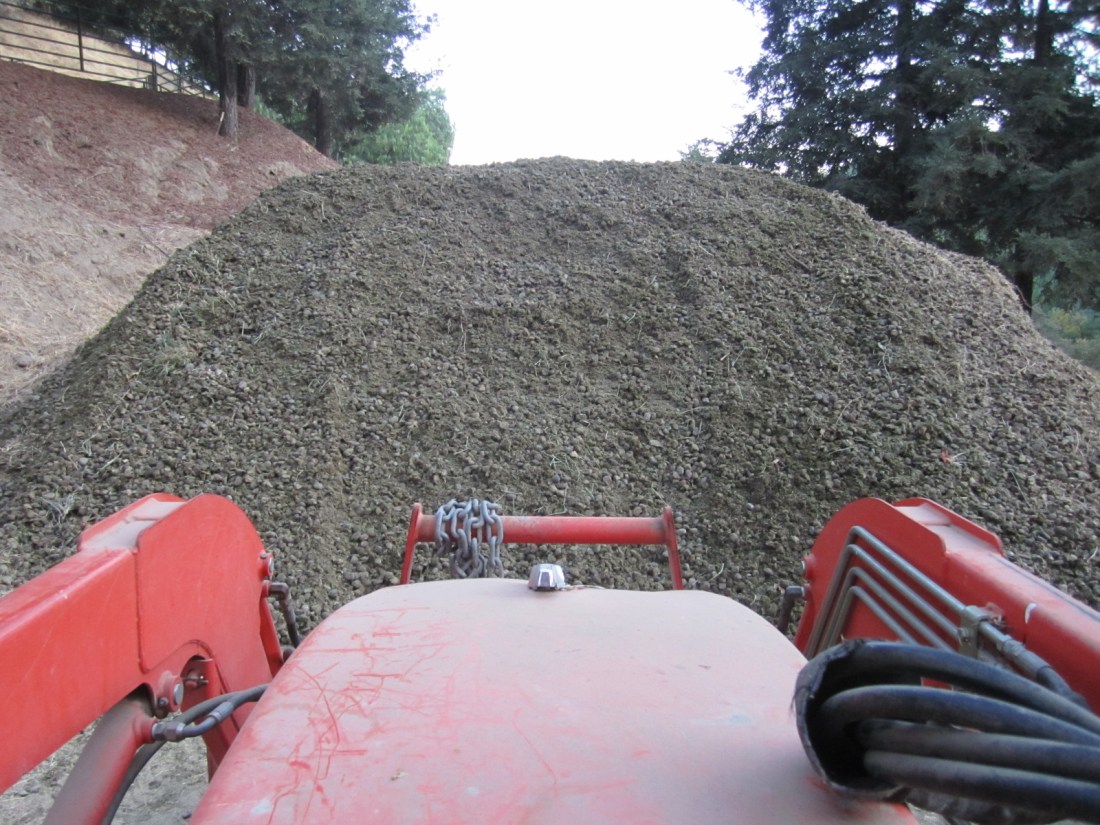
Now that the roundup is over and the horses are gone, the ranchers can enjoy more of what their allotments have to offer.
In just a few short months, thousands of cattle will be turned loose on an HMA that can only support 253 wild horses. You see, the numbers won’t work with just hundreds of cow/calf pairs—which is what you might guess for an area that recently achieved a thriving ecological balance.
Refer to Tables 2 and 3 in Appendix G of the Environmental Assessment for the HMA management plan.
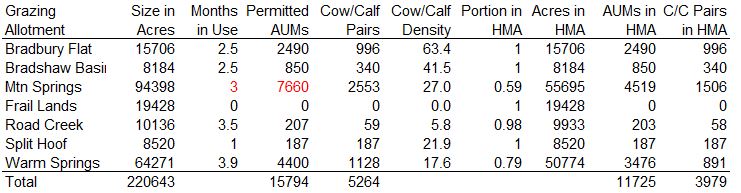
In the Bradbury Flat allotment, which covers 15,706 acres and is 100% inside in the HMA, 2,490 AUMs have been authorized on six pastures in a 2.5 month grazing season.
Livestock operators would have to place 996 cow/calf pairs on that parcel to consume that much forage in that amount of time. The animal density would be 63.4 cow/calf pairs per thousand acres!
The density allowed by plan for wild horses is 1.5 animals per thousand acres.
On Bradshaw Basin, also 100% inside the HMA, ranchers have access to 850 AUMs on 8,184 acres for 2.5 months. That translates to 340 cow/calf pairs on the allotment with a density of 41.5 cow/calf pairs per thousand acres.
The number of cow/calf pairs on the other allotments and the cow/calf densities can be found in the following table. The permitted forage for the Mountain Springs allotment was computed by difference, so the column total matched the figure given in Section 4.2.2 in the EA. The grazing season was not given so it was estimated.
The chart below shows the forage allowed by plan for horses and livestock on the HMA.
The map showing the allotment locations on the HMA could not be found (mentioned in Section 4.2.2 in the EA) so all of the acreage in the HMA was used in the livestock density calculation. If some of the land is not subject to livestock grazing, the overall cow/calf density would be higher.
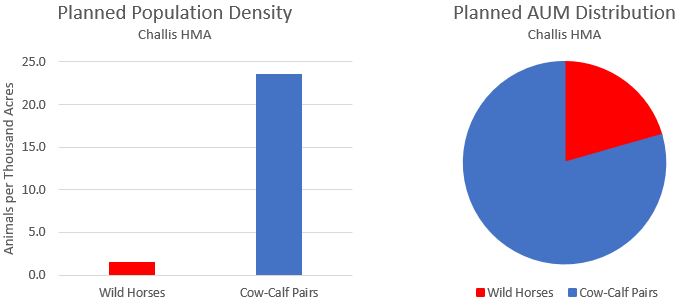
Now you know why over half the horses on the HMA had to be removed. By the time the ranchers get though, there’s almost nothing left for them.
Never mind that land was set aside for the horses. That was a long time ago.
UPDATE: If you add the numbers in the ‘Acres in HMA’ column, you get 168,240, which is very close to the size of the HMA stated in the EA (168,720 acres). Thus, all of the HMA is subject to livestock grazing, except for areas described as ‘Frail Lands.’
RELATED: Challis Roundup Ends.
Livestock may be few and far between on the Virginia Range but so are the foals.
RELATED: Livestock Notably Absent.
If no mining companies signed on to the proposed WHB management plan, what other users of public lands endorsed it?
(a) Ranchers
(b) Loggers
(c) Hikers
(d) Campers
(e) All of the above
Answer: A
BONUS QUESTION: The WHB Act of 1971 was prompted by the killing and slaughter of wild horses on western rangelands by _______________.
RELATED: ‘Path Forward’ Quiz.
How many oil companies signed on to the ill-conceived management plan for wild horses and burros?
(a) One
(b) Four
(c) Seven
(d) Eleven
(e) None
Answer: E.
BONUS QUESTION: How many mining companies?
RELATED: ‘Path Forward’ Discussed.
The number of wild horses and burros in off-range corrals and long-term pastures (around 50,000) can be explained by the misappropriation of forage on just a few dozen HMAs.
The forage allocated to privately owned cattle and sheep on public lands in the western U.S., about nine million AUMs per year, would support at least 750,000 wild horses and burros, enough to empty all of those corrals and pastures fifteen times over.
You don’t have a horse problem on western rangelands, you have a ranching problem.
RELATED: Hypothesis, Subject to the Test of Future Experience.
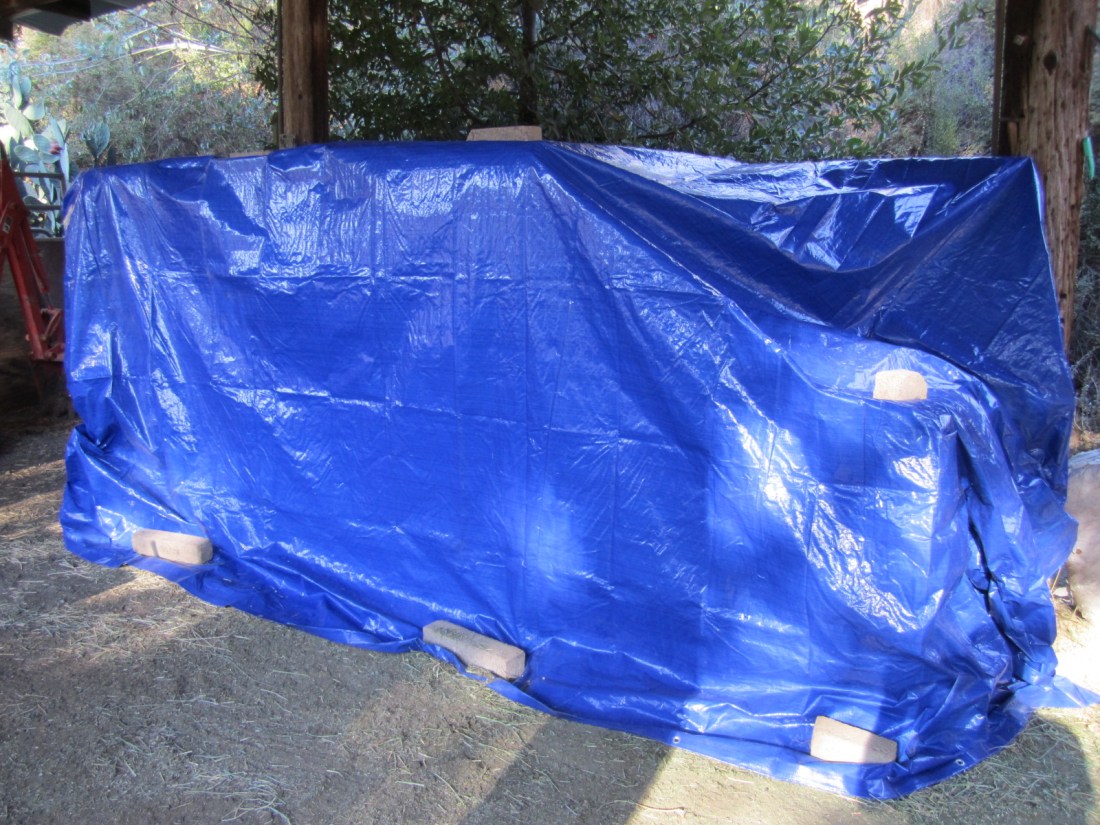
The old one was torn and deer were helping themselves. The stack is six bales across by four bales high and the 16′ x 20′ tarp covers if perfectly. It’s next to the corral in the middle photo.

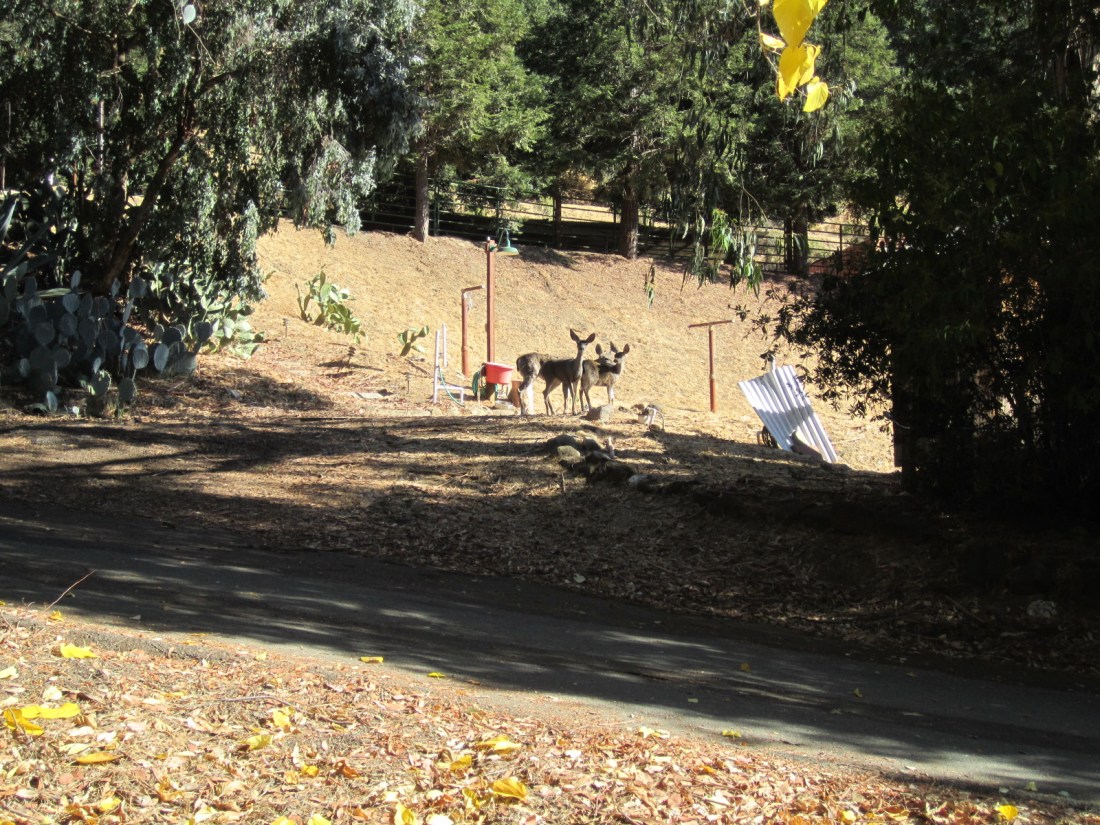
Along the Verde River in central Arizona with IO. Volume up.
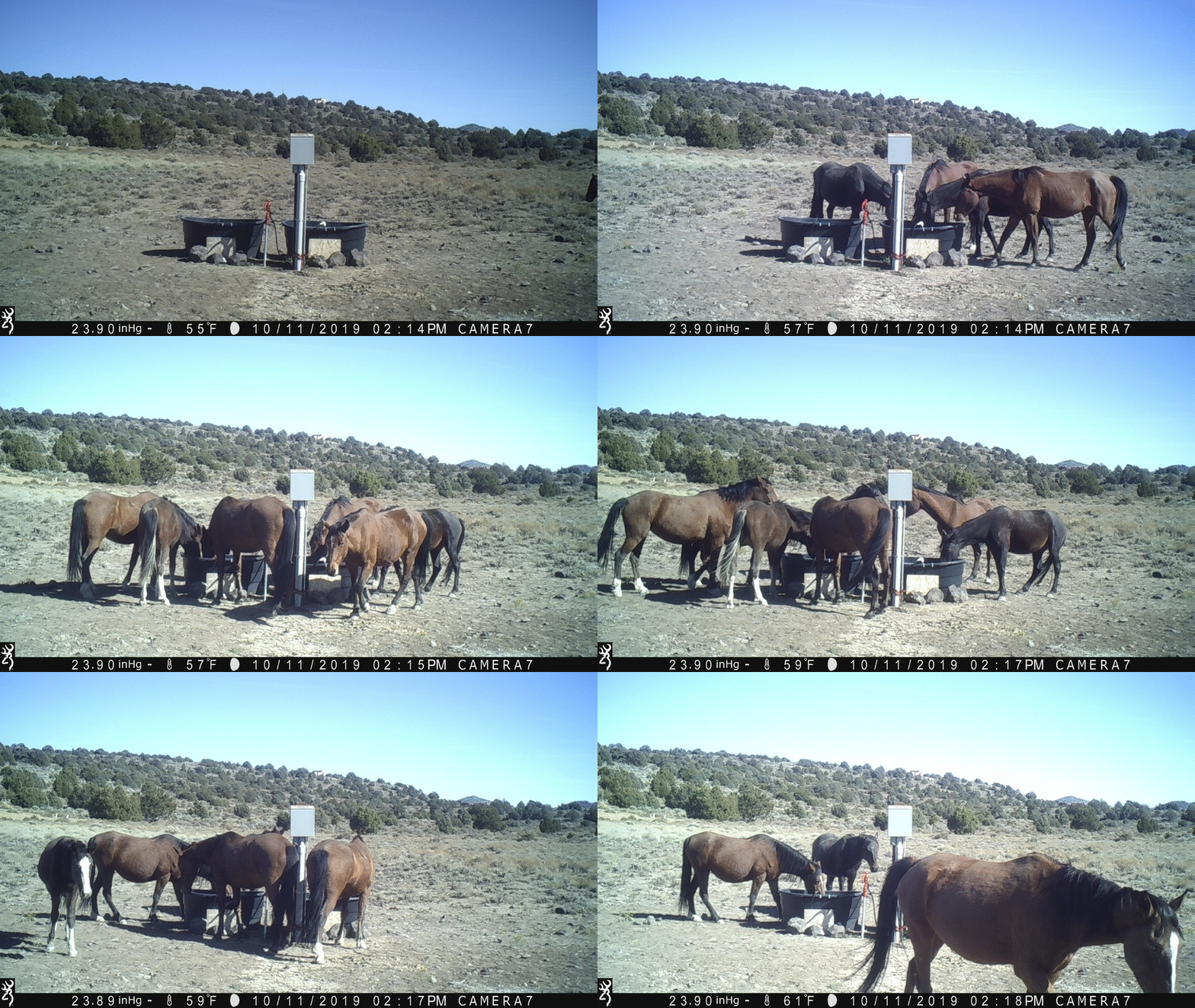
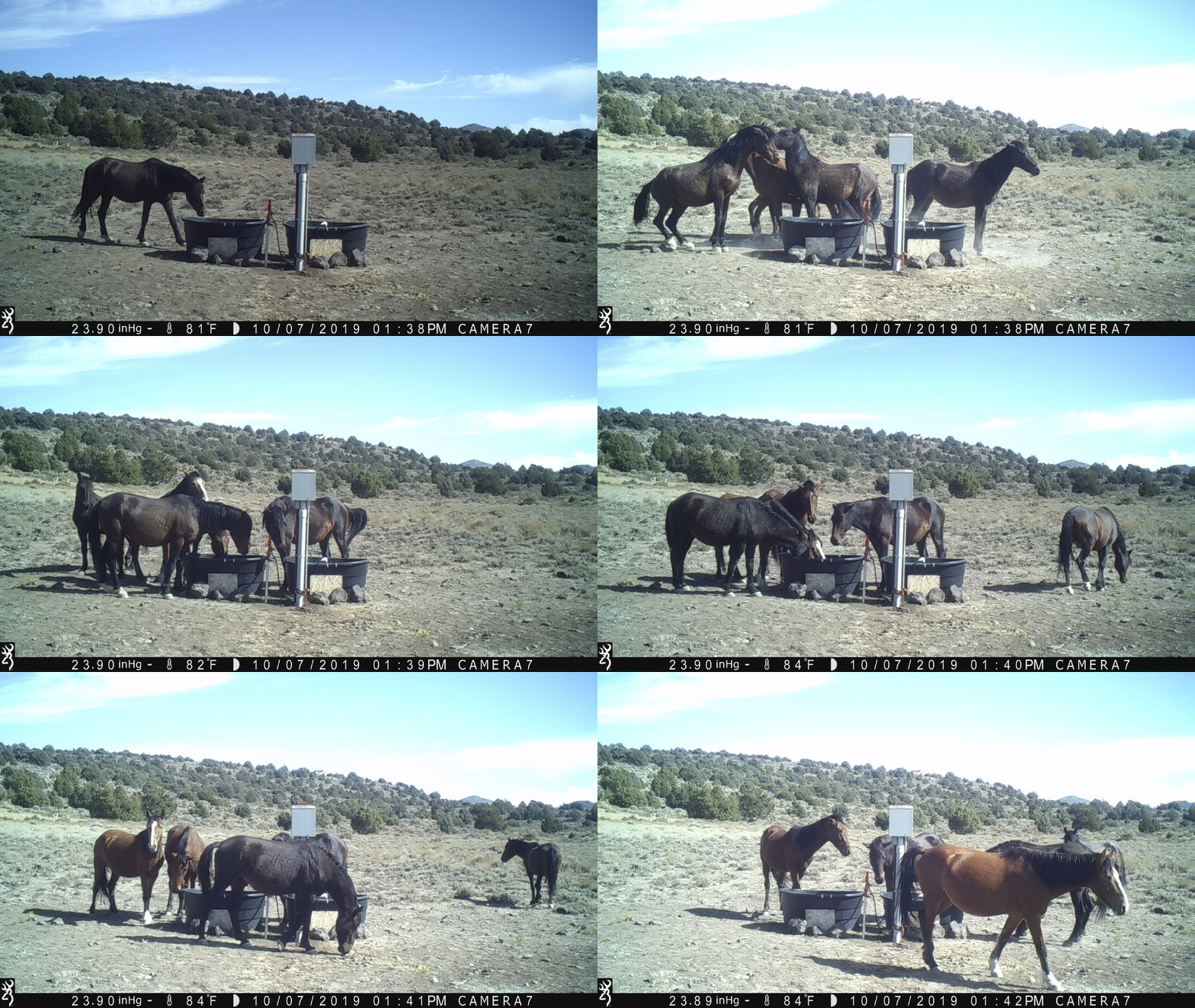
Trailcam photos of some drinking buddies on the Virginia Range.
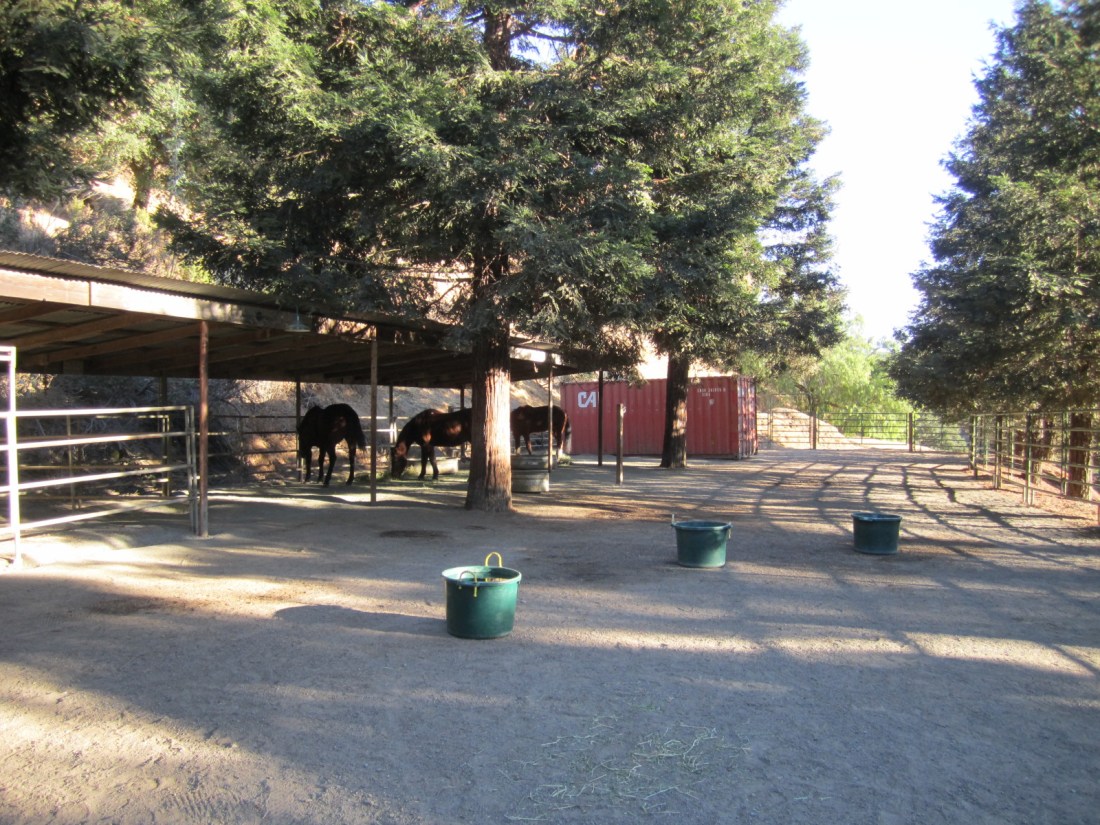
Scene on Sunday afternoon, 11-10-19. Corral just cleaned, on to the next job.
Small band of Virginia Range mustangs in a residential area, filmed by Julie Deloach.
Now you know what the white stripes on the edge of the road are for.
BLM said today that 295 wild horses had been gathered from the HMA, taking the herd from 429 animals to 134. No deaths were reported and the number of horses to be returned has yet to be determined. The post-gather population target is 185.
Captured mares will be treated with contraceptives before being returned to their home range, according to the news release, and the sex ratio of the herd will be altered to slow population growth.
The gather stats included 14 geldings and 43 foals. After deducting the geldings from the total, the youngsters accounted for 15% of the horses captured.
RELATED: Challis Wild Horses to Experience ‘Thriving Ecological Balance.’
On Sand Wash Basin HMA with HighStakesRanch.
This story was in the news a few days ago but was passed over because the original site was fouled with ads and tracking software.
But this syndicated version by Fox News of St. Louis is readable.
Visitors to the park had been feeding the animals and they became a bit too friendly, so they were removed and put up for adoption.
Hand feeding is one of the best ways to make a horse pushy and disrespectful.
RELATED: Wild Horses in Missouri?, Echo Bluff Horses Featured in Kid’s Section of Washington Post.
Refer to the comments from 40:52 to 42:44 in this radio segment on the ‘Path Forward’ by KNPR of Las Vegas. The program host asks if there is a perfect model for managing wild horse populations.
The guest, a member of the Wild Horse and Burro Advisory Board and science advisor for Return to Freedom, pointed to Assateague as the gold standard (Maryland side of the island, ponies on the Virginia side are managed by the annual swim).
Seriously?
The size of the herd declined from 78 in November 2018 to 75 in November 2019, there is clear evidence of a problem with its sex ratio and genetic diversity may be inadequate.
And you’re holding that up as an example of success?
The only non-lethal option for on-range management of wild horses and burros in the American west is to end public-lands ranching and restore the WHB Act to its original form.
RELATED: ‘Path Forward’ Discussed.
Listen to the remarks from 42:45 to 43:51 in this radio segment on the ‘Path Forward’ by KNPR of Las Vegas. Yep, reduce horses to allow more vegetation [for the ranchers].
The ill-conceived management plan, which will remove 70% of America’s wild horses and burros from their home range and slow the growth of the remaining herds, was not created by two opposing groups—it was written by comrades in arms!
Wild horse advocates were barred from the process because they’re on the fringe and might try to undo four years of ‘progress.’
A few months ago the PZP zealots said darted mares become ‘self-boosting’ after five years. Now, they refer to mares ‘reactivating’ after five years. Listen to the remarks from 18:38 to 20:33 in this radio segment on the ‘Path Forward’ by KNPR of Las Vegas.
Folks, these are code words for sterilization.
The PZP zealots are on the same side of the debate as the public-lands ranchers, differing only in methodology.
Don’t give them a penny.


