You can’t make this stuff up! Segment begins at 13:38.
Author: Western Horse Watchers
Swasey Progress Report Day 2
The daily reports indicate 253 wild horses captured as of July 16, with none returned to their home range and no deaths.
Body condition scores ranged from three to five(!) with a few twos.
Not exactly what you’d expect for an area that’s grossly overpopulated.
The fives tell the story: The horses are robbing too much forage from the poor ranchers.
The management plan for the HMA assigns six times more forage to privately owned livestock than horses.
Sand Springs Wild Horses Get Short End of Stick
Sand Springs is the third and final HMA in the Barren Valley Complex, an area subject to wild horse management actions per the Decision Record dated June 9.
The number of wild horses and privately owned livestock on the HMA vary with time and rangeland conditions but resource allocations don’t change that much. What do they reveal about the attitudes and beliefs of those who wrote them?
The management plan allows 200 wild horses on 192,524 acres per Section 1.2 of the Final EA. The current wild horse population is 422.
The forage requirement for horses is 200 × 12 = 2,400 AUMs per year. The stocking rate allowed by plan is 200 ÷ 192,524 × 1,000 = 1.0 wild horses per thousand acres and the number of excess horses on the HMA is 422 – 200 = 222.
Like Sheepshead, Sand Springs does not have a fractional stocking rate, so the proportion of forage diverted to livestock may not be as large as Coyote Lake.
The HMA intersects one grazing allotment. Table 6 in the EA provides the allotment size, permitted forage and grazing season. Few calculations are required. The forage budget was converted to cow/calf pairs, as their resource requirements are said to be equivalent to those of wild horses.
The HMA is not 100% subject to permitted grazing but close. The forage available to livestock inside the HMA is 6,314 AUMs per year.

The Saddle Butte ranchers would have to place 1,263 cow/calf pairs inside the HMA to graze off 6,314 AUMs in five months (6,314 ÷ 5). The stocking rate allowed by plan is 6.8 cow/calf pairs per thousand acres (1,263 ÷ 185,636 × 1,000).
These management indicators are compared in the following charts.

The management plan allocates 2.6 times as much forage to domestic livestock as it does for wild horses, on land set aside for the horses. The plan allows over six times as many cow/calf pairs per thousand acres as it does for horses.
Wild horses were not a priority when the plan was written. The “principally but not exclusively” clause of the WHB Act was ignored.
The forage assigned to livestock would support an additional 526 horses (6,314 ÷ 12), for a new AML of 726 (200 + 526).
There are no excess horses on the HMA (222 < 526). Carrying capacity has not been exceeded. So what is the rationale for roundups and contraceptives?
RELATED: Barren Valley Gather EA Comes and Goes, No News Release.
What to Do with 68,000 ‘Excess’ Wild Horses?
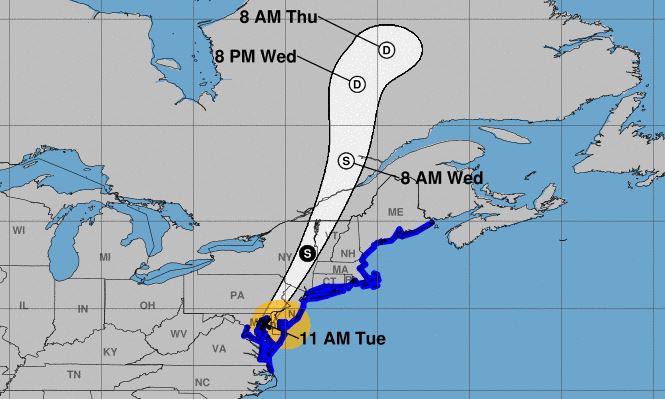
For your viewing enjoyment, a video report by Chief Meteorologist Ginger Zee of ABC News, distributed this evening by Yahoo! News.
What’s next, an engineer getting involved in the wild horse debate?
UPDATE: YouTube video here.
Jackson Mountains Roundup Ends Early
BLM announced this morning that the roundup was complete, with 85 wild horses removed from their home range on an emergency basis. No deaths were reported.
The operation began July 4. The original plan was to remove 300 wild horses over a period of 45 to 60 days.
Captured animals were taken to the Indian Lakes off-range corrals in Fallon, NV.
RELATED: Studs Outnumber Mares 2:1 in Jackson Mountains Roundup.
Currituck Horses at Great Risk?
Only 100 remain on the barrier island and “every single one lost is devastating to the genetic health and diversity,” said the herd manager in a report following last week’s choking incident.
She continued, “It’s hard enough to lose one to natural causes … but to lose one to something caused by humans and so easily avoided is just … I don’t even have a word for how bad that is.”
The greatest threat to these animals is not the tourists but the so-called advocates who stalk them with clipboards and darting rifles.
It’s bad when one dies but it’s okay if they’re never born.
You only need to look at Assateague Island (Maryland side) to see where this is going.
The PZP zealots have run that herd into the ground and they know it.
Teamwork on the Salt River
The bay horse in the river beginning at 0:15 seems to be foraging for the roan, who won’t put his head in the water to pull out eelgrass. Filmed July 13 by Mark Formo.
Studs Outnumber Mares 2:1 in Jackson Mountains Roundup
The bait has drawn 49 studs, 27 mares and 9 foals into the traps as of July 14, according to the daily reports. Body condition scores were not given and no deaths have occurred.
RELATED: Jackson Mountains Roundup in Progress.
Colorado Fire Restrictions Include Two HMAs
BLM announced this morning the beginning of Stage 1 fire restrictions in Moffat and Rio Blanco counties, among others, which contain the Sand Wash Basin and Piceance-East Douglas HMAs, respectively. The restrictions are explained in the news release.
The Wolf Fire, started yesterday by lightning, appears to be burning at or near the southern border of Piceance.
Exploring Oatman
Kathryn in Christ spends the day with family in Oatman, AZ, an old mining town in the Black Mountain HMA frequented by wild burros.
RELATED: Oatman of the North.
Rush Hour at Water Tanks
There was frost on the ground a few hours earlier. In June!

No Horses Just Frost
Trailcam photos from the Virginia Range. Elevation 6,200 feet.

Exploring Assateague
Filmed on the Maryland side of the island just before the arrival of Hurricane Dorian in September 2019 by Here Then Gone.
RELATED: Assateague Car Tour.
Court Decides Two Wild Horse Cases in Favor of BLM
The Ninth Circuit Court of Appeals sided with the BLM in its analysis of the effects of releasing a limited number of geldings onto public lands as part of its wild horse management efforts, according to a news release issued today.
In another case, the Court reaffirmed the use of wild horse and burro management plans that cover ten-year periods.
The terms ‘livestock’ and ‘multiple use’ appear nowhere in the announcement, as if the horses and burros have full use of the resources in their home range and are now far beyond its ability to support them.
The problem is most of the resources have been diverted to privately owned livestock.
Roundups may be necessary when the capacity limit of an area is reached, as seen earlier today in the Sheepshead HMA, but they can’t be justified when the forage assigned to livestock could support all of the ‘excess’ horses in an area, and more, as seen last week at the Coyote Lake HMA.
Currituck Wild Horse Chokes on Apple
The colt died Friday after suffering for several days with an apple stuck in its esophagus, according to a report by WTKR News of Norfolk, VA.
Swasey Wild Horse Roundup Starts This Week
Approximately 800 horses will be removed from the HMA, starting on Wednesday, according to a BLM news release. The incident will be open to public observation.
Gather stats and daily reports will be posted to this page, although it was generating an error message at the time this post went live.
Sheepshead Wild Horses Get Short End of Stick
Up next in the Barren Valley Complex is the Sheepshead-Heath Creek HMA, an area set aside for wild horses. The current population is 949, according to the Final EA for management actions in the Complex. If no action is taken, per Alternative 5, the poor ranchers would continue to suffer “undue hardship” because they can’t “fully use the forage they are authorized.”
In the original WHB Act, lands where horses were found were to be managed principally but not exclusively for wild horses. Today, some HMAs are ‘Horse Minimization Areas,’ because they’re managed primarily for livestock. Is this the case for Sheepshead?
The management plan allows 302 wild horses on 204,500 acres. The forage demand is 3,624 AUMs per year and the aimed-at stocking rate is 1.5 horses per thousand acres.
The target stocking rate across all HMAs is one wild horse or burro per thousand acres.
Unlike Coyote Lake, reviewed on these pages a few days ago, Sheepshead does not have a fractional stocking rate, so the proportion of forage diverted to privately owned livestock may not be as large as Coyote Lake.
The Sheepshead HMA intersects two grazing allotments. Table 5 in the EA provides data on allotment size, authorized forage and grazing seasons. Herd sizes and stocking rates are computed for cow/calf pairs, as their resource requirements are said to be equivalent to those of wild horses. One AUM will sustain one wild horse or one cow/calf pair for one month.

The total estimated forage for livestock inside the HMA, determined in the same manner as Coyote Lake, is 7,276 AUMs per year. The total estimated number of cow/calf pairs inside the HMA is 662. The total allotment acreage falling inside the HMA exceeds the size of the HMA, suggesting that it’s 100% subject to permitted grazing. The area available to livestock inside the HMA was set to 204,500 acres.
The estimated stocking rate allowed by plan is 662 ÷ 204,500 × 1,000 = 3.2 cow/calf pairs per thousand acres, twice the rate set for horses but a much smaller disparity compared to other HMAs in the ‘Short End of Stick’ (SES) series.
The weighted average grazing season is 11 months (7,276 ÷ 662).
These management indicators are compared in the following charts.

The pie chart tells you the HMA is not managed principally for wild horses, but it’s one of the milder cases of forage misappropriation in the SES series.
The forage allocated to livestock would support an additional 606 wild horses (7,276 ÷ 12), for a new AML of 908 (302 + 606).
The current wild horse population exceeds the capacity limit of HMA (949 > 908), which doesn’t include livestock.
The situation may not be as dire as it sounds because the BLM usually imposes a safety factor on forage consumption, meaning there’s more out there than authorized by plan, and the horses migrate between the HMAs in the Complex as stated in the EA. But it’s not a pattern that you’d want to maintain. Next year may bring a drought, or wildfire.
A higher percentage of forage has been diverted to livestock on Coyote Lake, compared to Sheepshead, which is not ideal for free-roaming horses in search of food. The forage allocation at Sand Springs, the third HMA in the Complex, is not known at this time but will be assessed in the near future.
RELATED: Barren Valley Gather EA Comes and Goes, No News Release.
Mustang Monday
Assateague Wild Horse Census Temporarily Halted?
Where are the results for May and July? Field work not performed or are the findings being hidden from public view?
The most recent results, from March, were not posted at the Assateague news site, but released via local media.
The census reveals the long-term effects of PZP, which its adherents don’t want you to know. The fertility control program (Maryland side of the island) was shut off in 2016 but the herd is only now starting to recover.
Scorcher Today?
Better find a shady spot where you can ride it out until sundown.