The executive order will help restore a balance on public lands, according to a news release dated January 27.
We already know how that plays out in the wild horse world. There is no balance, only a bias in favor of a special interest.


Western Horse Watchers Association
Exposing the Hypocrisy, Lies and Incompetence of the Wild Horse Advocates
The executive order will help restore a balance on public lands, according to a news release dated January 27.
We already know how that plays out in the wild horse world. There is no balance, only a bias in favor of a special interest.
The incident began on January 6. Gather stats through February 5:
No gather activity was reported on Day 29.
No deaths occurred on Days 29, 30, 31. The overall death rate is now 2.5%, down from 2.6% on Day 28.
One foal has been caught to date. Roughly 46% of captured adults are male and 54% are female. Some of the mares are probably within a few weeks of foaling. Some may have foaled in the off-range corrals.
Body condition scores are not known.
The location of current operations is not known. Three HMAs are involved in the roundup.
The number of unaccounted-for animals is 112, up from 108 on Day 28. The contractor is probably holding them on site.
Some of the mares will be treated with contraceptives and returned to the range but no such activity has been reported. Some may receive GPS radio transmitters.
Data quality continues to be good.
RELATED: Eagle Roundup Day 28.
These volunteers live on site in their own campers or camp trailers, according to a news release issued today. BLM provides varying levels of services such as water, septic, phone and power connections, depending on the site.
There is no salary, but the agency provides allowances to cover living expenses.
Horse watching opportunities in the immediate area will likely be slim to none.
Hosts are needed at the Douglas City, Steel Bridge and Junction City campgrounds along the Trinity River, west of Redding, CA. The season runs from May to November.
Last year’s announcement says the campgrounds have excellent access to the river, which offers world class salmon and steelhead fishing opportunities, white water rafting, and areas great for swimming and picnicking.
The incident occurred last week on state route 602 in New Mexico, according to a report posted today by AP News. Other members of the band were chased into the mountains.
Refer to this guest column, appearing this morning in the Pagosa Daily Post.
They should be moved to remote wilderness areas—not particularly suited to livestock grazing—so ranchers can have unfettered access to resources in HMAs and WHTs.
Another ruse, totally self serving.
RELATED: Wild Horses Reduce Wildfires?
Refer to this listing in ZipRecruiter, posted yesterday. The district boundary can be seen in this map.
Applicants must be able to perform assignments that involve strenuous walking, horseback riding and climbing over rough and mountainous terrain. Work may require heavy lifting, bending and working with [wild?] horses up to 1500 pounds, as well as lifting hay bales up to 100 pounds, metal panels, construction materials and wire rope.
The successful candidate must be able to fly in small fixed or rotary wing aircraft to conduct aerial inventories of WHB populations and must be able to operate four-wheel drive vehicles in rugged terrain.
Sounds interesting but the role is probably not compatible with the views and beliefs expressed on these pages.
UPDATE: The PZP zealots may be a good fit. They’re getting rid of more wild horses than predators, oil and mining companies, and WHB shooters.
RELATED: Get Job with BLM, Give Cover to Public-Lands Ranchers.
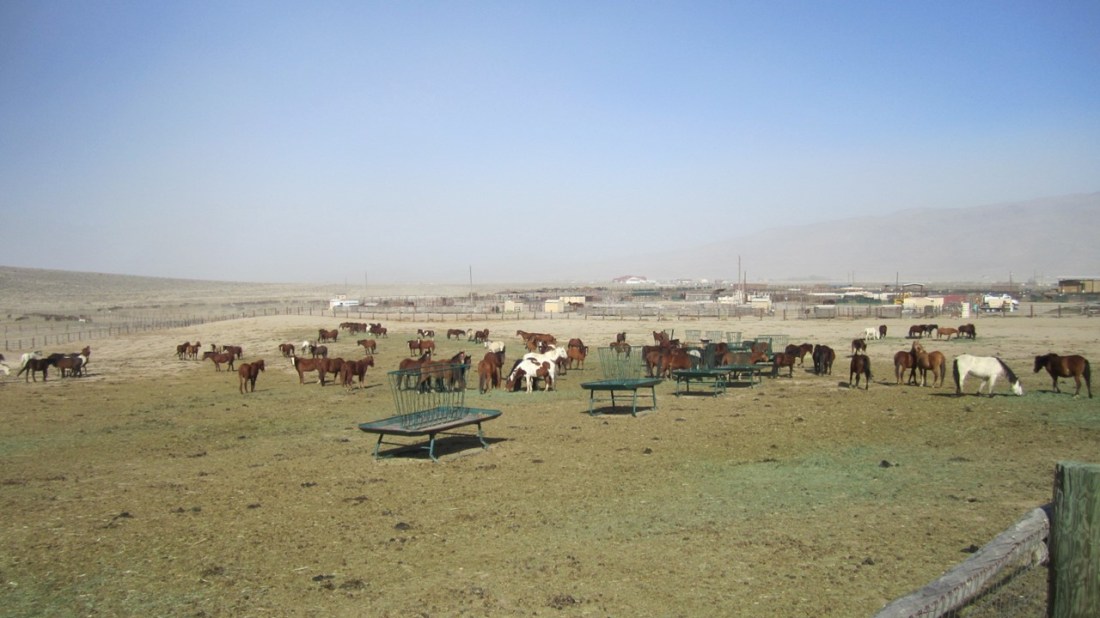
Did somebody take somebody on a hunting trip?
A report by the Nevada Independent says the founder of Blockchains LLC, owner of 67,000 acres in the Tahoe-Reno Industrial Center, has floated a plan to create an autonomous zone in Storey County, home to many of the Virginia Range mustangs.
The concept, circulated in the legislature, would apply to developers who own at least 50,000 contiguous acres of undeveloped land.
Last month, the governor expressed support for the idea in his state of the state address.
Why not set the limit at 75,000 acres? Why not 100,000?
Because it would render the applicant ineligible.
Totally self serving.
RELATED: PZP Darter’s Convention at Board of Agriculture Meeting.
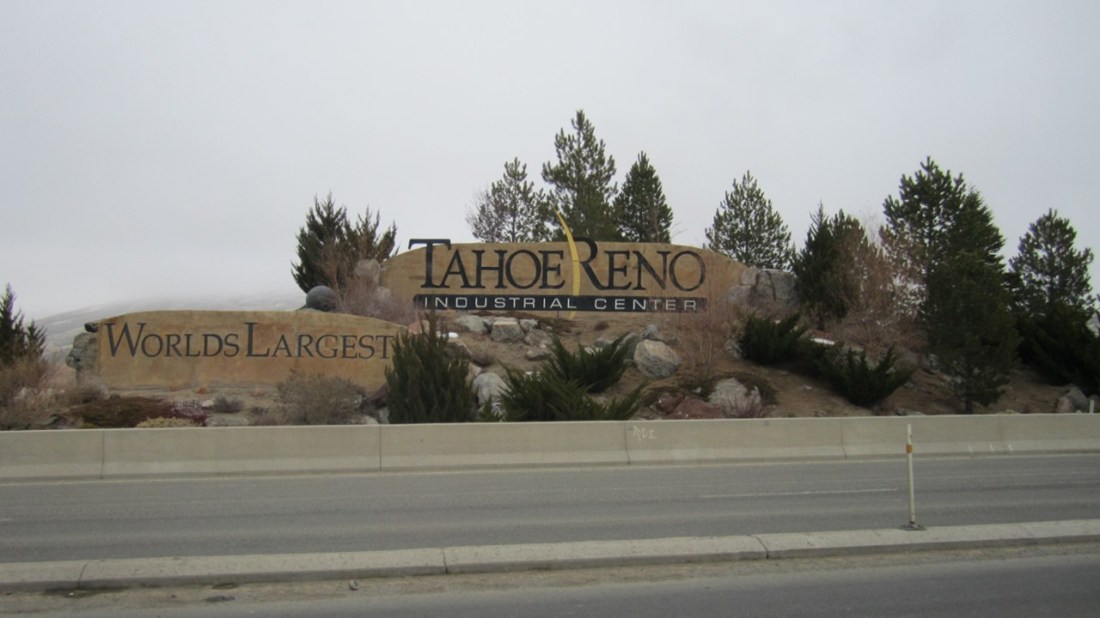
Table 3-14 in an EA from 2011, incorporated by reference into the new EA for resource enforcement actions in the Piceance-East Douglas HMA, shows the four allotments that overlap the HMA. The reference appears in Section 1.1.1 of the new EA.
The amount by which the allotments extend into the HMA is not known.
The Allotment Master report puts all four in the Improve category.
Livestock receive 6,935 AUMs per year on 166,888 acres, according to data from Tables 3-14 and 3-15 in the old EA, and wild horses receive 235 × 12 = 2,820 AUMs per year on 190,130 acres according to data in Section 1.1 of the new EA.
That’s 41.6 AUMs per year per thousand acres for livestock, compared to 14.8 AUMs per year per thousand acres for horses, reinforcing an observation made earlier that forage production tends to increase when land is designated for livestock.
In this case, by a factor of almost three.
RELATED: Decision Expected Next Week in Piceance-East Douglas EA?
The incident began on January 6. Gather stats through February 2:
Three deaths occurred on Day 27 and one on Day 28, all due to pre-existing conditions.
The overall death rate is 2.6%, up from 2.3% on Day 26.
One foal has been caught to date. Roughly 46% of captured adults are male and 54% are female. Some of the mares are probably within a few weeks of foaling. Some may have foaled in the off-range corrals.
Body condition scores are not known.
The location of current operations is not known. Three HMAs are involved in the roundup.
The number of unaccounted-for animals is 108, down from 121 on Day 26.
Some of the mares will be treated with contraceptives and returned to the range but no such activity has been reported. Some may receive GPS radio transmitters.
Data quality continues to be good.
RELATED: Eagle Roundup Day 26.
It’s not fair that the poor ranchers take all the heat for substandard conditions on western rangelands.
Western Horse Watchers proposes Category ‘D,’ for Deplorable, where most of the problems can be blamed on animals associated with freedom, ruggedness and self reliance.
Areas with a majority of Category D allotments would be referred to as baskets of deplorables.
RELATED: Allotment Categories Explained.
They just don’t get sick according to a Line on Agriculture segment posted this morning by the Ag Information Network of the West. Includes audio.
What will be the long-term effect on the animals as humans interfere with natural behaviors via roundups, fertility control and sex ratio skewing?
So says the writer of a story appearing this morning in the The Daily Sentinel of Grand Junction, CO. The decision likely involves a plan for resource enforcement actions in the Piceance-East Douglas HMA, NEPA project DOI-BLM-CO-N050-2020-0056-EA.
The comment period for the Draft EA closed on December 23, according to a BLM news release dated November 23.
Western Horse Watchers did not see the announcement. It may have been posted late but backdated to November 23, burying it in old news. This has happened before.
The HMA covers 190,130 acres in northwestern Colorado and has an AML of 235, for an aimed-at stocking rate of 1.2 wild horses per thousand acres.

The EA indicates in Section 5.1 (page 30 in the pdf) that “The predominant land uses within the PEDHMA are livestock grazing, energy development, and dispersed recreation including hunting,” but provides no data for the allotments, grazing seasons and active AUMs.
That would have been a substantive comment. Resource allocations and management priorities in the HMA are unknown. Is it managed primarily for livestock? Who knows.
Note that protection of wild horses is not one of the predominant uses.
Switched from alfalfa to alfalfa-grass about a week ago and the effect can be seen in their manure. Older material on the left, newer material on the right.

You can’t have a conversation about wild horses and burros without having a conversation about privately owned cattle and sheep.
RELATED: Wild Horse Narrative.
Table 3.3 in the Final EA for resource enforcement actions shows the eight allotments that intersect the HMA.
Western Horse Watchers was unable to find the Ely Spring Sheep allotment in RAS, although it appears on Map I of the EA (page 9 in the pdf). Ely Springs can be found in RAS but the acreage doesn’t match Table 3.3 so it was omitted.
Of the remaining allotments, five are managed by the Caliente Field Office and two by the Bristlecone Field Office.
The Caliente report shows one allotment in the Maintain category, two allotments in the Improve category and two in the Custodial category.
With most of the acreage coming from public lands, and all of the forage, Western Horse Watchers is unable to explain how those two allotments qualify as Custodial, in view of the 10% rule.
The category masks their condition.
The Bristlecone report classifies one allotment as Maintain and one as Custodial.
Same question for the allotment designated Custodial.
A category for blaming substandard conditions on wild horses and burros doesn’t exist.
Today is Groundhog Day—and Punxsutawney Phil did see his shadow—but the adopted horses are signaling the arrival of spring: They’re shedding out.

The next incident could occur in April, according to a report posted today by KX News of Bismarck, ND. The roundup planned for last year was cancelled.
The original wild horses of TRNP, thought to be descendants of Sitting Bull’s horses, were removed from the area 20+ years ago.
The following video shows some of the effects of darting mares with contraceptives, which are safe and effective according to their adherents.
RELATED: TRNP ‘Culls’ Adopted, Horses of the Badlands.
BLM said today that 283 wild horses will be gathered from the Silver King HMA, starting on or about February 5, due to overpopulation. Up to 25 mares will be treated with contraceptives and returned to the range, for a removal target of 258.
The operation will be carried out with helicopters, according to the news release, and will be open to public observation.
The last roundup ended in late 2018, with 996 horses removed.
The HMA covers 606,000 acres in eastern Nevada and has an AML of 128, for an aimed-at stocking rate of 0.2 wild horses per thousand acres. Refer to Table 1 in the Final EA for resource enforcement actions in the HMA.
The target stocking rate across all HMAs is one wild horse per thousand acres.
As previously discussed, fractional stocking rates may indicate large amounts of forage diverted to privately owned livestock.

The HMA intersects eight allotments, per Table 3.3 in the EA, with five of them offering year-round grazing. The Wilson Creek and Geyser Ranch allotments overlap the Eagle HMA to the east.
Cattle and sheep receive an estimated 24,000 AUMs per year inside the HMA, with just 1,500 AUMs per year assigned to the horses. The HMA is managed almost exclusively for livestock.
The forage allocated to livestock would support an additional 2,000 wild horses, for a True AML of 2,128. The current population of 343 wild horses is well within that range, making the roundup and fertility control program unnecessary.
Captured animals will be taken to the off-range corrals at Palomino Valley.
Gather stats and daily reports will be posted to this page.
The incident began on January 6. Gather stats through January 31:
No gather activity was reported on Days 24 and 25.
One death occurred on Day 24 and two more on Day 26, all attributed to pre-existing conditions. The overall death rate is 2.3%, up from 2.1% on Day 23.
One foal has been caught to date. Roughly 45% of captured adults are male and 55% are female. Some of the mares are probably within a few weeks of foaling. Some may have foaled in the off-range corrals.
Body condition scores are not known.
The location of current operations is not known. Three HMAs are involved in the roundup.
The number of unaccounted-for animals is 121, down from 143 on Day 23.
Some of the mares will be treated with contraceptives and returned to the range but no such activity has been reported. Some may receive GPS radio transmitters.
Data quality on this roundup has been good.
RELATED: Eagle Roundup Day 23.
This year’s event is scheduled for June 11 – 13 at the Murieta Equestrian Center east of Sacramento.
The 2020 Expo was cancelled due to Covid.
Although many activities are expected, a day trip to a nearby HMA will not be one of them. Events involving wild horses will be off the range.

