Comments Invited on Draft EA for Calico Gather Plan

The 30-day review period started today, according to a BLM news release.

The new Environmental Assessment looks at the consequences of resource enforcement actions in the five HMAs that make up the Complex.  A Finding of No Significant Impact will not apply to horses and burros found therein.

The Proposed Action features roundups and growth suppression techniques, such as fertility control vaccines, intra-uterine devices, non-reproducing animals (males and females) and sex ratio skewing.  Refer to Section 2.0 in the EA.

The plan will be valid for ten years.

The Complex covers 584,101 acres and has an AML of 952 wild horses and 65 wild burros, per Table 1 in the EA.  The equivalent AML is 985 horses, for an aimed-at stocking rate of 1.7 wild horses per thousand acres, slightly above the target rate across all HMAs of one wild horse per thousand acres.

The current population is estimated to be 1,692 horses and 73 burros.

Calico Complex Map 04-14-21

The Complex intersects five grazing allotments per Section 3.3.3 of the EA but there is not enough information to know which HMAs are affected and by how much.

Western Horse Watchers was unable to find a map in the appendices showing the allotment boundaries relative to those of the HMAs.

The Calico Complex is adjacent to the Surprise Complex in northwestern Nevada, the subject of a new gather plan and EA earlier this year.

Comments on the Calico EA can be submitted through May 13.
NCBA Responds to Coalition’s Letter About Livestock Grazing

The Executive Director of Natural Resources and the Public Lands Council said in a report dated April 13 by FarmProgress, an online news service, that “The path toward healthy horses, healthy rangelands, and healthy wildlife is championed by those who have been stewards of the land for generations—ranchers.”

Unfortunately, data from RAS show otherwise: Approximately 60% of BLM grazing land does not meet standards for rangeland health.

The letter calls for an end to livestock grazing on all “horse-occupied” HMAs, as if it didn’t occur on lands set aside for wild burros and included no data to support the claim that forage allocations “are severely biased against horse populations.”

Western Horse Watchers does not dispute the claim but believes the letter would have been more effective if submitted with some examples, such as the Little Colorado and Sand Wash Basin HMAs.

The letter also calls for a revamp of RMPs affecting such areas, which is essential, but may go nowhere without a court order.

Yesterday’s news release did not indicate if a similar request was sent to the Secretary of Agriculture regarding WHTs.

RELATED: Letter to Haaland Seeks Thriving Ecological Balance?

Letter to Haaland Seeks Thriving Ecological Balance?

We already have that.  It means 80 to 95% of the authorized forage going to privately owned livestock on land set aside for wild horses and burros.

It’s the six-bedroom home where the horses can use up to one bedroom but in no case less than half a broom closet.

Why not seek the ‘principally but not exclusively’ concept of the original statute?

Curiously, the term appears nowhere in the letter.

RELATED: Haaland Urged to End Livestock Grazing in HMAs.

Thriving Ecological Balance-3

Marketing the Virginia Range Mustangs to Job Seekers?

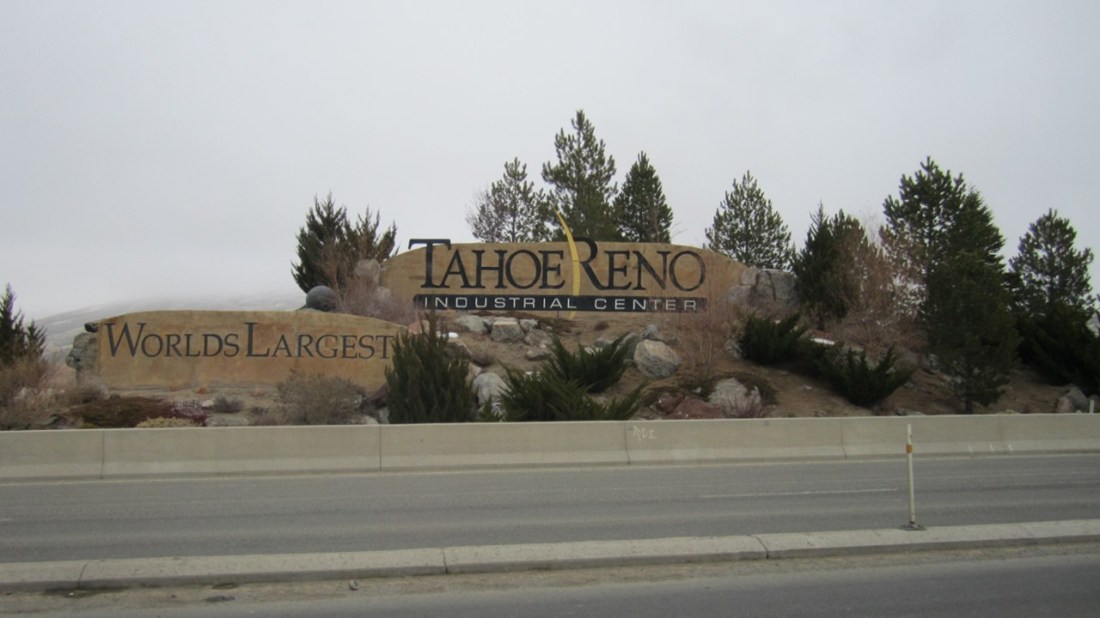
They’re one of the perks at the Tahoe Reno Industrial Center, according to a story in today’s online edition of The New York Times.

But before you hit the Apply button on a job posting, know that the ‘advocacy’ groups, led by the Campaign Against America’s Wild Horses, are trying to get rid of them.

Although there are few if any cattle in the area, and most of the land is privately owned, the future of these animals may follow the course of the recent ‘trajectory’ post.

RELATED: Storey County Commissioners Oppose Autonomous Zone.

TRIC Sign-1

Palomino Valley Not Just Famous for Wild Horses

The Palomino Valley Off-Range Holding Facility, destination of wild horses removed from public lands, is about 20 miles north of Sparks on the east side of Highway 445.

Palomino Valley Off-Range Corrals

The valley, which extends to the southeast, was the site of a rocket engine testing facility owned by the Rocketdyne division of North American Aviation in the 1960s, according to a document provided by the Palomino Valley General Improvement District.

The BLM corrals, not there at the time, are at the intersection of Ironwood Road and Pyramid Highway (445) in the following map.  Ironwood Road may have been moved slightly to the south to eliminate the jog and accommodate a larger holding facility.

Rocketdyne Labs at PV Map 04-11-21

The Nevada Field Laboratory, as it was called, was decommissioned in 1970.  Engines for the Gemini and Apollo spacecrafts, tested there, eventually put Neil Armstrong and Buzz Aldrin on the moon in 1969 and returned them safely to earth.

A 2014 report by USA Today describes the facility, as well as some of the environmental issues that were found as the area transitioned to a housing development.

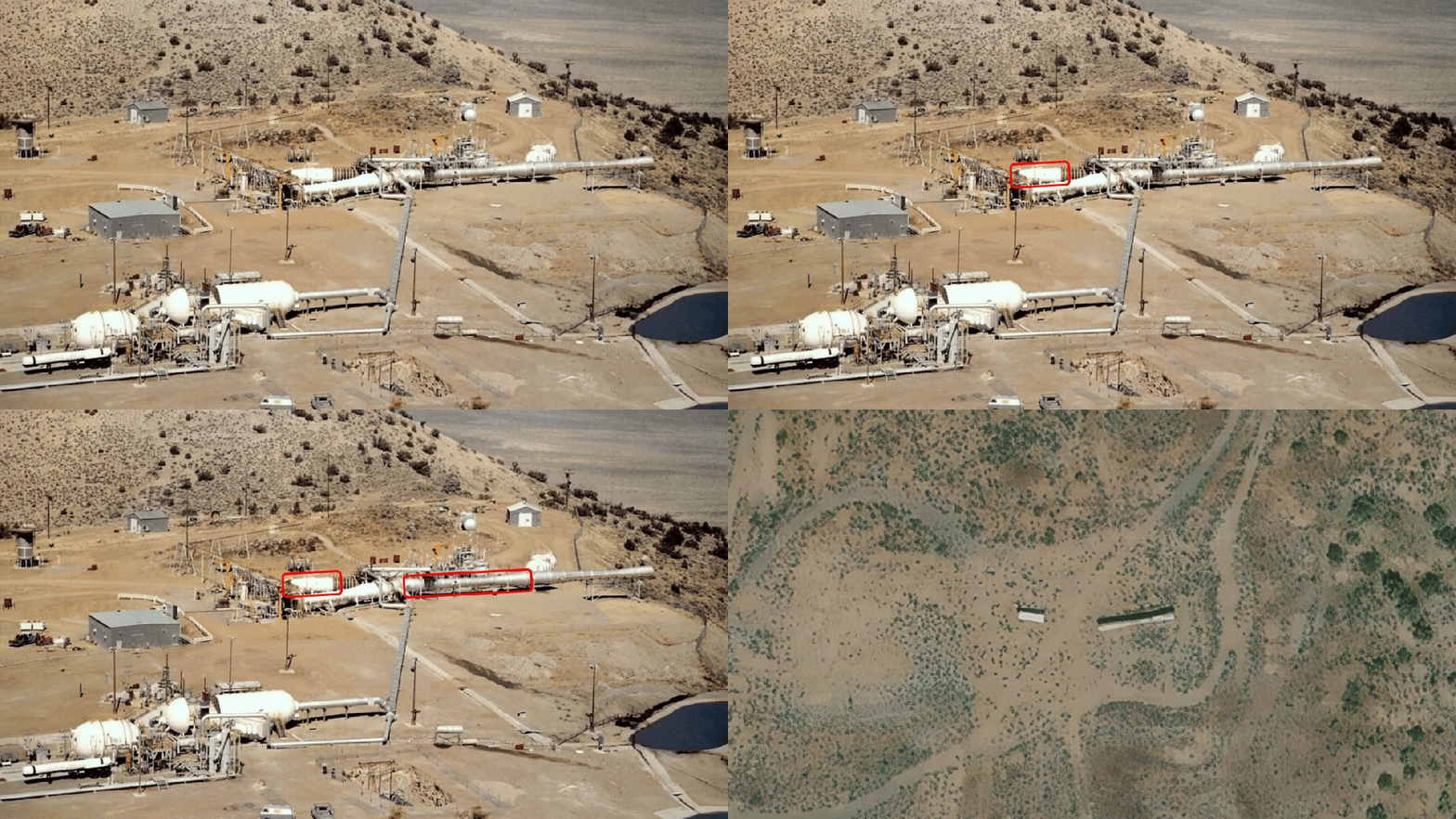
A few artifacts remain.  The exhaust tubes, mentioned in the story, are still there.  They were built in Area B of the map above.  Today, the land is owned by Boeing.

Rocketdyne Labs Inset

Plans for the Valley, post-Rocketdyne, never fully materialized.  Most of the roads are not paved but many of the parcels are 40 acres in size or larger.

Two years ago, a roundup in the area resulted in controversy when privately owned horses were captured and never returned.

UPDATE: More photos of the Rocketdyne facility can be found in this online gallery by the Reno Gazette Journal.

Assateague Herd Rebounds in Latest Census

The Park Service counted 78 horses on the Maryland side of the island in March, up from 73 a year ago, according to a story by WJLA News of Arlington, VA.  The findings were released on socialist media.

The fertility control program was shut off in 2016 but the herd has continued to decline, as seen in this history brief by NPS.  The chart shows an average growth rate of about 13% per year between 1975 and 1986, before the program was started.

The survey found 27 males and 51 females this year, suggesting that the breakdown by sex may be inching closer to normal.

The expected range of variation from a simple random process centered at 50% males / 50% females, with a herd size of 78, is 25.8 to 52.2.  The observed numbers of males and females fall within these limits so the results could be attributed to chance.

Last year’s results were outside of limits.

The increase in herd size this year was due to a larger number of males.

The expected range of variation must be determined by calculation, using basic statistical formulas, where n = 78 and p-bar = .5.

RELATED: Assateague Herd Declines in Latest Census.

Ranchers Rebranding Agenda as Wildlife Conservation?

SJR3 is one example.  It’s not about livestock, according to one of its adherents, even though the term appears five times in the text and the rancher-friendly Path Forward was cited once.

The writer of an opinion piece appearing in today’s edition of The Salt Lake Tribune claims that loss of sagebrush habitat, which rural communities need for ranching, hunting and other recreation, can be attributed to invasive cheatgrass, encroaching juniper, wildfires and overabundant wild horses, among other things.

Therefore, to protect wildlife that inhabit those areas, we need to eliminate those things because they displace native grasses, consume them or destroy them.

Like SJR3, the goal is wildlife conservation.  The ranchers have little if any interest in these efforts and will not benefit from them.

The author did not indicate if the photo of the cut-down juniper tree, which had probably been there for several hundred years, was taken on a grazing allotment.

RELATED: Sagebrush Restoration Project Inching Ahead.

SJR3 Not Intended to Benefit Livestock Producers?

The resolution was drafted to benefit Nevada’s wildlands and wildlife, according to the writer of column posted today by The Sierra Nevada Ally of Reno, NV.

Let’s accept that as a true statement.

Now, suppose you were going to write it to help the public-lands ranchers.  What would you do differently?  What exactly would you change?

“The fact that there is a problem with livestock does not mean we should not try to solve the problem with overabundant horses.”

You don’t have too many horses, you have too little food.  Gathering to the low end of AML and suppressing population growth reflects that reality.

The author testified in favor of the measure at the March 23 hearing.  His presentation was questioned at the end of the public comments for omitting data on cattle.  Go to 5:25:40 in the video transcript of the meeting.

RELATED: AWHC Intervenes in SJR3?

Management at the Maximum Possible Level

At the Salt River Horse Exhibit with Scouts Trail.

Meanwhile, back on the Virginia Range, the fertility police spent the weekend cleaning their darting rifles, getting ready for another season of population suppression.

Both programs are sponsored by the Campaign Against America’s Wild Horses.

You can’t have government telling the people that the land can only support one wild horse per thousand acres when the Virginia Range is carrying ten.

RELATED: Saving the Salt River Horses by Getting Rid of Them.