Laramie County Commissioners Favor Rule Change?

The decision was postponed until the May 5 meeting.  Three options are on the table for siting CAFOs—in particular, the wild horse feeding operation proposed by Equine Elite:

  • Leave the setback distance at three miles (current rule)
  • Change the setback distance to one mile
  • Use an odor footprint tool to determine the setback distance

Residents near the proposed feedlot said no.  The Planning Commission said no.

But three of the commissioners appear to be leaning toward a rule change that will allow the facility to be constructed near Burns, WY, arguing that the current setback distance deters agricultural businesses from coming into the county.

A spokesman for the residents said earlier in the meeting that the proposed CAFO is not an agricultural business because it produces nothing for human use or consumption.

He also pointed out that the recommended modeling program has not been calibrated for high-density horse feeding operations.

You can view the proceedings starting at 25:55 in this video.

RELATED: Laramie County CAFO to Be Discussed Next Week.

Wild Horses on Arctic Tundra?

Herds of wild horses, reindeer, bison and other large herbivores could pack down the earth and any snow on top of it, keeping the permafrost cold and reducing the risk of carbon emmissions, according to an article in Scientific American.

After all, they roamed the area thousands of years ago.

What a bunch of garbage.  Scientific American used to be a respectable publication but now it’s a left-wing propaganda organ.

Why not open it up to public-lands ranching?  Cut the grazing fee to 29¢ per AUM.

Cattle, being sedentary animals, will do a better job of packing down the soil and snow.

Remove them from western rangelands, ship them all up north and return warehoused horses to their home range.

Black Mountain Burros on Bullhead City Agenda

The City Council was asked this evening to support population control measures on the HMA, because, you know, the animals have been wandering onto private land in search of food and water, causing safety problems.

That they have been cut off from 70% of their forage—so it can be sold to public-lands ranchers—probably has nothing to do with that.

RELATED: Black Mountain Burros Get Short End of Stick.

End Public-Lands Ranching

The enterprise has outlived its usefulness.  The west is settled.

Privately owned livestock, the objects of individual and corporate profits, belong on private land.

Public lands set aside for wild horses and burros are managed primarily for cattle and sheep, with few exceptions.

Proponents of contraception, sterilization, sanctuaries and preserves subscribe to that paradigm.

Signatories to the rancher-friendly ‘Path Forward’ are of no use to the effort.

Others, who want to see the horses wild and free, don’t understand the problem.

We have to retrace the steps that destroyed the WHB Act and reverse those changes.

That will happen when you, and millions of others, demand it—the same principle that put the Act on the books in the first place.

Pinyon Pine Encroachment?

The announcement earlier this week of a proposed change that will streamline the approval of pinyon-juniper removal projects may have given you the impression that the trees are taking over western rangelands faster than ants at a Fourth of July picnic.

The projects would be carried out in mule deer and sage grouse habitats, with a view toward increased forage production, which could also benefit livestock, according to the Categorical Exclusion Verification Report.

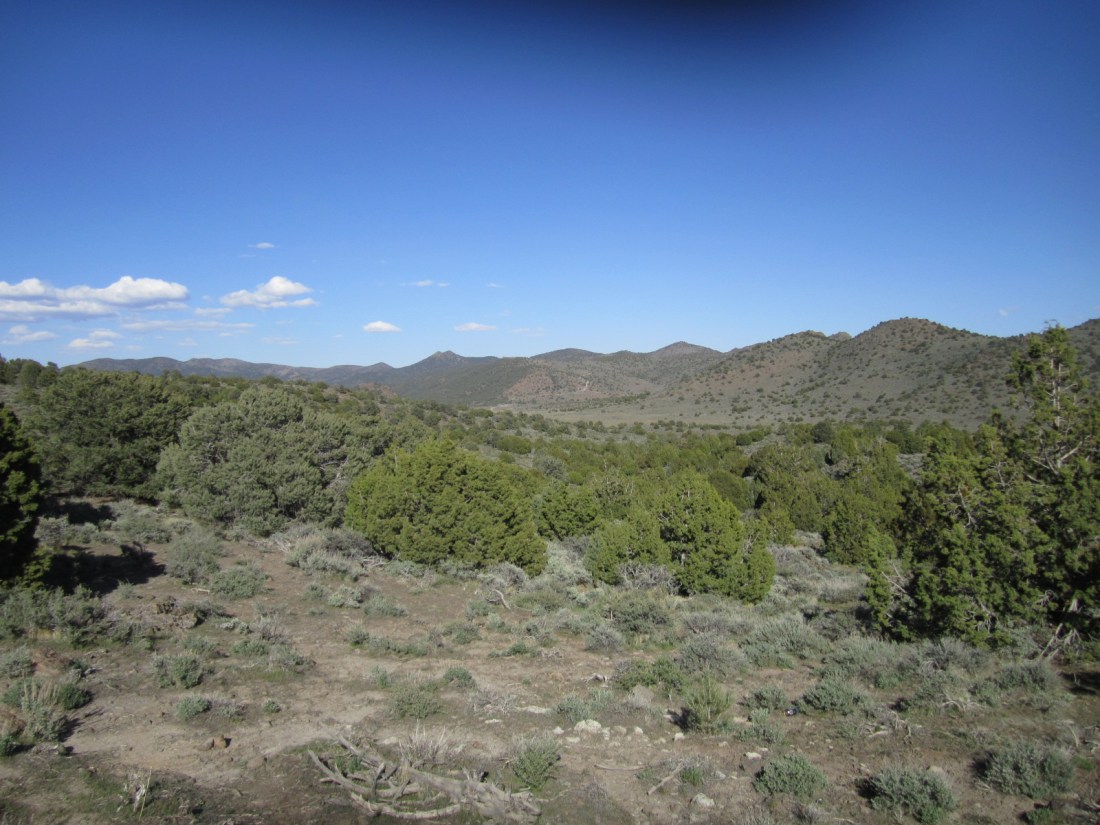
The pinyon pine seen in Nevada can take 50 to 60 years to reach six feet in height and the trees can survive for 600 years or more.  See page 7 in this publication by the University of Nevada Cooperative Extension.

Removal of old-growth trees is not allowed according to the CX Report, but are they the only ones large enough to reduce the available forage?

RELATED: BLM Targets Invasive Species.

IMG_3543

Green River Editorial Misses the Point

Refer to this opinion piece posted March 11 by the Green River Star of Green River, WY.

There’s nothing we can do.  The closure of three HMAs in the Wyoming Checkerboard is inevitable, along with the downsizing of a fourth.

“We can’t keep things the same as they have been [on public lands] because the Rock Springs Grazing Association [a private entity] won’t allow it.”

Maybe the White Mountain horses could be managed as a non-reproducing herd.

Nonsense!

The ranchers have outlived their usefulness, as well as the government incentives that keep them in place.

The grazing program overhaul should be the grazing program phase-out.

It’s time to end public-lands ranching and restore the WHB Act to its original form.

RELATED: Rock Springs AML Amendments.

PSA 12-24-19

House Considers DOI FY 2021 Budget Request

The Secretary of the Interior appeared before the House Interior and Environment Appropriations Subcommittee today to read a prepared statement and answer questions about the President’s FY 2021 budget request.

The priorities for the new year include a “more sustainable Wild Horse and Burro management strategy,” which probably means they want the next installment on the disastrous ‘Path Forward.’

The $21 million authorized for the project in FY 2020 was tied to the development of a game plan, which has not been announced on the BLM news page.

RELATED: What Can the BLM Do With an Extra $21 Million?

BLM Targets Invasive Species

What do wild horses have in common with pinyon pines and juniper trees?

They rob forage from cattle, sheep and big-game animals on public lands in the western U.S., or crowd it out.

Therefore, they have to go.

Who benefits?  Just look at those applauding a new initiative, announced yesterday, that will streamline the review of projects that remove pinyon and juniper trees to allow for sagebrush restoration.

  • President of the Mule Deer Foundation
  • President of the Congressional Sportsmen’s Foundation
  • Director of Communications, Wild Sheep Foundation
  • Beaver County Commissioner (and public-lands rancher)
  • Executive Director, New Mexico Cattle Growers’ Association

The proposal does not include the cutting of old-growth trees, planting of non-native species or application of herbicides, according to the news release.

IMG_8870

Photo: Pinyon pines and juniper trees on the Virginia Range, 05-04-19.

BLM Seeks Off-Range Corrals

Today BLM requested proposals for off-range holding facilities in western Nevada and southwestern Idaho that could accommodate 500 to 3,500 wild horses and burros.

The animals would be taken there (after removal from their home range) in preparation for transfer to off-range pastures or adoption and sale events around the county.

Bids will be accepted through April 9.

The current population of horses and burros on public lands in the western U.S. is three times higher than the number the land can sustainably support in balance with wildlife and other uses of the land (code words for privately owned livestock).

RELATED: More Off-Range Pastures Sought for Wild Horses.

PSA 01-01-20

Black Mountain Burros Get Short End of Stick

Refer to Section 1.1 of the EA for the Wild Burro Gather Plan.  Forage in the HMA has been degraded and two grazing allotments don’t meet standards for rangeland health.

The current number of burros exceeds the limit that achieves and maintains a thriving ecological balance vis-à-vis the multiple use and sustained yield mandates for the area.

OK, but what do the numbers tell you about the HMA, the way it’s being managed?

The management plan allows 478 wild burros on the HMA, which contains one million acres.  The aimed-at stocking rate is therefore 0.48 burros per thousand acres.

The forage allocation for the burros would be 2,868 AUMs per year, given that they’re on the range twelve months per year (478 × 12 ÷ 2).

The forage demand of burros is half of that for horses, so their impact on the land cannot be compared directly to livestock.  The forage requirements of horses are said to be equivalent to those of cow/calf pairs, so the comparison will be done on that basis.

The AUM budget won’t change but the AML and stocking rate will.  If the HMA was managed for wild horses, the AML would be 239 and the stocking rate allowed by plan would be 0.24 per thousand acres.

Table 7 in the EA provides data for livestock grazing on the HMA.  A BLM rep contacted by WHW confirmed that the grazing season is 12 months per year.

Six of the sixteen allotments are designated for intermittent use, when forage and other conditions are favorable.  They have been omitted from the calculations.

Note that the stocking rates for livestock (cow/calf densities) are considerably higher than the 0.24 allowed by plan for horses (who are proxy for the burros in this analysis).

Black Mountain Calcs-1

The land grazed continually corresponds to about 22% of the HMA.  The parcels grazed intermittently would bring the total to approximately 50%, as estimated in the original post (linked below).

The total estimated forage available to livestock inside the HMA is 7,333 AUMs per year, computed as the sum of the permitted AUMs for each allotment times the portion of each allotment inside the HMA.  For example, in Big Ranch A, 5,397 × .312 = 1684.

The estimated number of cow/calf pairs inside the HMA is 611, with an average grazing season of 12 months per year (7,333 ÷ 611).

The stocking rate for cow/calf pairs is 2.77 per thousand acres (611 ÷ 220,891 × 1,000).

Horses (burros, actually) receive 28% of the forage, compared to 72% for livestock.

These figures are compared in the following charts.

Black Mountain Charts-1

These indicators tell you that the HMA is managed primarily for livestock.

The thriving ecological balance—to be achieved by the roundup and maintained by one or more population controls—is not a balance at all.

The forage assigned to livestock would support an additional 1,222 burros (7,333 ÷ 12 × 2), for a new AML of 1,700 (478 + 1,222).

If the grazing allotments are fenced and livestock are present twelve months per year, can the burros access the resources on those parcels?

Has the most productive land in the HMA been given to the ranchers?

Would the loss of 72% of their forage explain their movement off the HMA?

If livestock are confined to the allotments by the same fences that keep the burros (and other wildlife) out, why attribute the substandard conditions to them?

Next time you see management actions justified by ‘multiple use’ and ‘sustained yield,’ know that they are code words for diverting most of the resources to privately owned cattle and sheep, minimizing the number of wild horses and burros, while giving the impression that the area is managed according to paragraph 1332(c) of the statute.

The term ‘Potemkin Village‘ comes to mind.

RELATED: Comments Invited on EA for Black Mountain Gather Plan.

PSA 12-07-19