New Stock Tank

An advantage of using 15-gallon buckets for water is they can be easily dumped, rinsed and refilled.  A disadvantage is the horses can easily put their feet inside, splash out half the water and flip the things over.  Which happens frequently in summer.  That’s what horses do.  But having no water when temperatures are over 90 degrees is unacceptable.

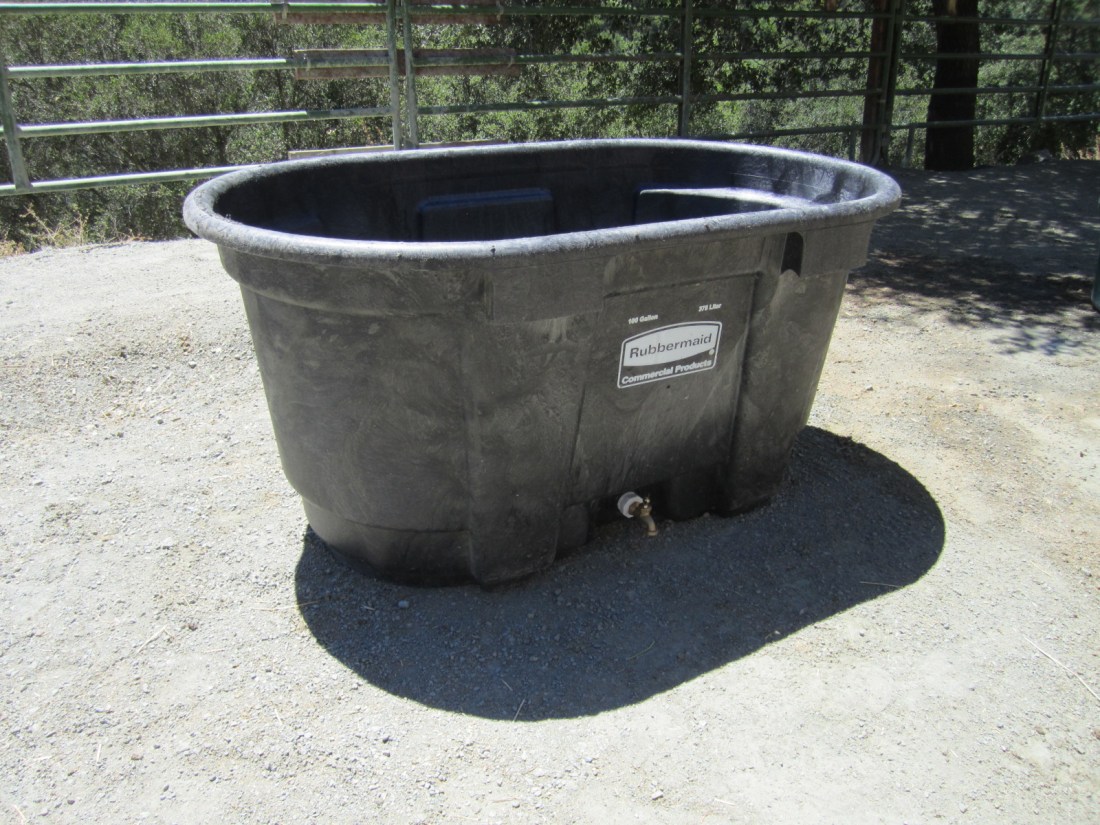
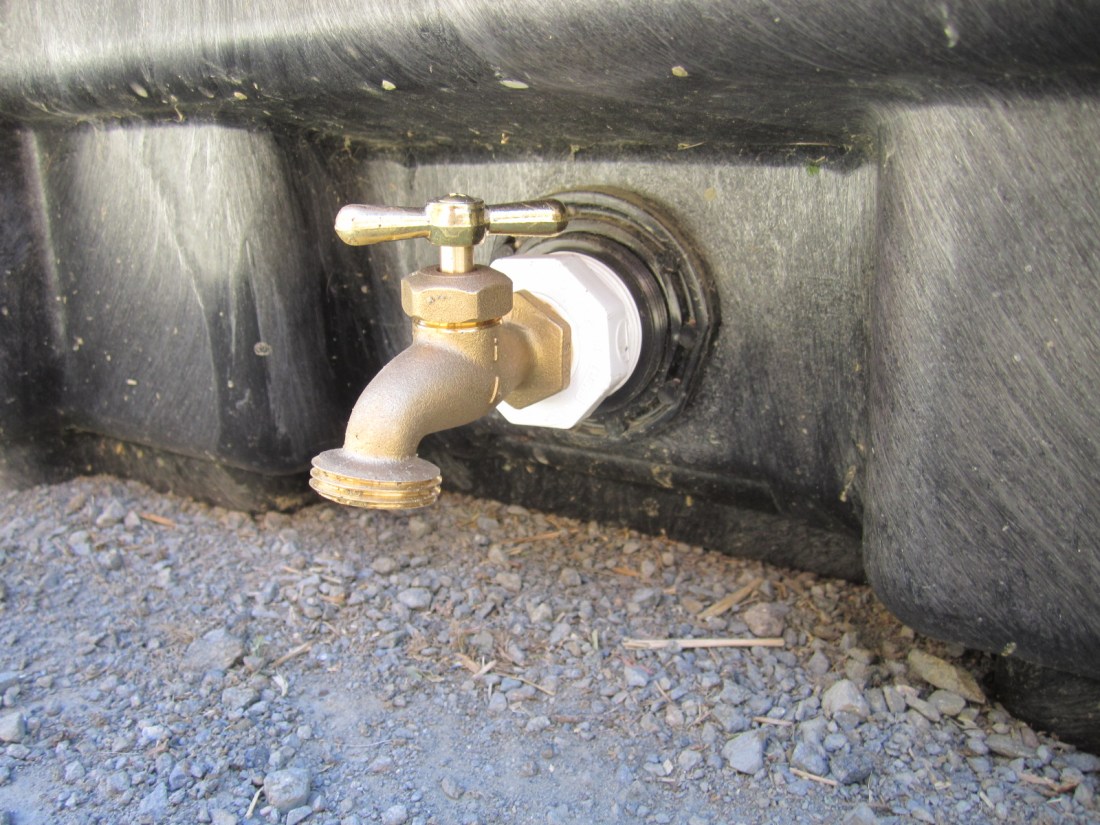
One way to avoid the problem is to add a 100-gallon stock tank.  The drain has a 1-1/4″ pipe thread, which accepts a 1-1/4″ x 3/4″ bushing for installing a valve.  The rim is high enough to deter contamination from dirty feet.  You can always set it on a pallet or cinder blocks for extra protection.
IMG_6846

When full, the tank weighs over 800 pounds, which means it’s not going anywhere until you drain it.  The tank supplements but does not replace the 15-gallon buckets.  You can be away for a day or two and not have to worry about water, assuming you have someone who can help with feeding and cleaning.
IMG_6853

If you elevate the tank a few inches you can connect a garden hose to the valve and direct the old water to a suitable spot.  Or you can just let it go to the ground so your horses can play in it.

The size and weight of the empty tank put it in the ‘luggable’ category.  You’ll still need to clean it two to three times a week.  Price was about $125 at the local feed store.
Mysterious Illness Affecting Wild Horses on Big Island

A neurological condition of unknown origin has afflicted several wild horses in Waipio Valley, resulting in some deaths, according to a report dated 07/10/18 from Hawaii News Now.

Locals are worried the disease could spread to domestic horses.

The illness may be related to a toxin in spoiled feed.  Blood samples have been collected and tests are in progress.  H/T Kellyerin Claybaugh of Aramat Equine Services.

Nature’s Hoof Cleaning

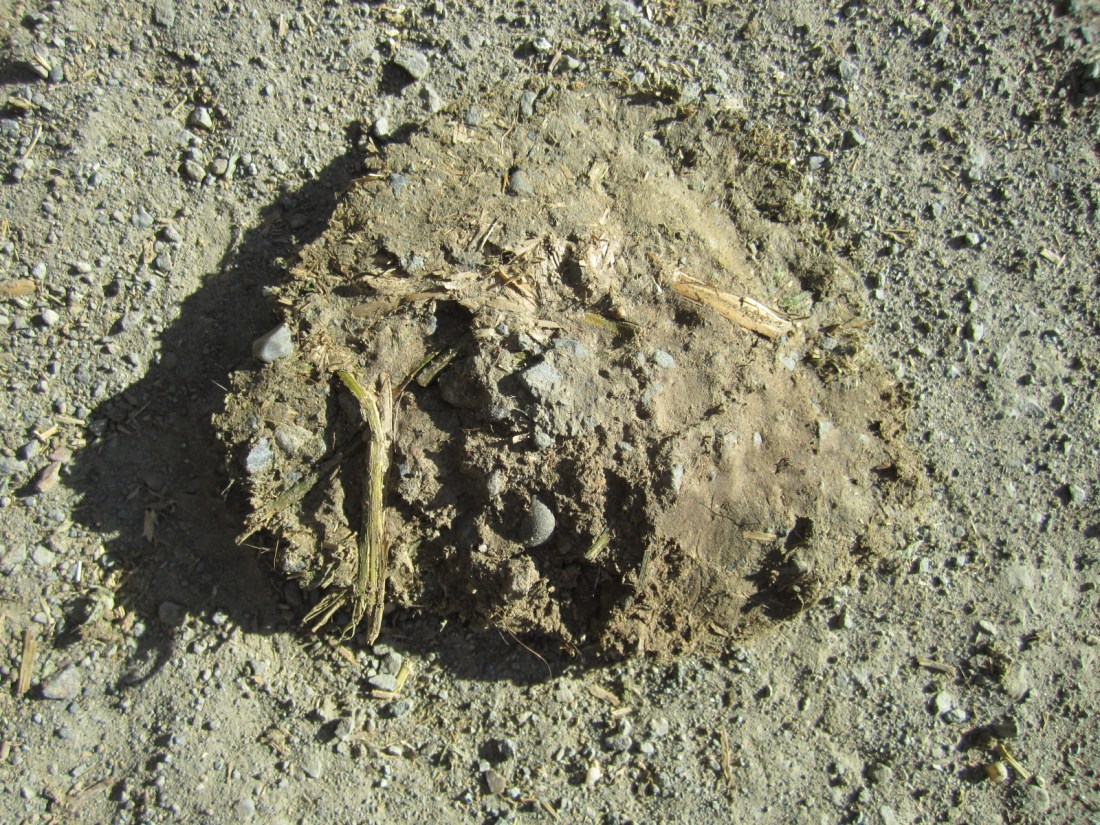
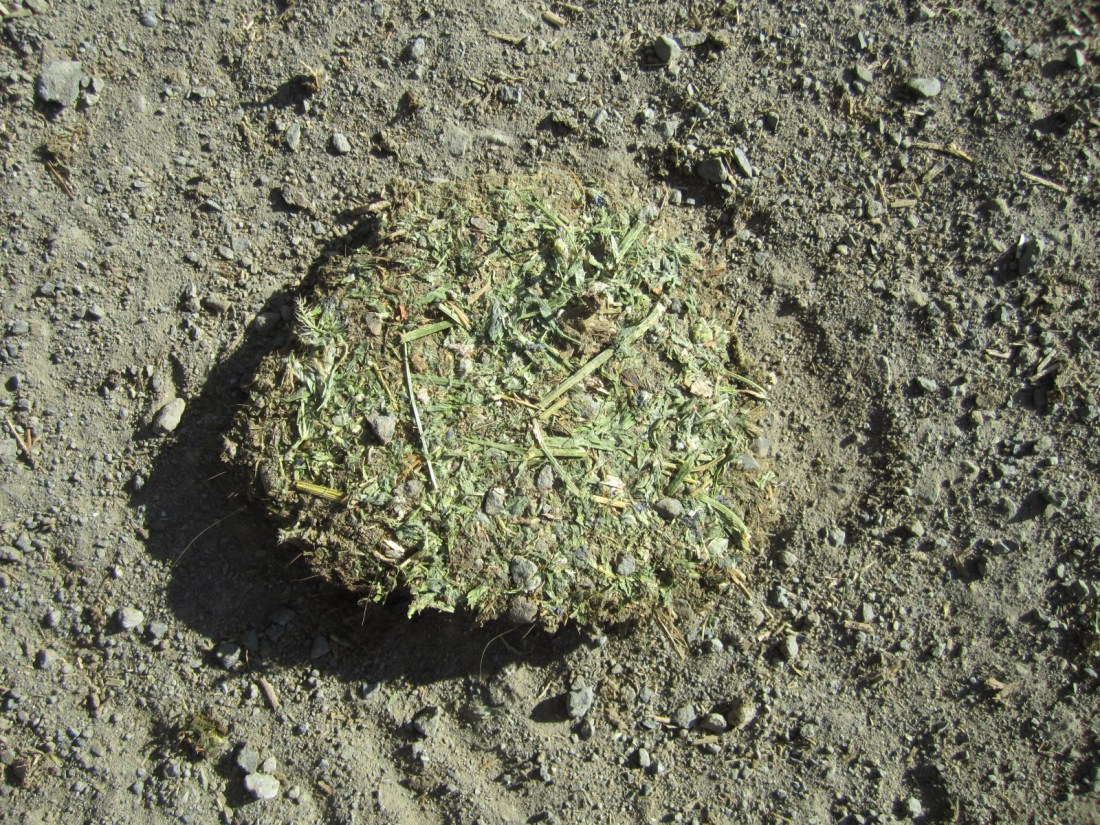
Found this in one of the corrals on 07/06/18.  It’s the compressed material flung out of a horse’s foot as he moves.  The first photo shows the outer surface that faces the ground.  The second photo shows the inner surface that contacts the hoof.  Note the rocks and other debris that were pulled out.

In one of his earlier videos, Rick Gore used the example of an overflowing water trough to keep mud in the pasture.  He explains the vacuum effect of mud as well as the flinging of dried mud in this video.

IMG_6842

IMG_6838

Emergency Gather of Pancake Horses to Begin Next Week

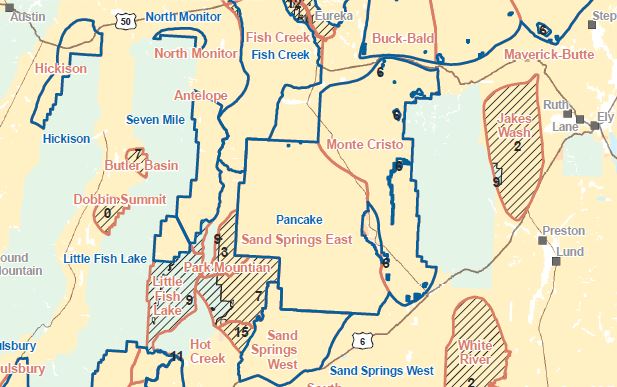
Bait-trapping will begin 07/09/18 with a goal of removing about 250 horses.  There is not enough water for the 2160 horses inhabiting the area, according to a BLM news release dated 07/06/18.  Gather operations are not open to public observation.

The Pancake HMA, which covers 850,000 acres, is southeast of Austin, NV.  Captured horses will be taken to the Indian Lakes off-range corrals in Fallon, NV, where they will be offered for adoption and/or taken to off-range pastures.

Pancake_HMA_Map-2

Livestock grazing has not been allowed on these lands since 2000.  The target population density of the HMA (at the upper end of the AML) is 0.6 animals per thousand acres.  The pre-gather density is 2.5 animals per thousand acres.

The Pancake Complex includes the Sand Springs West HMA, Pancake HMA, Jakes Wash HA and Monte Cristo WHT.  HMA boundaries are shown in blue, HA borders are red.

Red Desert Gather Announced

Refer to this BLM news release, dated 07/06/18.  The operation, which starts 08/06/18, will remove over 2600 horses from the five HMAs in the Red Desert Complex (Antelope Hills, Crooks Mountain, Green Mountain, Lost Creek, Stewart Creek).

Helicopters will be used to drive the horses into traps.  The area of interest is southeast of Lander, WY.

Red_Desert_HMA_Complex_Map-1

Some horses will be returned to the range but most will be put up for adoption and/or placed in off-range pastures.  Gather stats will be posted to this page.

The presence of livestock on these lands was not stated in the announcement.  However, the situation at Stewart Creek HMA is documented in the following video, starting at 4:40 (posted 06/20/17 by The Cloud Foundation).

Pine Nut Gather Moving Ahead Despite Public Outcry

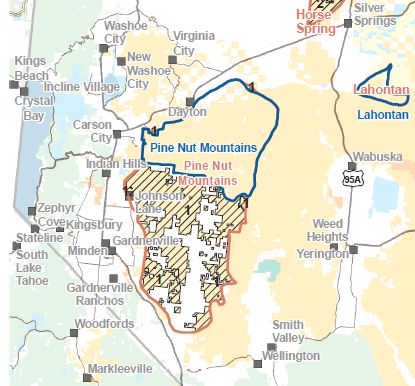
BLM plans to remove roughly 70 wild horses from the Pine Nut Mountains HA later this month, according to a report dated 07/06/18 in The Record-Courier.  They are found on lands south of the Pine Nut Mountains HMA, which is east of Carson City, NV.

Pine_Nut_Mountains_Map-2

There are no AMLs for herd areas and they are not managed for WHB due to inadequate food and/or water.  But the horses are there.  Similar to the Caliente HA Complex.

The horses are followed closely by the Pine Nut Wild Horse Advocates group, with photos and videos posted to their FB page daily.

Personnel with PNMWHA are trained to dart mares with PZP, and although the practice is sometimes discussed on FB, they rarely if ever show how it’s done.  The goal of these ‘humane management practices’ is zero population growth.

So when the BLM comes along and decides to remove the horses, how can you argue against it?

Both parties want FEWER HORSES ON THE RANGE.  It’s only a question of technique.

BLM to Gather Burros from Bullfrog HMA Starting Next Week

Bait traps will be used according to a news release dated 07/06/18.  Goal is remove 300 excess animals.  Captured burros will be taken to an Off-Range WHB Facility in Axtell, UT, where they will be available for adoption.

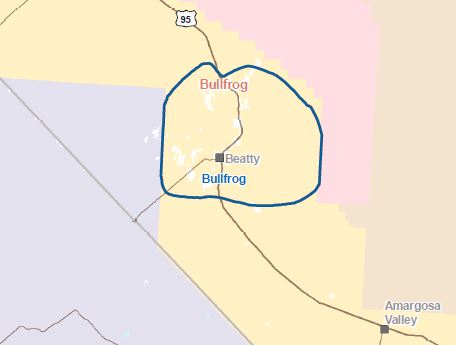
Bullfrog-HMA-Map-1

The Bullfrog HMA covers 157,180 acres and has a target population density of 0.6 animals per thousand acres (based on upper end of AML).  The density at current population levels is 4.3 animals per thousand acres.  Gather stats can be found on this page.

RELATED: Burros Found Dead Near Beatty, NV.

New Road Hazardous to Virginia Range Mustangs?

It is according to a story posted yesterday by KOLO-TV in Reno, NV.  Only a barbed wire fence separates the horses from a new section of the Southeast Connector, but the Regional Transportation Commission plans to build something more substantial over the next month.

Wild horse advocates worry that vehicle collisions with horses will lead to removal of the animals from the area.

The new road, which opens today, should improve traffic flow between residential areas south of Reno and Sparks and employment centers to the north.

Southeast_Connector_Map-1

The Virginia Range, not shown on the map, is on the east side of the new connector.

BLM Gathering Wild Burros at Piute Mountain HA

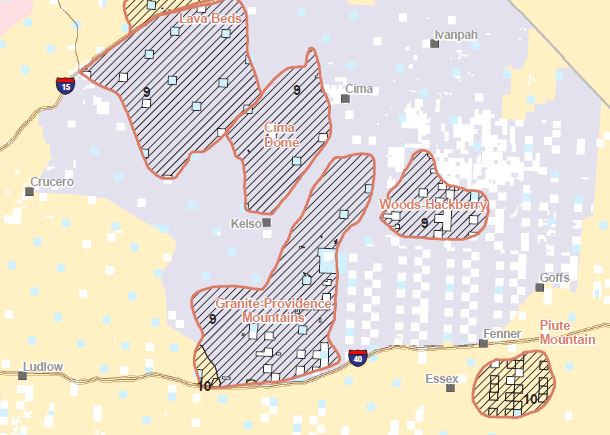
Bait-trapping began 06/28/18, per BLM news release dated 07/05/18.  Removal was prompted by insufficient water and high temperatures.  Affected area is near Fenner, CA, on the south side of I-40.  Captured burros will be taken to the Ridgecrest WHB Corrals for adoption.

Piute_Mountain_HA_Map-1

There are no AMLs for herd areas, they’re not managed for WHB due to lack of resources.  Yet the burros are there.  Gather stats can be found on this page.