
This speech may have been produced for a homework assignment, but it’s a fairly good assessment of the current situation in the wild horse world. H/T Amanda WH.
BLM to Gather Silver King Horses After Thanksgiving
Helicopters will be used to remove 980 ‘excess’ wild horses from the Silver King HMA, beginning 11/26/18, according to a BLM news release issued today. The roundup will be open to public observation.
Captured animals will be taken to the Indian Lakes off-range corrals in Fallon, NV, where they will be checked by a veterinarian and prepared for adoption. Given that the system has been flooded with 12,000 wild horses and burros removed from western rangelands in 2018, most will end up in segregated long-term holding. No family, no foals, no legacy.
The HMA covers 575,460 acres and has an AML of 128, for an aimed-at population density of 0.22 horses per thousand acres, almost nothing. The post-gather population will be 244 horses, according to the announcement. The HMA is in eastern Nevada.

The stated reason for the roundup is overpopulation. The real reason may forage losses.
This map, which appears at the BLM page for livestock grazing in Nevada, indicates the HMA is subject to several grazing allotments.

Three hundred wild horses were pushed off the Eagle HMA, immediately east of Silver King, in September. Perhaps this roundup will finish the job and clear the way for more livestock in 2019?
Anything for the public-lands ranchers.™
UPDATE: Gather stats and daily reports will be posted to this page.
Forest Service Ends Devil’s Garden Roundup
Helicopters were grounded on 11/08/18, with 932 wild horses shipped from the Devil’s Garden Plateau WHT. Refer to this USFS news release. Gather stats were not provided:
- Number of horses removed from the range
- Number of horses returned to the range
- Number of horses injured or killed in the traps
- Number of horses euthanized and reasons therefor
- Number of livestock harmed by the operation
Approximately 250 horses will be offered for adoption this weekend, according to a story posted yesterday by the Herald and News of Klamath Falls, OR. They have probably been hand-picked for the event.
An advocacy group argued that the adoption should be cancelled due to an outbreak of pigeon fever that could spread to domestic horses.
Another 650 horses were taken to the BLM Litchfield Corrals where they will be placed into an adoption program that has been flooded by roughly 12,000 horses and burros already gathered from western rangelands in 2018.
A roundup of similar size is planned for 2019.
RELATED: CBS Covers Roundup at Devil’s Garden WHT.
Rangelands in Southeast Oregon
This map, sourced from the WHB maps page, shows Herd Areas and Herd Management Areas in southeast Oregon. The HMAs, which are managed for wild horse and burros, have blue borders. The HAs, which may or may not contain HMAs, have red borders.
Jackies Butte HA includes Jackies Butte HMA plus some additional land to the north that is not managed for WHB. The Warm Springs HA has the same boundaries as the HMA. The Diamond Craters HA has no land managed for WHB, although horses and burros were found there when the WHB Act became law (that’s the definition of a HA).

Herd Areas are not managed for horses and burros because they don’t have adequate resources, according to the BLM. Go to 08:30 in this video.
This map, sourced from Data Basin, shows grazing allotments in the same area. HMAs from the map above have been added in red. Allotments are shaded green.

Most of the land in this part of the state is subject to BLM grazing permits. Same for the HMAs. Some HMA boundaries coincide with allotment boundaries. Which came first?
Note that lands outside the HMAs also fall within permitted grazing allotments—lands that can’t support horses and burros. But they can support cattle and sheep?
Would the situation be any different in Nevada? Utah? Wyoming?
If the Wild Horse and Burro Program is not run by ranching interests for the benefit of ranching interests, what would be done differently it was?
Mustang Monday
On the Salt River. H/T Mark Formo.
Reveille for V-Day
Today we honor our veterans. H/T Heart Of The Homefront for the video.
Forage Consumption on Western Rangelands
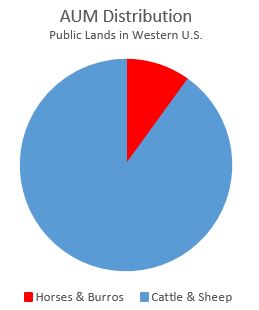
Wild horses and burros consume one million AUMs per year, cattle and sheep consume nine million AUMs per year. Ten percent vs. ninety percent. A ‘thriving ecological balance’ is only a few more roundups away.
Camp Fire Fallout
Looking up and down the valley on 11/10/18. Smoke from northern California wildfires gives everything an orange tint.


Orange Dayz
Looking west around 4:00 PM on 11/09/18, Contra Costa County, CA. Wildfires about 150 miles to the north.

Sacrificial Lambs at Fish Springs
Ten wild stallions will be removed from the Fish Springs area next week, according to a report posted today by The Record-Courier of Gardnerville, NV. Written complaints to the BLM have described their behavior as ‘aggressive.’ Damage to private property and a concern for personal safety were also cited in the complaints.
“A formal request for their removal was submitted by the Pine Nuts Wild Horse Advocates group.”
Bait traps will be used to capture the ‘excess’ stallions.
In September the BLM demanded that the Fish Springs herd be reduced from 78 horses to 58 by 2020. Could it be that the PN ‘advocates’ see this as opportunity to partially achieve that goal? Will they help the BLM set the traps?
The Fish Springs horses reside in the Pine Nut Mountains Herd Area, south of the Pine Nut Mountains HMA.
See also this news release issued today by the BLM.
RELATED: BLM Dictates Terms of Surrender to Fish Springs Advocates.
Zinke Leaving Interior?
Sessions is out. Who’s next? See the report posted yesterday by The Hill.
One million AUMs consumed by horses and burros on western rangelands in a year, compared to nine million AUMs for cattle and sheep. Eighty thousand horses and burros, millions of cattle and sheep.
But the helicopters never chase any livestock, only the horses and burros. Who will clean up this mess? Classic ‘swamp.’
May the Range Be Rid of These Pests!
That’s what ranchers in northern Colorado said about wild horses in 1904. Although the story is much the same across western rangelands today, the horses have survived and some have become rock stars. One such example is the Sand Wash Basin. Refer to this story posted 11/06/18 by the Craig Press for a perspective of this herd.
BLM Abandons Wild Horse Sterilization Research
Refer to this post which appeared this evening in Carol Walker’s Wild Hoofbeats blog.
“…the BLM has withdrawn completely…”
RELATED: Sterilization Delay in the News.
UPDATE: See this report by Oregon Live, dated 11/07/18.
BLM to Remove Burros Near Lake Havasu City
Fifty wild burros will be the subject of an emergency gather this week north of Lake Havasu City, AZ, due to safety concerns along Highway 95. Refer to this story, posted this morning by Havasu News.
The burros may be associated with the Havasu HMA, which surrounds the city, or Black Mountain HMA, the southern tip of which appears at the top of the map (blue borders).

The report did not indicate how the roundup would be conducted and if it would be open to public observation. Captured animals will be taken to a BLM facility in Florence, AZ where they will be prepared for adoption.
A formal announcement from the BLM had not been released at the time of writing.
Population Densities on Western Rangelands
One of the speakers at the WHB Advisory Board meeting last month presented these statistics on wild horses and burros in 2018:
- 82,000 animals at beginning of the year with over 11,000 removed
- 27 million acres set aside for grazing
Also presented at the meeting were some stats on livestock in 2017. The BLM livestock page provides the available land.
- 8.8 million AUMs consumed
- 155 million acres available for grazing
The WHB data yield a stocking rate of 2.6 animals per thousand acres (71,000 divided by 27,000,000 times 1000).
The aimed-at stocking rate for WHB is one animal per thousand acres (27,000 divided by 27,000,000 times 1000). This will be an indicator of a successful program, in the eyes of the public-lands ranchers and their allies at the BLM, along with many of the wild horse advocates.

The livestock data yield 1.5 million cow/calf pairs on western rangelands (per previous post), for a stocking rate of 19.4 animals per thousand acres (3,000,000 divided by 155,000,000 times 1000).
The livestock population target is 2 million cow/calf pairs (per previous post), which yields an aimed-at stocking rate of 25.8 animals per thousand acres (4,000,000 divided by 155,000,000 times 1000). This is another indicator of a ‘successful’ program.
So, if you’re talking about wild horses, public lands can only support one of them per thousand acres. If you’re talking about domestic cattle, the range can support 26 of them per thousand acres. In some cases it’s the same land!
This casts a long shadow over the concept of Appropriate Management Levels (AMLs), which supposedly represent the carrying capacity of the land. In view of these results, they only denote forage consumption the ranchers are willing to tolerate. They should be renamed Acceptable Forage Losses (AFLs)—the number of horses for a given area that won’t rob too much of the ranchers’ birthright.
Also keep in mind that many wild horse advocacy groups, large and small, agree with the overpopulation narrative, and that is the basis of their fertility control efforts.
They’re not friends of the horses.
RELATED: They’re All Starving, Public-Lands Ranching: How Bad Is It?
Midterm Results
Election’s over, swamp prevailed. This photo from the Drudge Report tells the story.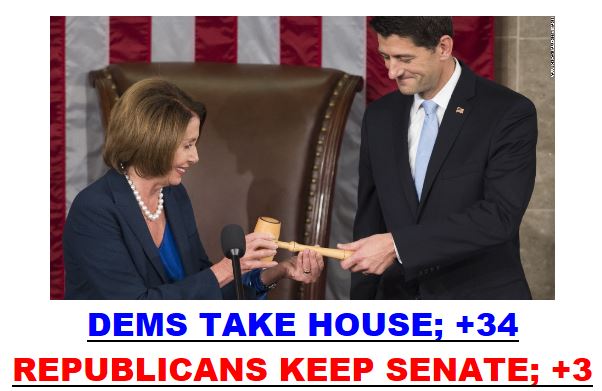
Could be subtitled ‘Emasculated Speaker Yields Control to Satan’s Sister.’ Butt sex and baby slaughter are back!
Election Night Wish List
Drain the swamp. Make western rangelands great again!
Voting with Their Feet
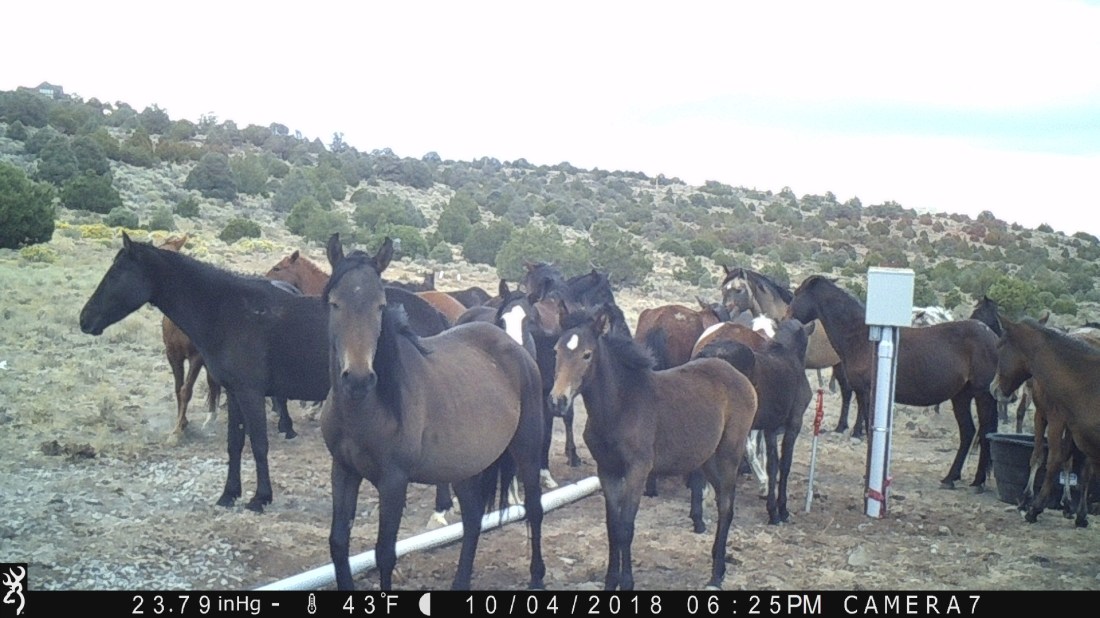
A report published yesterday by Santa Cruz Sentinel said 130,000 more residents left California for other states last year than arrived from them, with many fleeing the high cost of living. The overall population grew, however, due to births and immigration.
Sterilization Delay in the News
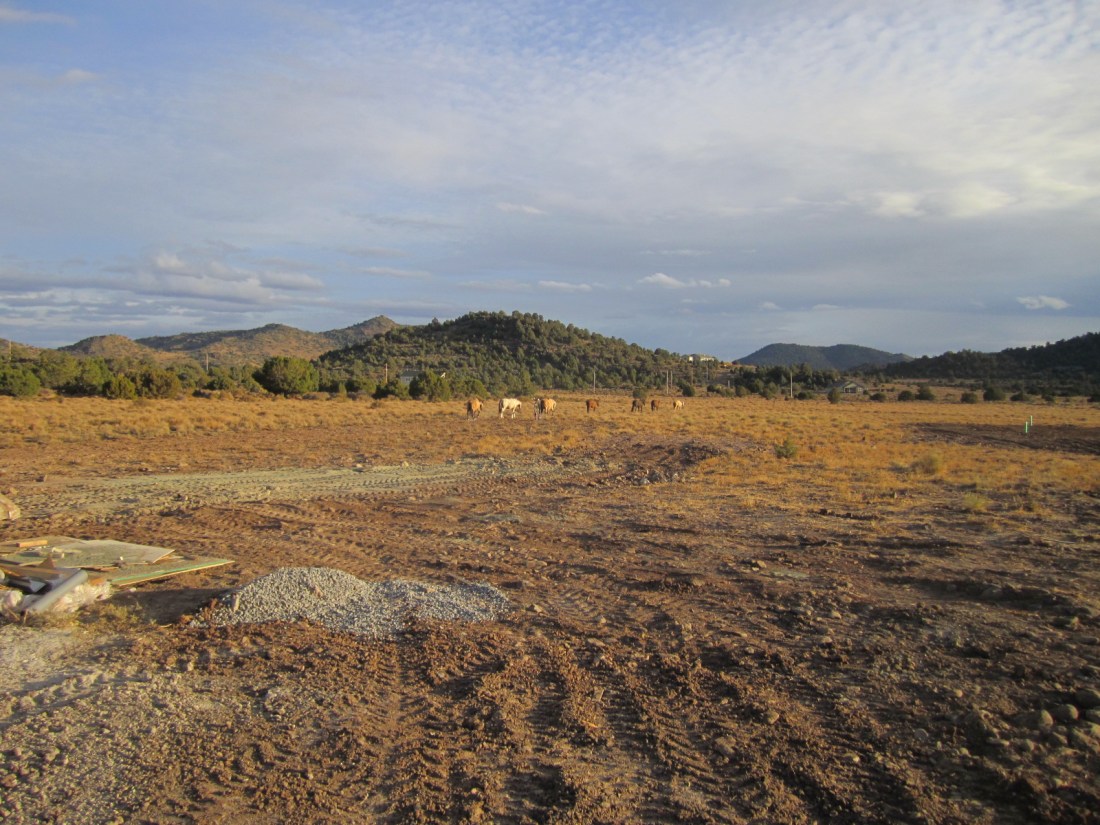
Unlike the Spruce-Pequop Incident, a judge’s decision to halt the sterilization of mares at the BLM wild horse corrals in Hines, OR has been picked up by national news outlets.
Wild horse enthusiasts may be pleased with the ruling, but it’s still a win for the public-lands ranchers, who have access to most of the Warm Springs HMA, and it’s now devoid of horses (grazing allotments denoted by green in the following map from 2014, HMA boundary highlighted in yellow).

If the project is stopped for a few years, will the HMA be restored to pre-gather conditions? If not, will the 200 horses that were to be returned after sterilization be allowed to go back?
The HMA contains 475,460 acres and has an AML of 202, for an aimed-at population density of 0.42 animals per thousand acres, the lowest of all HMAs in Oregon.
RELATED: Federal Judge Says No to BLM Sterilization Experiments.
Mustang Monday
Near the Salt River. H/T Robin Bender Knight.

