Memory card reached its limit while filming this on 02/22/19, but you get the idea.
Video of Waipio Valley horses posted to Mustang Monday, 02-25-19.

Exposing the Hypocrisy, Lies and Incompetence of the Wild Horse Advocates
Memory card reached its limit while filming this on 02/22/19, but you get the idea.
Video of Waipio Valley horses posted to Mustang Monday, 02-25-19.
On the Big Island (Waipio Valley) with Christine Laria.
Refer to the data and remarks in this post and this post.
Assumptions:
The adoption assumption is based on a removal rate of 12,000 or more wild horses per year, which floods the program, as in 2018 (lands managed by BLM and USFS).
A wild horse consumes 12 AUMs annually, yielding payments to the government of $16 per year from the rancher to whom the unused forage is sold (12 times 1.35).
The annual cost of holding him in off-range pastures is $730 per year (2 times 365).
Note that $2 per day equals $60 per AUM. Are you seeing a problem here?
You’re spending $730 per year so you can collect $16 per year. This is how the mortgage deduction works on federal income taxes. Ditto for property taxes.
This is what the situation looks like on a cash flow diagram. There is no payout, no rate of return.

The BLM removed 846 wild horses last fall from the Warm Springs HMA. The diagram for that would look the same but the figures would be different.
The initial outlay would be -$338,000 (846 times 400), the annual expenditure for long-term holding would be -$617,000 per year (846 times 730) and the revenue from grazing would be +$13,000 per year (846 times 16).
The grazing fee would have to be raised to at least $65 per AUM to make the program economically viable (internal rate of return greater than zero), a 4,700 percent increase from the current amount.
Their colors are spectacular! Filmed 02/06/19 by Corey Stohlquist.
To achieve a thriving ecological balance and multiple-use relationship on this blog.
Good grief, people are shocked when horses act like horses. An incident described as a ‘vicious brawl’ was captured on film and reported yesterday in The News & Observer of Raleigh, NC. The story was also picked up by other news outlets.
“It’s completely natural and a behavior that we like to see,” said one person interviewed for the story, suggesting that the fertility control program hasn’t totally screwed up the herd, at least not yet.
Last month, the same individual blamed the occurrence of ‘swamp cancer’ at the OBX on climate change.
Public-lands ranchers will pay the BLM $1.35 per AUM in 2019, down from $1.41 in 2018, according to a news release issued today.
An animal unit month is the amount of forage consumed by one cow/calf pair, one horse, or five sheep per month.
The new fee goes into effect 03/01/19.
RELATED: Grazing Fee for 2019 Pending.
Helicopters were grounded today, due to weather, but they won’t be flying again anytime soon. The roundup has been suspended according to a note at the top of this page, with 340 wild horses removed from the HMA at a cost of roughly $400 per head.
The BLM can expect to receive about $17 per year from the rancher to whom the excess AUMs are sold. The cost of caring for the displaced animal, assuming he’s not adopted, is about $730 per year.
That’s like buying a machine that costs $400 and earns $17 per year, while driving up your electric bill $730 per year. Nobody’s going to do that!
Unless you’re in government.
RELATED: Pine Nut Gather Resumed.
UPDATE: Refer to this BLM news release, posted today.
A report posted yesterday by YubaNet of Nevada City, CA, based on a press release issued the day before by the Animal Welfare Institute, says some of horses removed last fall for sterilization experiments will be returned to HMA.
The number and timing are unknown at this time, and an announcement has not appeared at the BLM news page.
Over 800 wild horses were driven from their home range, to provide test subjects for the ovary cutters at the off-range corrals in Hines, OR.
Congress tells the BLM to fix the wild horse ‘problem.’ Let’s look at the numbers.
Data from this post and this post, rounded, lands managed by the BLM:
Assumptions:
AUM consumption, current conditions:
Animal population, current conditions:
Population density, current conditions:
Graphical summary:

AUM consumption, planned:
Animal population, planned:
Population density, planned:
Graphical summary:

There is no wild horse problem, only a livestock problem. Thanks to the public-lands ranchers, the contractors, the trade groups, their cheerleaders and political allies—all working together to eradicate wild horses and burros—on land that belongs to you.
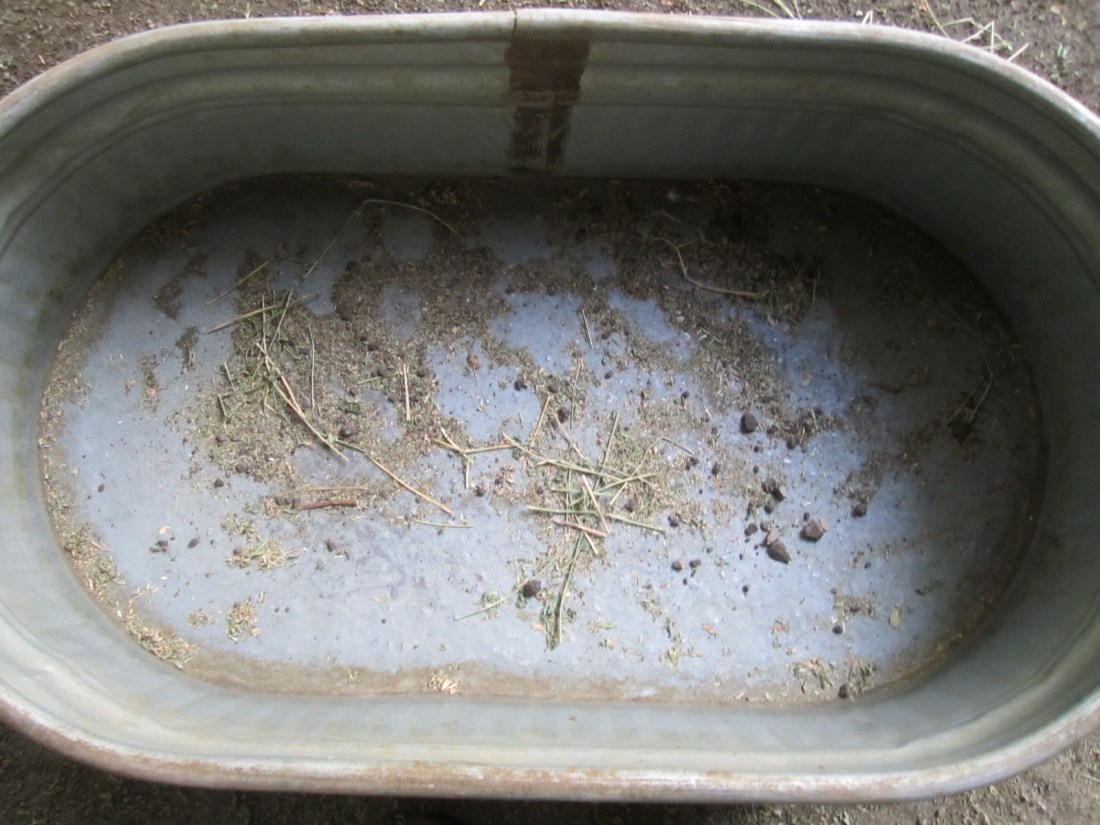
1. You find rocks and sand in the bottom of your feeders.
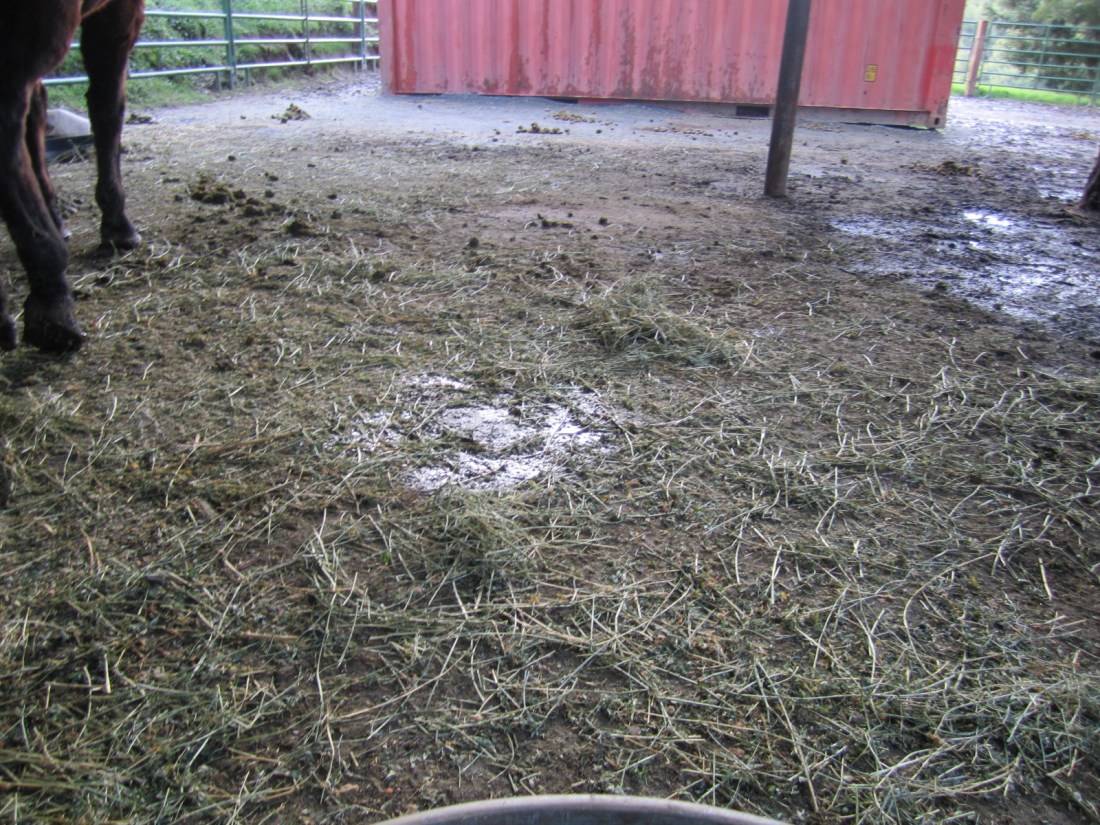
2. There’s uneaten hay all over the place. The horses use it like bedding.
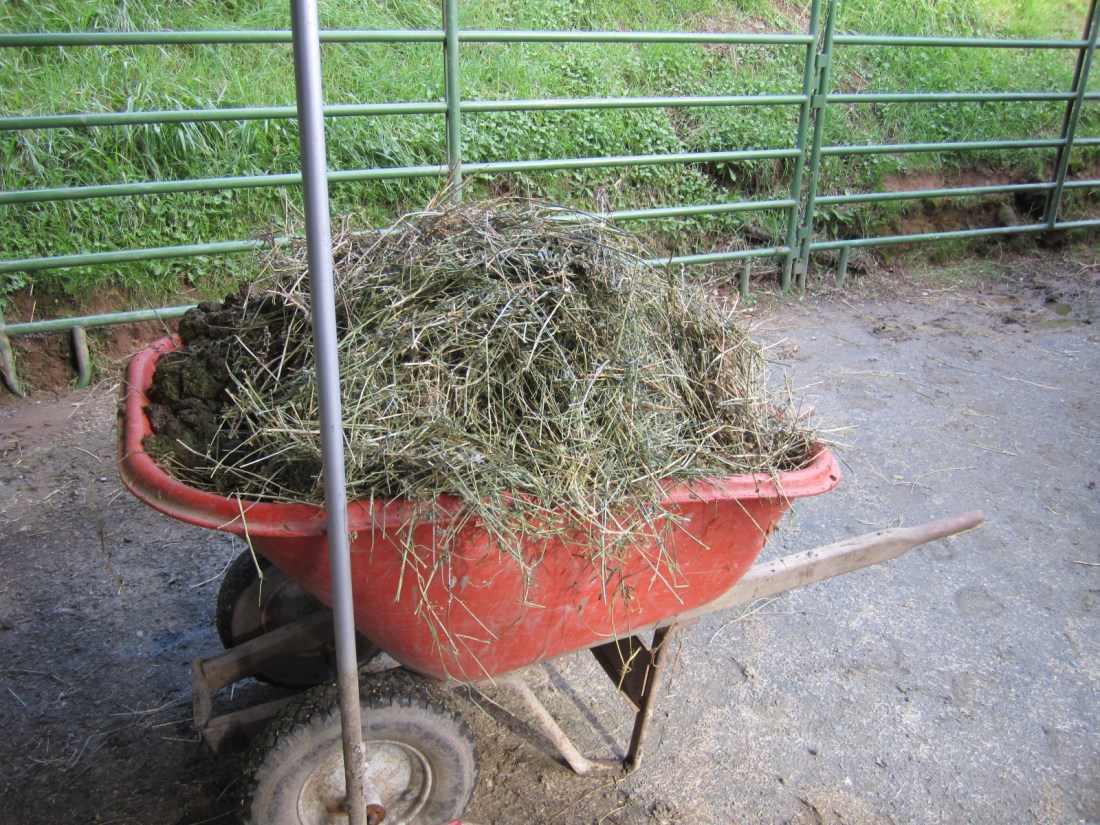
3. When you finish cleaning the corral, there’s more hay in the wheelbarrow than poop.
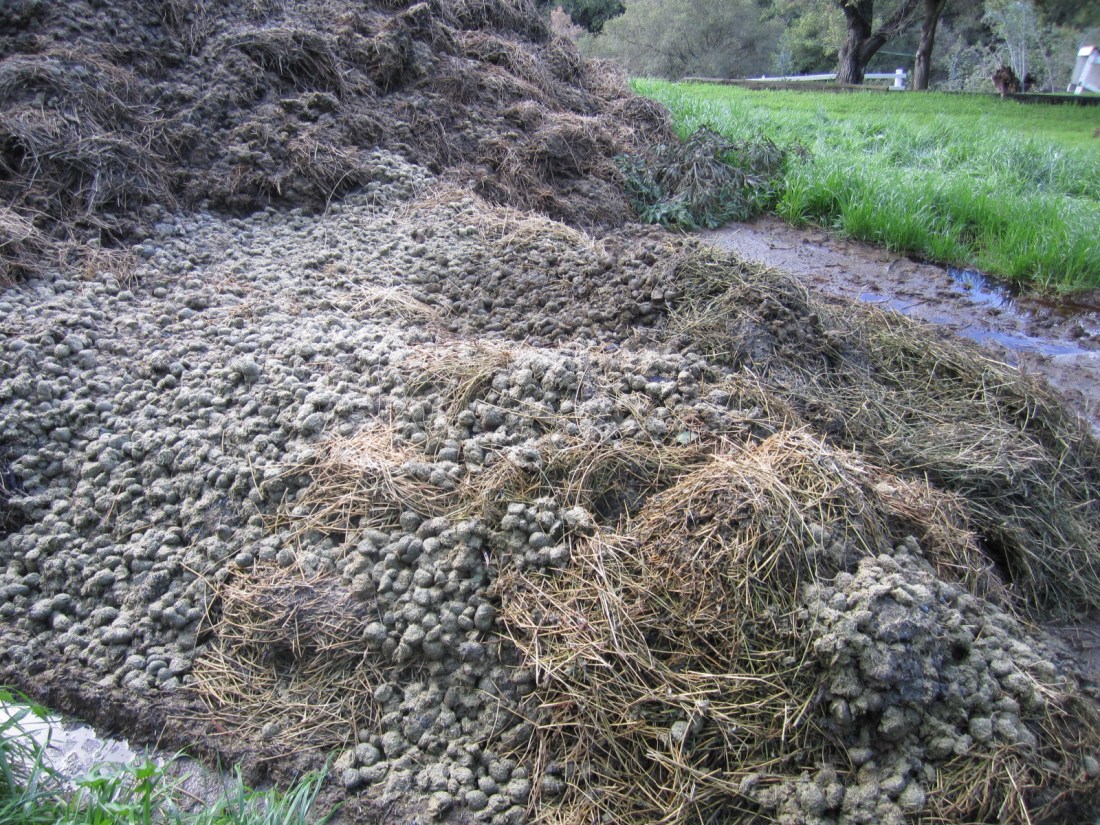
4. Your poop pile is starting to look like a hay pile.
5. The feed store charges you $17 a bale for this stuff.
The Forest Service continues its investigation, according to a report that appeared today in the White Mountain Independent, but no new information has been provided since the news release of 02/11/19.
Personnel from the Navajo County Sheriff’s Office, which operates the 1-800-78-CRIME hotline, have also refrained from commenting.
At one time a $2,500 reward was posted by NCSO for information leading to the arrest of the person or persons responsible but that has not been mentioned in recent reports.
RELATED: Investigation of Heber Wild Horse Deaths Continues.
Wild Horse Annie: Friend of the Mustangs shows how one woman, working tirelessly over a 20 year period, persuaded Congress to protect America’s wild horses and burros.
“When she saw mustangs being rounded up and killed to make room for ranchers’ livestock, she knew she had to speak up.”
Refer to this listing at Barnes & Noble for details.
What you will find in the book is a woman who truly understood wild horse advocacy, not like the wild-eyed feminists you have today pushing contraceptives and zero population growth onto unsuspecting herds everywhere.
RELATED: Remembering Velma.
Helicopters were back in the air yesterday, with seven more horses pushed off their home range, bring the total to 323.
The goal of the roundup is 575, which will free up 6,900 AUMs annually. As many as 1,150 additional cow/calf pairs could be placed on the HMA, assuming they graze six months per year.
The BLM is likely paying around $400 per animal removed, based on the cost of the Colville roundup, for a total of $230,000.
For this they can expect to receive up to $9,700 per year in additional grazing fees, for a simple payout of at least 23 years. If you add the cost of long-term holding, roughly $420,000 per year for 575 horses, there is no payout at all.
Where is the logic in this?
There isn’t any. It can only be described as redistribution of wealth, from American wage earners to the public-lands ranchers.
Is there any wonder that the ranchers, the contractors, the stock growers associations and cheerleader groups like Protect the Harvest want this gravy train going on forever?
All at the expense of America’s wild horses and burros.
RELATED: Pine Nut Roundup Delayed by Weather.
Last two months have been very wet and the hills are now velvety green. The dry season will begin in May with a bumper crop of fuel.
These photos were taken 02/17/19 in the same places as the previous report. Note the lowest rail in the pipe panels is now pretty much submerged.


The electric company installed these instruments last fall, presumably to monitor wind and humidity, and help them decide if power should be shut off because the risk of fire is too high.

On the Salt River with Laurel Strohmeyer.
Helicopters were grounded Wednesday through Saturday last week, according to the BLM gather page, with 316 wild horses driven from their HMA. That means 3,800 AUMs per year can now be allocated to ‘other rangeland resources.’
Almost certainly the roundup was demanded by oil and mining companies, but you’d never know it because the government has done a great job of hiding the derricks and frac tanks.
Pay no attention to the cattle gates, stock tanks and T-post fences. They are decoys, to make you think the government is actually covering for the public-lands ranchers.

Strong to the finish ’cause they eats their spinach! Colt on the left, mom in the middle, filly on the right. Family unit, not locked in stalls. Adopted 2015.
On the San Rafael Swell in central Utah with the Muddy Creek horses, courtesy of Backpacker Diaries. The HMA was gathered last September.
Tribal leaders have great plans for the future, so they rewrite the law to suit their agenda and the horses are gone. Sound familiar?
Where are they getting the money to pay the contractor? Did they receive a ‘donation’ from the federal government?
Refer to the letter titled ‘Amendment to horse capture law: Horses being slaughtered for damage caused by cattle, logging, pollution’ in yesterday’s edition of The Safety Valve in The Wenatchee World.
RELATED: Colville Gather Underway.

