Sulphur Roundup, Day 6

Gather stats through August 20:

  • Horses captured: 273
  • Goal: 600
  • Deaths: 2

A stud was put down on August 19 due to a pre-existing condition.

Foals represented 17.2% of the horses captured.

Body condition scores over the last two days ranged from 3 to 4.

The management plan for the HMA assigns 3.4 times as much forage to privately owned livestock as it does to horses.

The grazing allotments are shown on this map.  All are active except Mountain Home, according to the Final EA for wild horse management actions in the HMA.

The issues to be addressed by those actions, listed on page 5 of the EA (page 9 in the pdf), do not involve drilling, mining or logging.

RELATED: Sulphur Roundup, Day 4.

Triple B Roundup Ends

The operation concluded today, according to a BLM news release, with 390 wild horses removed from their home range.  Nine deaths were reported, with four horses put down on August 18 due to pre-existing conditions, including blindness.

The action was prompted by insufficient water and declining health of the animals.

The original goal was 360.

RELATED: Triple B Emergency Wild Horse Roundup Begins This Week.

What Happened to the Saylor Creek Mares?

They dropped off the radar screen on August 11.  From that date onward, only ‘adults’ were captured.

Perhaps some of them transitioned but are still in the process of coming out.  Maybe the traditional stud / mare binary is just too damn divisive?  Or it doesn’t accommodate the full spectrum of possibilities?

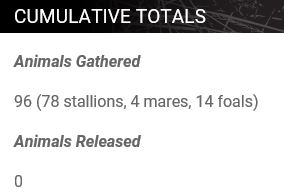
As of today, the gather stats show 78 stallions, four horses with a cervix and 14 foals.

Saylor Creek Stats 08-20-20-1

So much for transparency.  These data can’t be can’t be produced by a simple random process centered at 50% males / 50% females.  Try tossing a coin 82 times and coming up with no more than four tails.

RELATED: Saylor Creek Mares Not Taking the Bait?

Emergency Roundup Scorecard

Montezuma Peak HMA

  • Animals gathered: 5 horses, 43 burros
  • Goal: 50 horses, 25 burros
  • Animals shipped: 2 horses, 43 burros
  • Animal deaths: 0
  • Method of capture: Bait trap
  • Last update: August 17 (No activity since August 4)
  • Gather stats

Nevada WHR

Antelope Valley HMA

Triple B / Maverick-Medicine HMAs

  • Animals gathered: 327 horses
  • Goal: 360 horses
  • Animals shipped: 273
  • Animal deaths: 5
  • Method of capture: Bait trap
  • Last update: August 17
  • Gather stats

Jackson Mountains HMA

RELATED: Emergency Roundup Scorecard, August 14.

BLM Expands Off-Range Holding

The agency announced today it would be awarding contracts for three new short-term holding facilities and the expansion of a fourth, subject to a 30-day appeal period.

The corrals will be located in Colorado, Utah and Wyoming and will house wild horses and burros on their way to long-term pastures or adoption/sale events.  They will have a combined capacity of 8,500 animals.

RELATED: BLM Seeks Off-Range Corrals for Short-Term Holding.

Medical Waste Facility a Threat to Virginia Range Mustangs?

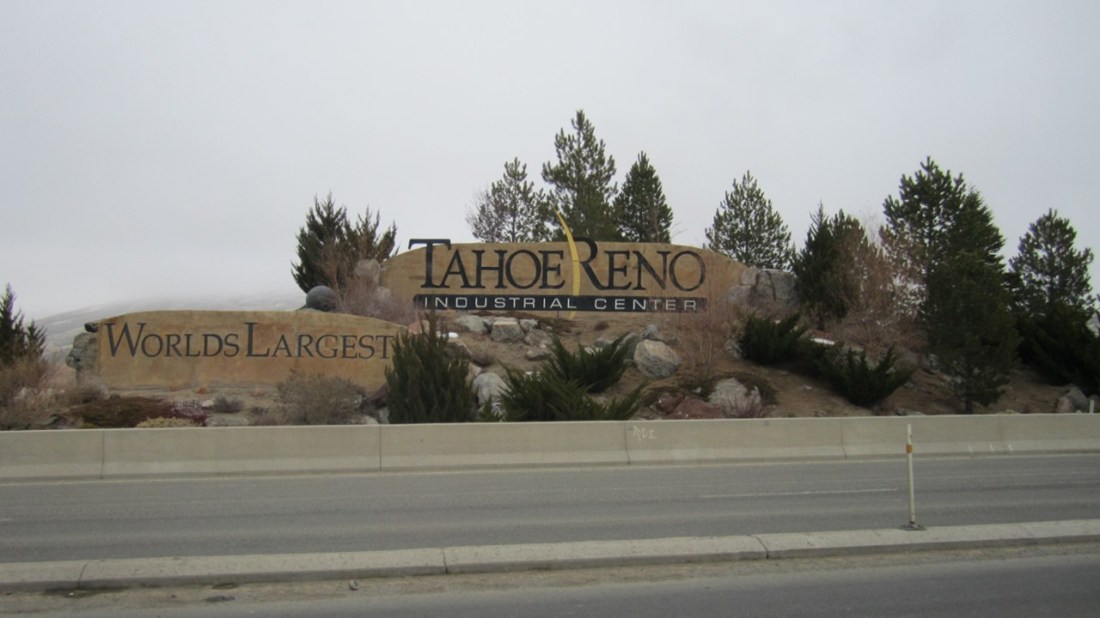
The proposed incinerator, to be built in the Tahoe Reno Industrial Center on the north end of the Virginia Range, was approved this week by Storey County Commissioners, according to a report published this morning by The Nevada Independent.

The project was questioned last month in a planning commission meeting about emissions, traffic and possible collisions with wild horses.

Who raised the concerns?  Who’s worried about the impact on horses?

The PZP zealots, whose war on the Virginia Range mustangs has already caused more loss of life than an incinerator ever could.

TRIC Sign-1

Sulphur Roundup, Day 4

Gather stats through August 18:

  • Horses captured: 232
  • Goal: 600
  • Deaths: 1

A foal was put down yesterday, due to a shoulder injury.  The loss was placed in the ‘Acute’ category, suggesting it was attributable to the roundup and not a pre-existing condition such as blindness.

Foals represented 18.1% of the horses captured.

Most body condition scores have been 4 to 5.  Observers have been present every day except August 16.

RELATED: Sulphur Wild Horse Roundup Starts This Weekend.

Pine Gulch Fire Still Active

The south, east and north sides of the fire are now under fairly good control, subject to changes in the weather.  The map at InciWeb shows containment along a portion of CR 204 on the east side.

Most of the growth is on the northwest and southwest sides, as explained in the meeting last night.  The Little Bookcliffs horses were not discussed.

Approximately 87,200 acres have burned since July 31, according to the 10 AM report, compared to 85,400 acres yesterday.

RELATED: Pine Gulch Meeting Tonight.

Shawave Roundup, Day 15

Gather stats through August 17:

  • Horses captured: 1,120
  • Burros captured: 220
  • Animal deaths: 9

Helicopters were grounded on August 16 while a new trap was set up.

Foals represented 19.4% of the horses captured.

The five HMAs assigned to the Blue Wing Complex cover about 46% of the land in the Blue Wing-Seven Troughs allotment but the horses and burros receive only 18% of the authorized forage.

RELATED: Shawave Roundup, Day 12.

Founder of Wild Horse Preservation League Dies

She led the effort to ensure that Nevada’s wild horses got the top vote to adorn the state quarter, according to an obituary published yesterday by Nevada Appeal.

Today, the group advocates for smaller herds through application of contraceptives.

You see, the only other option is roundups.

Perhaps it was not like that when Bonnie was in charge.

Curiously, the group does not mention her passing at their home page.

Effect of Drilling on Wild Horses?

A wild horse requires around 200 acres to find enough forage to survive, maybe more depending on the area.  BLM says 1,000 acres (27 million acres ÷ 27,000 horses).

That land may or may not have a source of water.

If a drilling rig requires an acre to set up and operate, you’d have to close 200 of them, maybe as many as 1,000, to allow one wild horse to return to the range.

How many drilling rigs are on HMAs?  Enough to allow maybe three wild horses back on the range?

We’re talking about drilling rigs, not completed wells, which might require 100 square feet (0.0023 acre).  You’d have to get rid of at least 87,120 of them to put one wild horse back on the range.

Alternatively, if you eliminate public-lands ranching on just one HMA, hundreds of wild horses could come out of long-term holding and back to their home range.

RELATED: Hypothesis Revisited.