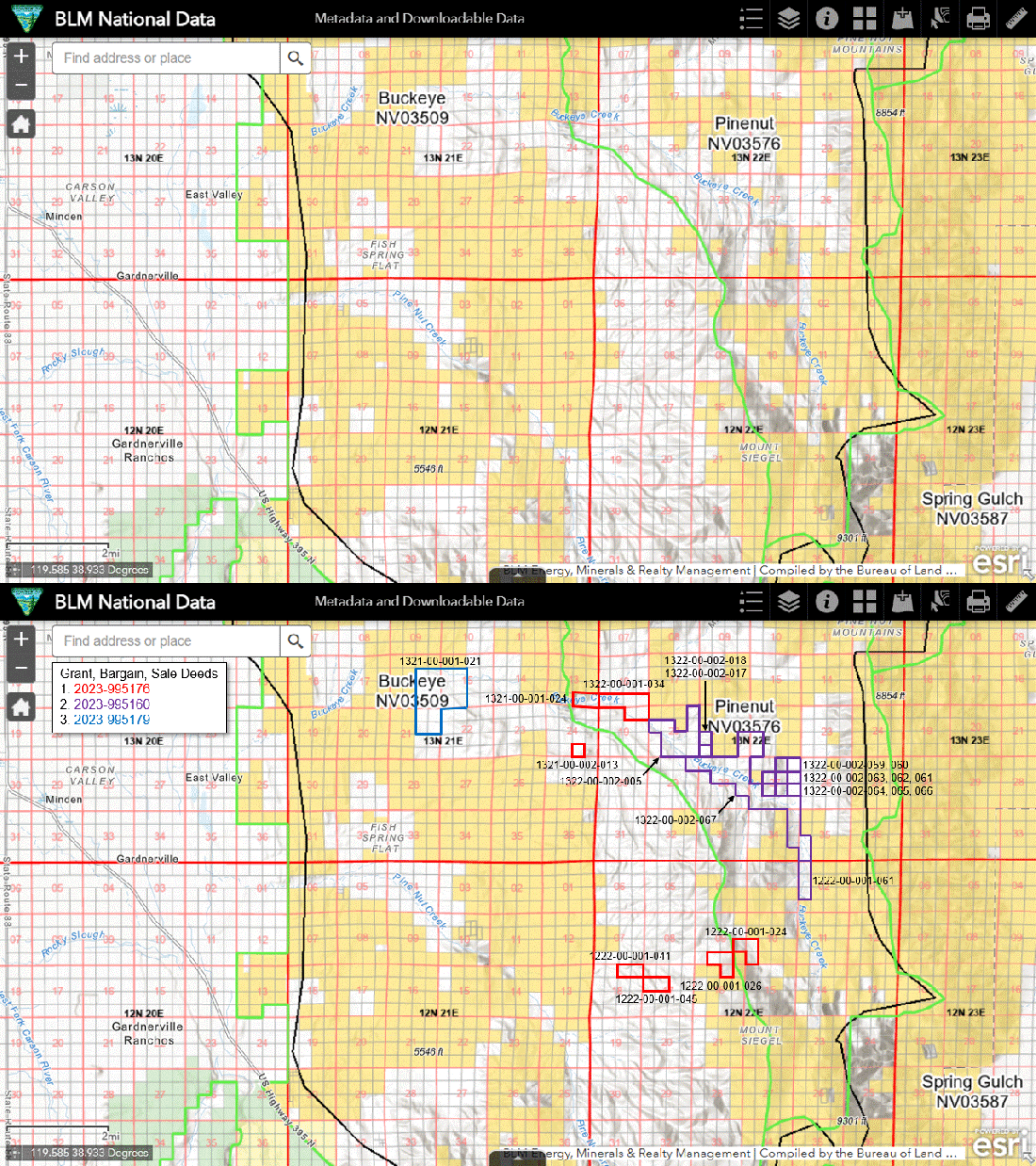
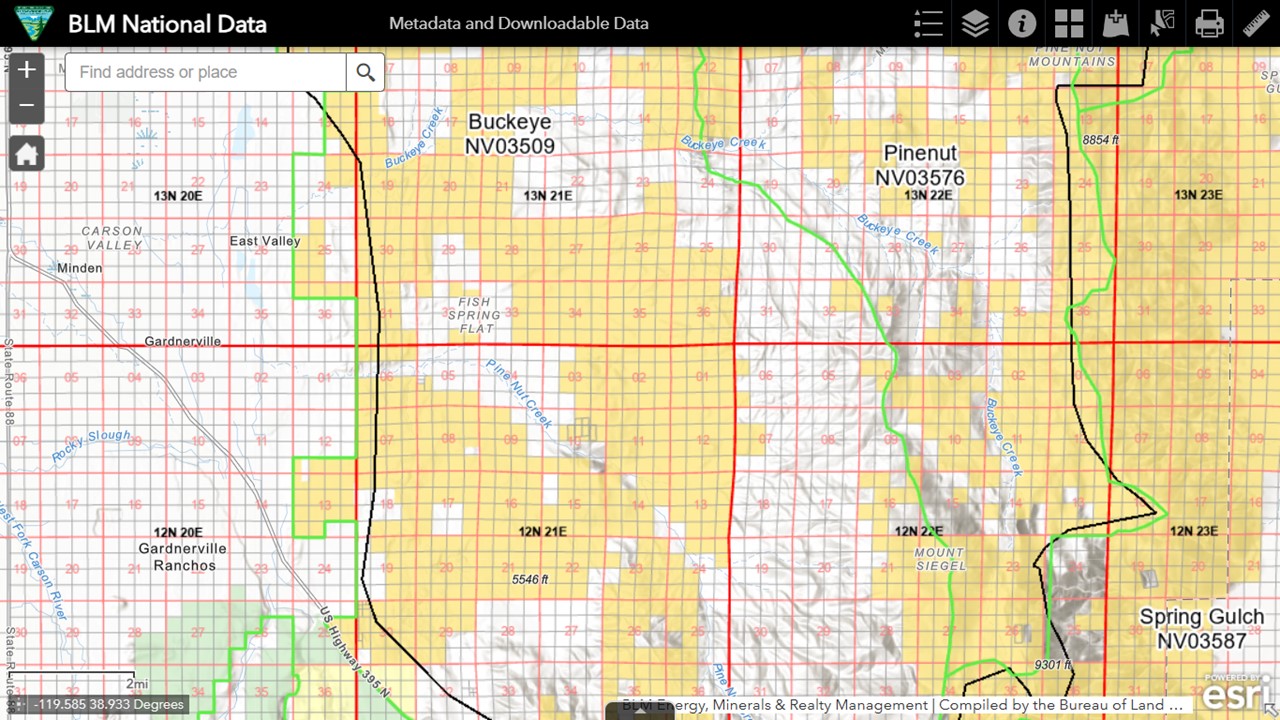
Pest Control Plan for Kiger and Riddle Mountain HMAs Stalled?

The scoping period closed four years ago.

As of today, the project folder contains only the scoping letter.

The previous plan was approved in 2011.

The two HMAs are on the February 1 roundup schedule with start dates of September 1 and September 10.

They are subject to permitted grazing.

The last roundup was in 2015.

RELATED: Kiger Scoping Period Comes and Goes, No News Release.

Sperm-Blocking Theory Doesn’t Hold Water

The idea was cooked up to make PZP seem reversible.

If you take a shower with a raincoat on, you don’t get wet.

If you take it off, you get wet.

The pattern holds for as long as you do the experiment.

But that’s not what happens with PZP.

The pesticide tricks the immune system into attacking the ovaries.

Damage begins with the first injection.

The longer they’re on it, the longer to regain fertility.

After five years, they don’t recover.

They’re self-boosting.

The advocates know this.

That means they’re willfully getting rid of wild horses under the guise of protection and they want you to pay for it.

Protecting Them From Removal 12-03-23

Why do you associate with frauds?

RELATED: Sperm-Blocking Theory Doesn’t Account for Self-Boosting Mares.

2024 FREES Conference Set for April

The FREES Network, a ranching advocacy group sponsored by Utah State University Extension, will meet at the Elko Conference Center to discuss interactions of free-roaming equids with wildlife.

The announcement did not indicate if the definition of wildlife would be stretched to include nonnative species such as privately owned cattle and sheep.

The agenda includes a session on Day 2 for fertility control, an opportunity for the wild horse advocates to share their message and cement their relationship with the ranchers.

CAAWH Membership Card Exposed 01-01-24

Day 3 consists of a field trip to an unspecified location, probably hand-picked with the aid of land managers to associate substandard conditions with wild horses.

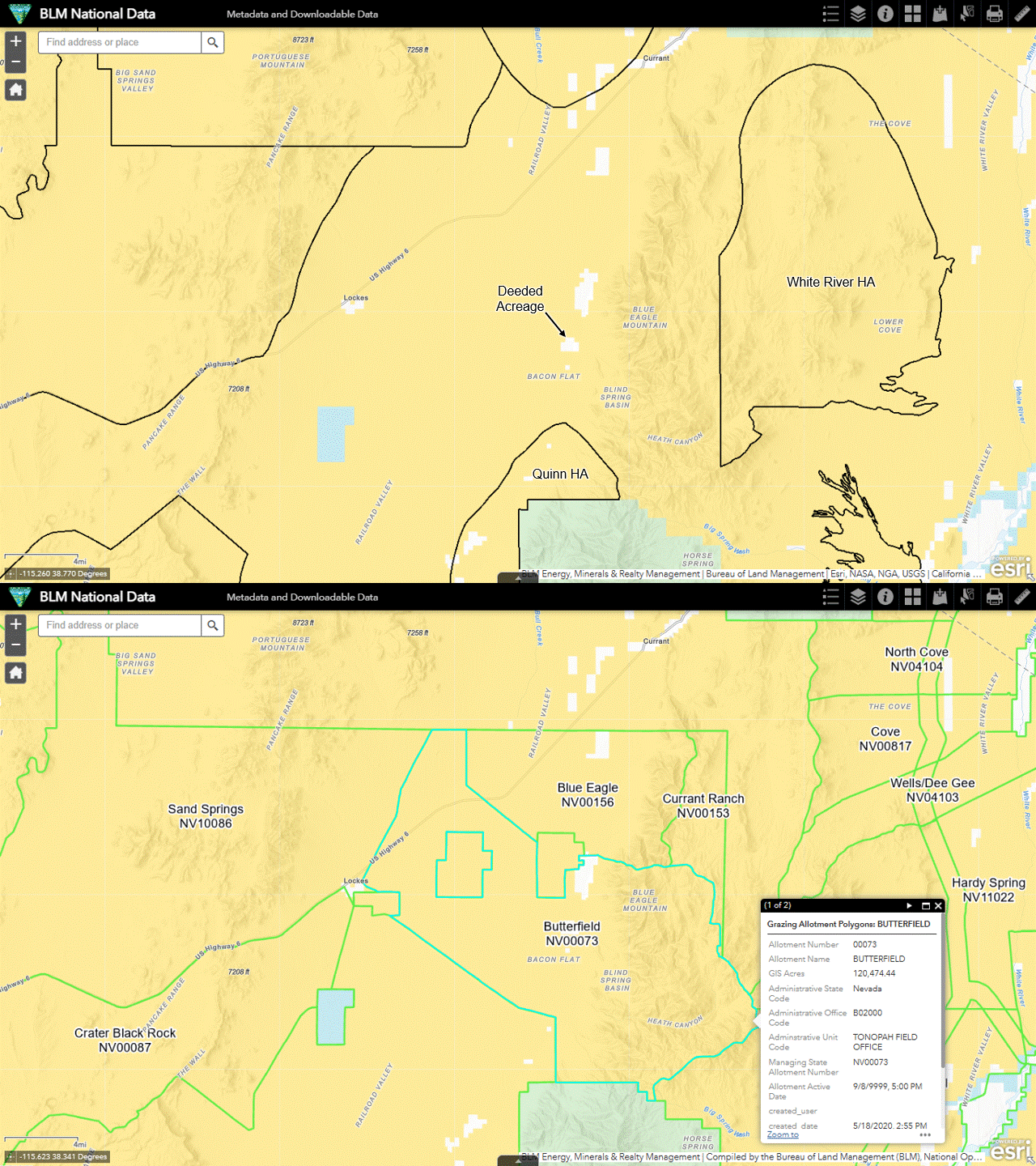
There are no HMAs in Elko but grazing allotments abound.

The National Data Viewer shows the HAs in black, the HMAs in orange and the allotments in green.  Click on image to open in new tab.

HMAs and Allotments Near Elko 02-18-24

Currituck Outer Banks to Become Like Assateague Island?

The Currituck County Wild Horse Advisory Board met on February 15.

Minutes have not been posted.

The agenda includes minutes from the November 16 meeting and a report by herd manager Meg Puckett.

The minutes indicate that healthy mares were not darted in 2023 due to significant losses over the last several years.

A previous report indicated that mares were not darted in 2022.

The report by Puckett indicates that healthy mares are not being darted in 2024 “Due to significant loss over the last several years, an aging population, and questions about the long-term effects of PZP on the mares’ reproductive systems,” suggesting that “significant loss” refers to genetic diversity and the number of viable mares.

Exactly what you’d expect from an ovary-killing pesticide, not a safe, proven and reversible vaccine.

Curiously, protocols are in place to send the uterus (not the ovaries) of any deceased mares who were darted with PZP to the researchers and veterinarians at the Billings School of PZP Darting and Public Deception.

They also have procedures for introducing horses from other areas, the final attachment to the agenda, a tactic used by the BLM to boost genetic diversity while keeping herd sizes small.

In this case it would be used in desperation to keep the herd from imploding, a consequence of the Montana Solution and its false promises.

RELATED: If PZP Is Reversible, Why Hasn’t Assateague Herd Rebounded?

Fighting a Never-Ending Battle at the Salt River?

Some organizations would rather get rid of wild horses than let them remain in the wild, according to a story dated February 16 by Wrangler News.

But not the Salt River Wild Horse Darting Group.

They’re stabilizing the population with PZP, which they peddle as humane management.

Simone Neterlands with Darting Rifle 09-02-23

That’s the same term used by a staffer with the Campaign Against America’s Wild Horses in a story about the East Pershing roundup.

Apparently, it’s a codeword for getting rid of wild horses with ovary-killing pesticides.

In most circles, stabilize means to brace or support, to stop something from changing.

Not to these charlatans.

They’re getting close to sterilizing the Salt River mares, just as their big-name enabler is doing at the Virginia Range.

RELATED: Ringleader Admits Her Group Is Getting Rid of Salt River Horses!

Foal-Free Friday, Passing the Torch Edition

Nobody talks about wild horse removal more than the advocates.

They’re obsessed with pesticides, their theories don’t hold water and they serve no charitable purpose.

They are the old guard, snake oil salesmen, allies of the ranchers.

America’s wild horses need leadership, not collusion.

Put them out to pasture today!

RELATED: Foal-Free Friday, No Bad Behaviors Edition.

Advocates are the Predators 11-30-21

How to Interpret Sex Data from WHB Roundups

The BLM reported that 16 jacks and 26 jennies had been captured through Day 10 of the Lake Pleasant roundup.

Do those results look like they came from a population that’s 50% males / 50% females?

The observed proportions are 38.1% male and 61.9% female.

The answer must be determined by calculation, using a basic statistical formula that accounts for random variation.

How to Compute p-chart Limits 02-10-22

In this example p-bar = .5 and n = 42.

The calculated range of variation is .269 (26.9%) to .731 (73.1%), which includes the observed values, so there is no evidence that the population is not 50% males / 50% females.

The East Pershing roundup took 1,082 stallions and 1,245 mares off the range (as well as 365 foals).

Do those data look like they came from a herd that’s 50% males / 50% females?

The observed proportions are .465 and .535, and the calculated limits are .469 and .531, so there is some evidence of an abnormal sex ratio.

The problem often occurs in herds subject to the Montana Solution, which the advocates dismiss as mares living longer.

Lake Pleasant Roundup, Day 10

The incident started on February 5.  Results through February 14:

  • Scope: Lake Pleasant HMA
  • Target: Burros
  • Type: Planned
  • Method: Bait trap
  • Goals: Gather 400, remove 400
  • Captured: 55, up from 29 on Day 6
  • Shipped: 28, up from zero on Day 6
  • Released: None
  • Deaths: None
  • Average daily take: 5.5
  • Unaccounted-for animals: 27

The figures above are based on the daily reports.

The capture total included 16 jacks, 26 jennies and 13 foals.

Youngsters represented 23.6% of the animals gathered.

Of the adults, 38.1% were male and 61.9% were female.

The HA and HMA are the same size.  The area is subject to permitted grazing.

  • Forage liberated to date: 330 AUMs per year
  • Water liberated to date: 275 gallons per day

Data quality has been good.

There are no plans to treat any of the jennies with fertility control pesticides and return them to the HMA.

The roundup will remove animals that are damaging private property and creating a public safety hazard, purposes for which PZP was not authorized.

The incident supports three tenets of rangeland management.

RELATED: Lake Pleasant Roundup, Day 6.

Lake Pleasant HMA with Allotments 02-06-23

Advocates Far Greater Threat to Wild Horses Than Holding Pens

This article by the Casper Star-Tribune is not about the loss of a yearling during the McCullough roundup, but the phoniness of the advocates.

The two women interviewed for the story, Sisti and Walker, are pesticide pushers.

If they had their way, there wouldn’t be any yearlings to trap.

They are the old guard, members of the Love Triangle, irrelevant.

RELATED: Cody Enterprise Biased in Favor of McCullough Ranchers?

McCullough Peaks Darting-1

BLM Extends Nomination Period for WHBAB

The original solicitation dated October 2 produced insufficient applications for the natural resources position so a second call for nominations will appear tomorrow in the Federal Register, according to an unofficial pre-publication notice.

The Wild Horse and Burro Advisory Board meets one to four times per year and members serve without compensation.

RELATED: Another WHBAB Nomination Cycle Begins.

Currituck Herd Adds One

WARNING: This post will be disturbing to most advocates.

A new foal has been spotted according to a report dated February 13 by OBX Today.

His name is Eros and he’s about a week old.

His mom had a filly in 2021.

Offspring since then are not known.

The status of the darting program is not known.

The number of viable mares and the size of the breeding population are not known.

Birth rates and breeding patterns had been determined by the advocates, not the horses.

The herd was the subject of last week’s Foal-Free Friday.

BLM Takes Overpopulation Narrative to Elementary School

A WHB Specialist used candy to show students at Duckwater Shoshone Elementary School the dangers of overgrazing by wild horses and burros, according to a story dated February 10 by KOLO News.

The herds increase every year, he told the class, and the amount of available forage, represented by Kit Kat bars, does not.  Too many animals degrade the range, impairing herd health.

The article follows a BLM news release dated February 8.

What he didn’t tell the kids was that there is another box of Kit Kats under the table that belongs to the horses but has been shifted by his co-workers to public-lands ranchers.

That might be good news to the kids because the Duckwater Reservation lies within the Duckwater Allotment and the tribe holds 24% of the active AUMs.

Also not mentioned in the article is that the reservation lies within the Pancake HMA, and there is considerable overlap between it and the allotment, so the discussion about overpopulation may be rooted in a conflict between horses and livestock.

Duckwater Reservation with HMAs and Allotments 02-13-24

McCullough Roundup, Day 20

The incident started on January 22.  Results through February 10:

  • Scope: McCullough Peaks HMA
  • Target: Horses
  • Method: Bait
  • Type: Planned
  • Goals: Gather 80, remove 35
  • Captured: 14, up from 11 on Day 5
  • Shipped: 3, no change from Day 5
  • Released: 10, up from 7 on Day 5
  • Deaths: 1, no change from Day 5
  • Average daily take: 0.7
  • Unaccounted-for animals: 0

The figures above are based on the daily reports.

Activity since Day 5 consisted of three stallions captured and released.

The death rate is 7.1%.

The location of the trap site was not disclosed.

The HMA is subject to permitted grazing.

  • Forage liberated to date: 48 AUMs per year
  • Water liberated to date: 40 gallons per day

The National Data Viewer shows habitat loss and overlapping allotments.  Click on map to open in new tab.

An estimated 535 wild horses have been displaced from their lawful home by permitted grazing, making the True AML almost five times higher than the current AML.

The roundup supports three tenets of rangeland management.

RELATED: McCullough Roundup, Day 5.

McCullough Peaks HMA with Allotments 07-14-23

Lake Pleasant Roundup, Day 6

The incident started on February 5.  Results through February 10:

  • Scope: Lake Pleasant HMA
  • Target: Burros
  • Type: Planned
  • Method: Bait trap
  • Goals: Gather 400, remove 400
  • Captured: 29, up from 10 on Day 1
  • Shipped: None
  • Released: None
  • Deaths: None
  • Average daily take: 4.8
  • Unaccounted-for animals: 29

The figures above are based on the daily reports.

Youngsters represented 24.1% of the animals gathered.

Of the adults, 50% were male and 50% were female.

The HA and HMA are the same size.  The area is subject to permitted grazing.

  • Forage liberated to date: 174 AUMs per year
  • Water liberated to date: 145 gallons per day

The roundup supports three tenets of rangeland management.

RELATED: Lake Pleasant Roundup Begins, No News Release.

Lake Pleasant HMA with Allotments 02-06-23

Notoriety of Virginia Range?

Velma’s first encounter with the mustangers occurred in the area but that’s not what makes it famous today.

It’s the site of the world’s largest darting program, where the advocates are trying to convince the bureaucrats and ranchers that they can be as ruthless as the helicopter pilots and wranglers.

Better Way 10-25-23

Their duplicity is on full display in this rugged area, as they pummel their cherished wild horses with ovary-killing pesticides.

They are the old guard, snake oil salesmen, turncoats.

Their allies want the herd drastically reduced because it contradicts their lies about resource availability and carrying capacity.

RELATED: Goicoechea’s Focus on Virginia Range Not About Public Safety.

Pesticide Pushers 07-17-23

East Pershing Roundup Cut Short

The incident concluded on February 9, not just gather operations but processing as well, based on the totals in the sidebar.

The numbers don’t balance but they tell you there are no unaccounted-for animals, no horses in pens awaiting shipment.

Horses captured: 2,692

Horses processed: 2,664 + 3 + 26 = 2,693

The capture and removal goals were 2,875 each.

The death rate was 1.0%.  Four horses died accidentally, 22 were killed intentionally.

The capture total included 1,082 stallions, 1,245 mares and 365 foals.

Youngsters represented 13.6% of the animals gathered, consistent with a herd growth rate of eight to nine percent per year.

Of the adults, 46.5% were male and 53.5% were female, no clear evidence of an abnormal sex ratio.

There were no plans to treat any of the captured mares with fertility control pesticides and return them to the range.

Video of a horse dragged on a skid sparked advocate outrage.

A Nevada politician used the roundup to push nonmotorized removal.

The BLM paid a very low price for the work.

The incident supported three tenets of rangeland management.

RELATED: East Pershing Roundup Starts Next Week.

UPDATE: BLM issued news release marking end of incident on February 13.