McDermitt Base Property Available for $20 Million

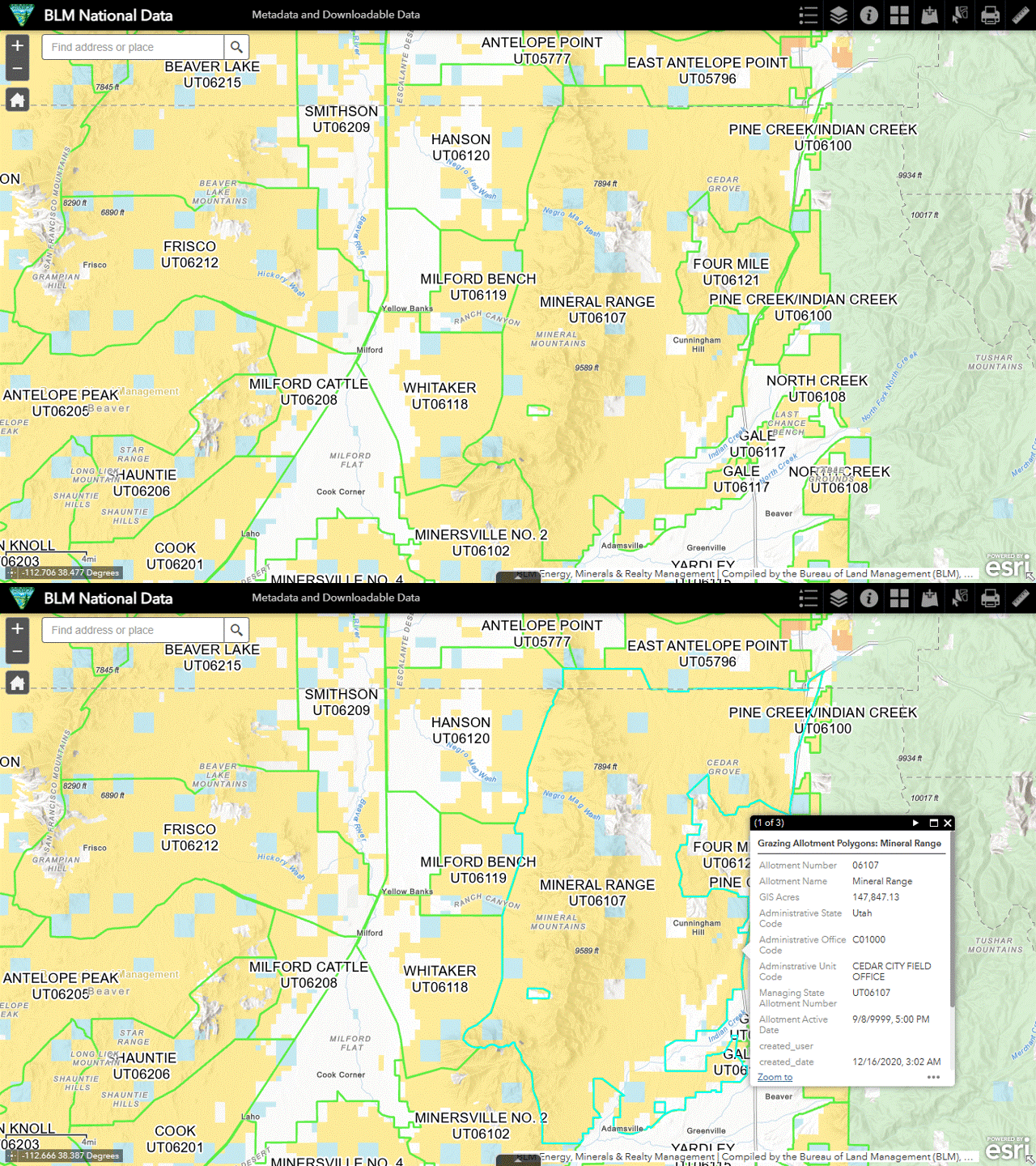
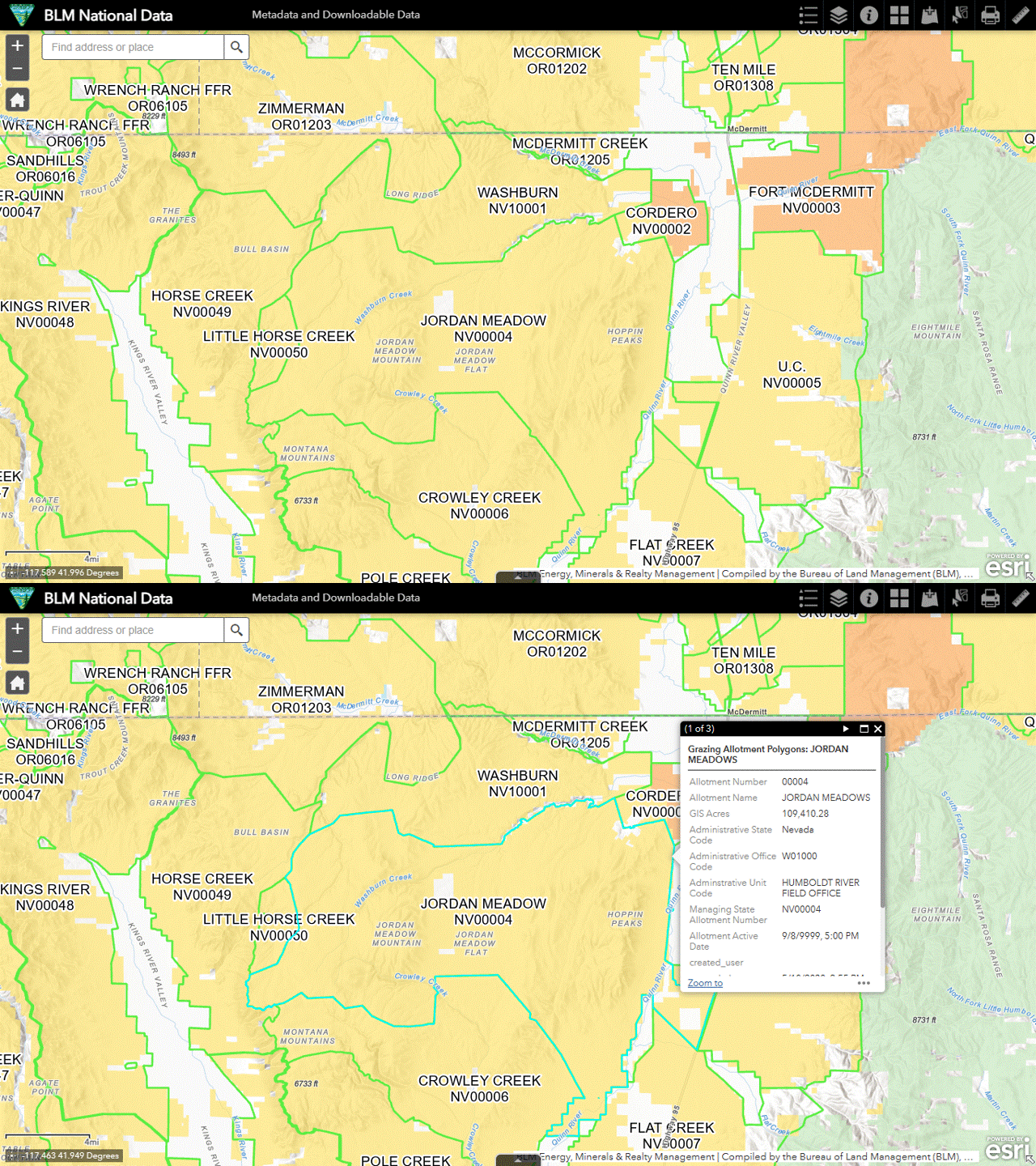
Lucky 7 Ranch covers approximately 6,700 deeded acres in Oregon and Nevada, with grazing preference the Campbell Allotment. according to the listing.

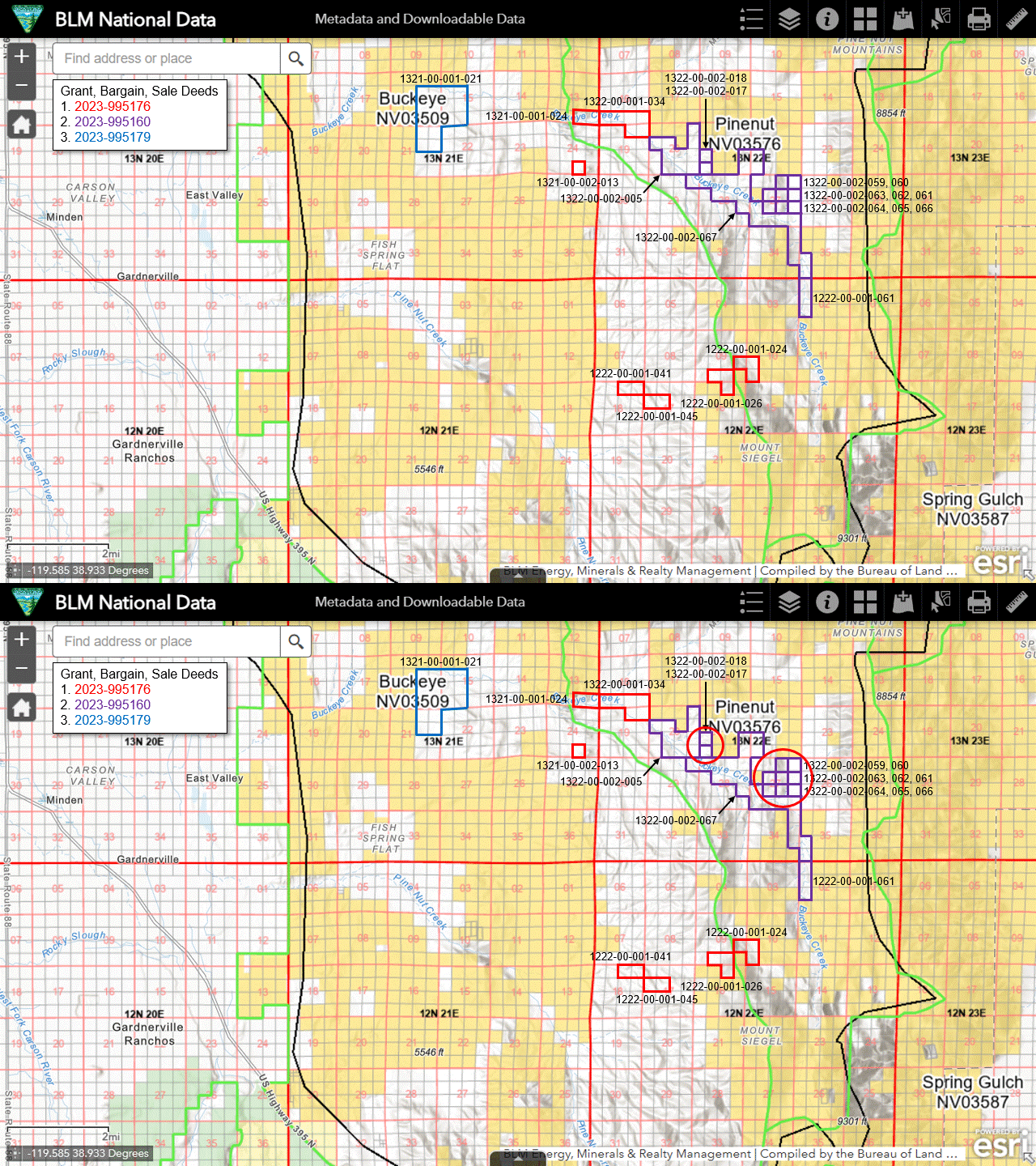
Most of the private land is on the west side of Highway 95 near McDermitt, NV.

A smaller parcel is at the south end of the allotment and another is at the north end.

The map shows the private acreage with black borders.

The allotment is shaded yellow.

The Allotment Master Report puts it in the Maintain category, with 14,160 active AUMs on 158,957 public acres.

That works out to 89.1 AUMs per year per thousand public acres, equivalent to 7.4 wild horses per thousand public acres.

This brings more distress to the bureaucrats and ranchers, who claim that public lands in the western U.S. can only support one wild horse per thousand acres (27,000 animals on 27 million acres).

The new owner could ask the BLM for a change in livestock type and season of use so wild horses could roam the area, as American Prairie did for bison in Montana.

McDermitt Base Property with Allotments 02-27-24

How Many Wild Horses Can the Riddle Mountain HMA Support?

The HMA covers 32,666 total acres in eastern Oregon, including 28,331 public acres, according to the 2023 HA/HMA Report.

The 56 horses allowed by plan receive 672 AUMs per year.

The stocking rate allowed by plan is two wild horses per thousand public acres.

The land must be able to produce at least 23.7 AUMs per year per year per thousand public acres to sustain the horses.

Can it produce more?

The HMA intersects one allotment.

Chapter IIIB in a 2011 EA for pest control and resource enforcement identifies it as Burnt Flat.

Table 2 says 99% of the allotment is inside the HMA, which seems reasonable based on the arrangement in the National Data Viewer.

The allotment boundary includes some private lands the HMA does not.

The Allotment Master Report provides management status, acreage and active AUMs.

Riddle Mountain Allotment Calcs 02-26-24

Although it’s in the Improve category, the allotment offers an estimated 3,824 AUMs per year to livestock inside the HMA, compared to 672 AUMs per year for wild horses.

How is that possible?  It’s the same land!

A guiding principle in developing the land-use plan, apparently, was that the ranchers would prosper, not the horses, even though it’s the lawful home of wild horses.

The forage assigned to livestock would support 318 wild horses, on top of the 56 allowed by plan, for a True AML of 374.

This would be achieved by confining the permittee to his base property in a year-round off season.

The stocking rate at the new AML would be 13.2 wild horses per thousand public acres.

This brings more distress to the bureaucrats and ranchers, who insist that public lands in the western U.S. can only support one wild horse per thousand acres (27,000 animals on 27 million acres).

As for costs, the BLM collects 3,824 × 1.35 = $5,162 per year from ranching activity inside the HMA while it spends 318 × 5 × 365 = $580,350 per year to care for the horses displaced thereby.

Would you say that’s a wise use of the public lands?

RELATED: How Many Wild Horses Can the Kiger HMA Support?

Riddle Mountain HMA with Allotments 02-25-24

McCullough Roundup, Day 34

The incident started on January 22.  Results through February 24:

  • Scope: McCullough Peaks HMA
  • Target: Horses
  • Method: Bait
  • Type: Planned
  • Goals: Gather 80, remove 35
  • Captured: 37, up from 34 on Day 32
  • Shipped: 9, up from 3 on Day 32
  • Released: 27, up from 26 on Day 32
  • Deaths: 1, no change from Day 32
  • Average daily take: 1.1
  • Unaccounted-for animals: Zero

The figures above are based on the daily reports.

The Day 33 report said two more horses were removed, bringing the total to ten.

The capture-to-remove ratio is 3.7:1, compared to a target of 2.29:1.

Some animals may have been caught more than once.

The death rate is 2.7%.

The location of the trap site was not disclosed.

The HMA is subject to permitted grazing.

  • Forage liberated to date: 120 AUMs per year
  • Water liberated to date: 100 gallons per day

The National Data Viewer shows habitat loss and overlapping allotments.  Click on map to open in new tab.

An estimated 535 wild horses have been displaced from their lawful home by permitted grazing, making the True AML almost five times higher than the current AML.

The roundup supports three tenets of rangeland management.

RELATED: McCullough Roundup, Day 32.

McCullough Peaks HMA with Allotments 07-14-23

Odysseus Reaches Moon, Tips Over on Landing

Mission controllers believe the spacecraft is now on its side, according to an article posted yesterday by Space dot com.

As one engineer told Western Horse Watchers, “The L/D ratio gets you every time.”

A rancher from Nevada exclaimed “It’s still on public lands, even if it’s upside down!”

Fortunately, all is not lost.

The lander was equipped with instruments that can determine management status, available acreage and active AUMs—even in suboptimal positions.

A PZP darter who wished to remain anonymous said “We want to make sure the lunar cowboys get the lion’s share of the resources before any pests, such as wild horses and burros, receive protected status as on earth.”

Sensors in the ballistics package will help other engineers redesign her rifle for conditions on the moon.

The project was endorsed by some of the biggest names in ranching advocacy, including the National Cattlemen’s Beef Federation, Public Lands Alliance, Campaign Against America’s Wild Horses, Pneu-Inject, High Desert Tactics and the Science and Conversation Center.

Ringleader Discusses Veterans for Pesticides Act

The bill would prioritize the recruitment of military veterans to become certified applicators of fertility controls for free-roaming horses and burros.

Contrary to what’s stated in this article by WDBJ News of Roanoke, VA, it’s been stalled in committee since introduction.

Poisoning mares with ovary-killing pesticides is not protection.

It’s good for the ranchers, not the horses.

Teaching veterans to eradicate the animals that supposedly heal them is a terrible disservice to our fighting men and women.

Hopefully the bill will term out with the 118th Congress later this year.

RELATED: Veterans Against Mustangs Act Reintroduced in House.

McCullough Roundup, Day 32

The incident started on January 22.  Results through February 22:

  • Scope: McCullough Peaks HMA
  • Target: Horses
  • Method: Bait
  • Type: Planned
  • Goals: Gather 80, remove 35
  • Captured: 34, up from 14 on Day 20
  • Shipped: 3, no change from Day 20
  • Released: 26, up from 10 on Day 20
  • Deaths: 1, no change from Day 20
  • Average daily take: 1.1
  • Unaccounted-for animals: 4

The figures above are based on the daily reports.

The Day 32 report said four more horses were removed, bringing the total to eight.

The capture-to-remove ratio is 4.25:1.  The target rate is 2.29:1.

Some horses may have been captured more than once.

The death rate is 2.9%.

The location of the trap site was not disclosed.

The HMA is subject to permitted grazing.

  • Forage liberated to date: 96 AUMs per year
  • Water liberated to date: 80 gallons per day

The National Data Viewer shows habitat loss and overlapping allotments.  Click on map to open in new tab.

An estimated 535 wild horses have been displaced from their lawful home by permitted grazing, making the True AML almost five times higher than the current AML.

The roundup supports three tenets of rangeland management.

RELATED: McCullough Roundup, Day 20.

McCullough Peaks HMA with Allotments 07-14-23

Canyonlands Roundup Begins, Ends on Same Day

The incident started today as scheduled, with 46 burros captured, 46 shipped, none released and no deaths.

There was no news release.

The capture and removal goals were 40 each.

The Day 1 report did not provide the number of jacks, jennies and foals.

Those figures will be posted on February 26.

RELATED: BLM Publishes Canyonlands Final Planning Documents.

UPDATE: The capture total included 29 jacks, 17 jennies and no foals.

Lake Pleasant Roundup, Day 16

The incident started on February 5.  Results through February 20:

  • Scope: Lake Pleasant HMA
  • Target: Burros
  • Type: Planned
  • Method: Bait trap
  • Goals: Gather 400, remove 400
  • Captured: 101, up from 55 on Day 10
  • Shipped: 93, up from 28 on Day 10
  • Released: None
  • Deaths: 4, up from zero on Day 10
  • Average daily take: 6.3
  • Unaccounted-for animals: 4

The figures above are based on the daily reports.

Activity has been occurring almost every day but updates are not.

Two deaths were reported on Day 15 and two on Day 16.  Two were accidental and two were intentional.  The sidebar only shows two deaths.

The death rate is 4%.

The capture total includes 46 jacks, 42 jennies and 13 foals.

Youngsters represented 12.9% of the animals gathered.

Of the adults, 52.3% were male and 47.7% were female.

The HA and HMA are the same size.  The area is subject to permitted grazing.

  • Forage liberated to date: 606 AUMs per year
  • Water liberated to date: 505 gallons per day

There are no plans to treat any of the jennies with fertility control pesticides and return them to the HMA.

The roundup will remove animals that are damaging private property and creating a public safety hazard, purposes for which PZP was not authorized.

The incident supports three tenets of rangeland management.

RELATED: Lake Pleasant Roundup, Day 10.

Lake Pleasant HMA with Allotments 02-06-23

How Many Wild Horses Can the Kiger HMA Support?

The HMA covers 30,305 total acres in eastern Oregon, including 19,998 public acres, according to the 2023 HA/HMA Report.

The 82 horses allowed by plan receive 984 AUMs per year.

The stocking rate allowed by plan is 4.1 wild horses per thousand public acres, four times higher than the target rate across all HMAs of one wild horse per thousand acres.

There are three layers of forage demand in the HMA: Wildlife, wild horses and privately owned livestock.

To estimate the carrying capacity, calculate the forage assigned to livestock, add the result to the allocation above and convert the total to wild horses.

In their zeal to install humane management wherever possible, the advocates ignore the livestock layer because it’s incompatible with the overpopulation narrative, which they ratify with their darting programs.

Chapter IIIB in a 2011 EA for pest control and resource enforcement discusses two allotments that overlap the HMA: Smyth-Kiger and Happy Valley.

Table 2 indicates that 77% of Smyth-Kiger falls within the HMA, which seems reasonable based on the arrangement in the National Data Viewer.

The table indicates that 32% of Happy Valley is inside the HMA but the NDV suggests it’s closer to 60% so that figure will be used in the calculations.

The Allotment Master Report provides management status, acreage and active AUMs.

Kiger Allotment Calcs 02-21-24

Both allotments are in the Improve category.

The estimated forage assigned to livestock inside the HMA is 3,031 AUMs per year, equivalent to 252 wild horses.

The True AML would be 82 + 252 = 334, the number of horses the HMA could support if it was managed principally for them as specified in the original statute, to be achieved by confining the ranchers to their base properties in a year-round off season.

The stocking rate at the new AML would be 16.7 wild horses per thousand public acres.

This brings more embarrassment to the bureaucrats who claim that public lands in the western U.S. can only support one wild horse per thousand acres as noted above.

The BLM collects 3,031 × 1.35 = $4,092 per year from ranching activity inside the HMA while it spends 5 × 252 × 365 = $459,900 per year to care for horses displaced thereby.

Would you say that’s a wise use of the public lands?

RELATED: Pest Control Plan for Kiger and Riddle Mountain HMAs Stalled?

Kiger HMA with Allotments 02-18-24

CAAWH Seeks Operations Leader

The Campaign Against America’s Wild Horses, a recognized expert in nonmotorized removal, has an opening for a full-time operations manager in Davis, CA according to a job posting on Idealist.

The successful candidate will oversee internal operations, including administration, board relations and finance.

Compensation ranges from $29 to $36 per hour.

Some travel is required and WFH is available two days per week.

The announcement did not say if a diploma from the Billings School of PZP Darting and Public Deception was required.

Comments Invited on DNA for White Mountain Roundup

The incident is on the latest schedule with a start date of August 15.

The capture and removal goals are 586 each.

There are no plans to treat any of the mares with fertility control pesticides and return them to the HMA, which differs slightly from the action authorized in 2021.

In that scenario, 478 wild horses would be captured, 358 would be removed and 120 would be treated with pesticides and returned to the HMA.

Western Horse Watchers suspects the deviation from the original plan triggered the NEPA review.

Comments will be accepted through March 22 according to today’s news release.

The DNA worksheet was copied to the project folder in ePlanning.

The HMA, home of the Pilot Butte Wild Horse Loop, is subject to permitted grazing.

The roundup supports three tenets of rangeland management.

Why Your Host Won’t Throw in with the Advocates

Submitted in response to those who say “Keep politics out of it, you’re alienating half of your readers.”

1. Most advocacy groups are unsavory.  They’re obsessed with nonmotorized removal, which they peddle as humane management.  They constantly point to drillers and miners as the boogeymen on western rangelands.  They want the ranchers to win.

2. Liberals control the unelected bureaucracy.  That’s how they keep the Democrat agenda moving forward, even when they’re not in power.  Whatever you see on public lands in the western U.S. is because the Democrat Party wants it that way.

3. Most advocates are liberals.  Innumerate, emotional and unscientific, they couldn’t convert an AML to AUMs if their lives depended on it, much less compute forage allocations for livestock in areas identified for wild horses.  They vote Democrat, perpetuating the cycle.

4. These charlatans enjoy the protections of big tech, socialist media and legacy news services, which are also controlled by liberals.  They marginalize anyone who disagrees with them.

We don’t need to unify around error.  We don’t need to rally around lies.

We need to jettison the old guard and choose new leaders who actually care about wild horses and will restore the WHB Act to its original form.

NOTE: This is not an endorsement of Republicans.  No Democrats are Republicans but many Republicans are Democrats.

RELATED: Wild Horse Advocacy in One Word.

Ranching Juggernaut 11-26-23

AWA to NPS: Depopulate TRNP with PZP

In a news release dated February 19, Animal Wellness Action opposes the removal of wild horses from the park, yet it mentions fertility control four times while trying to downplay the need with terms such as “in the unlikeliest of cases” and “only if warranted.”

The group refers to the pesticide as “a proven and safe method with a 40-year history,” which is nonsense.

PZP is poison, wiping out herds wherever it’s applied.

The best example of long-term harm is Assateague Island and the truth is now leaking out at the Currituck Outer Banks.

RELATED: Bold Prediction for Wild Horses at TRNP.

Tough Choices: SOWH&W Conference Overlaps FREES

You know you’d rather be in Elko shmoozing with the ranchers.

But if your donors found out they’d cut you off at the knees.

What’s an advocate to do?

Keeping up appearances is important, so you’d better spend the week in Reno, at the Saving Our Wild Horses & Wildlife Conference.

The relationship to Save Our Wild Horses is not known.  An email seeking clarification was not immediately answered.

The speakers list includes pesticide pushers and ranching sympathizers.

The field trip on Day 1 will likely involve the Palomino Valley off-range corrals.

In an optional field trip after the conference, participants will travel to Tonopah and the Stone Cabin HMA, described at the birthplace of wild horse advocacy.

The HMA is known for the first wild horse roundup under the WHB Act, but wild horse advocacy was born 25 years earlier on the Virginia Range when Velma first encountered the horse runners on their way to a rendering plant.

HMAs weren’t even a pipedream.

Sadly. her vision for wild horses has been completely lost on today’s advocates.

RELATED: 2024 FREES Conference Set for April.

UPDATE: The email was answered.  SOWH&W is an offshoot of SOWH, which hosted conferences in 2022 and 2023.