No Change to Federal Grazing Fee in 2024

Ranchers will continue to pay pennies on the dollar to feed their animals on public lands this year, including areas identified for wild horses and burros.

The price remains at $1.35 per AUM for the new grazing season, which begins on March 1.

The fee applies to nearly 18,000 grazing permits and leases administered by the BLM and nearly 6,250 permits administered by the Forest Service according to a news release dated January 31.

For comparison, the price of hay now stands at $170 per AUM.

The new fee ensures that the American people will not receive a fair return on the use of their public lands in 2024.

RELATED: New Grazing Fee Untouched by Inflation.

Foal-Free Friday, No Bad Behaviors Edition

“A wild horse is just gonna do what a wild horse does,” according to herd manager and PZP darter Meg Puckett, “and it’s not really up to us to decide whether or not that’s good behavior or bad behavior.”

Not so fast, dear.

Like most advocates, you determined that procreation is a bad behavior and you tried to stop it.

Worse, the herd was designated as Critical/Nearly Extinct by the Equus Survival Trust as you pummeled the mares with ovary-killing pesticides.

Two years ago, the herd was at 106.  Today, it’s at 110, a 2% annual growth rate.

How many in the wild are female?  How many are still viable?  What’s the size of the breeding population?

The greatest threat to these animals is the advocates, not tourists, not climate change and not apples.

RELATED: Foal-Free Friday, Keeping You in the Dark Edition.

East Pershing Roundup, Day 43

The incident began on December 28.  Results through February 8:

The figures above are based on the daily reports, not the totals posted by the BLM.

The death rate is 1.0%.  Four horses died accidentally, 22 were killed intentionally.

The capture total includes 1,084 stallions, 1,251 mares and 363 foals.  The sidebar at the gather page says 1,082/1,245/365.

Youngsters represented 13.5% of the animals gathered, consistent with a herd growth rate of eight percent per year.

Of the adults, 46.4% were male and 53.6% were female, no evidence of an abnormal sex ratio.

Body condition scores ranged from 3 to 4 on Days 42 and 43.

The location of the trap site was not disclosed.

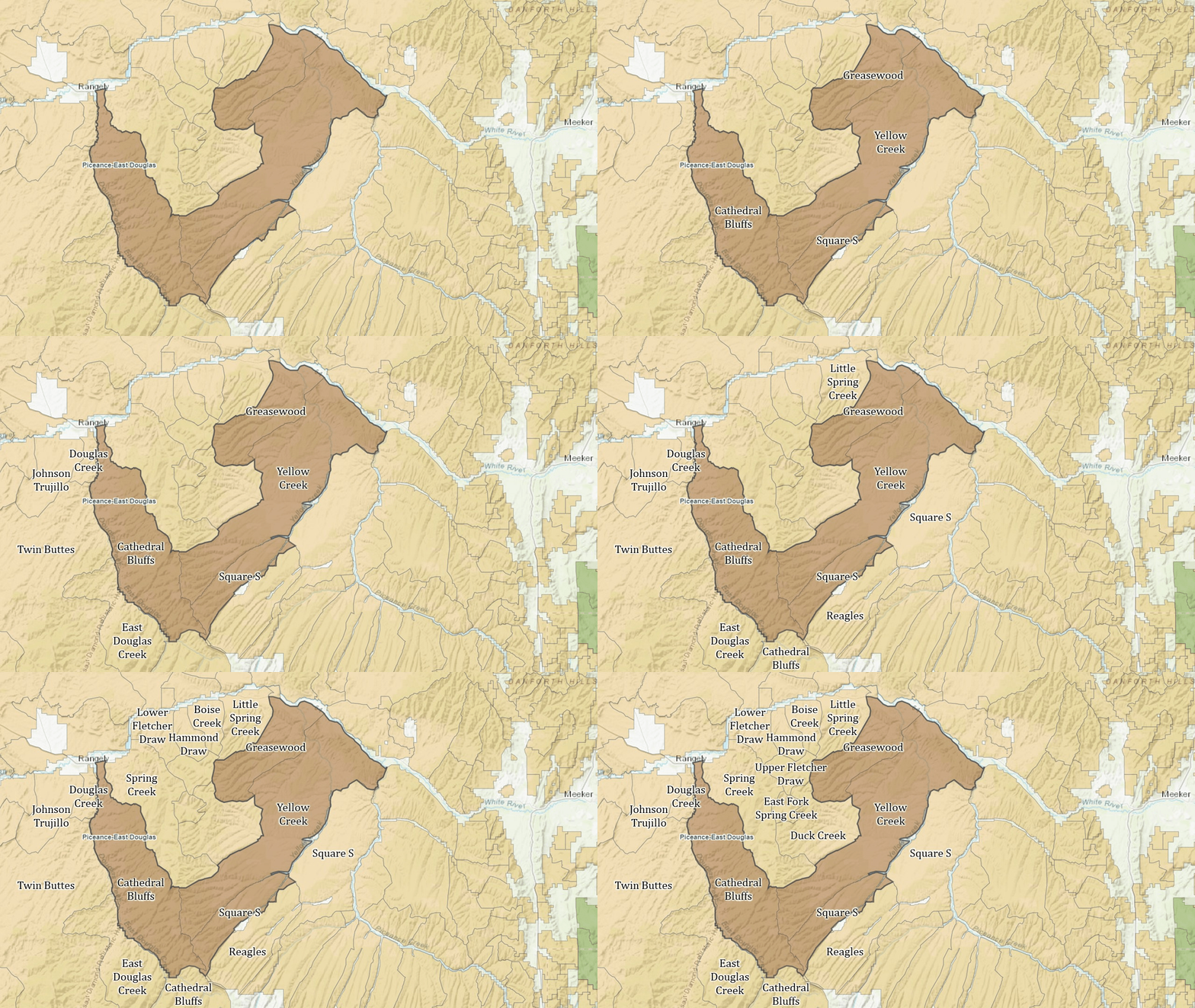
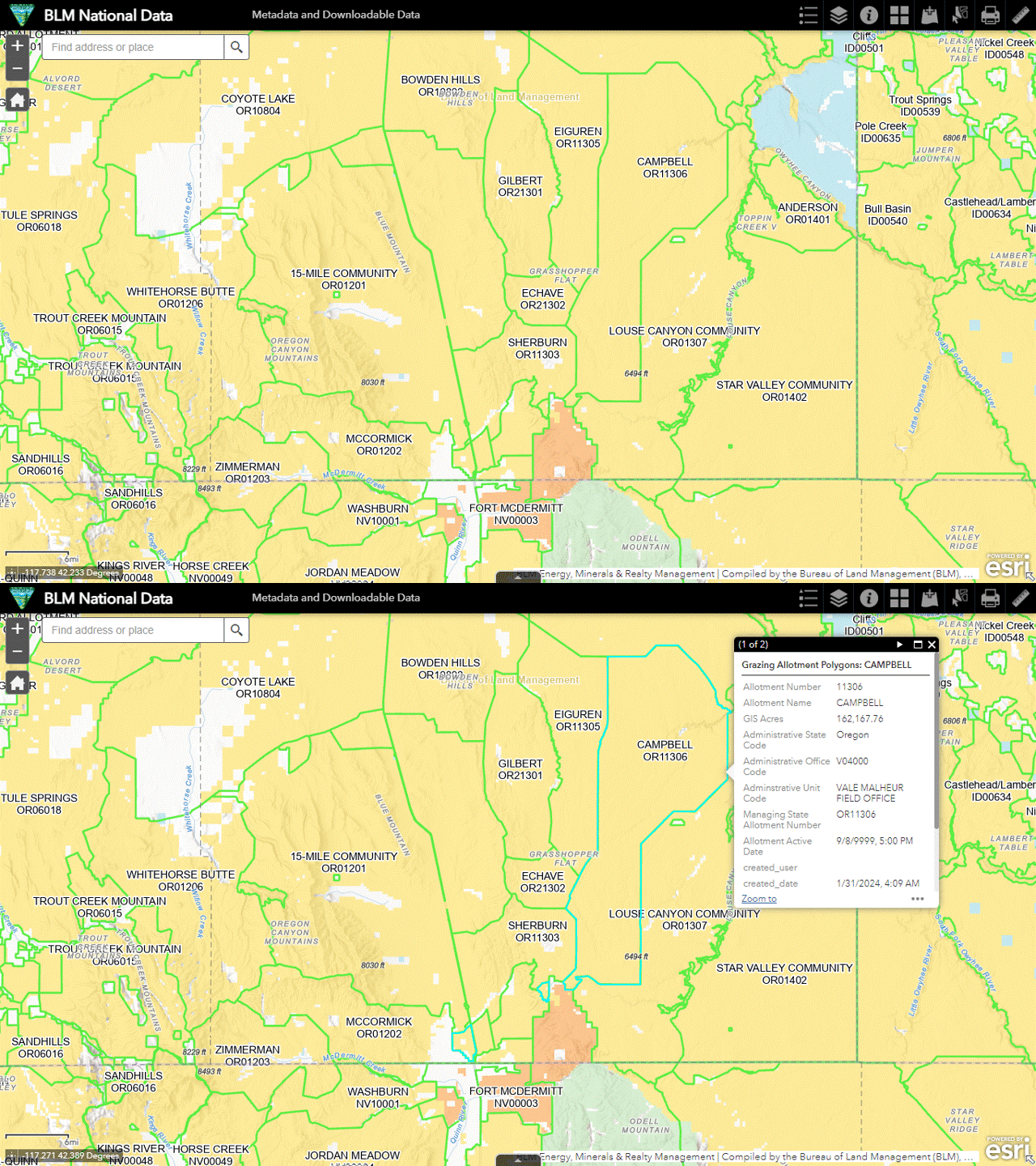
The Complex is managed primarily for animal agriculture.  The National Data Viewer shows habitat loss and grazing allotments.  Click on image to open in new tab.

*According to advocates.

East Pershing Complex with Allotments 12-30-23

Day 43 ended with 80 unaccounted-for animals.

There are no plans to treat any of the captured mares with fertility control pesticides and return them to the range.

With 2,589 horses shipped, and a pre-gather population in Winnemucca of 958, give or take, the off-range corrals should be at 89% of capacity.

Other statistics:

  • Forage liberated to date: 32,340 AUMs per year
  • Water liberated to date: 26,950 gallons per day
  • Horses allowed by plan: 555
  • Pre-gather population: 3,375
  • Forage assigned to horses: 6,660 AUMs per year
  • Forage assigned to livestock: Not determined
  • Horses displaced from Complex by permitted grazing: Not determined
  • True AML: Not determined
  • Stocking rate at new AML: Not determined
  • Horses displaced by drilling and mining: Ask the advocates

Overpopulation means more horses than allowed by plan, not necessarily more horses than the land can support.

The ability of the Complex to sustain wild horses has been limited by the bureaucrats, who have assigned most of their food to the public-lands ranchers.

Refer to these reports for an indication of the problem:

RELATED: East Pershing Roundup, Day 41.

Why Did We Drop the Geocentric Model of the Universe?

Because it didn’t do a very good job of correlating the observed facts.

The heliocentric model wasn’t perfect but it did a better job of explaining the motions of the heavenly bodies.

Euclidian geometry works well within the confines of the village but fails at larger distances because the surface of the earth is curved.

Likewise, the sperm-blocking theory of PZP doesn’t do a good of correlating the observed facts, especially the skewing of sex ratios in favor of females, and therefore deserves a fair share of skepticism.

Better yet, it should be tossed out along with its adherents in favor of the ovary-killing theory, which is not perfect but does a better job of explaining the observed facts.

RELATED: Sperm-Blocking Theory Doesn’t Account for Self-Boosting Mares.

Cody Enterprise Biased in Favor of McCullough Ranchers?

The paper posted an editorial today, written by the publisher, claiming that roundups are necessary to preserve not only the horses but also our public lands.

Wild horses can’t be legally hunted and there aren’t enough natural predators to combat their growing populations.  Without the BLM’s diligent work to achieve an appropriate management level, these wild herds can increase rapidly and public lands can be overwhelmed by the demand for forage and water.

What about the six allotments that overlap the HMA?

How much forage do the ranchers receive?

What happened to the predators?

Why is the AML so small?

The HMA is managed primarily for animal agriculture.

The darting program protects the ranchers.

The roundup protects the ranchers.

Depredation protects the ranchers.

The AML protects the ranchers.

But there’s not one word in the commentary about the ranchers.

Shame on you Megan Barton!

RELATED: Advocates Bawling About Loss of McCullough Filly?

Lake Pleasant Roundup Begins, No News Release

The incident started on February 5 as scheduled, with ten burros captured, none shipped, none released and no deaths.

It’s not open to public observation.

The capture and removal goals are identical at 400 each.

The pre-gather population was not specified.

The reason for removal is private property damage and public safety.

The HMA covers 103,000 acres north of Phoenix and is subject to permitted grazing.

Lake Pleasant HMA with Allotments 02-06-23

East Pershing Roundup, Day 41

The incident began on December 28.  Results through February 6:

The figures above are based on the daily reports, not the totals posted by the BLM.

Helicopters could not fly on Day 41 due to fog.

The death rate is 1.0%.  Four horses died accidentally, 22 were killed intentionally.

The capture total includes 1,029 stallions, 1,186 mares and 345 foals.  The sidebar at the gather page says 1,027/1,180/347.

Youngsters represented 13.5% of the animals gathered, consistent with a herd growth rate of eight percent per year.

Of the adults, 46.5% were male and 53.5% were female, no evidence of an abnormal sex ratio.

Body condition scores ranged from 3 to 4 on Day 40.

The location of the trap site was not disclosed.

The Complex is managed primarily for animal agriculture.  The National Data Viewer shows habitat loss and grazing allotments.  Click on image to open in new tab.

*According to advocates.

East Pershing Complex with Allotments 12-30-23

Day 41 ended with 26 unaccounted-for animals.

There are no plans to treat any of the captured mares with fertility control pesticides and return them to the range.

With 2,505 horses shipped, and a pre-gather population in Winnemucca of 958, give or take, the off-range corrals should be at 86% of capacity.

Other statistics:

  • Forage liberated to date: 30,684 AUMs per year
  • Water liberated to date: 25,570 gallons per day
  • Horses allowed by plan: 555
  • Pre-gather population: 3,375
  • Forage assigned to horses: 6,660 AUMs per year
  • Forage assigned to livestock: Not determined
  • Horses displaced from Complex by permitted grazing: Not determined
  • True AML: Not determined
  • Stocking rate at new AML: Not determined
  • Horses displaced by drilling and mining: Ask the advocates

Overpopulation means more horses than allowed by plan, not necessarily more horses than the land can support.

The ability of the Complex to sustain wild horses has been limited by the bureaucrats, who have assigned most of their food to the public-lands ranchers.

Refer to these reports for an indication of the problem:

RELATED: East Pershing Roundup, Day 39.

Litchfield Corrals Temporarily Closed to Public

Conditions inside the pens are not posing any danger to the horses and burros, according to today’s news release, but a partial ceiling collapse in the office lobby and unsafe conditions for moving animals to loading areas has necessitated the closure.

The damage was likely caused by the so-called bomb cyclone that tore through California starting on February 4.

The adoption facility covers about 80 acres east of Susanville on Highway 395 and has a capacity of 1,000 animals according to the November 2023 facility report.

Sperm-Blocking Theory Doesn’t Account for Self-Boosting Mares

The ovary-killing theory does.

It explains why the Assateague herd isn’t growing.

Trends in Assateague Population 04-27-23

It also explains why recovery time goes up the longer they’re on it.

After five years, they don’t recover, they’re self-boosting.

The sperm-blocking hypothesis was cooked up so the advocates could sell the pesticide as a safe, reversible vaccine.

For a discussion of the adverse effects of PZP, go to page 30 in this report.

RELATED: If PZP Is Reversible, Why Hasn’t Assateague Herd Rebounded?

Pesticide Pushers 07-17-23

East Pershing Roundup, Day 39

The incident began on December 28.  Results through February 4:

The figures above are based on the daily reports, not the totals posted by the BLM.

A mare was put down on Day 38 for a facial fracture, possibly due to collision with a post or pipe panel.  A stallion was dispatched on Day 39 due to a missing eye.

The death rate is 1.0%.  Four horses died accidentally, 22 were killed intentionally.

The capture total includes 1,024 stallions, 1,184 mares and 345 foals.  The sidebar at the gather page says 1,022/1,178/347.

Youngsters represented 13.5% of the animals gathered, consistent with a herd growth rate of eight percent per year.

Of the adults, 46.4% were male and 53.6% were female, no evidence of an abnormal sex ratio.

Body condition scores ranged from 3 to 4 on Days 38 and 39.

The location of the trap site was not disclosed.

The Complex is managed primarily for animal agriculture.  The National Data Viewer shows habitat loss and grazing allotments.  Click on image to open in new tab.

*According to advocates.

East Pershing Complex with Allotments 12-30-23

Day 39 ended with 146 unaccounted-for animals.

There are no plans to treat any of the captured mares with fertility control pesticides and return them to the range.

With 2,378 horses shipped, and a pre-gather population in Winnemucca of 958, give or take, the off-range corrals should be at 83% of capacity.

Other statistics:

  • Forage liberated to date: 30,600 AUMs per year
  • Water liberated to date: 25,500 gallons per day
  • Horses allowed by plan: 555
  • Pre-gather population: 3,375
  • Forage assigned to horses: 6,660 AUMs per year
  • Forage assigned to livestock: Not determined
  • Horses displaced from Complex by permitted grazing: Not determined
  • True AML: Not determined
  • Stocking rate at new AML: Not determined
  • Horses displaced by drilling and mining: Ask the advocates

Overpopulation means more horses than allowed by plan, not necessarily more horses than the land can support.

The ability of the Complex to sustain wild horses has been limited by the bureaucrats, who have assigned most of their food to the public-lands ranchers.

Refer to these reports for an indication of the problem:

RELATED: East Pershing Roundup, Day 37.

BLM Updates FY24 Roundup Plan

The December 8 schedule, which greatly increased the scope of the removals, has been supplanted by the February 1 schedule.

The grand totals increased from 20,942 gathered and 19,870 removed to 21,603 gathered and 20,260 removed.

Warm Springs Canyon was replaced by McGee Mountain.

Antelope Hills and Lost Creek were dropped.

Calico was added as an “as built.”

Twin Peaks moved from August to September.

The first part of the schedule corresponds to nonmotorized removal, the domain of the advocates.

These actions support three tenets of rangeland management.

RELATED; BLM Massively Expands FY24 Roundup Schedule.

East Pershing Roundup, Day 37

The incident began on December 28.  Results through February 2:

The figures above are based on the daily reports, not the totals posted by the BLM.

The death rate is 1.0%.  Three horses died accidentally, 21 were killed intentionally.

The capture total includes 940 stallions, 1,080 mares and 303 foals.  The sidebar at the gather page says 938/1,074/305.

Youngsters represented 13.0% of the animals gathered, consistent with a herd growth rate of eight percent per year.

Of the adults, 46.5% were male and 53.5% were female, no evidence of an abnormal sex ratio.

Body condition scores ranged from 3 to 4 on Days 36 and 37.

The location of the trap site was not disclosed.

The Complex is managed primarily for animal agriculture.  The National Data Viewer shows habitat loss and grazing allotments.  Click on image to open in new tab.

*According to advocates.

East Pershing Complex with Allotments 12-30-23

Day 37 ended with 6 unaccounted-for animals.  This result should be zero based on the totals in the sidebar, suggesting there are errors in the daily reports.

The contractor is shipping them the same day they are captured, no animals held back for selective return.

There are no plans to treat any of the captured mares with fertility control pesticides and return them to the range.

Other statistics:

  • Forage liberated to date: 27,840 AUMs per year
  • Water liberated to date: 23,200 gallons per day
  • Horses allowed by plan: 555
  • Pre-gather population: 3,375
  • Forage assigned to horses: 6,660 AUMs per year
  • Forage assigned to livestock: Not determined
  • Horses displaced from Complex by permitted grazing: Not determined
  • True AML: Not determined
  • Stocking rate at new AML: Not determined
  • Horses displaced by drilling and mining: Ask the advocates

Overpopulation means more horses than allowed by plan, not necessarily more horses than the land can support.

The ability of the Complex to sustain wild horses has been limited by the bureaucrats, who have assigned most of their food to the public-lands ranchers.

Refer to these reports for an indication of the problem:

RELATED: East Pershing Roundup, Day 35.

Black Mountain Roundup, Day 17

The incident started on January 9.  Results through January 25:

  • Target: Burros
  • Method: Helicopter
  • Type: Planned
  • Category: Cruel and costly*
  • Goals: Gather 1,000, remove 960
  • Better way: Poison the jennies with PZP, let the herd die off*
  • Captured: 1,150, up from 1,112 on Day 15
  • Shipped: 1,102, up from 900 on Day 15
  • Released: None
  • Deaths: 2, no change from Day 15
  • Average daily take: 67.6
  • Unaccounted-for animals: 46

The figures above are based on the daily reports, not the totals posted by the BLM.

Gather activity concluded on Day 16 with 15% overreach.

  • Animals taken by helicopter: 1,112
  • Animals taken by roping: 38

The death rate is 0.2%.

The capture total includes 461 jacks, 524 jennies and 165 foals.

Youngsters represented 14.3% of the animals gathered.

Of the adults, 46.8% were male and 53.2% were female.

The name of the contractor was not given and the location of the trap site was not disclosed.

The HMA is subject to permitted grazing.

  • Forage liberated to date: 6,900 AUMs per year
  • Water liberated to date: 5,750 gallons per day

The Day 17 report said 47 burros will be returned to the HMA, including those treated with the Montana Solution, but only 46 animals were held back according to the totals.

1,150 – 1,102 – 2 = 46

The National Data Viewer shows habitat loss and overlapping allotments.  Click on map to open in new tab.

The HMA is managed primarily for livestock.

The roundup supports three tenets of rangeland management.

*According to advocates

RELATED: Black Mountain Roundup, Day 15.

Black Mountain HMA with Allotments 12-20-23

Virginia Range Darting Update for January 2024

The Campaign Against America’s Wild Horses, a leader in nonmotorized removal, reported today that 82 mares received 82 doses of PZP during the month, 17 given as a primer and 65 as a booster.

Over the life of the program, which began in 2019, the advocates have pumped 8,609 doses of the pesticide into 1,994 mares.

Two foals were born and one died of unspecified causes.

The current population is thought to be 3,465 with 342 horses listed as missing, compared to 3,471 with 336 listed as missing in December.

Goal for February: “Continue to maximize booster treatments to mares across the Virginia Range before spring breeding season to prevent pregnancies, and continuing to allow for humane population decrease.”

Let Us Fix Your Wild Horse Problem 02-18-23

Not discussed in the report:

  • Long-term population goal
  • Size of breeding population
  • Loss of genetic diversity
  • Changes in death rate and sex ratio
  • Unlawful use of pesticides

PZP tricks the immune system into attacking the ovaries, resulting in sterility after five years of treatment.

The report will be submitted to the Nevada Department of Agriculture.

RELATED: Virginia Range Darting Update for December 2023.

Adjectives for Pests 12-01-23

Groundhog Predicts Another Year of Deceit from Advocates

He didn’t see his shadow according to a report by AP News.

Actually, it doesn’t matter.  We know they’re defeatists, pesticide pushers and ranching sympathizers.

“As you start reducing the amount of available space and forage, then you need to manage the numbers to fit what’s available for the horses.”

That’s what the bureaucrats have been doing for 50 years and instead of opposing it, the advocates go along with it.

CAAWH Membership Card Exposed 01-01-24

Why are you still giving them money?

Foal-Free Friday, Keeping You in the Dark Edition

The Campaign Against America’s Wild Horses, a leader in nonmotorized removal, publishes monthly reports for the Virginia Range darting program, which they share with the Nevada Department of Agriculture.

The report for January should post next week.

What is the size of the breeding population?

How many mares are still viable?

What is the sex ratio?

They have the information but they don’t say.

Accountability to the public is lacking in this and other such programs.

When the long-term effects become apparent, the herds will be lost forever.

RELATED: Foal-Free Friday, All Zeal but No Truth Edition.

Cherished Wild Horses 02-01-24

Reward Offered in Big Summit Wild Horse Shooting

The Campaign Against America’s Wild Horses, a leader in nonmotorized removal, pledged $5,000 for information leading to the arrest of those responsible, according to a story dated February 1 by The Bulletin of Bend, OR.

The Forest Service did not indicate if the target was female and if it was in foal.

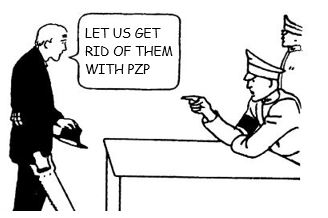
Would you feel better if the advocates were getting rid of them with PZP?

Why hasn’t law enforcement investigated CAAWH for unlawful use of pesticides?

RELATED: Wild Horse Shot, Killed in Big Summit WHT.

CAAWH Congratulates Self for Poisoning Virginia Range Mare

Her freedom and safety have been safeguarded thanks to the pioneering fertility control program, according to a January 31 news flash distributed by Lucky Three Ranch.

The advocates have determined that three foals are enough and her contribution to the genetic diversity of the herd is adequate.

So now they’re going to sterilize her with an ovary-killing pesticide, which they describe as a lifeline.

Better Way 10-25-23

Won’t you give them $30 so they can buy another dose of the miraculous vaccine?

Curiously, they didn’t refer to it as reversible.

These frauds care far more about their standing with the bureaucrats and ranchers than they do about wild horses.

RELATED: CAAWH Admits Virginia Range Mares Are Sterile?