The group that assisted in the rescue last weekend of a wild horse trapped in a cattle guard is asking for volunteers who can participate in the training and be available when a call comes in.
More information in this story by KOLO News of Reno.
They opted instead for a new rule seeking humane treatment during roundups, according to a report dated October 19 by the Pahrump Valley Times.
An outright ban would be a serious affront to those associated with animal agriculture, which the commissioners promote as a key part of the local economy.
The article said the motion passed unanimously, with an effective date of October 30, but it has not been posted to the county’s ordinance page as of this morning.
The capture goal was 761 and the removal goal was 380.
Data quality was good.
The death rate was 3.1%.
The capture total included 173 stallions, 257 mares and 59 foals.
Youngsters represented 12.1% of the animals gathered, consistent with a herd growth rate of 7% per year.
Of the adults, 40.2% were male and 59.8% were female, not consistent with a simple random process centered at 50% males / 50% females and a sample of 430 horses.
Some of the mares will be treated with a fertility control pesticide and be returned to the range, so the net removal cannot be determined at this time.
The ranch includes 7,942 deeded acres east of Richfield, UT, with grazing preference on approximately 80,000 state and federal acres, according to the agent’s listing.
The operator runs approximately 350 cow/calf pairs year around.
In addition to forage on public lands, the owners feed hay produced from valley operations as well as purchased hay.
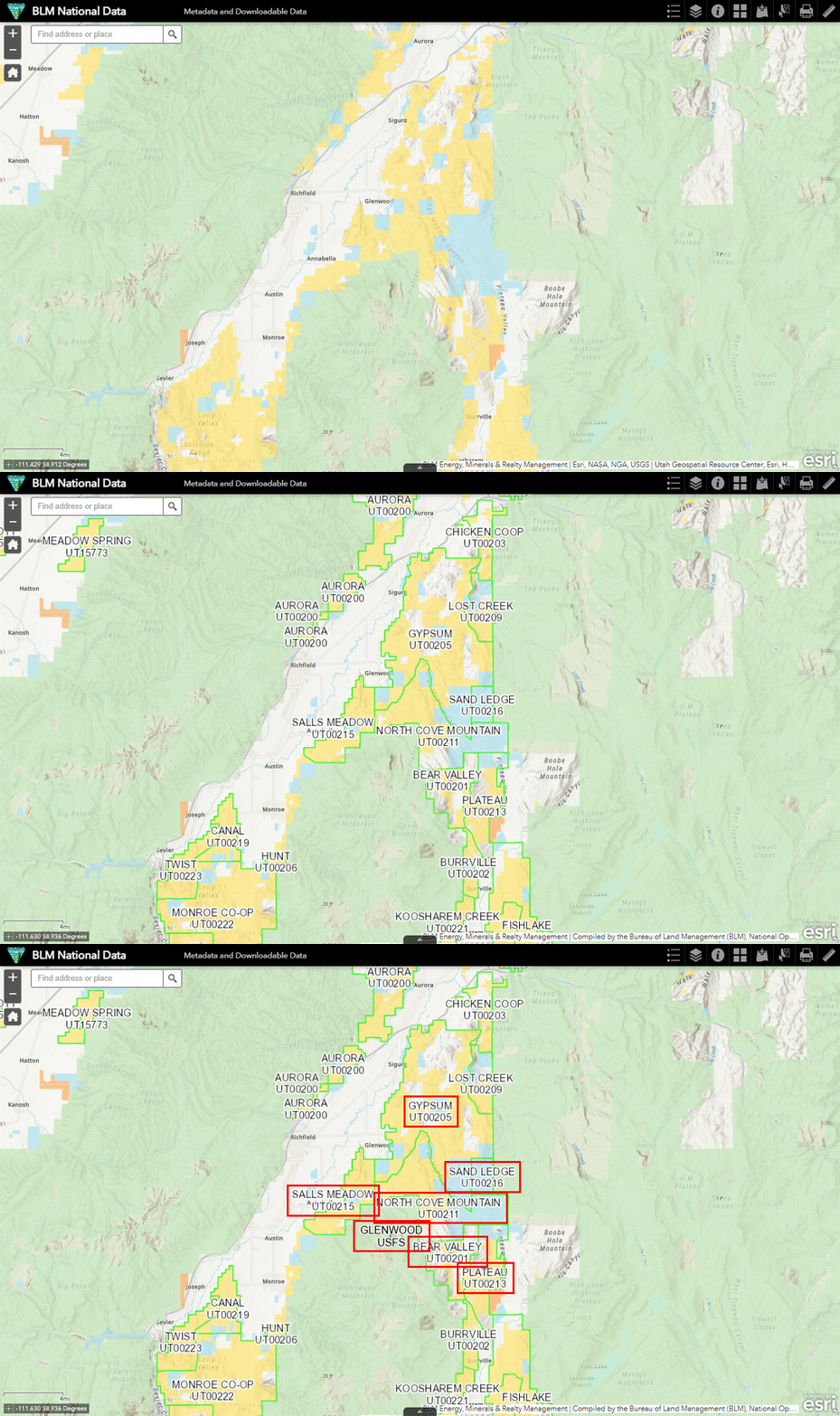
The agent’s map links the deeded acreage, shown in red, to six BLM allotments, shown in yellow, and one FS allotment, shown in green.
The National Data Viewer shows the BLM allotments. The FS allotment is south of North Cove Mountain and west of Bear Valley in the Fishlake NF.
The allotments do not intersect any wild horse or burro areas.
The Operator Information Report at RAS ties Annabella Land & Cattle to Authorization #4305032. The Allotment Information Report ties the authorization to Bear Valley, Gypsum, North Cove Mountain and Salls Meadow.
A keyword search of the Allotment Master Report yielded four instances of “Annabella,” consistent with the Allotment Information Report.
The permittees on the two remaining allotments may be DBAs or lessees but this was not explained in the listing.
Information about the Forest Service allotment can be found in the 2023 AOI.
An outlay of $25 million obtains access to a miniscule 558 AUMs per year on BLM land and roughly 483 AUMs per year on FS land. Not a great deal in your host’s opinion.
The price tag would break the budget of the new adoption partnerships program, but nobody said public-lands ranching was for the little guy.
Mares returned to the Complex will be treated with GonaCon Equine, a fertility control pesticide. As of today, all returned animals have been stallions.
Other statistics:
Forage liberated to date: 3,636 AUMs per year
Water liberated to date: 3,030 gallons per day
Forage assigned to livestock: Undetermined
Horses displaced from area by permitted grazing: Undetermined
True AML: Undetermined
Stocking rate at new AML: Undetermined
Horses removed because of drilling and mining: Ask the advocates
Overpopulation means more horses than allowed by plan, not necessarily more horses than the land can support.
Mares returned to the Complex will be treated with GonaCon Equine, a fertility control pesticide. As of today, all returned animals have been stallions.
Other statistics:
Forage liberated to date: 4,056 AUMs per year
Water liberated to date: 3,380 gallons per day
Forage assigned to livestock: Undetermined
Horses displaced from area by permitted grazing: Undetermined
True AML: Undetermined
Stocking rate at new AML: Undetermined
Horses removed because of drilling and mining: Ask the advocates
Overpopulation means more horses than allowed by plan, not necessarily more horses than the land can support.
The opportunity is open to local and state governments, tribes, other federal agencies and nonprofit organizations through January 15, according to today’s news release.
Proposals will support off-range activities related to placement of wild horses and burros into private care, such as training, outreach and compliance inspections.
An additional funding opportunity related to research may be announced in November and another in December for on-range projects such as application of fertility control.
The agency did not indicate if the solicitation was related to the falling out with MHF.
Mares returned to the Complex will be treated with GonaCon Equine, a fertility control pesticide. As of today, all returned animals have been stallions.
Other statistics:
Forage liberated to date: 3,204 AUMs per year
Water liberated to date: 2,670 gallons per day
Forage assigned to livestock: Undetermined
Horses displaced from area by permitted grazing: Undetermined
True AML: Undetermined
Stocking rate at new AML: Undetermined
Horses removed because of drilling and mining: Ask the advocates
Overpopulation means more horses than allowed by plan, not necessarily more horses than the land can support.
The allotments offer a combined 20,054 AUMs per year on 293,664 public acres, for a weighted average 68.3 AUMs per year per thousand public acres, equivalent to 5.7 wild horses per thousand public acres.
Not bad for an area that’s unfit for wild horses.
The target rate across all HMAs is one wild horse per thousand acres.
Captured animals will be taken to the off-range corrals in Sutherland, UT.
Gather stats and daily reports will be posted to this page.
The contractor euthanized a mare on Day 8 because of a snake bite, followed by two stallions and a mare on Day 9 due to blindness.
The death rate is 3.6%.
The capture total includes 135 stallions, 172 mares and 30 foals.
Youngsters represented 8.9% of the animals gathered, consistent with a growth rate of four percent per year.
Of the adults, 44.0% were male and 56.0% were female.
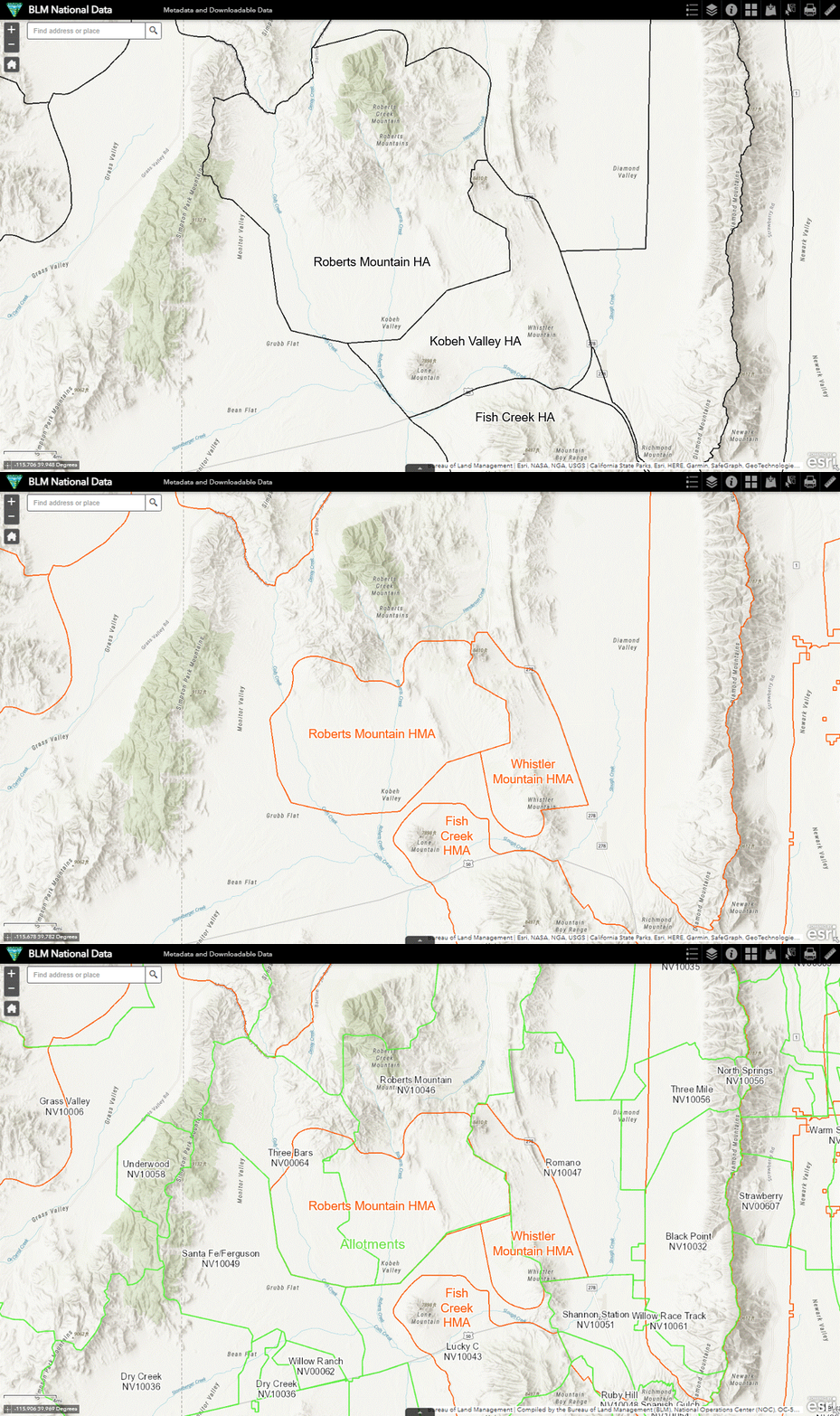
The HMAs and surrounding lands are subject to permitted grazing.
*According to advocates.
Day 9 ended with 119 unaccounted-for animals. Given that 86% of captured mares have been shipped, but only 2% of the stallions, this group is probably dominated by males and will be used to tilt the post-gather sex ratio in favor thereof.
Mares returned to the Complex will be treated with GonaCon Equine, a fertility control pesticide.
Other statistics:
Forage liberated to date: 3,672 AUMs per year
Water liberated to date: 3,060 gallons per day
Forage assigned to livestock: Undetermined
Horses displaced from area by permitted grazing: Undetermined
True AML: Undetermined
Stocking rate at new AML: Undetermined
Horses removed because of drilling and mining: Ask the advocates
Overpopulation means more horses than allowed by plan, not necessarily more horses than the land can support.


 Western Horse Watchers Association