McCullough Roundup Looms?

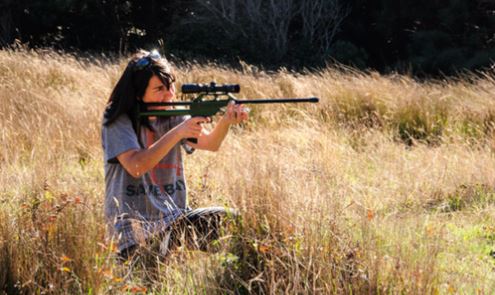
Sisti puts on a good show in this video by KTVQ News but when you’re not looking she’s pummeling mares with PZP, an ovary-killing pesticide.

Contrary to the remarks by the BLM representative, there is no statutory warrant for cheating the horses in favor of the ranchers.

It is policy of the unelected bureaucracy.

Iron-Fisted Government 11-08-23

As of today, no activity has been reported at the gather page, wherein the BLM admits an abnormal sex ratio, a documented side effect sold as mares living longer.

RELATED: What the McCullough Advocates Are Trying to Protect.

Virginia Range Mustang Killed by Motorist in South Reno

The incident occurred today along Toll Road, according to a story by KOLO News.

The article did not indicate if it was female, which would take a little pressure off the darting program and save the Campaign Against America’s Wild Horses a few bucks.

Regardless, the death moves the herd size in the direction they want it to go.

RELATED: Reno to Install New Barrier for Virginia Range Mustangs.

Clan Alpine Roundup, Day 19

The incident began on November 8.  Results through November 26:

  • Scope: Clan Alpine HMA
  • Purpose: Pest control, resource enforcement, rancher protection
  • Target: Horses
  • Type: Planned
  • Method: Helicopter
  • Category: Cruel and costly*
  • Better way: Thin the herd with ovary-killing pesticides*
  • Captured: 1,468, up from 1,302 on Day 17
  • Average daily take: 77.3
  • Capture goal: 1,594
  • Removal goal: 1,381
  • Returned: 1, no change from Day 17
  • Deaths: 20, up from 18 on Day 17
  • Shipped: 1,237, up from 1,102 on Day 17

The sidebar shows two stallions released but only one was documented in the daily reports.

A mare was dispatched on Day 19 due to blindness along with a stallion for a broken leg.

The death rate is 1.4%.

The capture total includes 604 stallions, 673 mares and 191 foals.

Youngsters represented 13.0% of the animals gathered, suggesting the herd is growing at a rate of eight percent per year.

Of the adults, 47.3% were male and 52.7% were female.

Body condition scores on Days 18 and 19 ranged from 3 to 4.

The HMA and surrounding lands are subject to permitted grazing.

*According to advocates.

Clan Alpine HMA with Allotments 06-17-23

Day 19 ended with 210 unaccounted-for animals.

To date, 81 mares have been treated with GonaCon Equine, a fertility control pesticide.

They will be returned the range with up to 121 stallions.

Operations will likely conclude this week.

Other statistics:

  • Forage liberated to date: 17,604 AUMs per year
  • Water liberated to date: 14,670 gallons per day
  • Horses allowed by plan: 979
  • Pre-gather population: 1,661 plus this year’s foals
  • Forage assigned to horses: 11,748 AUMs per year
  • Forage assigned to livestock: 6,796 AUMs per year
  • Horses displaced from HMA by permitted grazing: 566
  • True AML: 1,545
  • Stocking rate at new AML: 5.2 wild horses per thousand public acres
  • Horses displaced by drilling and mining: Ask the advocates

RELATED: Clan Alpine Roundup, Day 17.

Colorado Rancher Yields Grazing Preference to Save Bighorns

The permittee received an undisclosed sum from The National Wildlife Federation for vacating five BLM allotments and five FS allotments totaling over 100,000 acres in a mountainous area southeast of Telluride.

The deal will separate a herd of Rocky Mountain bighorns from nonnative domestic sheep according to a story dated November 26 by CBS News, reducing the risk of disease and death in the native sheep.

Although optimistic about the agreement, the executive director of the Rocky Mountain Bighorn Society said he remains dismayed by inaction of federal land management agencies, noting that grazing is a privilege not a right, and that “We should not be relying upon third party NGOs to negotiate settlements and raise hundreds of thousands of dollars in private funds to protect our bighorn sheep herds.”

Touché!  But the foot dragging makes sense if you understand the prime directive.

The article suggests that the permittee obtained access to some other allotments closer to home as part of the deal.

The Operator Information Report at RAS tied the permittee to five BLM authorizations and fifteen allotments.  The last two authorizations cover the vacated allotments.

  • 0503059 – SANDY WASH, PIPELINE, SHAVANO MESA, FRANKLIN MESA, DRY CREEK BASIN, SOUTH PINEY, DAVE WOOD ROAD, CANAL
  • 0503501 – LEE LANDS
  • 0504436 – BRUSH POINT
  • 0503955 – GLADSTONE, EUREKA, DEER PARK, ELK CREEK
  • 0504718 – MAGGIE GULCH

Utilization on FS lands cannot be determined at this time.

The Allotment Master Report for the vacated parcels puts all five in the Maintain category, offering a weighted average 68.3 AUMs per year per thousand public acres.

Etchart Allotment Calcs 11-27-23

That resource would support 5.7 wild horses per thousand acres, defying claims by the bureaucrats that public lands in the western U.S. can only support one wild horse per thousand acres (27,000 animals on 27 million acres).

Although the arrangement offers another approach to protecting wild horses and burros, can you imagine a headline that reads “__________ negotiates a settlement and raises hundreds of thousands of dollars to protect our wild horse herds?”

Fill in the blank with your favorite advocacy group.

You’re much more likely to see a news flash about that same group beating the numbers down with ovary-killing pesticides, much to the delight of the public-lands ranchers.

RELATED: Pneumonia Killing Off Bighorn Sheep in Nevada?

The Three Tenets of Rangeland Management

Removal of wild horses and burros from their lawful homes, by any means, supports these principles:

  • Pest control
  • Resource enforcement
  • Rancher protection

1. Pest Control

Most HMAs are managed primarily for livestock.  The HAs are managed almost exclusively for livestock.  Horses and burros are a nuisance.  The advocates underscore this principle in their attempts to shrink the populations with pesticides.

Deniz Bolbol TCF Darter 03-11-23

2. Resource Enforcement

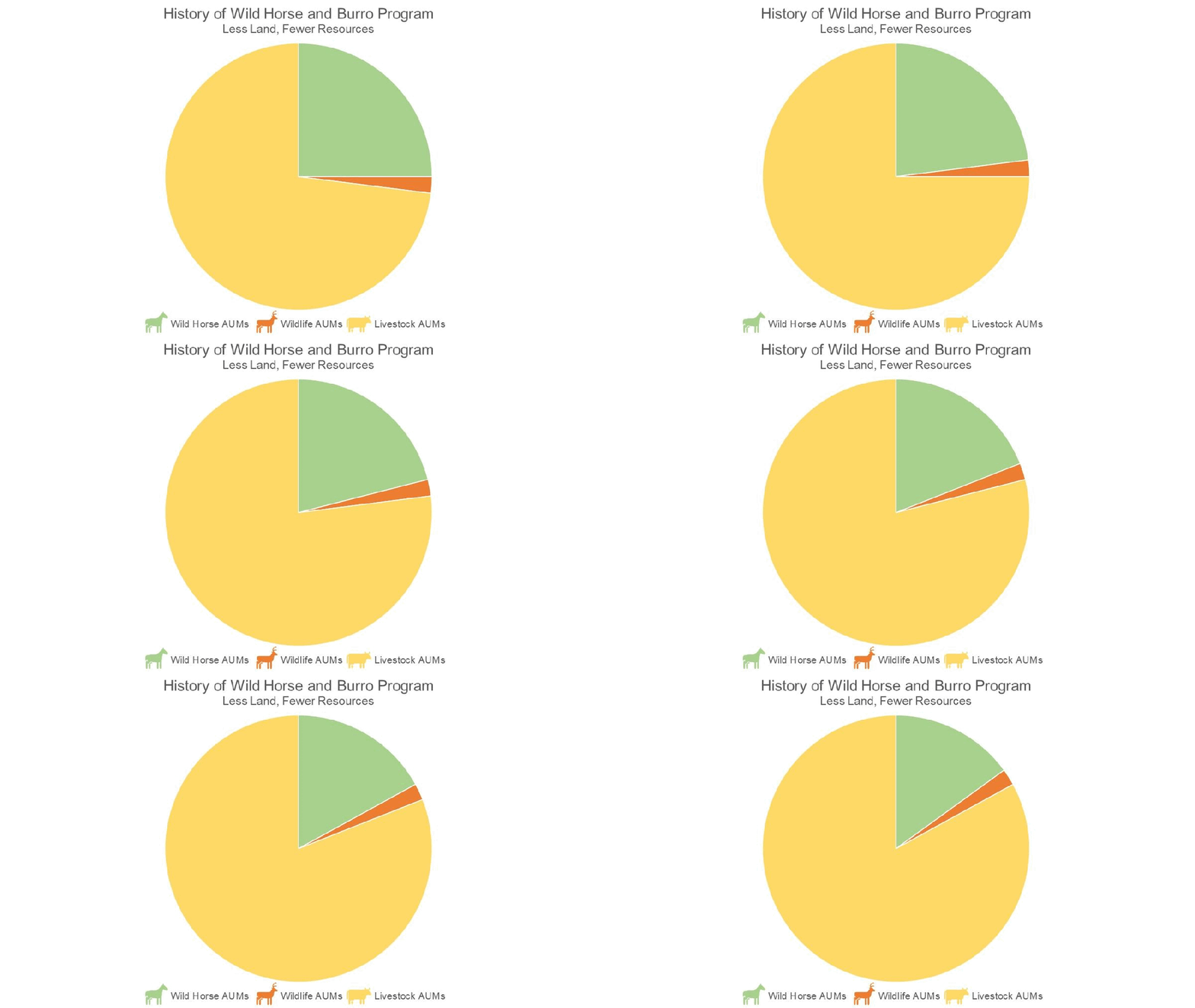
If the management plan assigns 80% of the forage in an HMA to livestock, horses and burros will be removed until the ranchers receive 80% of forage.  There is no statutory basis for such proportions, they are bureaucratic diktats.

History of Wild Horse and Burro Program 12-01-22

3. Rancher Protection

Public lands in the western U.S. shall be managed not for the benefit of the American people, but for the benefit of a select few.  This is the prime directive, the goal of Tenets 1 and 2.  Collect a few million dollars per year in grazing fees for privately owned cattle and sheep while you spend tens of millions of dollars every year stockpiling wild horses and burros displaced thereby.  Stick taxpayers with the difference.

Livestock Grazing Infographic 08-14-22

Clan Alpine Roundup, Day 17

The incident began on November 8.  Results through November 24:

  • Scope: Clan Alpine HMA
  • Purpose: Pest control, resource enforcement, rancher protection
  • Target: Horses
  • Type: Planned
  • Method: Helicopter
  • Category: Cruel and costly*
  • Better way: Poison mares with ovary-killing pesticides*
  • Captured: 1,302, up from 1,198 on Day 15
  • Average daily take: 76.6
  • Capture goal: 1,594
  • Removal goal: 1,381
  • Returned: 1, no change from Day 15
  • Deaths: 18, no change from Day 15
  • Shipped: 1,102, up from 964 on Day 15

The sidebar shows two stallions released but only one was documented in the daily reports.

Two domestic horses were picked up on Day 16 and turned over to the state.

The death rate is 1.4%.

The capture total includes 525 stallions, 606 mares and 171 foals.

Youngsters represented 13.1% of the animals gathered, suggesting the herd is growing at a rate of eight percent per year.

Of the adults, 46.4% were male and 53.6% were female.

Body condition scores on Days 16 and 17 ranged from 3 to 4.

The HMA and surrounding lands are subject to permitted grazing.

*According to advocates.

Clan Alpine HMA with Allotments 06-17-23

Day 17 ended with 181 unaccounted-for animals.

To date, 81 mares have been treated with GonaCon Equine, a fertility control pesticide.

They will be returned the range with up to 121 stallions.

Other statistics:

  • Forage liberated to date: 15,612 AUMs per year
  • Water liberated to date: 13,010 gallons per day
  • Horses allowed by plan: 979
  • Pre-gather population: 1,661 plus this year’s foals
  • Forage assigned to horses: 11,748 AUMs per year
  • Forage assigned to livestock: 6,796 AUMs per year
  • Horses displaced from HMA by permitted grazing: 566
  • True AML: 1,545
  • Stocking rate at new AML: 5.2 wild horses per thousand public acres
  • Horses displaced by drilling and mining: Ask the advocates

RELATED: Clan Alpine Roundup, Day 15.

Advocates Seek Information on Loss of Virginia Range Mare

An article published today by the Las Vegas Review-Journal says she was found on November 19 east of Lockwood, caught in an illegally set snare.

The Campaign Against America’s Wild Horses, a leader in nonmotorized removal and operator of the Virginia Range darting program, offered a reward of $6,000.

The story did not indicate if the mare had been targeted by its field workers and if she had reached the point of no return.

The trap could have been set for other animals, as explained in an October 18 report by Nevada Current.

Your host found an old trap on the Virginia Range in July.

What CAAWH is doing to the herd is far more destructive than anything hunters or trappers have done.

Trap Found on Virginia Range 07-29-23

Centennial Roundup Comes and Goes, No Daily Reports

No information was posted to the gather page until today.

The start date is unknown.

The incident was set to begin on November 20 with capture and removal goals of 140.

The sidebar indicates 56 horses captured, 56 shipped, none released and no deaths, along with 92 burros captured, 92 shipped, none released and no deaths.

There were no unaccounted-for animals.

Of the horses captured, 22 were stallions, 24 were mares and 10 were foals.

For the burros, 46 were jacks, 30 were jennies and 16 were foals.

The incident was not open to public observation.

RELATED: Centennial Roundup Announced.

Centennial HMA with Allotments 11-14-23

Clan Alpine Roundup, Day 15

The incident began on November 8.  Results through November 22:

  • Scope: Clan Alpine HMA
  • Purpose: Pest control, resource enforcement, rancher protection
  • Target: Horses
  • Type: Planned
  • Method: Helicopter
  • Category: Cruel and costly*
  • Better way: Sterilize mares with pesticide-laced darts*
  • Captured: 1,198, up from 1,062 on Day 13
  • Average daily take: 79.9
  • Capture goal: 1,594
  • Removal goal: 1,381
  • Returned: 1, no change from Day 13
  • Deaths: 18, up from 13 on Day 13
  • Shipped: 964, up from 922 on Day 13

Three horses were dispatched on Day 15 for blindness.  A stallion was put down because of a club foot and another for a fractured knee, lifting the death rate to 1.5%.

The capture total includes 481 stallions, 555 mares and 162 foals.

Youngsters represented 13.5% of the animals gathered, suggesting the herd is growing at a rate of eight to nine percent per year.

Of the adults, 46.4% were male and 53.6% were female.

Body condition scores on Days 14 and 15 ranged from 3 to 4.

The HMA and surrounding lands are subject to permitted grazing.

*According to advocates.

Clan Alpine HMA with Allotments 06-17-23

Day 15 ended with 215 unaccounted-for animals.

To date, 81 mares have been treated with GonaCon Equine, a fertility control pesticide.

They will be returned the range with up to 121 stallions.

Other statistics:

  • Forage liberated to date: 14,364 AUMs per year
  • Water liberated to date: 11,970 gallons per day
  • Horses allowed by plan: 979
  • Pre-gather population: 1,661 plus this year’s foals
  • Forage assigned to horses: 11,748 AUMs per year
  • Forage assigned to livestock: 6,796 AUMs per year
  • Horses displaced from HMA by permitted grazing: 566
  • True AML: 1,545
  • Stocking rate at new AML: 5.2 wild horses per thousand public acres
  • Horses displaced by drilling and mining: Ask the advocates

RELATED: Clan Alpine Roundup, Day 13.

McCullough Advocates Support Wild Horse Removal

The executive director of FOAL sent a letter to the Cody Enterprise endorsing the roundup, noting that population control is a critical element to maintaining the health of the herd and the habitat.

The opinion was disclosed in a story posted today.

Removal of “excess” animals, combined with application of PZP and GonaCon Equine, will ensure the ranchers receive the lion’s share of the resources for many years to come.

RELATED: What the McCullough Advocates Are Trying to Protect.

What the McCullough Advocates Are Trying to Protect

This article by the Casper Star-Tribune features remarks from a PZP darter and a ranching sympathizer, both held up as voices for the horses.

The management plan assigns 3.9 times more forage to livestock than it does to wild horses, in the lawful home of wild horses.

As of today, the horses are consuming more than their allocated share of the forage, not more than the land can produce.

That is the meaning of overpopulation.

The BLM wants the resource allocations enforced with baited traps and pesticides while the advocates say the traps aren’t necessary, the pesticides will achieve the results by themselves.

Like the bureaucrats, they want the ranchers to prosper, not the horses.

Protect Wild Horses from Advocates 08-29-21

A BLM spokesman said they’re just following the law that the American people through Congress have already established, which is not true.

There’s nothing in the current statute that says AMLs must correspond to 20% of the authorized forage or less.

Good grief, the term isn’t even defined!

AMLs are small relative to the available resources because the bureaucrats, who never have to face the voters, said so.

RELATED: CAAWH Worried about Viability of McCullough Herd?

UPDATE: In this video, the PZP darter is on the left and the ranching sympathizer is on the right.

Clan Alpine Roundup, Day 13

The incident began on November 8.  Results through November 20:

  • Scope: Clan Alpine HMA
  • Purpose: Pest control, resource enforcement, rancher protection
  • Target: Horses
  • Type: Planned
  • Method: Helicopter
  • Category: Cruel and costly*
  • Better way: Sterilize mares with pesticide-laced darts*
  • Captured: 1,062, up from 1,010 on Day 11
  • Average daily take: 81.7
  • Capture goal: 1,594
  • Removal goal: 1,381
  • Returned: 1, no change from Day 11
  • Deaths: 13, no change from Day 11
  • Shipped: 922, up from 802 on Day 11

Data quality has been good.

The death rate is 1.2%.

The capture total includes 430 stallions, 490 mares and 142 foals.

Youngsters represented 13.4% of the animals gathered, suggesting the herd is growing at a rate of 8% per year.

Of the adults, 46.7% were male and 53.3% were female.

Body condition scores on Days 12 and 13 ranged from 3 to 4.

The HMA and surrounding lands are subject to permitted grazing.

*According to advocates.

Clan Alpine HMA with Allotments 06-17-23

Day 13 ended with 126 unaccounted-for animals.

To date, 81 mares have been treated with GonaCon Equine, a fertility control pesticide.

Approximately 96% of captured stallions have been shipped, with 78% of captured mares, suggesting that they are being held on site, possibly awaiting a second dose, which is to be given no sooner than 90 days after the primer according to the label.

They will be returned the range with up to 121 stallions.

Other statistics:

  • Forage liberated to date: 12,732 AUMs per year
  • Water liberated to date: 10,610 gallons per day
  • Horses allowed by plan: 979
  • Pre-gather population: 1,661 plus this year’s foals
  • Forage assigned to horses: 11,748 AUMs per year
  • Forage assigned to livestock: 6,796 AUMs per year
  • Horses displaced from HMA by permitted grazing: 566
  • True AML: 1,545
  • Stocking rate at new AML: 5.2 wild horses per thousand public acres
  • Horses displaced by drilling and mining: Ask the advocates

RELATED: Clan Alpine Roundup, Day 11.

Rule Changes Would Affect Closure Notices on Public Lands

If adopted, temporary closure and restriction orders would no longer appear in the Federal Register and would instead be disseminated though modern communications channels such as socialist media.

These orders would go into effect upon signature, according to today’s news release.

When does the comment period start?

When the proposal is announced in the Federal Register.

Clan Alpine Roundup, Day 11

The incident began on November 8.  Results through November 18:

  • Scope: Clan Alpine HMA
  • Purpose: Pest control, resource enforcement, rancher protection
  • Target: Horses
  • Type: Planned
  • Method: Helicopter
  • Category: Cruel and costly*
  • Better way: Sterilize mares with pesticide-laced darts*
  • Captured: 1,010, up from 832 on Day 9
  • Average daily take: 91.8
  • Capture goal: 1,594
  • Removal goal: 1,381
  • Returned: 1, no change from Day 9
  • Deaths: 13, up from 12 on Day 9
  • Shipped: 802, up from 590 on Day 9

A mare was dispatched on Day 11 for a prolapsed uterus.

The death rate is 1.3%.

The capture total includes 411 stallions, 470 mares and 129 foals.

Youngsters represented 12.8% of the animals gathered, suggesting the herd is growing at a rate of 8% per year.

Of the adults, 46.7% were male and 53.3% were female.

Body condition scores were not given.

The HMA and surrounding lands are subject to permitted grazing.

*According to advocates.

Clan Alpine HMA with Allotments 06-17-23

Day 11 ended with 194 unaccounted-for animals.

To date, 81 mares have been treated with GonaCon Equine, a fertility control pesticide.

They will be returned the range with up to 121 stallions.

Other statistics:

  • Forage liberated to date: 12,108 AUMs per year
  • Water liberated to date: 10,090 gallons per day
  • Horses allowed by plan: 979
  • Pre-gather population: 1,661 plus this year’s foals
  • Forage assigned to horses: 11,748 AUMs per year
  • Forage assigned to livestock: 6,796 AUMs per year
  • Horses displaced from HMA by permitted grazing: 566
  • True AML: 1,545
  • Stocking rate at new AML: 5.2 wild horses per thousand public acres
  • Horses displaced by drilling and mining: Ask the advocates

RELATED: Clan Alpine Roundup, Day 9.