BLM to Gather Burros from Bullfrog HMA Starting Next Week

Bait traps will be used according to a news release dated 07/06/18.  Goal is remove 300 excess animals.  Captured burros will be taken to an Off-Range WHB Facility in Axtell, UT, where they will be available for adoption.

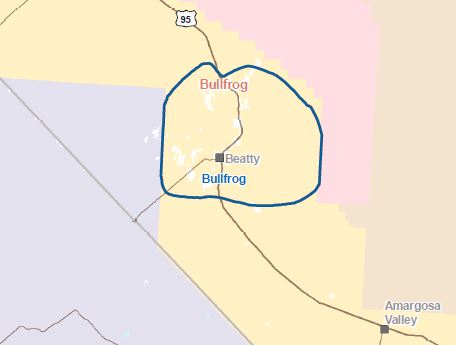
Bullfrog-HMA-Map-1

The Bullfrog HMA covers 157,180 acres and has a target population density of 0.6 animals per thousand acres (based on upper end of AML).  The density at current population levels is 4.3 animals per thousand acres.  Gather stats can be found on this page.

RELATED: Burros Found Dead Near Beatty, NV.

New Road Hazardous to Virginia Range Mustangs?

It is according to a story posted yesterday by KOLO-TV in Reno, NV.  Only a barbed wire fence separates the horses from a new section of the Southeast Connector, but the Regional Transportation Commission plans to build something more substantial over the next month.

Wild horse advocates worry that vehicle collisions with horses will lead to removal of the animals from the area.

The new road, which opens today, should improve traffic flow between residential areas south of Reno and Sparks and employment centers to the north.

Southeast_Connector_Map-1

The Virginia Range, not shown on the map, is on the east side of the new connector.

BLM Gathering Wild Burros at Piute Mountain HA

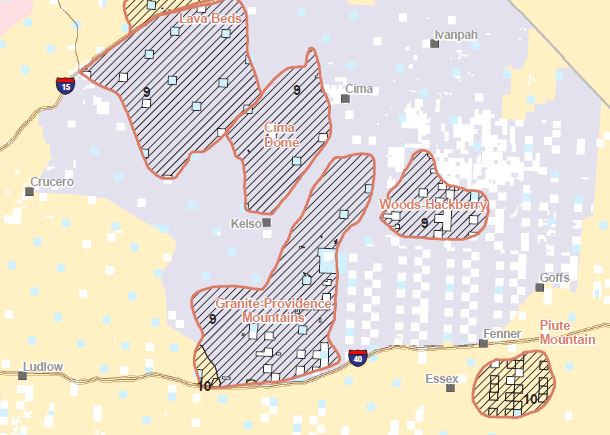
Bait-trapping began 06/28/18, per BLM news release dated 07/05/18.  Removal was prompted by insufficient water and high temperatures.  Affected area is near Fenner, CA, on the south side of I-40.  Captured burros will be taken to the Ridgecrest WHB Corrals for adoption.

Piute_Mountain_HA_Map-1

There are no AMLs for herd areas, they’re not managed for WHB due to lack of resources.  Yet the burros are there.  Gather stats can be found on this page.

Advocates Win Approval to Haul Water to Sand Wash Horses

BLM says OK.  See this post on their FB page, originally published 06/29/18, updated 07/03/18.  The area has received some rain in recent weeks but they’re still not out of the woods.

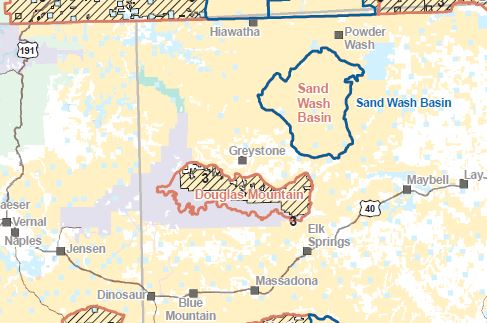
Sand_Wash_Basin_HMA_Map-1

The Sand Wash Basin HMA is in northwest Colorado.  The target population density (at upper end of AML) is 2.3 animals per thousand acres, a bit higher the national average (all HMAs) of one animal per thousand acres.

RELATED: Water Delivery Plans On Hold at Sand Wash Basin HMA.

Mustangs of Oregon

Sometimes it’s better to watch a TV program several years after it was broadcast, because you can see what’s changed.  Consider this documentary by Oregon Public Broadcasting, originally aired February, 2014.

At the time it was filmed, wild horses and burros inhabited 32 million acres.  Today, that figure is 27 million acres.

When the video was produced, there were 179 HMAs across ten western states, now there are 177.  Back then, Oregon had 19 HMAs, today it’s 18.

Some things haven’t changed.  In 2014, the carrying capacity of the land for WHB (based on upper value of AMLs) was about 26,000 animals.  Ditto for today.

Rancher sentiment hasn’t changed.  They still think wild horses and burros are destroying western rangelands and consuming forage that belongs to them.

But there is hope.  The BLM corral facility in Hines, OR, may soon become Auschwitz of the West, where the Josef Mengeles of the of the wild horse world perform gruesome experiments on mares to find the best method of sterilization.

Stay tuned folks, you won’t want to miss it.

Still Barren

Update on the horses in this post.  Tried to get some photos of the mares with welts but the stud wouldn’t have it.  No improvement on the mare with the smaller welt.  Unable to see the mare with the larger welt (third photo in original post).  Inflammation due to bites or stings should have resolved by now.  These photos taken 06/29/18.

The pond seen in the photos from 06/15/18 has lost quite a bit of water, which increases the concentration of dissolved minerals, making it unfit for animal consumption.

IMG_6629

IMG_6644

IMG_6648

Carrots and Apples Kill Horses?

An advocacy group near Corolla, NC recently installed a billboard reminding tourists not to feed the horses that roam the area.  It’s part of a campaign to educate visitors about the dangers of human interaction with the wild herd.

Yes, wild horses should eat food from their natural habitat, such as beach grass, but carrots and apples are not going to kill them.

The problem is hand feeding, not apples and carrots.  Bananas and fig newtons, not covered by the initiative, should be offered instead?

RELATED: How to Make Your Horse Pushy and Disrespectful

RELATED: A Word about Hand-Feeding Your Horse

RELATED: What the Heck Is That?

RELATED: Keeping a Safe Distance

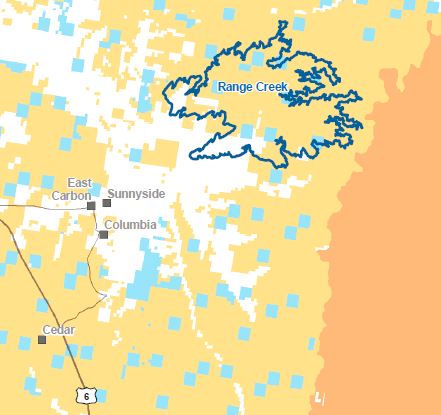
BLM Plans Gather at Range Creek HMA

No start date was given for the bait-trapping operation, announced in a news release dated 06/28/18.  Approximately 100 horses will be removed from lands in and around the Range Creek HMA, northeast of Sunnyside, UT on Hwy 123.

The gather was prompted by letters from private landowners and the Utah Department of Natural Resources.

Range_Creek_HMA_Map-1

The HMA covers 83,410 acres and has a target population of 125 (upper end of AML), for a population density of 1.5 animals per thousand acres.

Pryor Mountains: Celebrating Fifty Years

This year marks the 50th anniversary of the Pryor Mountains Wild Horse Range and celebrations have already started, as explained in a story dated 06/28/18 in the Lovell Chronicle.

Friday, June 29th is Wild Horse Watcher Day at the Pryor Mountain Wild Mustang Center and Bighorn Canyon National Recreation Area.

Events associated with Lovell Mustang Days will continue through the weekend.

Lawsuit: BLM Can’t Remove Horses in Favor of Livestock

See this headline at E&E News dated 06/27/18.  No other details known at this time, more info as story develops.

UPDATE 1: Refer to this story in Courthouse News Service dated 06/28/18.  Includes link to complaint filed in U.S. District Court.  Also this news release from Western Watersheds Project dated 06/27/18.

UPDATE 2: Added map.  Affected area is Caliente HA Complex, consisting of Applewhite, Blue Nose Peak, Clover Creek, Clover Mountains, Delamar Mountains, Little Mountain, Meadow Valley Mountains, Miller Flat and Mormon Mountains Herd Areas.  Between I-15 and Hwy 93 in eastern Nevada.

Caliente_HA_Complex_Map-1

No AMLs for these areas, not managed for WHB due to inadequate resources.  But the horses are there.  Go figure.

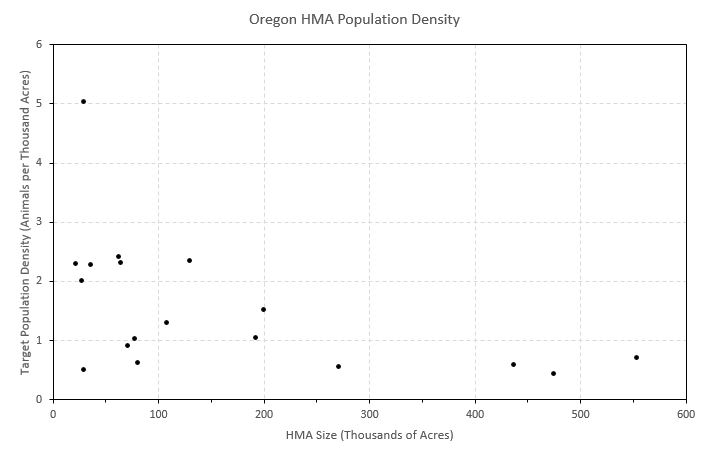
Oregon HMA Stocking Rates

The chart below shows the stocking rate in animals per thousand acres as a function of land area for HMAs in Oregon.  Stocking rates are based on the upper values of the AMLs (mostly horses, a few burros and mules).

Three observations from the chart:

  • Most of the stocking rates are smaller than 2.5 animals per thousand acres
  • Stocking rates vary inversely with HMA size
  • Stocking rates are more-or-less constant for HMAs larger than 250,000 acres

The Cold Springs HMA has the largest stocking rate.

The largest HMA is Coyote Lake / Alvord Tule Springs, the smallest is Hog Creek.

The average stocking rate for the state is 0.97 animals per thousand acres (1031 acres per animal).

The Kiger and Riddle Mountain HMAs, which produce the popular dun-factor horses, have stocking rates of 2.3 and 2.0 animals per thousand acres, respectively.  The next gather of these animals will probably be in the third quarter of 2019.

OR-SR-HMA-1

Given that the HMAs are fairly close to each other in the southeastern corner of the state, if a smaller parcel can sustain two or more animals per thousand acres, why can’t the larger ones?

The Beaty’s Butte HMA, one of the largest in the state, has a population density of just 0.57 animals per thousand acres.  Could it be the government serfs who run cattle on public rangelands put pressure on the BLM to reduce the number of horses in the area?  The same ranchers who pushed for the Beaty’s Butte Wild Horse Training Facility?