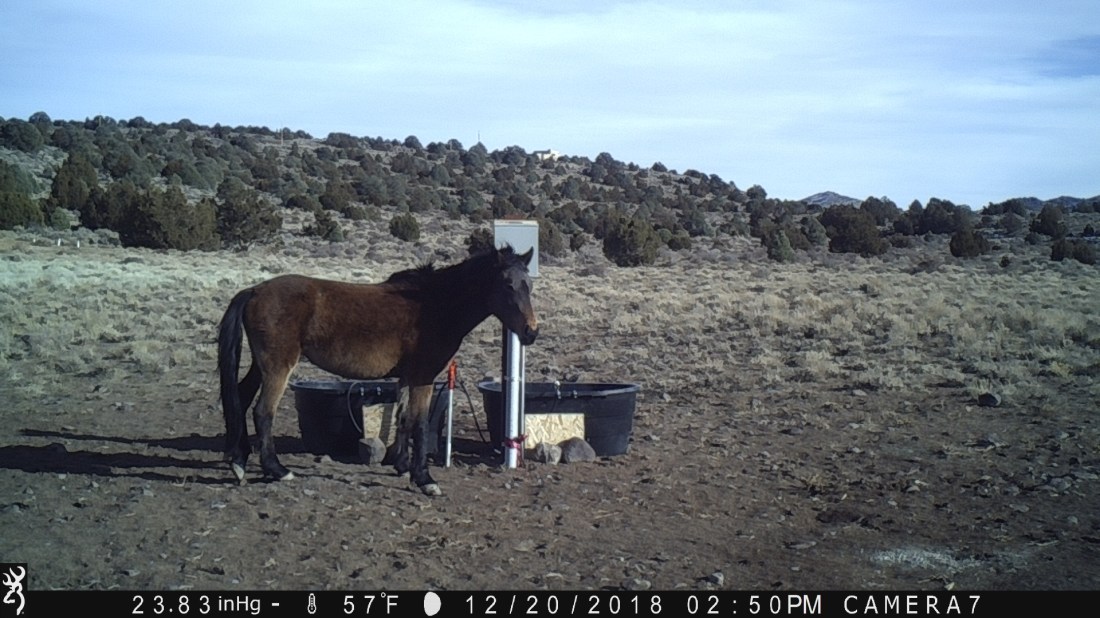
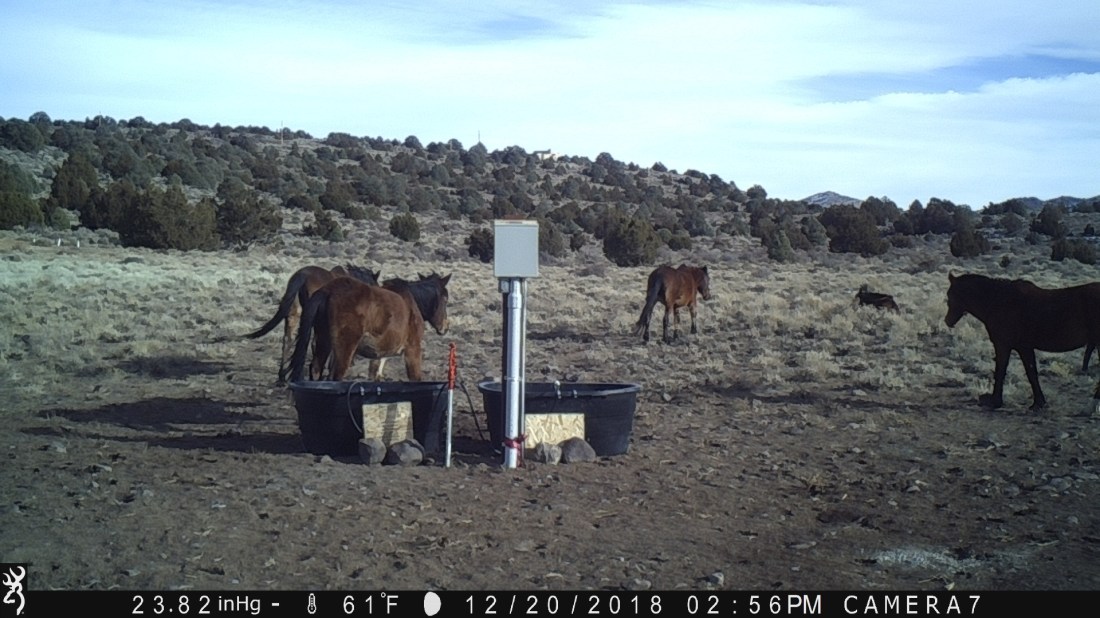
An example of what you can do in PowerPoint. H/T Valeriu Margescu.
Category: Range
On the range
More Horses Found Dead at Heber WHT
The remains of four wild horses and several coyotes were found between January 15 and 22, near State Highway 260, according to a story posted today by the White Mountain Independent of Show Low, AZ.
All were dispatched by gunshots.
The discoveries were reported to the Navajo County Sheriff’s Office. Personnel from the Forest Service were not available due to the federal government shutdown.
A motive was not discussed in the article.
The Heber WHT lies within—and is surrounded by—grazing allotments. See the map on page seven of this document.
That wild horses rob forage from the public-lands ranchers is well established, including mares that have been darted with contraceptives.
Can coyotes take down young calves?
Last October, two stallions were found dead in the WHT, also killed by firearms.
RELATED: USFS Still Silent on Heber Wild Horse Shooting, Advocates Disappointed with Heber Recommendations, Wild Horse Narrative.
DVM Pushes Back Against Colville Gather
Although the wild horse roundup has been delayed, a veterinarian and member of the Colville Tribes has spoken out to make sure it doesn’t happen.
She observed that wild horses are an ‘easy scapegoat,’ but noted that
“Many legitimate studies by government agencies, universities, and animal groups show that livestock with cloven hooves can do a broader range of damage, can consume more types of plant species, and will drink more water than horses.”
A long term program that benefits the tribe and the horses should be developed, she explained, to avoid “…the loss of this basic element of our heritage.” Refer to this story, posted yesterday by The Star of Grand Coulee, WA.
RELATED: Colville Gather Announced.
Wyoming Advocates Push for ‘Wild Horse Highway’
Volunteers with Friends of a Legacy, a group that works with the BLM to manage the wild horses of McCullough Peaks HMA, has asked the state legislature to formally name a section of U.S. 14/16/20 running from Cody to Emblem, according to a report posted yesterday by the Powell Tribune.
The HMA is on the north side of the road, while the neighboring Fifteenmile HMA is a few miles to the south.
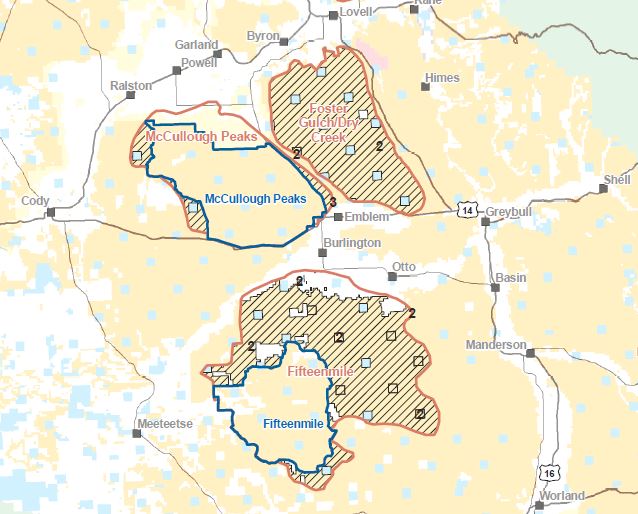
Both HMAs are subject to permitted livestock grazing.

The group received $5,000 last year from ASPCA to dart mares with contraceptives, signifying their assent to the overpopulation narrative. (The ASPCA, an organization that guards against cruelty to animals, actually inflicts it.)
You have to wonder if these people have ranching backgrounds or ties to the ranching industry. What a great way to get rid of the last few wild horses remaining on western rangelands.
These maps indicate that roughly half the land in this part of Wyoming set aside for wild horses is no longer managed for them, supposedly due to inadequate food and water, yet it can support privately owned cattle and sheep.
RELATED: Wyoming Advocacy Group Receives $5000, Aids Ranchers, Livestock Grazing in Wyoming.
Mustang Monday
On Theodore Roosevelt National Park. Thanks to Dakota Grown Photos for the video.
Advocates Disappointed with Heber Recommendations
The proposed management plan for the Heber WHT is now in the public domain and some wild horse advocates are not happy with it, according to a story that appeared today in the White Mountain Independent.
One person said the collaborative working group that drafted the plan had a pre-set agenda to remove all free roaming horses from the Apache-Sitgreaves National Forest.
Another said the group was trying to solve a problem that didn’t exist.
A third person said she was removed from the group because she disagreed with some of the recommendations.
Comments on the plan can be submitted to the Forest Service this summer, according to the report.
RELATED: Heber Management Plan Drafted.
Summer Fun on the OBX
Bill Williams captured the Corolla wild horses on film while vacationing on the 4×4 beaches of the North Carolina Outer Banks.
Horses of the Coalfields
Wild horses roam the abandoned coal mines in southern West Virginia, according to a story posted today by the Herald-Dispatch of Huntington, and mine owners don’t always consider them a welcome addition.
Tinia Creamer, founder of the Heart of Phoenix rescue, says many were abandoned by people who don’t want them anymore, or are looking to sell them but let them go to save money until a buyer is found.
She met last week with legislators to discuss the wild horse issues but concedes the meeting focused mostly on tourism, noting that organizations that use the horses for that take no responsibility for their care.
Given that things didn’t go exactly as planned, she wonders what the legislators might propose and if the horses would be better off left alone.
Paiute Roundup Draws Lawsuit
A wild horse advocacy group and Palomino Valley resident have joined forces to sue the Pyramid Lake Paiute Tribe for taking privately owned horses from private property during the tribal roundup in Palomino Valley, NV earlier this month. Refer to this story, posted today by KOLO-TV in Reno.
Also named in the suit are the Nevada Department of Agriculture, Cattoor Livestock Roundup, Inc., the tribe’s contractor, Zena Quillan, a woman who allegedly bought the captured horses from the tribe and sent them to slaughter, and two Department of Agriculture employees.
What’s the punishment nowadays for horse theft? Why isn’t this a criminal case?
Assateague Island Welcomes New Foal
A pinto filly was born to first-time mom Susi Sole last week, according to a report posted today by the Maryland Coast Dispatch. The arrival brings the wild horse population on the barrier island to eighty.
Fertility control efforts were suspended recently, because of the shrinking size of the herd.
The distribution of males and females on the island is now wildly skewed, based on a census from last November, a result that should be investigated.
Corolla Wild Stallion Passes On
This story has been in the news since yesterday, none of the reports have explained why a month went by before it was announced. CBS-17 in Raleigh, NC has the details.
Blending In with the Surroundings at TRNP
Wild horses pick up the local scent at Theodore Roosevelt National Park. Mud helps to repel the flies as well. Filmed July, 2015 by Dakota Grown Photos.
Second Day of Winter on the Virginia Range
Five wild horses gather at the watering station on an overcast day. Elevation 6,500 feet.

Mustang Monday
On the Virginia Range. Temperature 25 ºF, elevation 6,500 feet.
Fences on Western Rangelands
Opponents of free-roaming horses like to point at photos of muddy ground on one side of a fence and lush green pasture on the other. They say the horses harm the ecology and therefore have to go.
Do you think the barren area would exist if these horses could come and go as they pleased? Of course not. The fence caused it.
ZPG On the Salt River
The Population Bombers of the wild horse world have targeted the Salt River mares, with the goal of reducing wild horse population growth to zero, according to a story posted today by AZ Family, the CBS affiliate in Phoenix. Includes video of mares being shot with contraceptives.
Yep, the Salt River horses have been protected from everything…except the PZP zealots.
Programs like this reflect the moral depravity of their adherents.
WHB Outplacement Continues Despite Government Shutdown
KVEO-TV, the NBC affiliate in Brownsville, covers the wild horse and burro sale event in Mercedes, TX. See also this report.
The woman at 0:23 does not appear to be much of a horseman. No problems though, her job is to lie about what’s happening on western rangelands.
RELATED: BLM Cash-and-Carry Event Next Month in Mercedes, TX.
Silver City Horses Ignore Driver
Barry Smith encounters some Virginia Range mustangs near Silver City, NV, on Hwy 342 at the Donovan Mill. Yes, they’re in the road, but it’s their road!
Waipio Horses Carry On
Stephen Dennish provides a boots-on-the-ground view of these animals in their subtropical habitat. No more deaths reported since the summer of 2018.
Winter Break
Virginia Range mustangs get a little relief from the cold just before Christmas.