BLM Invites Comments on Twin Peaks Gather Plan

Refer to this news release dated 05/30/19.  Plan documents can be found at this page.

The HMA lies on the California-Nevada border, east of Highway 395.  It contains 758,128 acres and is managed for horses and burros.  The aimed-at population density is 1.15 animals per thousand acres (both species, upper end of AMLs).

Twin Peaks HMA Map-1

“The AML was determined based on an in-depth analysis of habitat suitability, resource monitoring, and population inventory data with public involvement,” according to the draft, but, curiously, it falls in line with the target density of one animal per thousand acres for public lands managed by the BLM in the western U.S.

Take the size of the HMA in acres and drop the last three digits.  There’s your AML.

Why spend millions of dollars on in-depth analysis?

The land can support way more than one animal per thousand acres so why are the horses and burros held to such tiny numbers?

The draft indicated there were 793 horses remaining on the HMA after the gather of 2010 and 3,506 horses on the HMA in 2019, for a compound average growth rate of 18 percent per year over the nine year period.  Both population figures are estimates.

There are an estimated 632 burros on the HMA this year, bringing the total to 4,138 animals and the pre-gather population density to 5.5 animals per thousand acres.

Surely they must be skin and bones by now, that’s five times too many!

The draft offers four alternatives for dealing with the ‘problem.’  Most are discussed in detail.  The following options were rejected:

  • Remove or reduce livestock within the HMA
  • Designate the HMA to be managed principally for WHB
  • Raise the AMLs

What a surprise.  Public-lands ranching is a disease that has spread across the western U.S., with an entrenched bureaucracy that resists every attempt to cure it.

The plan allocates 9,792 AUMs per year to horses and burros on the Twin Peaks HMA, which corresponds to the upper end of their AMLs.

Privately owned cattle and sheep receive 22,481 AUMs and 4,697 AUMs, respectively, for a total of 27,178 AUMs per year.

For purposes of comparison, let’s convert the AUM budgets to wild horses and cow-calf pairs, which are equivalent in their resource loading.

The AUM allocation for horses and burros yields 816 wild horses, assuming they graze twelve months per year.  The allocation for cattle and sheep yields 4,530 cow-calf pairs, assuming they graze six months per year.

The population densities, based on these figures, are approximately 1.1 wild horses and 6.0 cow-calf pairs per thousand acres, respectively.  (The grazing allotments fit neatly within the HMA, see map on page 95 of the draft.)

The results are summarized in these charts:

Twin Peaks AUM Distribution-1

The HMA can only support one wild horse per thousand acres but it can support six times as many cow-calf pairs, privately owned, of course.

Next time you hear the BLM say “The land can only support 27,000 wild horses and burros,” know that they mean it can only support that many horses and burros vis-à-vis the number of fee-paying animals they want to allow on it.

Latest Census Shows Major Problems in Assateague Herd

The National Park Service said earlier this week that 21 males were found on the island in May, along with 55 females, for a total of 76 ‘wild’ horses.  A report by WBOC News of Salisbury, MD did not indicate the change from a year ago and if the horses were subject to ‘humane management practices.’

The expected proportion of males (or females) is .50.  The actual proportion of males was .28 and the actual proportion of females was .72.

The range of variation in these values attributable to natural causes can be computed from basic statistical formulas, where p = .50 and n = 76.  The results show something unnatural is happening on the island.

Assateague Census May 2019 Rev-1

Are males being removed from the area by NPS?  Why would they die at a rate that far exceeds that of females?

How much of the variation is attributable to human involvement?  Is it still reasonable to call these horses ‘wild?’

RELATED: Three Assateague Mares Missing in Latest Census.

Group Criticizes Forest Service for Response to Heber Shootings

A representative of the Heber Wild Horses Freedom Preservation Alliance said yesterday in a letter to the White Mountain Independent that the investigative process was “slow and lackadaisical,” noting that in the latest incident, documented by a photographer, the Forest Service never even bothered to go out to the scene to interview the witness or suspect.

RELATED: Photographer Says LE Not Taking Heber Shooting Seriously.

Burros to Be Removed from Seven Troughs HMA

BLM announced today that 200 ‘excess’ wild burros would be removed from the Seven Troughs HMA in northern Nevada and shipped to the Palomino Valley Off-Range Corrals, starting around June 1.

Bait traps will be used to effect the gather, which will not be open to public observation.

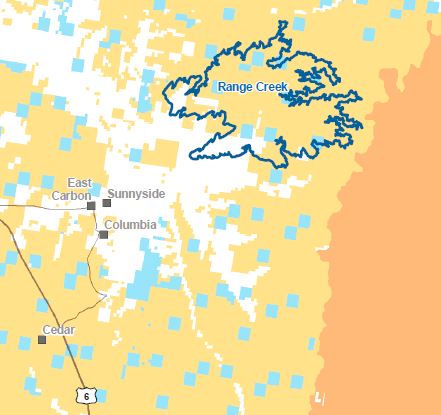
The HMA is managed for wild horses and burros, and is subject to permitted livestock grazing.  It covers 148,884 acres and has a combined AML of 202, for an aimed-at population density of 1.36 animals per thousand acres.

Seven Troughs HMA Map-1

The news release said the burros were leaving public rangelands and crossing roadways in search of food and water but did mention any such problems for cattle and sheep.

Gather stats and daily reports will be posted to this page.

Another Reader Blasts Stewart and Lee’s Letter

Refer to this letter, posted today by St. George News in response to the letter of 05/17/19 by Rep. Chris Stewart and Sen. Mike Lee of Utah.

“Overpopulation is a concocted crisis.  It is wrongful to take wild horses from the range and inject them with chemical sterilants because the rationale for doing so – overpopulation – is fake.”

RELATED: Reader Pens Rebuttal to Stewart and Lee’s Letter.

Journey to Marietta

Off-road trip to the Marietta Wild Burro Range by kingcidtravels.

The designation of ‘Range’ means the area is managed primarily for wild burros in accordance with the WHB Act.  It is the only WBR in the western U.S.

There are three ‘Ranges’ for wild horses in the western U.S.  Many of the remaining areas—which were set aside for wild horses and burros—are managed primarily for domestic livestock, a twisting of the law by the BLM to pacify the public-lands ranchers.