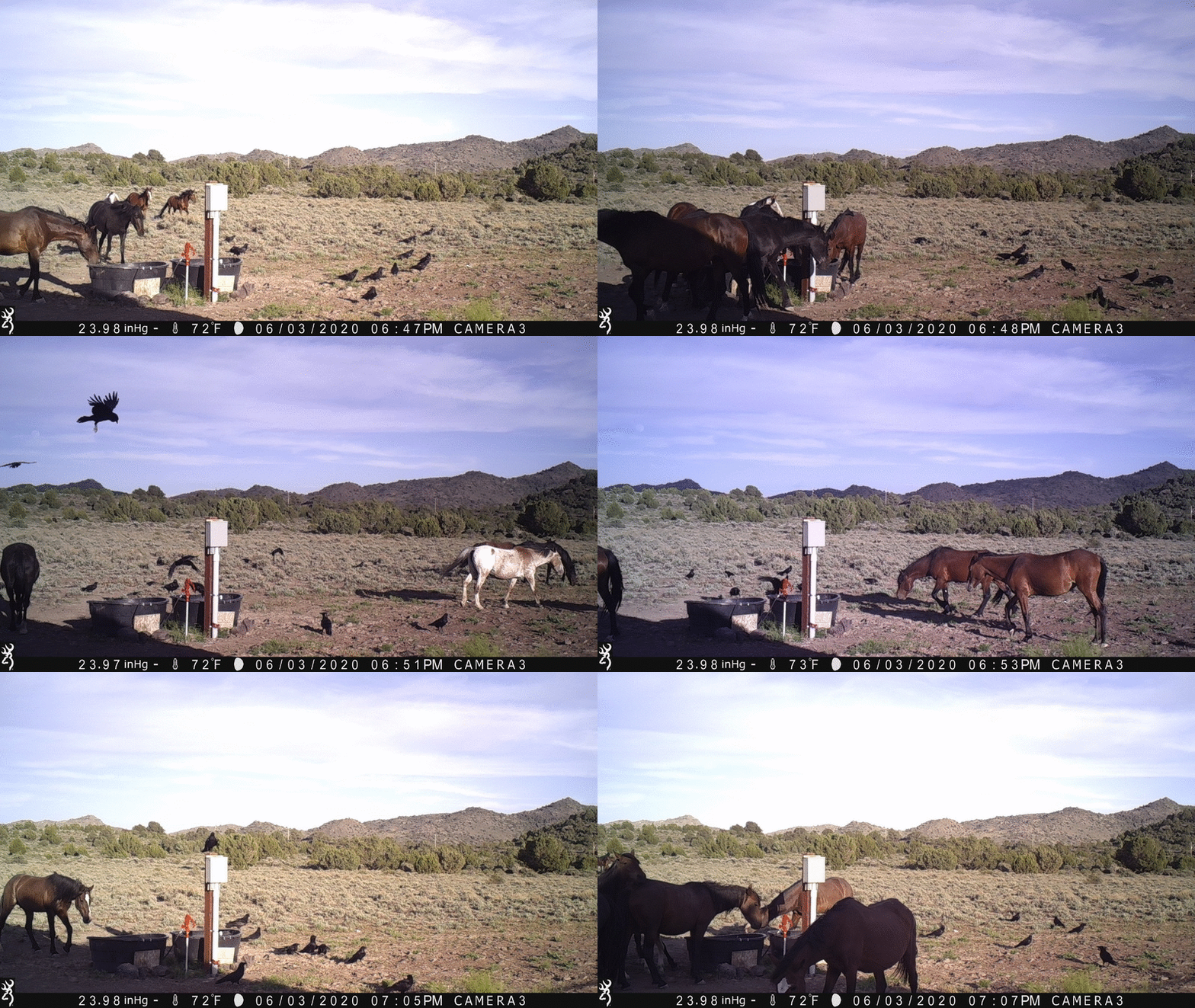
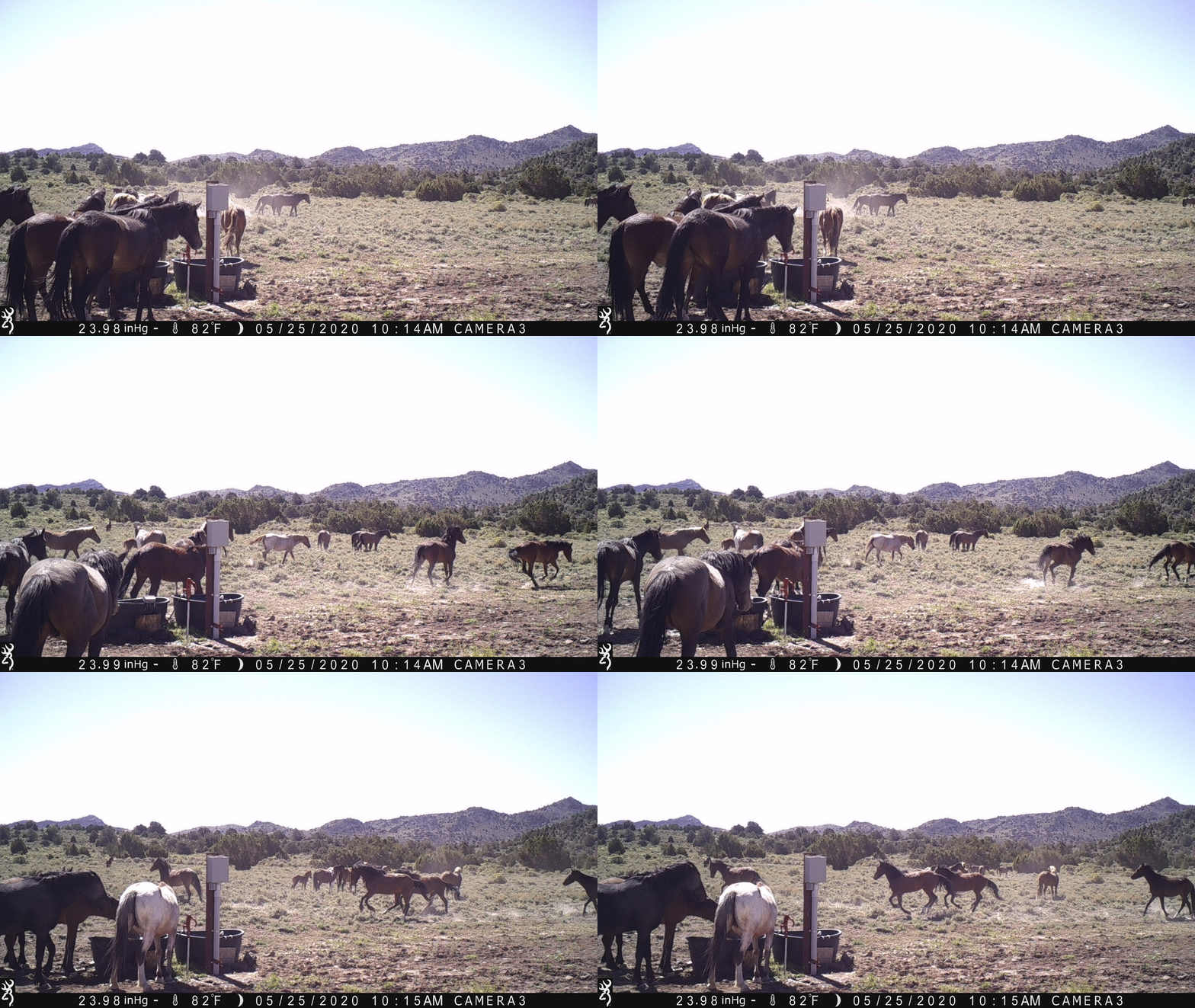
No!

Yesterday I was asked by one of the Virginia Range darters if they could ply their trade on my property.  No unfair advantage or anything.

When the project was announced a year ago, it was to occur on land owned by Blockchains LLC in the Tahoe Reno Industrial Center.

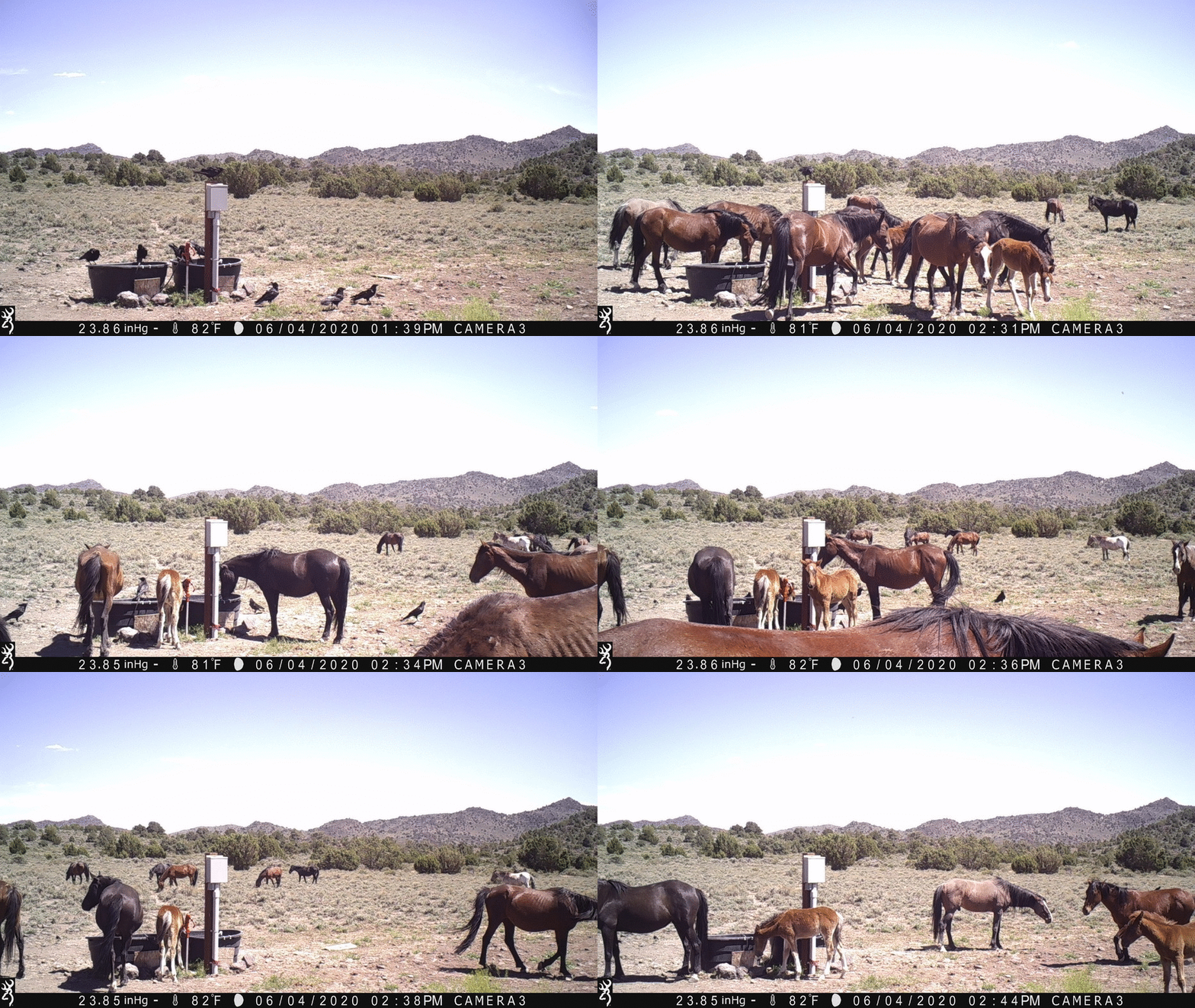
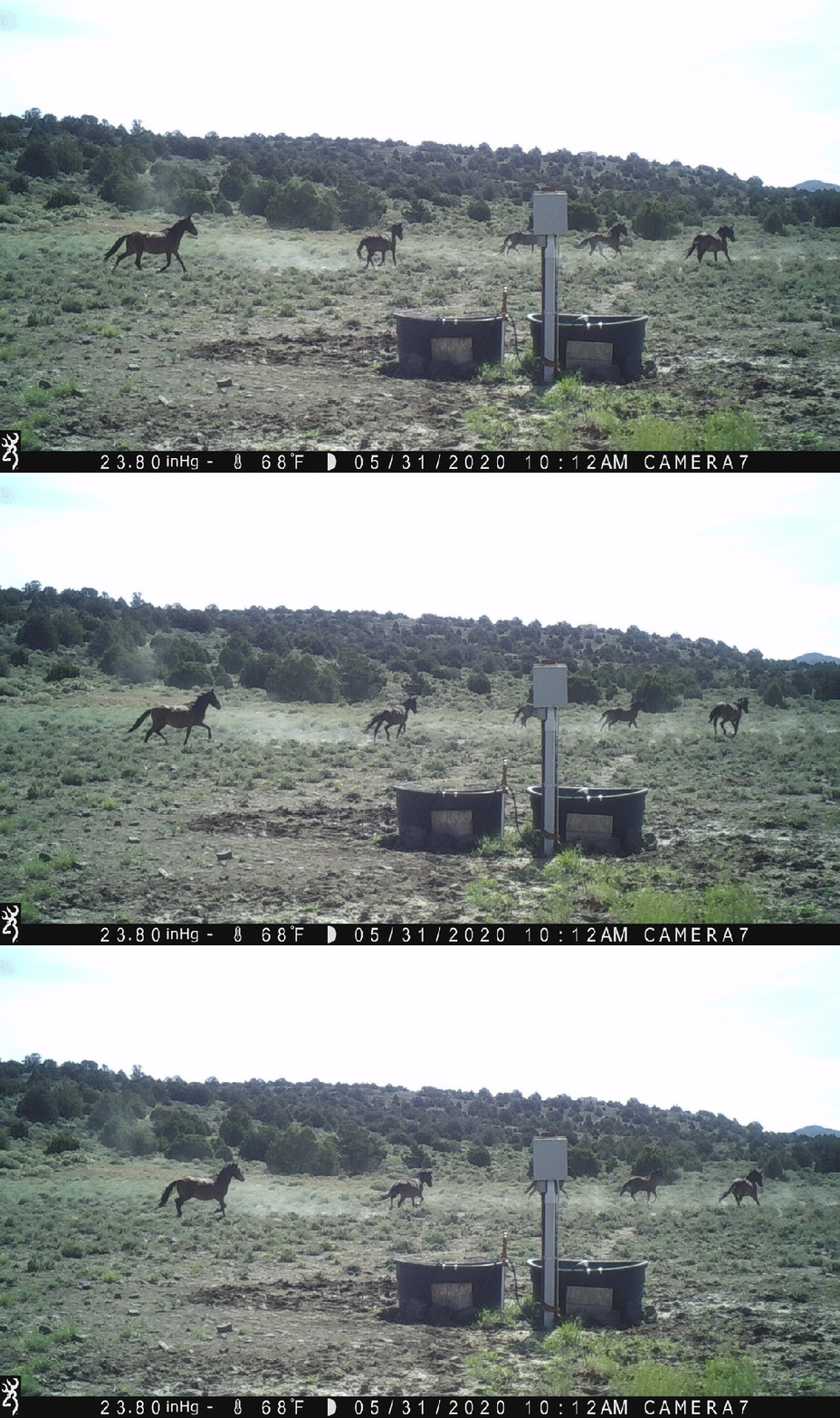
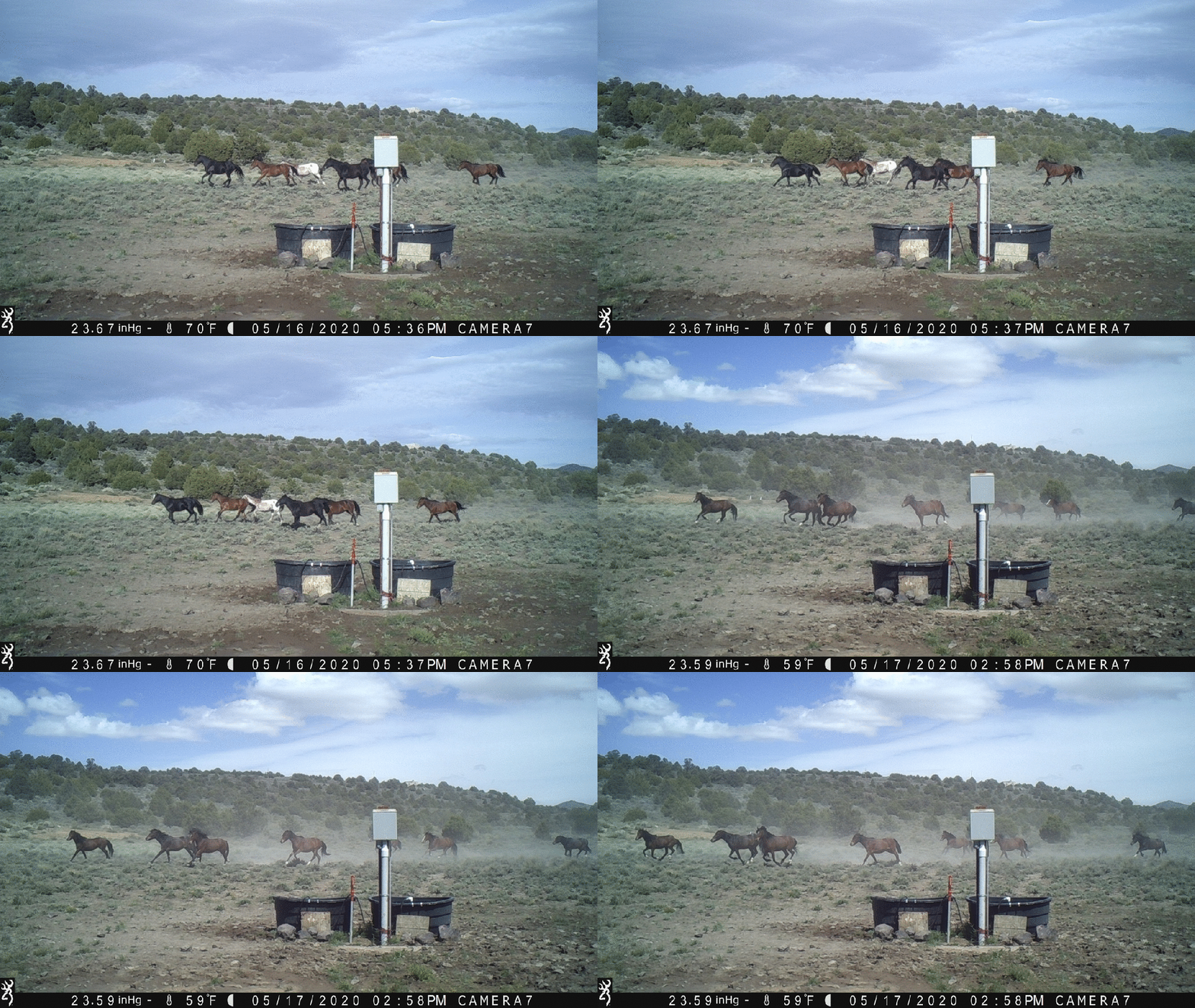
But apparently it has morphed into mass targeting of all wild horses across the Virginia Range, which is held up as a model of success.  Trailcam photo taken 05-15-20.

No! 05-15-20

‘Path Forward’ Sob Story

Look at the photos on page 25 of the new strategy for controlling wild horse and burro populations on western rangelands.  You’re supposed to conclude that the changes were due to free-roaming horses.  Wildfires, droughts and overgrazing were not involved.

Path Forward Sob Story-1

Why worry about forage and nutritional values?  The horses take what they can get.

Zoom in on the storyboard.  The photos were taken on the Spruce Allotment, which intersects the Spruce-Pequop HMA.

The tragedy is not that the horses are suffering from malnutrition, but that the land is now less useful to the poor ranchers.

RELATED: Strategy for Implementing ‘Path Forward’ Sent to Congress.

Havasu Roundup Pending

BLM will remove 120 wild burros from the Havasu HMA starting this month, because they are damaging private property.  The operation, not announced on the BLM news page, will be carried out with bait traps and will not be open to public observation.

The HMA covers 450,790 acres in western Arizona, with land on both sides of the Colorado River.  The AML is 166 wild burros, equivalent to 83 wild horses.

The stocking rate allowed by plan is equivalent to 0.2 wild horses per thousand acres, compared to a target rate of one wild horse per thousand acres across all HMAs.

Havasu HMA Map-1

Captured animals will be taken to the off-range corrals in Florence.

Gather stats and daily reports will appear on this page.

BLM did not indicate if any resources on the HMA had been diverted to other users of public lands.

As noted last month, stocking rates below 1.0 may denote large percentages of resources assigned to privately owned livestock.  The environmental assessment for management actions on the HMA would have to be reviewed to find out if that’s the case.

Cibola-Trigo Nuisance Roundup in Progress

Bait trapping began April 16.  To date, 30 burros and 25 horses have been captured, with one death reported.  No details were given.  The goal is 35 burros and 40 horses.

The operation, not announced on the BLM news page, was necessitated by animals that were damaging private property and creating a safety hazard along roadways.

The HMA covers 179,000 acres in southwestern Arizona.  The AML is 165 wild burros, equivalent to 83 horses, and 150 wild horses, for an aimed-at stocking rate of 1.3 wild horses per thousand acres.  The target stocking rate across all HMAs is one animal per thousand acres.

Cibola-Trigo HMA Map-1

The roundup is not open to public observation.  Captured animals have been taken to the off-range corrals in Florence.

The pre-gather population was estimated to be 616 wild burros and 274 wild horses.

The report did not indicate if any resources on the HMA had been diverted to other users of public lands.

Big Summit Horses Get Short End of Stick

The Forest Service announced last month that there were too many wild horses on the Big Summit WHT and that the land was deteriorating as a consequence.

A new approach is needed “…to ensure wild horses are managed in a thriving natural ecological balance with other uses…,” according to the Environmental Assessment for the new management plan (page 11 in the pdf file, emphasis mine).

The high end of the AML would be reduced from 65 to 57 under the proposed action, limited mostly by the availability of winter forage.  The low end would drop from 55 to 12, opening the door to population control measures such as genetic dilution, sex ratio skewing and contraception.

The WHT contains 25,434 acres.  The current AML yields a stocking rate of 2.6 wild horses per thousand acres.  The stocking rate under the proposed AML would be 2.2.

The 57 horses allowed by plan would require 684 AUMs per year.

The horses share the land “…with wildlife and seasonally with domestic sheep; there are no permitted cattle,” according to page 10 of the EA.

The WHT intersects one grazing allotment, which is managed for two pastures.  Table 21 supplies the acreage, forage allocations and grazing seasons.  Map is on the next page.

Approximately 9,000 allotment acres fall outside the WHT.  The WHT lies almost entirely within the allotment.  Table 21 doesn’t give the percentages of the pastures inside the WHT so they were estimated to be .738, which makes the allotment acreage falling within the WHT is almost as large as the WHT.

Big Summit Venn Diagram-1

Herd sizes and stocking rates for horses can’t be compared directly to those for sheep, at least from a resource viewpoint, so cattle will be used as a proxy.  The forage demand of one wild horse is said to be equivalent to that of one cow/calf pair.

Big Summit Calcs-1

The stocking rate allowed by plan on the WHT is 19.3 cow/calf pairs per thousand acres (490 ÷ 25,415 × 1,000), compared to 2.2 wild horses per thousand acres.

The 57 wild horses allowed by the new management plan represent 10% of the grazing animals on the WHT during the summer season (57 ÷ [57 + 490] × 100).

The horses receive 29% of the forage, with the balance going to livestock.  These figures are compared in the following charts.

Big Summit Charts-1

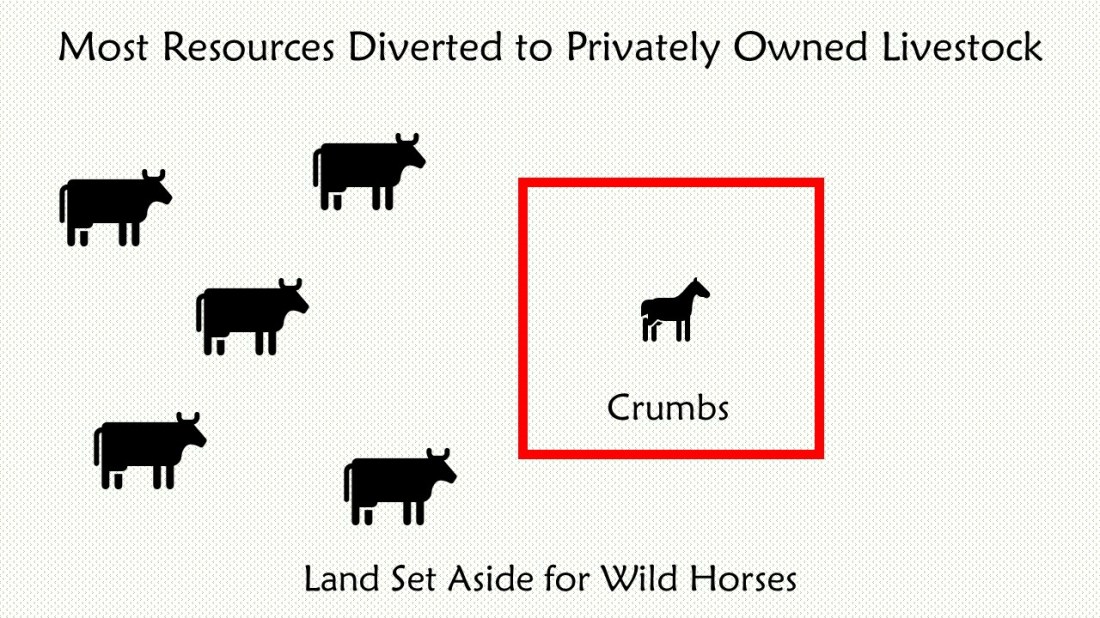
The problem is not lack of winter forage but scarcity of summer forage.  The horses can’t put on enough weight for the winter and their numbers have to be carefully monitored because most of their food has been diverted to privately owned livestock.

Never mind that the land was set aside for the horses.

The population controls lock the pattern in, guaranteeing the problem goes on forever.

RELATED: Comments Invited on Changes to Big Summit Management Plan.

Two Foals Exit Virginia Range

A report posted yesterday by Horse & Man said one of them received no milk and the other was abandoned.  But wait—great news—they’re going to a sanctuary!  Awww….

What are they supposed to eat?  Who’s going to teach them how to be horses?

Wild horses coming off the range is never good news.  The cases were reported by “volunteers with the American Wild Horse Campaign,” according to the story.

The Virginia Range is a large area, about 450 square miles.  What were those volunteers doing out there?  Darting mares with contraceptives?  Were the foals casualties of their ill-conceived program?  None of this was mentioned in the report.

We know from Assateague Island that PZP produces unnatural sex ratios, high mortality rates in stallions and slow return to fertility when treatments are stopped.

We also know from the Virginia Range that it can result in barren mares stealing foals, pregnant mares aborting foals and abscesses at the injection area.

But don’t worry, it’s safe, because the PZP zealots said so.

New Twist in Rock Springs RMP Amendments?

Ranchers in the Wyoming Checkerboard don’t want any wild horses on their land but want to graze as many of their animals as possible on the horses’ land.  Sound familiar?

Now, the largest private landowner in the area may be interested in selling its property to the state of Wyoming, according to a guest column appearing today in Horse Nation.

RELATED: The Other Rock Springs RMP Amendments.