
The court appearance was set for yesterday, according to a story by the Sacramento Bee.
Category: Range
On the range
Hard to Call Them Wild
This video, filmed in the Apache-Sitgreaves National Forests, east of the Heber WHT, includes remarks about the Salt River horses, a herd that’s being ruined by the local advocacy group.
RELATED: Saving the Salt River Horses by Getting Rid of Them.
Mustang Monday
On the Onaqui Mountain HMA with Infinite Explorers.
Satellite Calibration Activities Near Pancake HMA?
A notice in the Federal Register dated April 29 segregates approximately 23,000 acres from all forms of appropriation under the public land laws, including mining, mineral leasing and geothermal leasing for a period of two years, pending an Environmental Assessment that will analyze the effects of a proposal by the National Aeronautics and Space Administration.
The project area is in the Railroad Valley, 80 miles northeast of Tonopah, NV, according to a BLM news release posted yesterday.
The announcement did not explain ‘satellite calibration.’
The area of interest is on the south side of Highway 6, based on the townships and ranges given in the Federal Register and a map in the BLM Land Records search tool.
The grid lines mark off parcels of approximately 36 square miles. Hover over each one in the BLM map to see its coordinates.
The withdrawal would include a portion of the land in the two parcels.
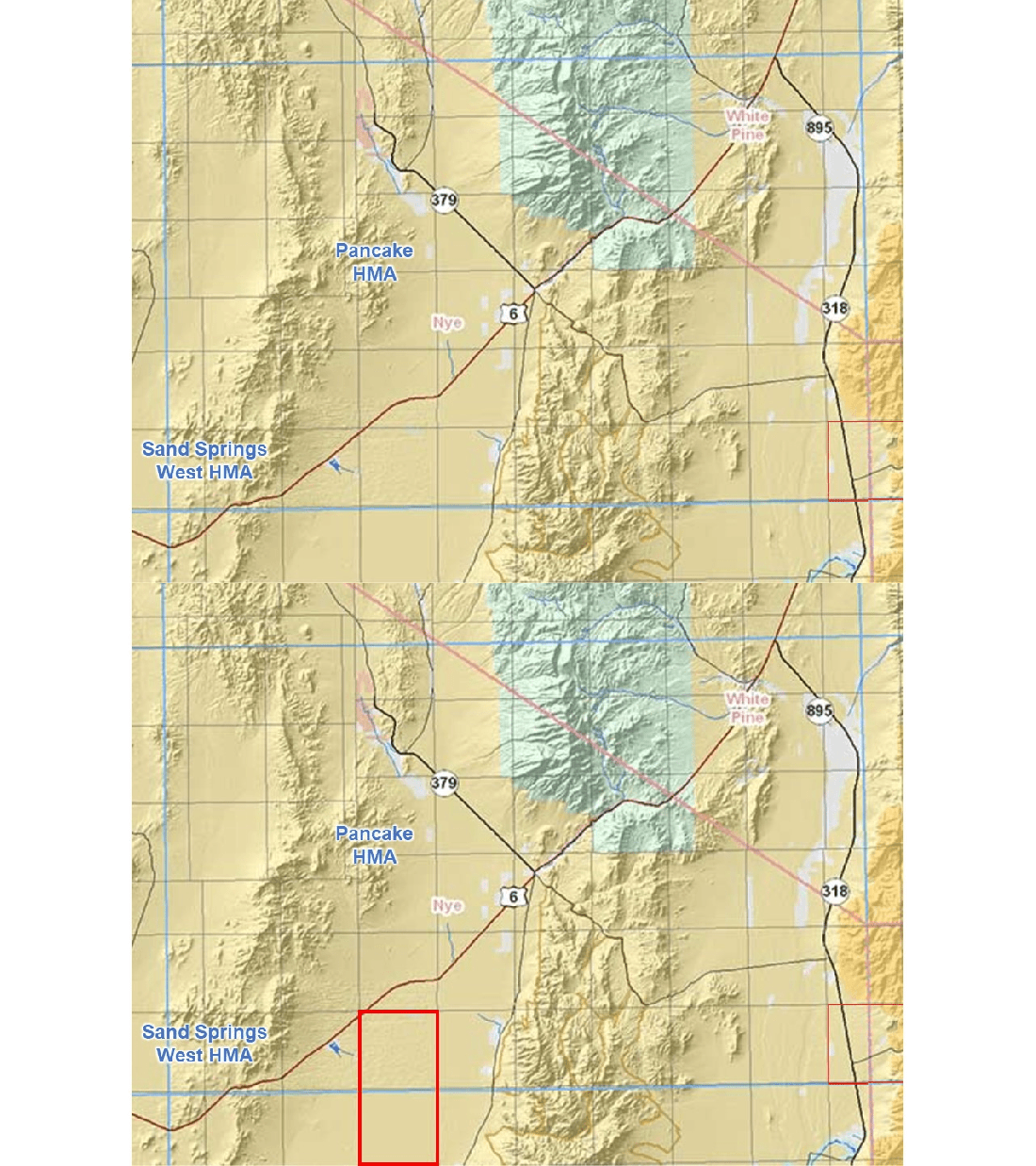
The news release did not say if the area would be off limits to wild horses and livestock.
Calibration usually involves the measurement of known quantities, called ‘standards,’ followed by adjustment of the instrument to bring the measured values in line with the known values.
BLM Monitoring Dry Conditions in Northern California
Public lands may not support the usual numbers of cattle and sheep this year and ranchers have been advised that early removal could be necessary.
BLM staff will also be looking at resource availability for wild horses and burros, and assessing the potential for wildfires, according to the news release.
Not All Range Improvements Built by Ranchers
Wild horses have a keen nose for water, which includes sources underground, according to a report published yesterday by National Geographic. Water holes created by the horses also benefit wildlife.
The story refers to them as an introduced species, suggesting that they’re not supposed to be there, but reintroduced might be a better choice.
A Wikipedia article about the Banker Horses provides another example.
Is the behavior limited to the wild?
This hole was dug by adopted horses in their corral. Water is added manually for them to play in and curb their interest in digging further.

Shackleford Herd Grows by One
The filly was born earlier this week, according to a report by OBX Today.
The story did not indicate if breeding patterns are determined by the horses.
Wild Horses Living in Balance with Their Environment?
A letter to The Nevada Independent suggests that wild horse herds will not grow beyond the capacity of their environment, so there is no need for sterilization, fertility control and other ‘solutions’ proposed by the government.
The idea is that growth rates taper off when the herds have filled their ecological niches.
What would trigger the change in behavior?
Would the horses sense that the limit has been reached when their habitat is dominated by livestock or would they make the determination based on their own kind?
Radio Program Considers Recent Events in the Wild Horse World
Refer to this story by KNPR of Las Vegas, which includes a 45-minute audio segment with invited guests from the University of Nevada and Willamette University, and a caller from eastern Nevada.
Topics include the demise of SJR3, the letter to Haaland about livestock grazing on HMAs and the attempt to market the Virginia Range horses to job seekers.
Burning Man Scrubbed

‘Path Forward’ for Idaho Wolves Sent to Governor
The measure, favored by agricultural interests, will remove up to 90% of the animals from the state, alleviating attacks on cattle, sheep and wildlife.
Ranchers have claimed hundreds of thousands of dollars in losses due to wolf attacks, according to a report published today by AP News.
The story did not indicate if the animals would be pursued on public lands.
RELATED: Grazing Program Ancillaries.
Bighorns and Broomtails on the San Rafael Swell
Both species are threatened by public-lands ranching, not necessarily in this area but across the west in general. The horses may be attached to the Muddy Creek HMA.
Thanks to Backpacker Diaries for sharing the video.
RELATED: Wild Burros of San Rafael Swell.
Public Review of Rock Springs Draft EA Ends This Week
Comments will be accepted through April 30.
The project may be a forerunner of the Rock Springs RMP Amendments, which will finish the job by zeroing out most of the HMAs involved.
The leading beneficiary of the effort is the Rock Springs Grazing Association.
RELATED: Comments Invited on Draft EA for Rock Springs Gather Plan.
Mustang Monday
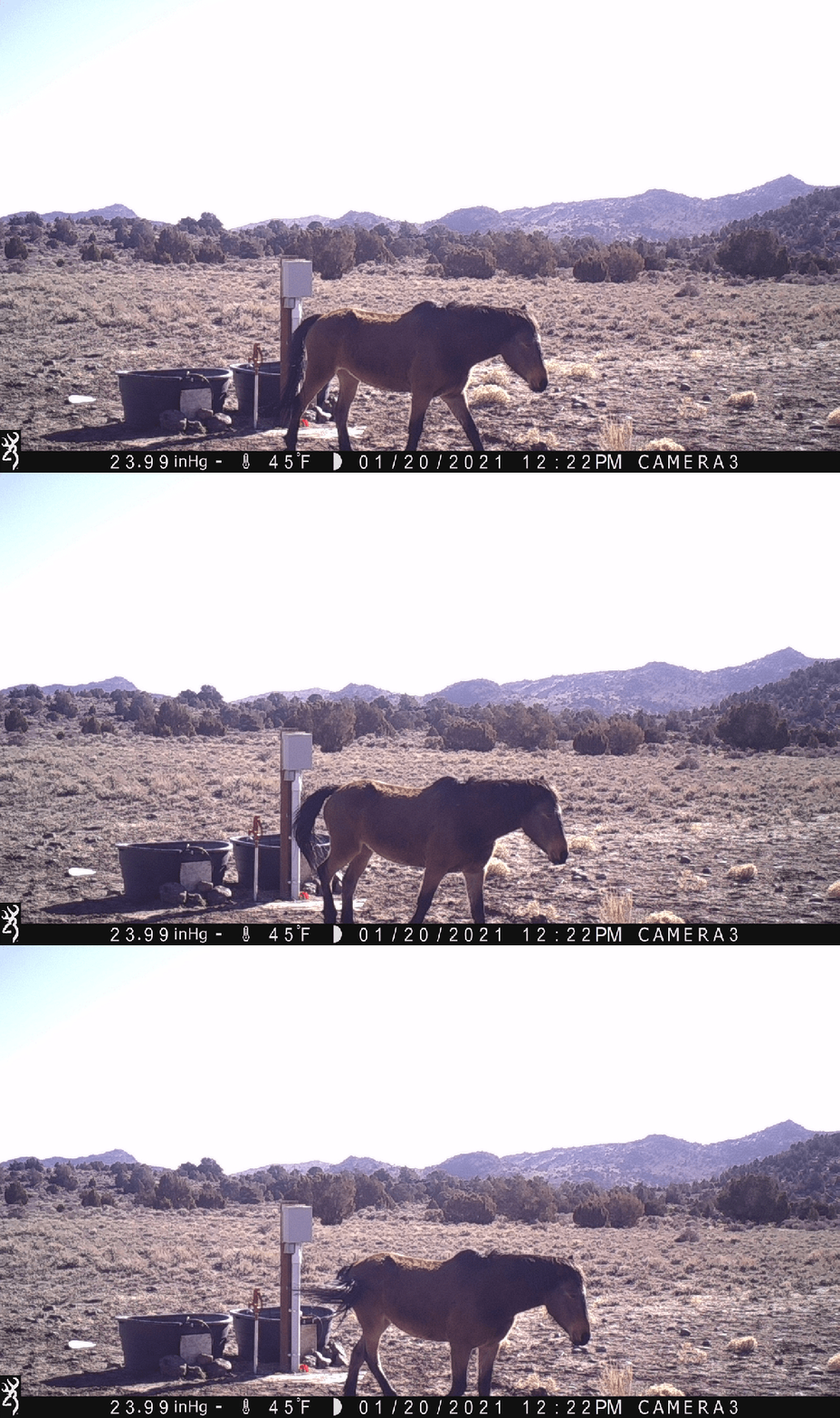
Snaking Near Water Tanks

What if ‘Hopeless’ Was Born on BLM Lands?
The Draft EA for resource enforcement actions in the Calico Complex suggests that he’d have to be looking over his shoulder every day, not just during roundups (page 25 in the pdf): “BLM does euthanize old, sick or lame animals on the range when such animals have been identified. This occurs on an on-going basis and is not limited to wild horse gathers.”
RELATED: ‘Hopeless’ Seen at Water Tanks.
‘Hopeless’ Seen at Water Tanks
If he was captured in a roundup, he’d be put down for a pre-existing condition with a hopeless prognosis for recovery. Left alone, he survives.
RELATED: ‘Hopeless’ Still in the Area.
Virginia Range CoyoteCam
Definitely a threat to new foals, although there won’t be many of them this year, thanks to the ‘advocates.’

Higher Elevations Get Most Precipitation in Great Basin
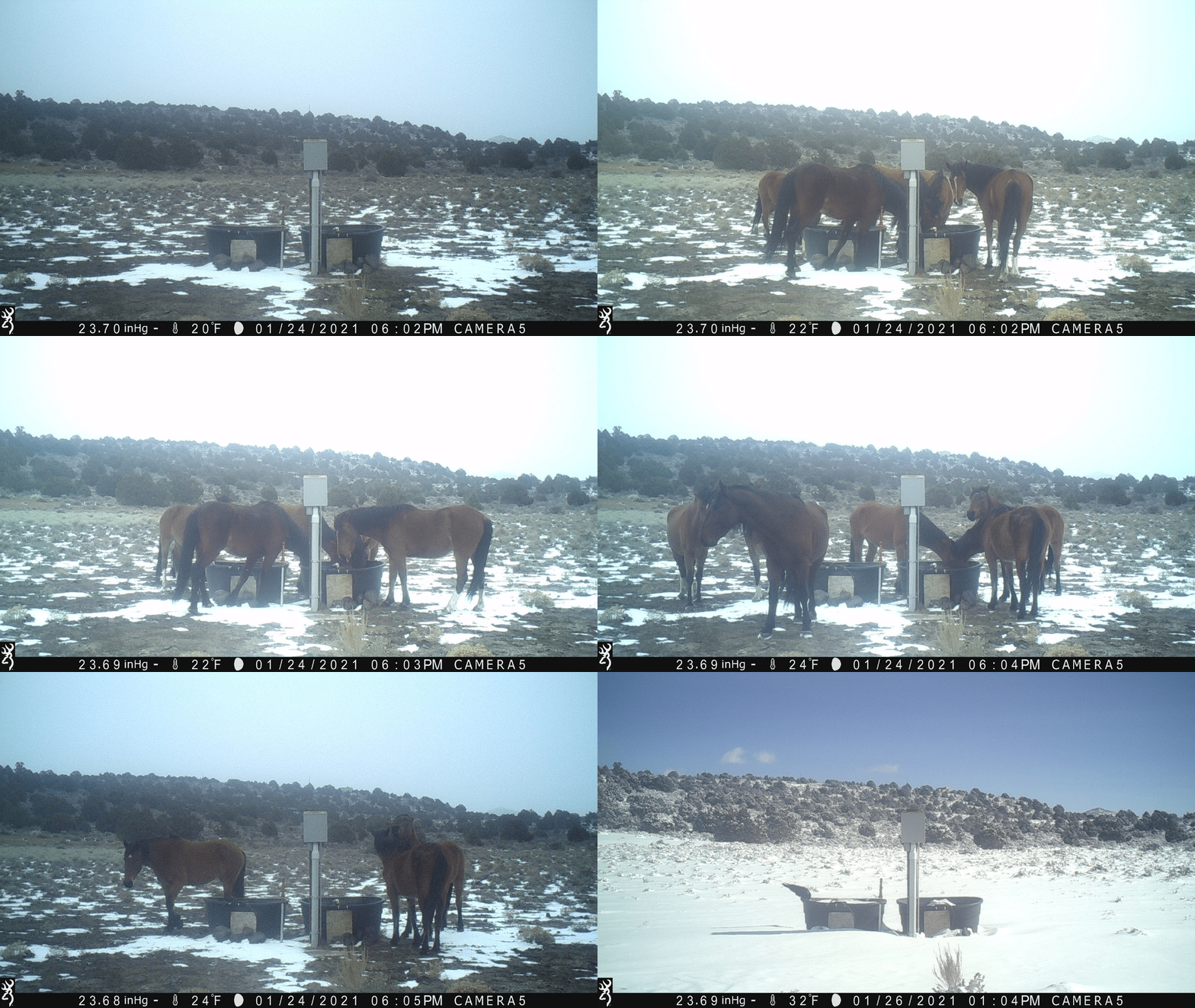
A few horses have appeared at the water tanks over the winter, even though the water supply has been shut off. The tanks may contain some rainwater or melted snow.
Decision Reached in SoCal Burro Removal Plan
The Decision Record, issued today, authorizes Alternative 1 in the Final EA, subject to a 30-day appeal period.
The initial roundup, to be carried out with helicopters, will occur in late May, according to a BLM news release. The operation will target up to 939 animals.
The Finding of No Significant Impact, not applicable to the burros, suggests that little if any collateral damage is expected.
RELATED: Comments Invited on Draft EA for SoCal Burro Removals.

