Cutting the Virginia Range Herd Down to Size

The Virginia Range is an outlier.

Not because most of the land is privately owned or that the horses are managed at the state level, but because of the stocking rate.

The article in Tahoe Quarterly noted that a survey conducted in early 2018 (when the Nevada Department of Agriculture wanted to transfer ownership of the horses to a private entity) found approximately 2,900 wild horses in the area.  The article also noted that the Virginia Range covers around 300,000 acres.

Those numbers yield a stocking rate of roughly ten wild horses per thousand acres.

NDA says the range can support 600 horses at most, with 300 horses representing the ideal amount, according to the story.

That last figure yields a stocking rate of one wild horse per thousand acres, in line with the target rate for wild horses on federal lands.

Now you have a driver for a fertility control program—in lieu of roundups.

The largest landowner in the area, Blockchains LLC, instigator and would-be beneficiary of the Storey County autonomous zone, pushed for the darting program.

And the turncoats at AWHC were only too eager to help.

One woman, commenting on the use of PZP in a Facebook page for the Fish Springs horses, located a few miles south of the Virginia Range, said “Hey, look at it this way, they get more sex without the consequences!”

This is what passes for advocacy in the wild horse world.

You can’t have government telling the people that the land can only support one wild horse per thousand acres when the Virginia Range is carrying ten.  Not when you’re biased in favor of ranching interests.

The program is a disgrace and an insult to Velma’s legacy.

RELATED: Virginia Range 70 Years Later.

Dark Horse in Rock Springs RMP Amendments?

The Rock Springs Grazing Association, petitioner in the consent decree and instigator of the RMP amendments, owns some of the land it uses in the Wyoming checkerboard and leases other parcels, originally from the Anadarko Corporation, which was acquired by Occidental Petroleum.  Occidental sold the land to Orion Mine Finance in 2020.

What would happen if Orion told RSGA that the land is designated for wild horses?

RELATED: Who’s Buying Occidental’s Checkerboard Properties?

Virginia Range 70 Years Later

The Virginia Range is ‘ground zero’ in the wild horse preservation movement.

Today, it is home to the largest darting effort in the country, sponsored by the ringleader and standard-bearer of the wild horse prevention movement, the American Wild Horse Campaign.

An undated article appearing in the winter 2020-2021 edition of Tahoe Quarterly leads the reader from Velma’s first encounter with the mustangers in 1950 to the current fertility control program, which has no adverse effects according to an adherent interviewed for the story (see trailcam photos below).

Along the way, it considers rangeland health, including comments by J.J. Goicoechea, a proponent of the rancher-friendly ‘Path Forward,’ a plan for achieving and maintaining AMLs on public lands inhabited by wild horses.

That means eighty to ninety five percent of the forage going to the ranchers.

Western Horse Watchers was able to find two grazing allotments associated with Mr. Goicoechea and his father, Pete, one managed by BLM’s Tuscarora Field Office and the other by the Bristlecone Field Office.

The Allotment Master reports [Tuscarora | Bristlecone] show both in the Improve category, with the Goicoecheas holding most of the active AUMs in each allotment.

RELATED: Allotment Categories Explained, The Experiment Is a Success!

Handiwork of PZP Zealots

Usurper Condemns ‘Seizure of Power’ in Burma

You can’t make this stuff up.  The one-horse pony forces his way into office, then criticizes the Burmese military for doing the same thing.

Talk about the pot calling the kettle black.

The stories have common elements.

  • Election fraud
  • Government overthrow
  • State of emergency

The voters did not remove Donald Trump from office, they affirmed his second term.

Nobody’s doing anything about it.  You’re not even allowed to talk about it.

Just like the wild horse world.

Be a good advocate.  Don’t talk about privately owned cattle and sheep.  Forget about resource allocations and management priorities on western rangelands.

Keep pushing for contraceptives, sanctuaries and relocation of wild horses into remote wilderness areas, so their food can be sold to public-lands ranchers.

Only Government Can Surpass Impact of PZP Zealots

Everybody wants to bash the BLM for mismanagement of America’s wild horses and burros, and rightly so.

Eighty percent or more of their food diverted to public-lands ranchers, with numerous roundups and growing numbers in long-term holding as a consequence.

Nobody wants to point a finger at the PZP zealots, and the so-called advocacy groups, who rank #2 in terms of their impact on those animals.

Nobody except Western Horse Watchers.

RELATED: WHB Shooters Can’t Match Impact of PZP Zealots.

Holy Grail of Wild Horse World?

It would be skeletal remains between 500 and 10,000 years old, the timeframe when, supposedly, there were no horses in North America.

The wild horse narrative would fall to the ground.

One such discovery was the subject of an episode several years ago of the now-defunct Mustang Matters radio program hosted by America Matters Media.  The remains were found during road construction in Nevada and were quickly disappeared.

Classifying horses as an indigenous species would change many things, especially on western rangelands.

RELATED: Wild vs. Feral: Are America’s Horses a Re-Introduced Species?

Comment Period for Surprise Complex EA Almost Over

Public input on the Draft EA will be accepted until February 14.

Concerns about resource allocations and management priorities, although valid, should not be submitted, as they are outside the scope of the project.

If you want to help America’s wild horses, don’t focus on the horses.

The PZP zealots focus on the horses.

A gather plan is too late, too far downstream, to be of any benefit to these animals.

You have to look upstream in the management process.

RELATED: Management Priorities at Surprise Complex.

Binge Grazing at Piceance HMA

Privately owned livestock receive 2.4 times as much forage as wild horses and consume it in one tenth of the time.

The stocking rate allowed by plan for cattle is 23 times higher than that for the horses.

A similar pattern was seen at the Challis HMA in Idaho.

Piceance has numerous oil and gas wells dating back to the 1950s, according to the discussion on page 82 of an EA from 2011.  BLM has photographs of horses napping on well pads during a busy day of industry work and traffic.

The EA did not indicate how many wild horses have been shot dead or rounded up and taken to rendering plants at the behest of oil companies.

RELATED: Piceance Wild Horses Get Short End of Stick.

Horses of the Autonomous Zone

Did somebody take somebody on a hunting trip?

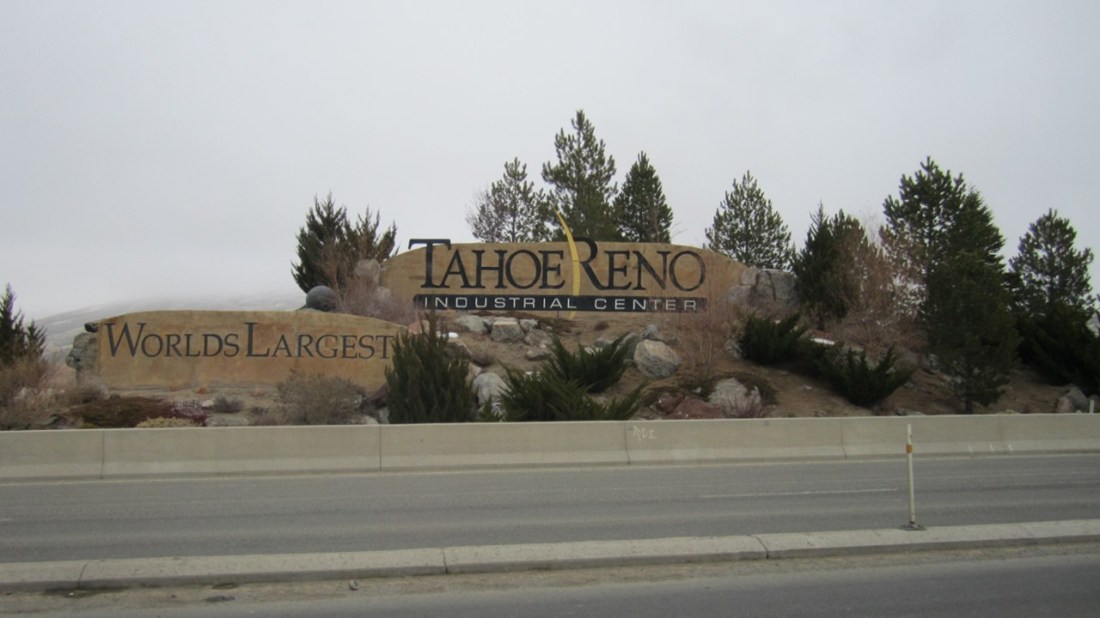
A report by the Nevada Independent says the founder of Blockchains LLC, owner of 67,000 acres in the Tahoe-Reno Industrial Center, has floated a plan to create an autonomous zone in Storey County, home to many of the Virginia Range mustangs.

The concept, circulated in the legislature, would apply to developers who own at least 50,000 contiguous acres of undeveloped land.

Last month, the governor expressed support for the idea in his state of the state address.

Why not set the limit at 75,000 acres?  Why not 100,000?

Because it would render the applicant ineligible.

Totally self serving.

RELATED: PZP Darter’s Convention at Board of Agriculture Meeting.

TRIC Sign-1

New Allotment Category?

It’s not fair that the poor ranchers take all the heat for substandard conditions on western rangelands.

Western Horse Watchers proposes Category ‘D,’ for Deplorable, where most of the problems can be blamed on animals associated with freedom, ruggedness and self reliance.

Areas with a majority of Category D allotments would be referred to as baskets of deplorables.

RELATED: Allotment Categories Explained.

Public Service Announcement

If you’re new to the wild horse world, you may not know the difference between an AUM and AML but you need to get up to speed on this stuff as soon as possible.  These are not the stated definitions, they reflect current management practices.

AML (Appropriate Management Level) – The number of horses or burros an area can support after diverting most of the resources to privately owned livestock.

HA (Herd Area) – An area identified for wild horses or burros in 1971 but no longer managed for them (AML is zero).  Now managed almost exclusively for livestock.

HMA (Herd Management Area) – Usually a subset of an HA, an area identified for wild horses or burros in 1971 but now managed primarily for livestock.  Referred to as a Wild Horse Territory (WHT) or Wild Burro Territory (WBT) on Forest Service lands.

WHR (Wild Horse Range) – An area managed principally for wild horses, per the original statute, now accounting for less than two percent of areas where wild horses are still allowed by plan.

AUM (Animal Unit Month) – The amount of forage consumed by one cow/calf pair, one wild horse, two wild burros or five domestic sheep in one month.

RMP (Resource Management Plan) – A document that specifies management priorities on public lands and allocates resources accordingly.  AMLs derive from these plans.

EA (Environmental Assessment) – A review of the expected consequences of a proposed action, along with those of one or more alternatives, usually carried out before anything happens in the field.  Roundups enforce the resource allocations of RMPs—they cannot not change them—so comments involving forage distribution on EAs for roundups are usually rejected.

EIS (Environmental Impact Statement) – A more in-depth analysis of a proposed action and its alternatives, usually reserved for major changes to the way public lands are managed.

The number of wild horses or burros an area can support, after taking back the resources assigned to privately owned livestock, is usually referred to as the True AML on these pages and represents the sum of the animals allowed plan (AML) and the animals displaced from their home range by domestic livestock, frequently climbing into the thousands.

RELATED: So You Want to Help America’s Wild Horses?

Pancake Gather Plan

WHB Shooters Can’t Match Impact of PZP Zealots

Almost four dozen wild burros lost at the Clark Mountain HA in 2020 and over two dozen wild horses lost at the Heber WHT over the past two years, with plenty of outrage.

But when the PZP zealots get rid of an estimated 600 wild horses in the Virginia Range, there’s high fives and press conferences.

What would be the reaction if they were captured by helicopters?

RELATED: Oil and Mining Companies Can’t Match Impact of PZP Zealots.