His supporters said the move was cruel and costly, arguing they had a better way (to get rid of him).
Your host reached out for comment but did not get an answer.
RELATED: One-Horse Pony Lays an Egg?

Western Horse Watchers Association
Exposing the Hypocrisy, Lies and Incompetence of the Wild Horse Advocates
Opinion
His supporters said the move was cruel and costly, arguing they had a better way (to get rid of him).
Your host reached out for comment but did not get an answer.
RELATED: One-Horse Pony Lays an Egg?
They’re now claiming they can apply the pesticide as long as they want with no ill effects.
This, of course, is to give cover to their darting programs at the Salt River and Virginia Range, now in their sixth year, where they’re quietly trying to convince the bureaucrats and ranchers that mass sterilization is a practical alternative to helicopter roundups.
If you think they’re being dishonest, here are three steps you can take to cure your doubt and become one of their supporters:
1. Ignore Jay Kirkpatrick’s warning about long-term use. In a 2012 paper, he said “PZP is designed to bring about short-term infertility and is reversible, if not used beyond five consecutive years.”
2. Disavow the disaster on the Maryland side of Assateague Island, where the herd is still shrinking eight years after the darting program was shut off.
3. Ignore the experience of ISPMB, which demonstrated that Kirkpatrick was correct.
A common denominator in many darting programs is the Campaign Against America’s Wild Horses, a leader in nonmotorized removal.
RELATED: Advocates Discuss Better Way (to Get Rid of Wild Horses).

A Judas Horse, released at 0:10 in this undated video by KTVZ News, draws wild horses into the trap as a helicopter applies pressure from behind.
Not to be outdone, the advocates believe none of this is necessary and the best way to get rid of them is with ovary-killing pesticides.
RELATED: Feeling Betrayed?
The advocates are trying to market themselves as competitors to the legacy contractors.
Their strategy is to sterilize as many mares as possible with PZP, sending the herds into irreversible decline.
To say they’re even remotely associated with Velma would be gross exaggeration of the truth.
RELATED: Foal-Free Friday, Inmates Running the Asylum Edition.
The roundup will likely be over but the advocates will meet at the Rock Springs Off-Range Corrals at 11 AM local time and march to the BLM office according to a story dated July 17 by KGWN News.
Would they stay home if the agency got rid of the horses with pesticides instead of helicopters? Maybe write thank you letters for conserving the herd?
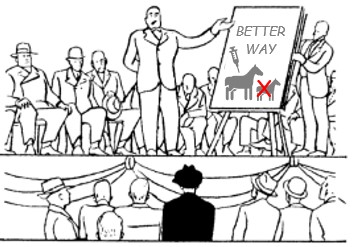
If the pesticide of choice was PZP, would they band together and offer to apply it for free?
RELATED: North Lander Roundup, Day 17.
It’s not in Wyoming, it’s in Nevada, and the plaintiff should be the defendant.
Yesterday, the Campaign Against America’s Wild Horses presented oral arguments in U.S. District Court against the Rock Springs RMP Amendments, according to a news flash distributed by Lucky Three Ranch.
The communiqué said the changes “represent the first time in the 53-year history of the Wild Free-Roaming Horses and Burros Act that the BLM has eliminated entire wild horse herds where sufficient habitat characteristics (i.e., forage, water, space, and cover) exist on public lands,” which is not true.
The agency has a long history of zeroing-out areas identified for wild horses and managing them principally for livestock. The Caliente, Blue Wing and East Pershing Complexes are three examples.
They don’t have enough forage, water, space and cover to sustain wild horses, supposedly, yet roundups are needed to keep the populations in check.
Moreover, the nonprofit, a leader in nonmotorized removal, claimed that, so far, it’s held off the largest wild horse eradication in the history of the Act, but needs your money to continue the fight.
Nonsense. The largest wild horse eradication in the American west is on the Virginia Range, where volunteers with CAAWH are sterilizing the mares with PZP, a restricted-use pesticide that tricks the immune system into attacking the ovaries.
The herd, now at risk of collapse, consists of approximately 3,500 horses, while Divide Basin and Salt Wells Creek contain 1,050 + 1,204 = 2,254 wild horses according to the 2024 population dataset.
Thus, CAAWH and its supporters are responsible for the greatest loss of America’s wild horses, not the BLM.
The judge should take this into consideration as he weighs the testimony of their attorneys.
RELATED: What If the Rock Springs HMAs Were Zeroed Out with Pesticides?
The broadcast premieres on PBS stations in New York, Philadelphia and Miami this month, followed by Los Angeles, Chicago and San Francisco in August according to today’s announcement.
Released in 2020, the documentary appeals to defeatists, pesticide pushers and ranching sympathizers, sometimes referred to as advocates, and a gullible public.
Subscribers to the overpopulation narrative will not go unsatisfied.

It’s probably an isolated case.
Donald Broom is a rancher and Moffatt County Commissioner according to his bio.
He manages Sombrero Ranches, “where he oversees the nation’s largest herd of broke horses, supplying riding stables, movie scenes and outfitters with ridable livestock.”
A search of the Operator Information Report at RAS linked Sombrero Ranches to authorization #0501087.
The Allotment Information Report tied the authorization to West Boone Draw and Thompson Basin, both in the Little Snake Field Office.
The National Data Viewer puts them on the west side of Sand Wash Basin.
The Allotment Master Report puts both in the Improve category.
The Authorization Use Report indicates that most of the AUMs go to domestic horses, with some to cattle.
Broom may not be the owner, but his personal fortune, and the profitability of his employer, may be inversely related to the number of wild horses in and around the HMA.
Thus, they’d want the herd minimized, which may be consistent with the aim of the committee but not the people of Colorado.
Western Horse Watchers does not know if the allotments were always permitted for horses or if Sombrero had to go through the planning process as American Prairie did for bison in Montana.
RELATED: Wild Horse Working Group Will Serve Ranchers Not Horses.

Tell your U.S. representative (you have one) and senators (you have two) to
Tip for building wealth: Don’t give a penny to the advocates. They protect the ranchers, not the horses.
RELATED: Project 2025 Targets America’s Wild Horses and Burros?

Many of the advisors in the Trump administration were rats.
They’re still rats, intent on sabotaging a second administration or advancing an agenda that’s not compatible with conservative principles, so it’s understandable that his supporters would want to screen them out now along with their nefarious ideas.
That’s the goal of Project 2025: To have the right people in the right place with the right ideas, starting on Day 1.
Chapter 16 in the policy agenda covers the Department of the Interior.
It was written by William Perry Pendley, a controversial figure from the first administration and a defender of government dependency and redistribution of wealth, ideas championed by the Left.
On page 9 of the pdf he describes wild horses and burros as western icons.
On page 10 they’re tough issues.
A few paragraphs later they’re an existential threat.
On page 12: “For decades, Congress watched as these herds overwhelmed the land’s ability to sustain them, crowded out indigenous plant and other animal species, threatened the survival of species listed under the Endangered Species Act, invaded private and permitted public land, disturbed private property rights, and turned the sod into concrete.”
“There are 95,000 wild horses and burros roaming nearly 32 million acres in the West—triple what scientists and land management experts say the range can support. These animals face starvation and death from lack of forage and water.”
“This is not a new issue—it is not just a western issue—it is an American issue.”
Nonsense. It’s an issue for a special interest, a select group that profits from cheap feed on government lands.
Wild horses and burros interfere with the process.
“Congress must enact laws permitting the BLM to dispose humanely of these animals.”
Are these the views of the project organizers?
Why do they allow this thinly veiled attempt to push leftist ideals?
Pendley was one of the rats and should not be allowed anywhere near a second Trump administration.
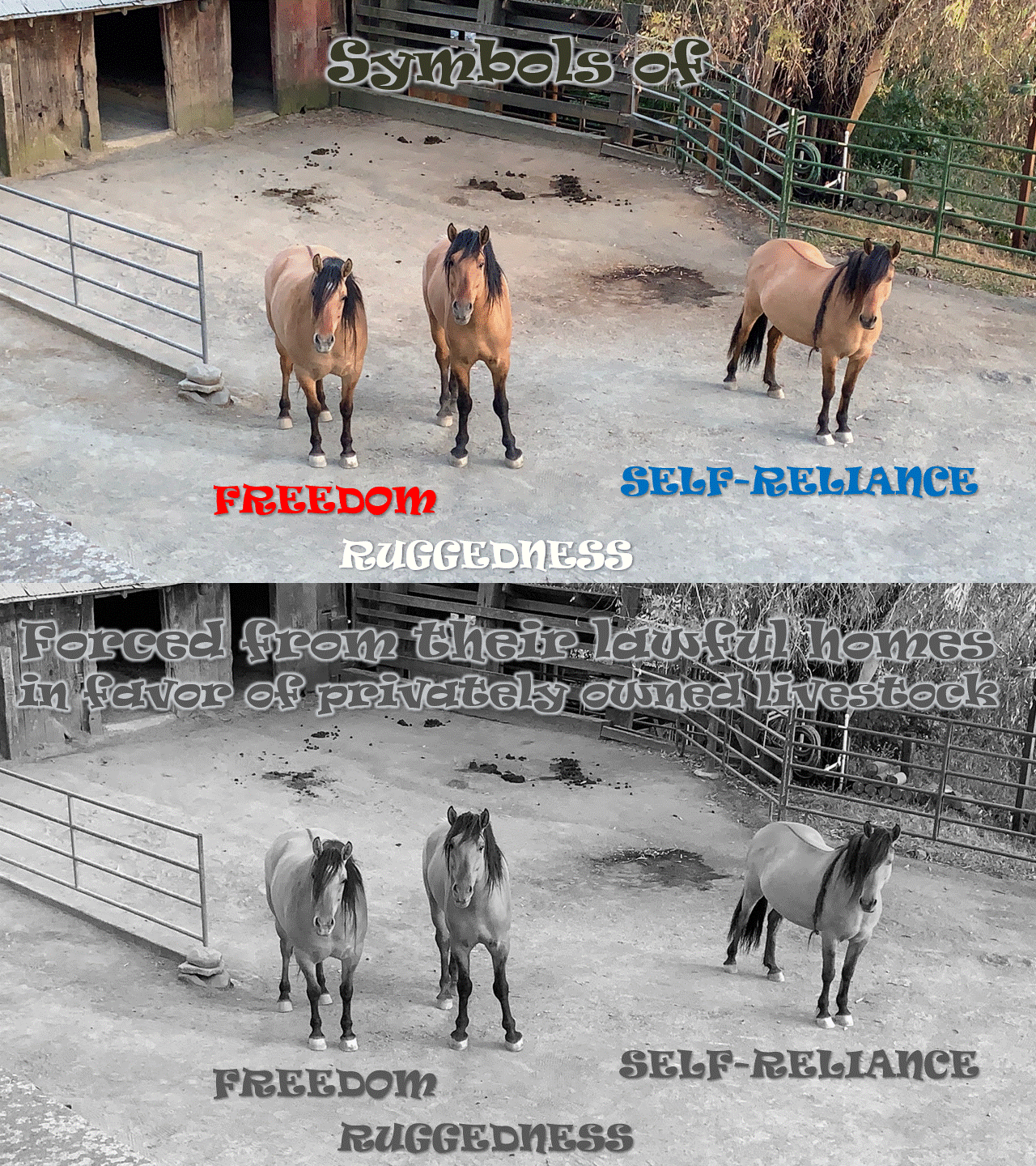
As for the public-lands ranchers, they’ve spent years trying to portray themselves as symbols of freedom, ruggedness and self-reliance.
That image needs to be demolished along with their influence at DOI.
In general, they represent victory for the ranchers and failure for the horses, which explains why the advocates like them.
But there’s one way to turn the outcome around: When they’re on public lands, in repurposed grazing allotments.
The American Prairie decision established a precedent and roadmap.
Thus it is true that wild horses can have principal use of Fourth of July (or any other allotment) as discussed last week.
RELATED: American Prairie Using Leverage to Achieve Conservation Goals.
The Campaign Against America’s Wild Horses, a leader in nonmotorized removal, reported today that 178 mares received 183 doses of PZP during the month, 41 given as a primer and 142 as a booster.
Over the life of the program, which began in 2019, the advocates have pumped 9,514 doses of the pesticide into 2,046 mares, for an average of 4.7 doses per mare.
Since the beginning of the year, 132 foals have been born and 24 died.
The current population is thought to be 3,521, with 302 horses listed as missing, compared to 3,502 with 310 horses listed as missing in May.
The population was 3,519 with 370 listed as missing in April and 3,480 with 353 listed as missing in March.
The Year 6 agreement with NDA has not been posted to the darting resources page.
The Year 5 summary has not been posted to the monthly reports page.
A goal for July is to maximize booster treatments, shrink the herd (and pray for the older horses to die).
Another goal is to hold a darter certification class in Stagecoach, NV.
Not discussed:
The herd on the Maryland side of Assateague Island, where the same pesticide was applied, is still shrinking eight years after the darting program was shut off.
The report will be submitted to the Nevada Department of Agriculture.
RELATED: Virginia Range Darting Update for May 2024.

How much poison has Robin Silver of the Center for Biological Diversity pumped into the Salt River herd?
How many mares has he sterilized?
How much time does he spend praying for the older horses to die?
How many times has he gone on record claiming that PZP does not cause infertility?
How many times has he called the pesticide a vaccine?
How much money has he given to the Campaign Against America’s Wild Horses and its surrogate, the Salt River Wild Horse Darting Group?
The real villains in the case are the advocates, not the biologists.
As for genetic diversity, both sides are wrong.
It’s the size of the breeding population that matters, not the size of the herd, and at the Salt River you can count it on one hand. (Refer to Section 4.4.6.3 in H-4700-1.)
In a few years, that number may be on the high side, thanks to the advocates.
RELATED: Hypocrisy of Advocates on Full Display at Salt River.
It’s a good example of government dependency and redistribution of wealth, hallmarks of socialism, which explains why Democrats support it.
That’s what they want for all Americans, not just the large and growing underclass.
Curiously, many Republicans like the idea as well.
Give them the boot in November, not for wild-eyed liberals but for solid conservatives.
The ringleader of the Salt River Wild Horse Darting Group said in yesterday’s article about the CBD lawsuit “We believe that wild horses have a positive impact on their environment.”
If that’s true, why are you trying to get rid of them?
She also said the darts, which contain PZP, don’t make the mares infertile, yet she knows they won’t get pregnant after five years of treatment even if darting stops.
They’re not sterile, they’re “self-boosting.”
That’s what happened on the Maryland side of Assateague Island, an area the advocates pointed to as a model of wild horse management.
Now that the truth is out—that the herd is still shrinking eight years after the darting program was shut off—they have a bad case of amnesia.
So if the court rules in favor of the plaintiffs, the herd will remain with 50 animals.

But if it sides with the defendants, there will be no herd at all because nobody’s trying to stop these charlatans from destroying it through mass sterilization.
The Salt River Wild Horse Darting Group receives support from the Campaign Against America’s Wild Horses, a leader in nonmotorized removal.
RELATED: CBD Cares More About Salt River Horses Than Advocates.
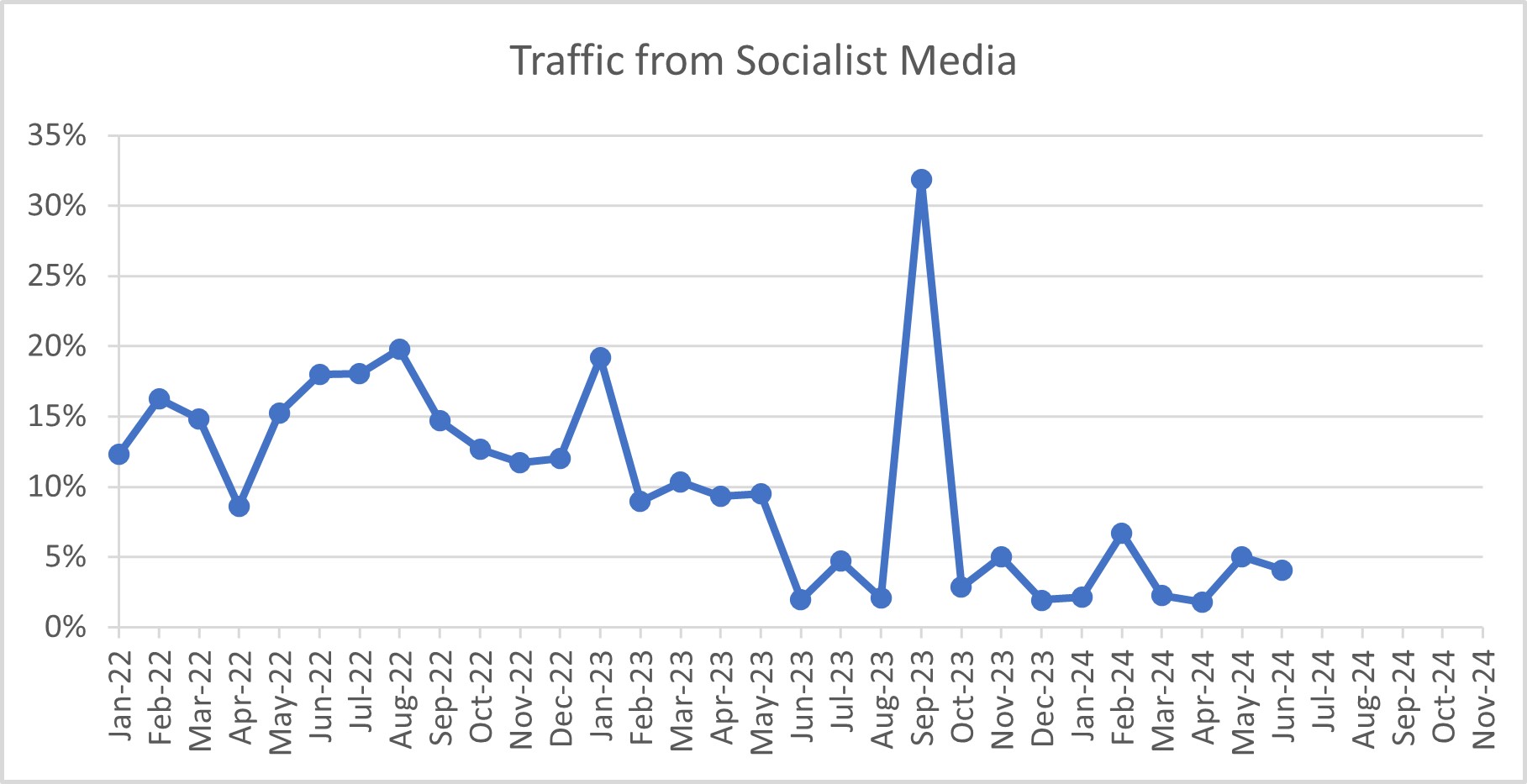
Traffic from Facebook and Twitter accounted for 4.1% of the total during the month, down considerably from the same period two years ago.
Did you know that livestock in the North Lander Complex receive seven times more forage than the horses and that an additional 4,080 horses could be on the range but are rotting instead in off-range holding because of permitted grazing?
You didn’t hear that from the advocates because it undermines the rationale for their ruinous darting programs.
Western Horse Watchers brings you the truth about wild horses, resource management and the Love Triangle on America’s public lands.
RELATED: Socialist Media Update for May 2024.
The site was omitted from Google searches for “wild horse” and “wild horses” for most of June, but it’s back today.


Who gave the order?
The Love Triangle hates competition, much less dissent.
RELATED: They Fear Western Horse Watchers Most.

How can the North Lander Complex be overpopulated with 3,035 wild horses when the BLM authorizes livestock equivalent to 4,080 wild horses in the same area, on top of the 536 horses allowed by plan?
How can you give money to groups that say the roundups are cruel and costly but would, if given the chance, zero out the herds with ovary-killing pesticides?
RELATED: If Wild Horses Had Principal Use of North Lander Complex.
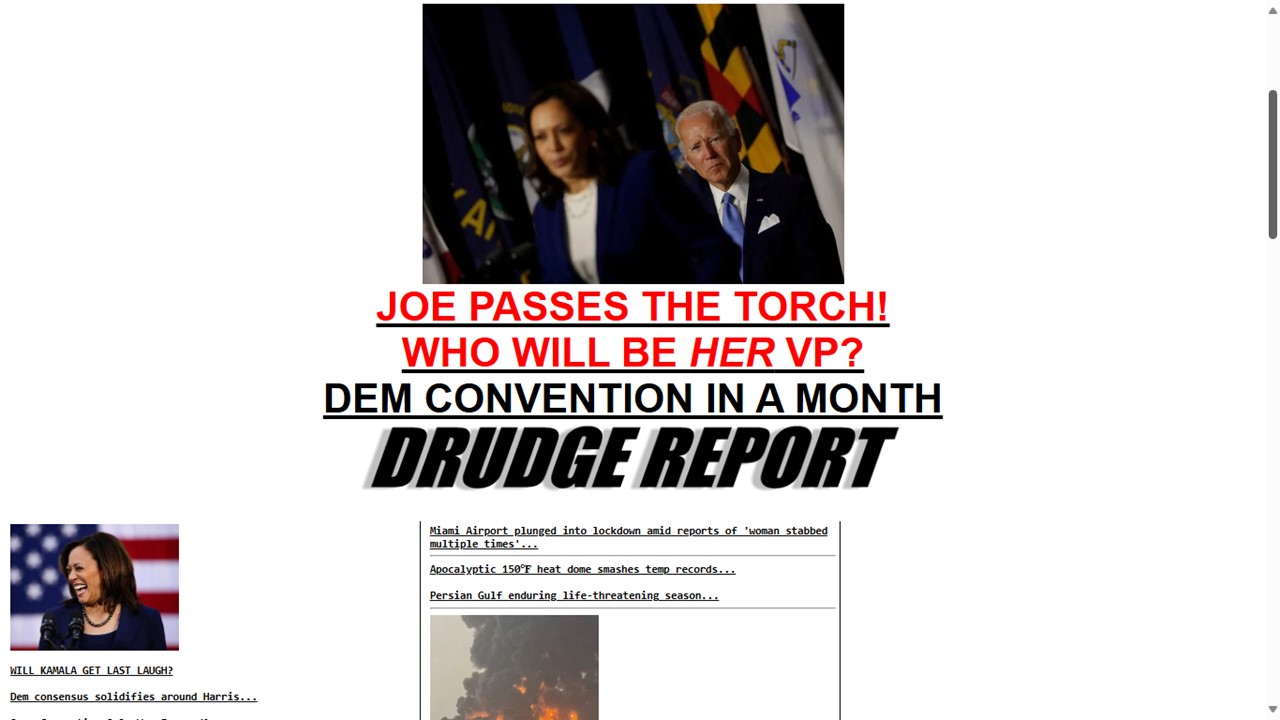
Apparently, at least according to the headlines on Drudge.
Your host was not among the 47.9M viewers.
Most wild horse advocates are Biden voters, disciples of climate change, LGBT and all manner of communist subversion.

The Salt River Wild Horse Darting Group, an ally of the Campaign Against America’s Wild Horses, has started a fundraiser to intervene in the second case filed by the Center for Biological Diversity against the Forest Service.
The description says “They have sued our Forest Service over NEPA and are asking the judge for a halt of the humane management programs. This of course would spell the end of the Salt River wild horses as we know it.”
Halting the humane management program, sometimes referred to as mass sterilization with PZP, would be good for the herd, assuming the mares haven’t been completely ruined by the advocates. It would spell the end of their reign of terror.
Further, “The humane management programs are what have kept the Salt River wild horses safe and healthy, and it has also reduced the foaling rate from 100 foals a year to just one or two per year (for the past 3 years). So why would they attack these programs? Because they want to see the Salt River wild horses removed down to 44 horses!”
Forty-four is greater than zero. At least some horses will be left. If the darting program is not stopped this year, the tipping point will be reached and the herd will slide into irreversible decline, with life unable to keep up with death, just like the Maryland side of Assateague Island.
As for legal action, the advocates should be the target of a criminal probe.
They’re using PZP to eradicate herds that are said to be overpopulated, pose safety hazards to motorists or interfere with animal agriculture, none of which are approved uses of the pesticide.
Note in the photo below the lack of PPE, another violation of the Directions for Use.
RELATED: CBD Brings Another Complaint Against Salt River Horses.

 Western Horse Watchers Association