The Virginia Range mustangs find you guilty of gross incompetence for sending 24 members of their herd to the Carson City prison in early August.

RELATED: Advocates Bungle Sunny Hills Rescue, 24 Horses Lose Freedom.

Western Horse Watchers Association
Exposing the Hypocrisy, Lies and Incompetence of the Wild Horse Advocates
Opinion
The Virginia Range mustangs find you guilty of gross incompetence for sending 24 members of their herd to the Carson City prison in early August.
RELATED: Advocates Bungle Sunny Hills Rescue, 24 Horses Lose Freedom.
If homes were burning because of faulty circuit breakers, they’d build more fire stations.

That’s according to an October 6 letter to INFORUM.
They and their offspring are the 15 horses to be removed from the park later this month.
Although the proposed livestock plan was terminated in April, the Park Service appears to be pursuing Alternative C, a nonreproducing herd that dies off.
The incident has been swept under the rug with 59 unaccounted-for horses.
No updates since September 18.

RELATED: Hold Your Horses: Little Book Cliffs Roundup Not Complete.
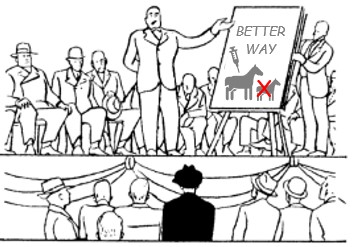
Tell the advocates you’ve decided to get rid of the herd with PZP.
They’ll be eating out of your hand.
Not only will they drop their opposition but they may offer to do it for free.
RELATED: City Council to TRNP: Drop the Pesticides and Roundup.
A bale of alfalfa/grass mix sold for $29 earlier this week, 20 bales minimum, down from $30 in August and $36 a year ago.
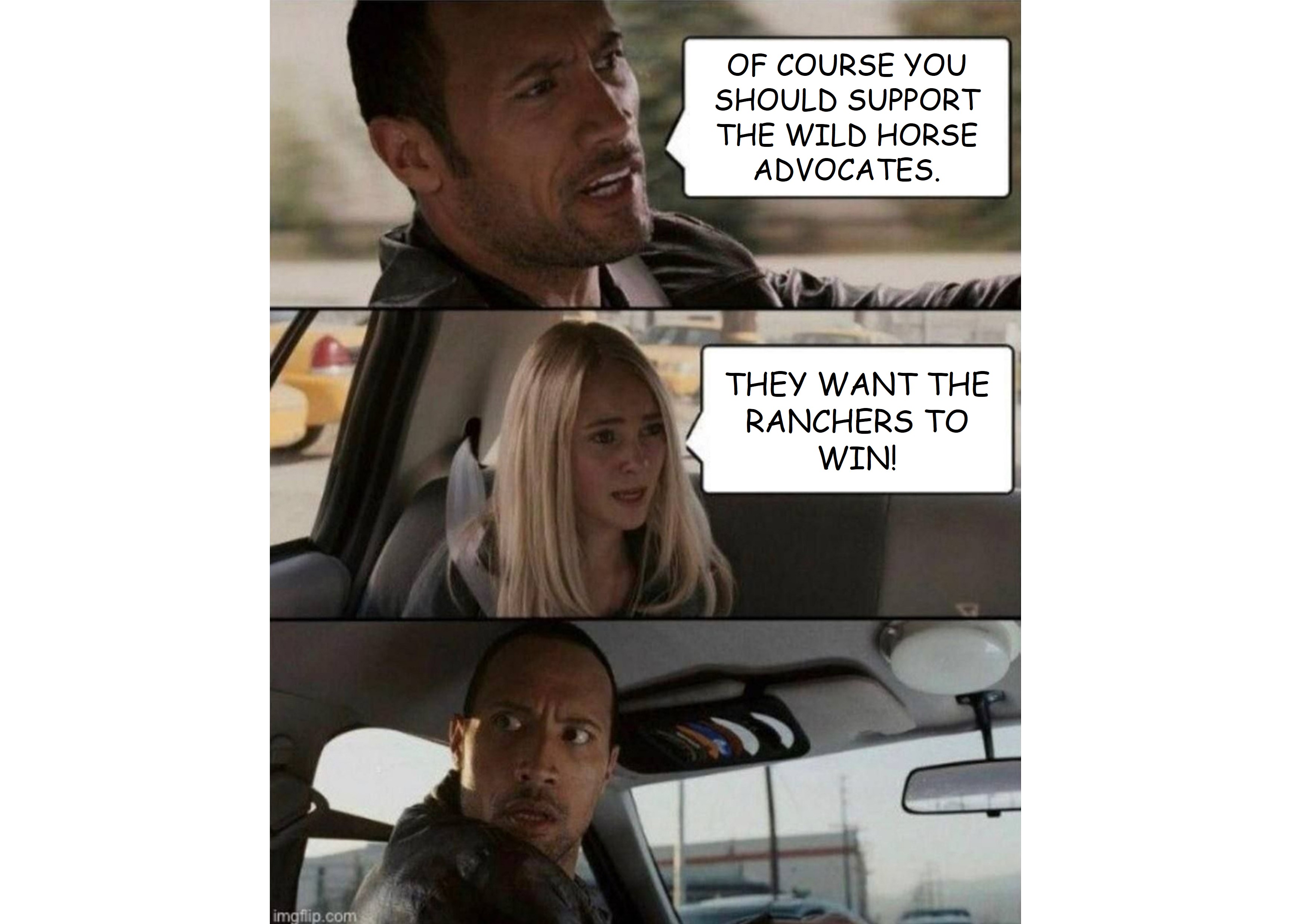
“That’s great news, I’m voting for Harris.”
It’s still up 53% from 2021, when the price was $19.
“I’m voting for Trump.”
RELATED: Price of Hay Eases Slightly?
She’s their Digital Director according to her profile.
She should write a tell-all about her former boss.
The title could be “Pesticides and Monsters: One Woman’s Mission to Eradicate America’s Wild Horses.”
RELATED: Grace Kuhn Leaves CAAWH?
Three reasons why you should avoid them. They oppose:
Cut them off. They’re not going to reform themselves.
They like the status quo and their cozy relationship with the bureaucrats and ranchers.
RELATED: Let Giving Tuesday Become Defund the Advocates Day.
Remember how liberals criticized the Bush administration in 2005 for its response to Katrina? News reports of families stranded on rooftops, a dead person in a wheelchair at the Superdome, etc.
How are they responding today?

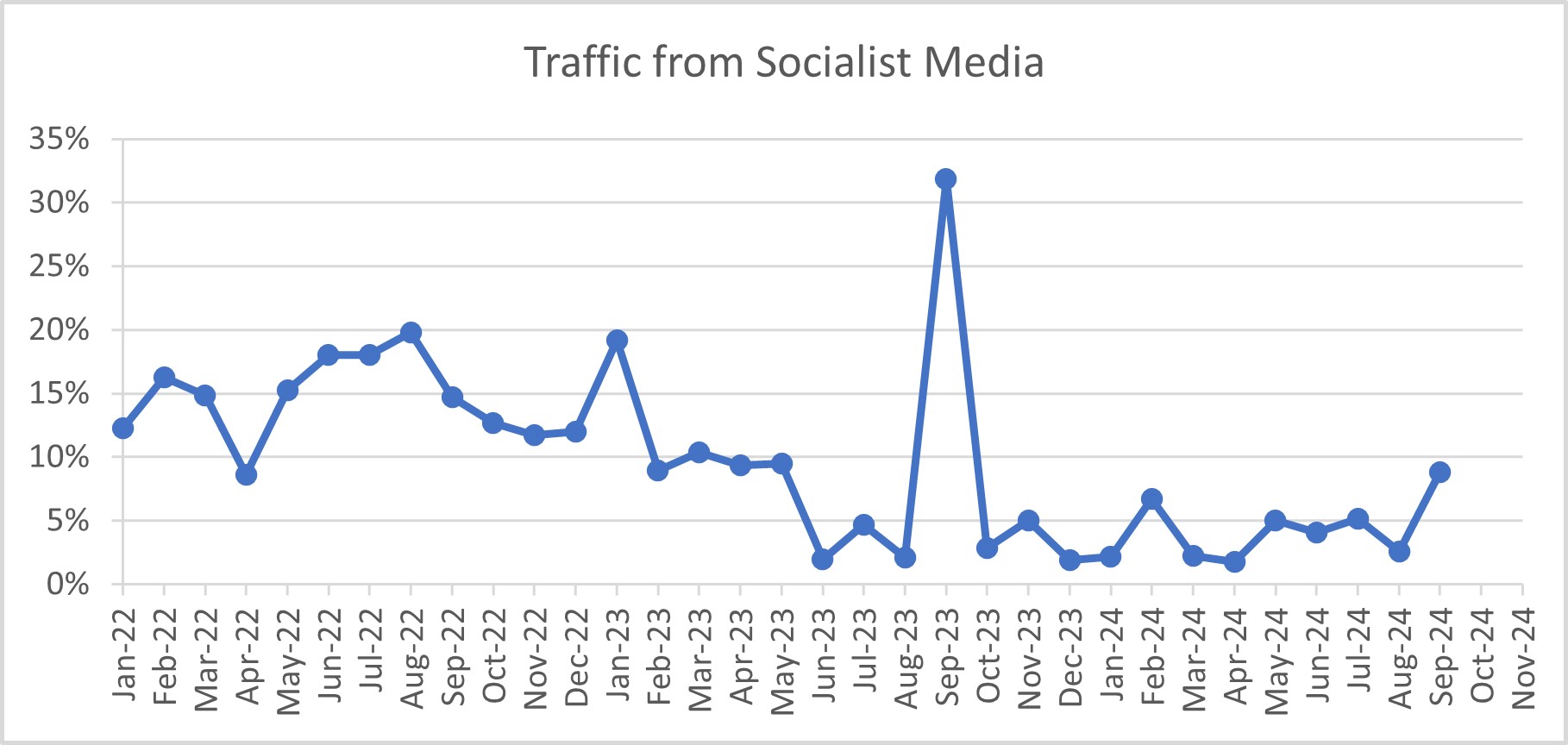
Traffic from Facebook and Twitter accounted for 8.8% of the total during the month, down considerably from the same period two years ago.
Did you know that the new PLC president is a public-lands rancher?
You didn’t hear that from the advocates.
The aim of socialist media is to get you to vote for liberals.
RELATED: Socialist Media Update for August 2024.
You can’t poison their water holes per 18 USC 3 §47, a common practice before 1959.

Today, the advocates poison the mares with Zonastat-H, a restricted-use pesticide that tricks their immune systems into attacking their ovaries.
The ranchers are also involved, but they prefer GonaCon Equine.
Their methods may differ but their goal is the same: Ranching superiority in the lawful homes of wild horses.
RELATED: If You Want to Help the Ranchers Give Money to the Advocates.
It’s not about healthy horses on healthy rangelands as suggested in the September 26 blog post, it’s about ranching superiority in the lawful homes of wild horses, sometimes referred to as achieving and maintaining AMLs.
The advocates stopped playing for the home team years ago. Today, they support the effort through their darting programs (first part of schedule).
Ranchers perform the task in Oregon.
In herds where field-darting is not practical, the BLM will capture the animals, provide the treatment and return them to the range. These incidents have been marked “CTR.”
The column did not indicate how much forage had been assigned to livestock in the areas targeted for removal, which would allow you to decide by calculation if they’re really overpopulated.
FY25 begins on October 1.
RELATED: FY25 Roundup Schedule Issued.

The advocates say that wild horse adopters should not receive cash incentives because they turn the process into a money-making venture, with some animals ending up in slaughter.
Similarly, the advocates should not be given financial support because it fuels their obsession with pesticides, primarily PZP.
Instead, they should be given vouchers for treatment at Betty Ford clinics or similar institutions, where they can be deprogrammed and educated in basic math, rational thought and intellectual integrity.
RELATED: Foal-Free Friday, Gaslighting Your Supporters Edition.

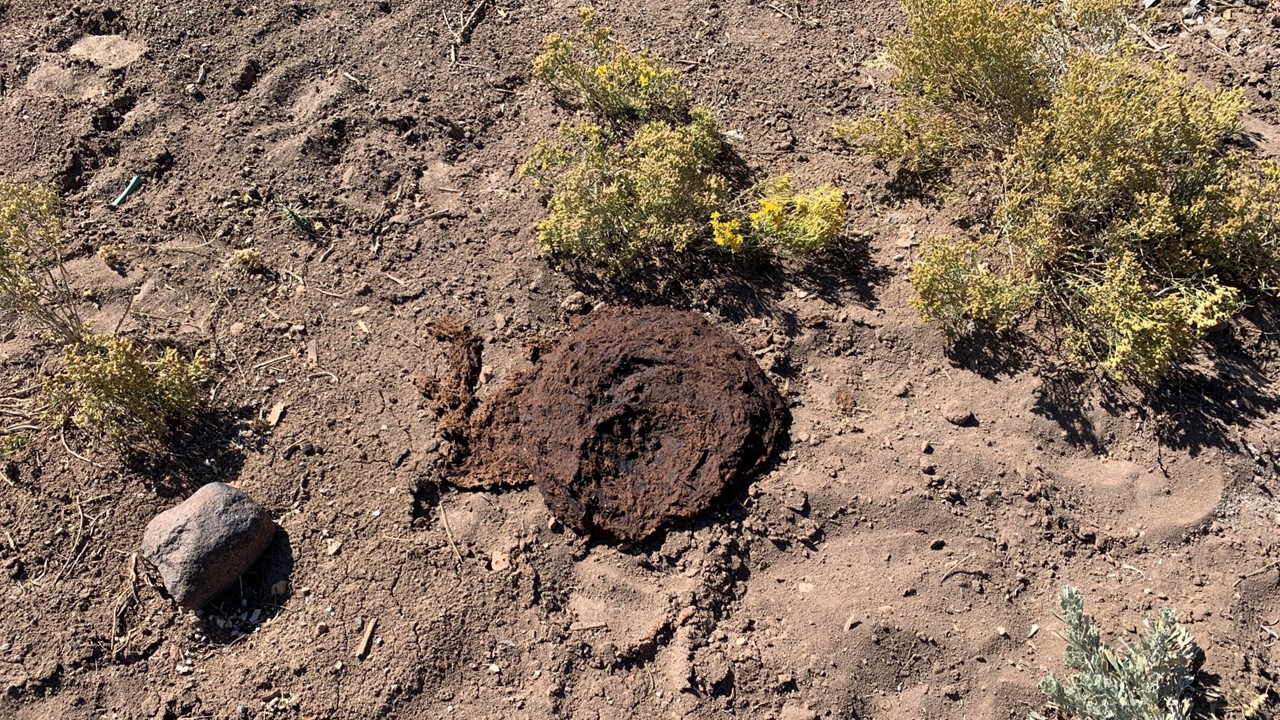
You’re seeing cow poop where you previously saw horse poop.
The Campaign Against America’s Wild Horses, a leader in nonmotorized removal and staunch opponent of principal use, pursues the Virginia Range mares relentlessly.
The PZP darting program, now in its sixth year, has moved into the sterilization phase, which may explain why it hasn’t posted the Year 6 agreement with NDA to its darting resources page.
It may contain terms like “tipping point” and “no looking back,” as its adherents lucture you about the safety and reversibility of the pesticide.
This bogus advocacy group will do anything to win the approval of the bureaucrats and ranchers, including total herd destruction.
RELATED: If You Want to Help the Ranchers Give Money to the Advocates.
He assumed the role at the end of the 56th Annual Meeting according to a September 20 news release.
As a role model for the industry, his allotments meet or exceed standards for rangeland health. Right?
The Operator Information and Allotment Information reports at RAS tied him to these authorizations and allotments, all in the Royal Gorge Field Office.
The Allotment Master Report provides management status, acreage and active AUMs.

The operation is on the small side, putting the new president in the figurehead category.
All of the public acres are in the Improve category, which should be an embarrassment to PLC.
The parcels support livestock equivalent to 70 wild horses, with an average stocking rate of 4.8 animals per thousand public acres.
The bureaucrats and ranchers tell us that public lands in the western U.S. can only support one wild horse per thousand acres (27,000 animals on 27 million acres), which should bring more embarrassment.
The advocates, defeated a long time ago and now in their camp, bolster the narrative with their darting programs.
In 1970, Led Zepplin released the Immigrant Song.
Fast forward to 2024.
RELATED: Missing Cat Posters Explained.
Project 2025 talks about getting rid of wild horses.
The advocates are actually doing it.
The greatest threat is public-lands ranching, which the advocates support.
Do not be deceived.
RELATED: Project 2025 Targets America’s Wild Horses and Burros?

So says one of their leaders in today’s news release on PRN.
Judge for yourself.
They’ve published a list of recommendations for the BLM covering ethical and effective wild horse and burro management.
It was developed at the SOWH Conference in Reno where there was no condemnation of the Virginia Range mass sterilization program, despite its proximity to the hotel-casino.
The page includes a form that will add your name to the signatories.
Western Horse Watchers offers the following suggestions as a starting point for meaningful discussion.
A guiding principle in the SOWH recommendations is that they could be implemented without any changes to policy and law.
The cover letter was not addressed to anyone in the Department of Agriculture, which is responsible for wild horses and burros on Forest Service lands.
Won’t you chip in so they can buy more PZP?
RELATED: Advocates to Fleece West Coast Liberals at Wild Horse Gala?

Suppose you adopt a mom-baby pair at one of the BLM off-range corrals, captured earlier this year in a wild horse roundup.
How much does the on-range population change?
What is the change in resource loading?
How many public acres were conserved?
Zip, zero and zilch, respectively.
So why would the writer of an opinion piece in today’s edition of The Nevada Independent peddle wild horse adoptions as conservation?
Because they free-up space in the corrals, allowing more horses to be taken off the range, conserving resources for the public-lands ranchers.
The author forgot to mention them.
“The equines generally inhabit rugged, remote, arid landscapes where they compete with mule deer, pronghorn, sage-grouse and other wildlife for water and forage.”
There aren’t many predators in those areas because they have been minimized in the name of animal agriculture.
Public lands in Nevada can’t support 38,000 wild horses and burros but they can support livestock equivalent to 173,000 wild horses.
The Property and Environment Research Center advocates for market solutions to conservation so let’s put labels on range-fed beef saying it was produced on public lands at the expense of America’s wild horses and let consumers pick the winners and losers.
RELATED: AIP Turns 5.


