Inspired by Ian Tyson’s La Primera, a track on his 1999 album Lost Herd.


Western Horse Watchers Association
Exposing the Hypocrisy, Lies and Incompetence of the Wild Horse Advocates
Inspired by Ian Tyson’s La Primera, a track on his 1999 album Lost Herd.
Yeah, roughly half of the horses under BLM administration are there.
Maps of HAs and HMAs in Nevada.
Not sure of the difference between herd areas and herd management areas? Go watch the presentation by John Ruhs at this post. Pay attention to the remarks beginning at 0:08:30.
Example of a band leader chasing away an unwanted visitor. Filmed on the Pine Nut Mountains herd area. Follow the action at the Pine Nut Wild Horse Advocates FB page.
Forecast for the Virginia Range, Tue 02/20/18, courtesy of Highland Ranches POA.
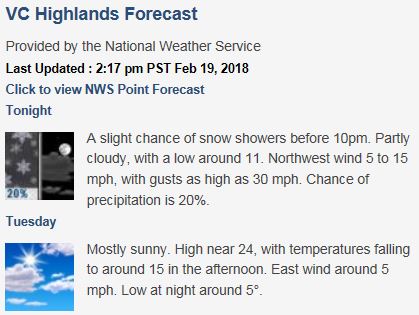
Better stock up on PZP in case the five degree temperatures don’t kill off enough of the youngsters and oldsters.
Code word for ‘diversity’ on the range.
However, the goal is not variety of inhabitants. It’s about reducing the influence of certain ‘undesirable’ elements in the population.
You know, like straight white men. No, wait a minute…wild horses and burros.
Not that you hate horses and burros. Just the things they represent.
Family, freedom, self-reliance, mobility, autonomy, virility.
You’ll need some metrics to promote awareness of the ‘problem.’
Give them nice names, such as ‘appropriate management levels.’
Values can be assigned to the metrics by tables of random numbers or lightning bolts from Mt. Olympus. These numbers establish limits on the size of the population segments. If their size goes beyond the AMLs, corrective actions will be taken.
Other segments in the population have no limits. Especially if they were placed on the range from other ‘areas.’
You need to be more welcoming and inclusive.

P.S. Would like to see the folks over at Maggie’s Farm rethink their position on the subject.
Another example of repairs to underground PVC pipe. The leak was at a 2″ 45 degree elbow above the one you see in the photo. Only the soil held the pieces together.
As shown in the photo, you can join any two pieces of pipe with three elbows.

The first Q&A period closes on 02/19/18, see sections 5 and 6 in the RFP.
Given that most of the lands grazed by the VR horses are privately owned, why isn’t there a requirement for working with property owners on issues like liability and consent?

Related: Comments on RFP for VR Horses.
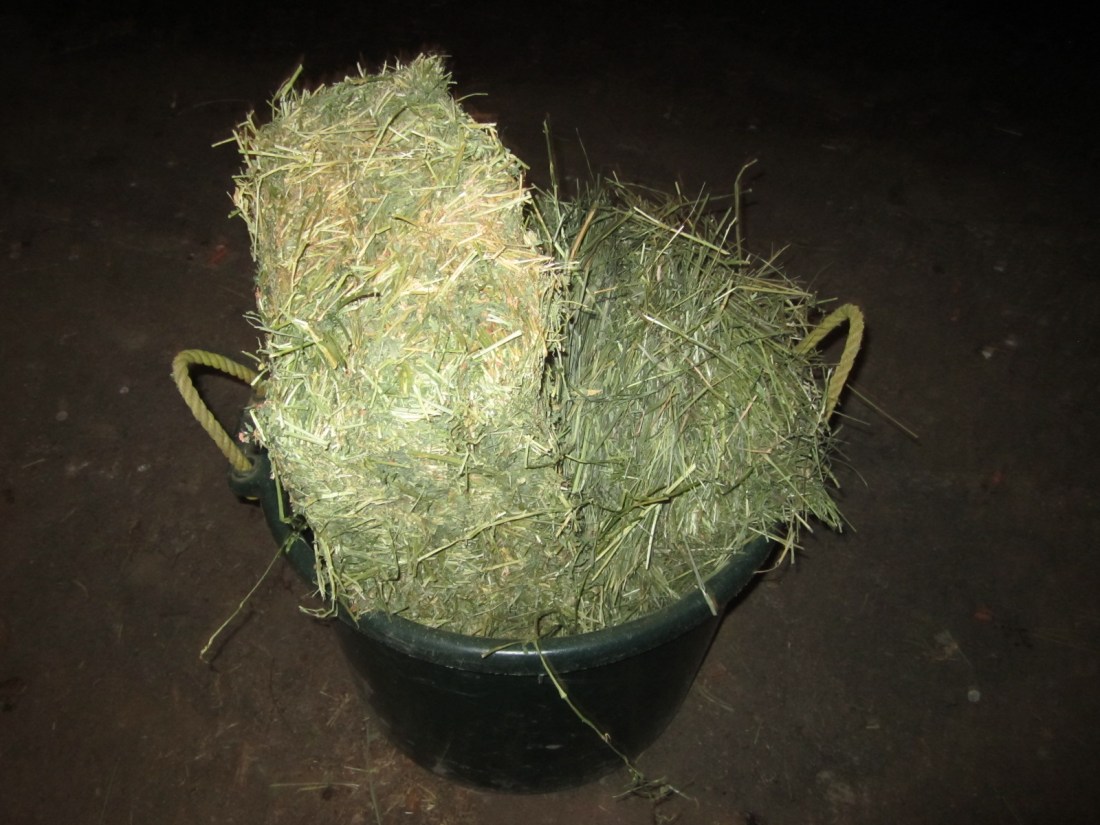
They may not hold water but they’ll carry hay.
Your horses are not in stalls, right?
Example of horses returned to the range after a roundup, at/near White Mountain HMA.
Presentation by John Ruhs, State Director for BLM in Nevada, at the National Wild Horse and Burro Summit in August 2017. Thirty minutes in length but worth it.
Remarks from 0:01:30 to 0:03:09 reflect the BLM mission in the post-Obama era.
Wild horses and burros fall under the ‘historic values’ category (0:02:17).
Conference sponsored by the National Horse & Burro Rangeland Management Coalition, which is not a WHB advocacy group.
The second presentation in the video focuses mostly on the burros in Arizona.
The final presentation deals with disease on the range.
On the Pryor Mountains.
A trained horse released at the trap entrance to draw the wild ones into captivity.
In this video, from the 2015 Kiger gather, the JH appears at 12:16 behind some trees, just inside the temporary fence. He is released at 12:23, as the mustangs pass by, and they follow him into the trap.
Carrot in front, stick in the back.
BLM film from Calico Complex gather in 2010 (Nevada).
Processing of captured horses has been omitted.
Never get on the bus.
South Steens in Oregon.
Triple B Complex in Nevada.
Bible Springs Complex in Utah.
Next internet adoption adoption begins 02/13/18.
Conditions in South Steens as of October 2017, documented by Mustang Meg:
Article that appeared in the September 2014 issue of The Nevada Rancher about Cattoor Livestock Roundup, Inc., one of BLM’s contractors.
You decide.

A change to the WHB Act that allows BLM horses to be sold if they are more than 10 years old or have been offered unsuccessfully for adoption at least three times.
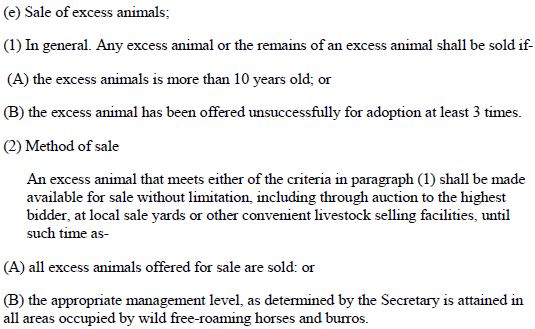
Harry Reid was behind it?
See this post at Tuesday’s Horse.
How to connect a rope to a halter.
For leading and riding.
Section 2, Scope of Work.
During the 12/12/17 meeting, Board members indicated that the horses would be managed by their new owner ‘…as they see fit.’ (Go to the remarks between 9:30 and 10:50 in the audio at this post.)
So why is there a mandate for fertility control?
What if the new owner believes that PZP darting of mares is harmful? Listen to the remarks in the audio from 2:33:40 to 2:34:40. Somebody in the gallery tries to shut the speaker down at 2:34:16. Here you see a glimpse of pro-life vs. pro-choice in the wild horse world.

