No to Cannon in SD 17

Yearning for open space?  Check out this guy’s bio.  What does he do for a living?  What are his qualifications for office?  Is he on board with the fundamental transformation?

The Democrat candidate recently visited the Pine Nut Mountain herd area to learn about birth control for horses.
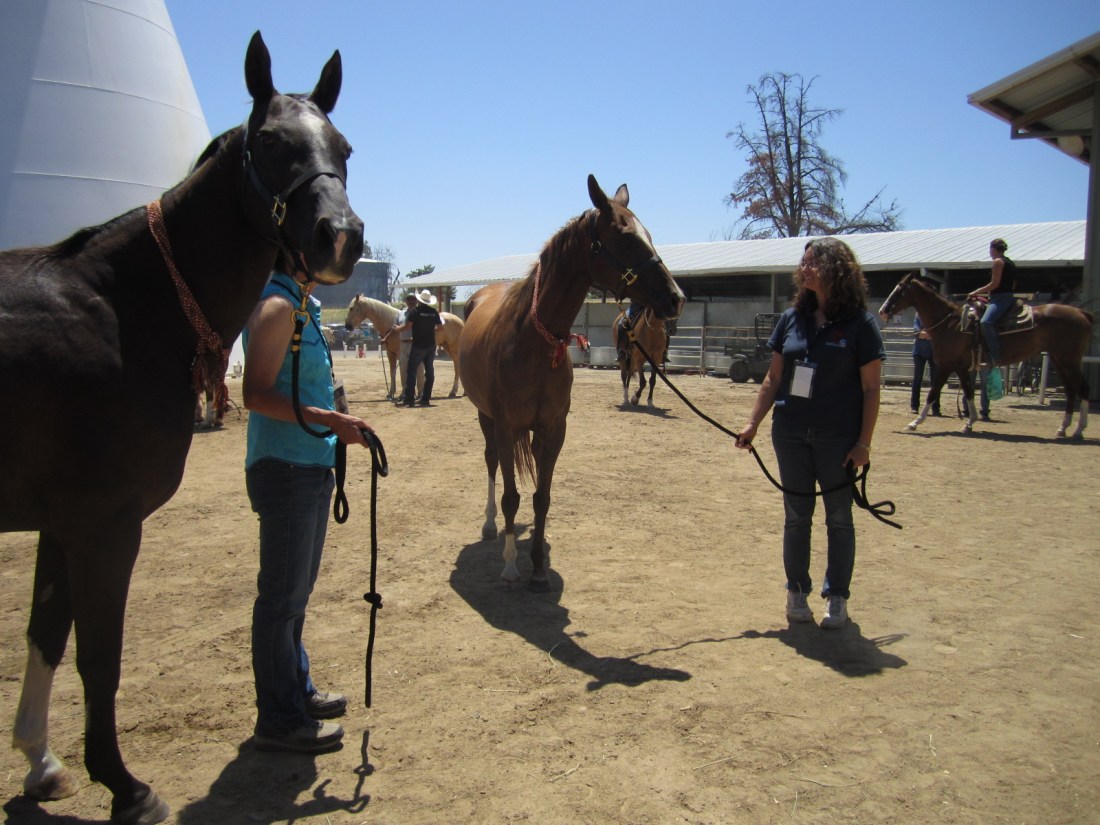
Hmmm, can the technique be used to re-shape the electorate?  It’s already happening.  The birth rate in the U.S. is negative because we are aborting/sterilizing/contracepting ourselves out of existence.  Although rarely discussed, this is an important part of the Voter Replacement Project sponsored by his party.

Our wild ones are losing ground, literally, because of Multiple Use.  What are some of the factors making livestock grazing on public lands (especially HMAs) more attractive?

  • Costs – corn is getting too expensive due to ethanol production
  • Pop culture – a belief that range-fed beef is better for you
  • Revenue – grazing fees help nourish the leviathan
  • Land – not enough of it in private hands

Who pushes alternate energy?  Who wants more money from the private sector?  Who thinks government should control everything?  Liberals.

Anybody asking for ‘an equitable solution to our wild horses’ doesn’t understand the issues and shouldn’t be setting policy, political leanings aside.

Rural Water Systems – Cold Climates

If temperatures at your ranch drop below freezing for days or weeks at a time, the riser from your pump (pipe that brings water to the surface) can’t exit the well from the top.

Your contractor will cut a hole in the case at the appropriate depth, 36″ in this example, to install a special fitting known as a pitless adapter.

IMG_5311

The adapter functions like a 90 degree elbow, but is threaded at the top so the hoisting rig can lower the assembly (pump, riser and fitting) back into the well.  The o-ring seals it to the inside of the casing, preventing surface water intrusion.  When installed, the outlet of the fitting (male threads) protrudes from the casing.  The contractor will connect an underground line to the fitting and run it over to your pump house.

IMG_5319

The line should enter the pump house on an interior wall.  The gray conduit stub seen in the lower right of this photo is where that will happen (contractor will push 1.25″ poly tubing from the well up through the stub).  The pressure tanks and water treating equipment will also need to be protected from freezing.  The pressure switch is on the right in this photo, covered by its box, at the inlet to the system.  A 500 watt heater keeps the space warm (above freezing) in the winter.

IMG_5339

This photo shows the basic arrangement, construction almost complete.  The well is on the right.  Cement-fiber siding and metal roof for fire resistance.  The gooseneck lights (one in the rear also) are on dusk-to-dawn control.

Next to the house and barn, you’ll probably spend more money on the water system than any other part of your ranch.  But that’s what you have to do if you want live among the wild horses of the American West.

IMG_5344

Emergency Gather Planned Near Cold Creek, NV

Refer to this report dated 05/07/18 in the Las Vegas Review-Journal.  See also this press release dated 05/07/18 from the U.S. Forest Service.

A similar action was carried out in 2015, against the wishes of local residents.  At the time of the gather, the horse population was at 7X AML and no cattle were grazing in the area.  The case is briefly discussed beginning at 21:48 in this video.

The town of Cold Creek falls within the Wheeler Pass HMA or Spring Mountain HA.

New Band on the Virginia Range

Photo of VR stallion scouting out the territory on 05/04/18.  A mare and foal lagged about 600 feet behind, awaiting instructions.

IMG_5301

He decided things were not safe for the rest of the family so he circled back and moved them elsewhere.

IMG_5305

Picked up by trailcam as he circled back.  A contractor arrived on site while these photos were taken, pulling a trailer with backhoe, and that’s what spooked him.

IMG_6901a

Gone Now

This video tells the story of the Sheldon horses in NW Nevada, former inhabitants of Sheldon National Wildlife Refuge.  Rounded up a few years ago.  The area is managed by the FWS, not the BLM, although a BLM contractor was involved in the gathers.

The size of the refuge is 574,000 acres, and at the time of the removals there were 800 horses and 90 burros roaming the land, for a stocking rate of 1.6 animals per thousand acres, almost twice the rate of your average HMA in Nevada.

The gathers themselves, sometimes difficult to watch, are an effect, not a cause.  Instead of criticizing the contractor, question the basis on which they were justified.  Does everything appear to be legit?

Sheldon-Horses-1

For example, this section of the SNWR brochure indicates that plants grow back quickly after a fire but grow slowly after grazing.  Does that sound right?  What happens to the risk of fire when you allow vegetation to grow unchecked?

These Women Don’t Fit the Narrative

What is a narrative?  A story that explains why things are the way they are, or why the current situation is unacceptable and must be changed.  The farther from the truth, the more outrageous, the better.  Only fools believe the narrative.

Example: Black folks are victims of white oppression, they’re not responsible for their station in life and only the Democrat Party can save them.  Standards must be lowered and concessions must be made.  The Founding Fathers were aristocratic slave owners who crafted the Constitution to favor white people.  The system must be changed.

That last statement, of course, was the goal all along, but it had to be justified (which is why you invent a narrative).  Another example: Global warming.  Goal: Massive government involvement in your life.

The narrative for WHB contains several elements, here’s one of them: They were simply turned loose or escaped from nearby ranches, no special significance.

Home Defense

If you’re in a rural area, you’ll want a means of defending yourself, your family, your livestock and your property (assuming you live in a state where it’s legal to do so).

Your arsenal should include some or all of the following, plus 5000 rounds of ammo (at least) and a working knowledge of said weapons and ammunition.

  • Handgun with night sights and weapon light
  • Shotgun, 18″ barrel, with mag extension, night sights, weapon light
  • Semi-auto rifle configured for close quarters, 16″ barrel, weapon light, red dot sight
  • Semi-auto rifle configured for medium range, 18″ barrel, magnified optic
  • Bolt-action rifle for long range, 20 to 24″ barrel, magnified optic

A common handgun size is 9 mm.  Ammo is usually plentiful and inexpensive.  If you’re nostalgic for the Old West, get a Single Action Army (Colt .45).

The shotgun would likely fall into the tactical category, 12 gauge, with an assortment of rifled slugs and buckshot.

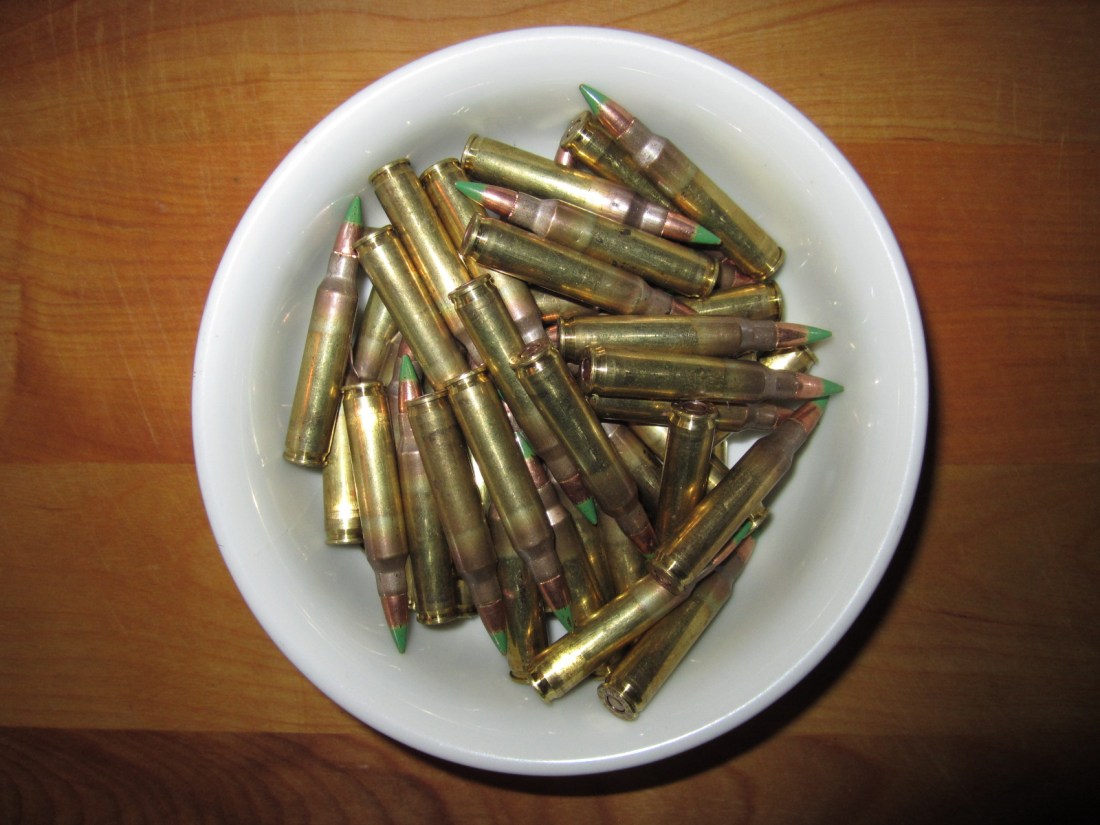
The 16″ semi-automatic rifle could be chambered in 5.56.  Bulk ammo (55 and 62 grain) runs around 40 cents per round, match ammo (75 grain) costs about 90 cents per round.

The 18″ rifle would probably be chambered in .308.  Match ammo (168 grain) costs about 90 cents per round.  Like the 5.56, get extra mags and pre-load them.

The bolt action rifle can be also used for hunting.  It can be chambered in .308 or something larger.  Ammo may cost $1.00 to $2.00 per round.  The optic should cost as much or more as the rifle.

You’ll also want eye and ear protection.

Basic safety rules for guns:

  • Keep them in a safe (but accessible) place
  • Always assume they’re loaded
  • Don’t put your finger on the trigger until ready to fire
  • Never point them at anything you wouldn’t want to destroy
  • Know what’s in the background of your shot

There are many Youtube channels, many videos and many opinions out there so take some time to learn what’s right for you.  A few examples:

Hickok45

Sootch00

Mrgunsngear

Iraqveteran8888

And finally, The Nutnfancy Project, an all-around gear and adventure channel.  He’s based in Utah, so you may even see a few wild horses in his videos.

Quick Tour of Virginia City

Aerial view of Virginia City posted to this FB page.  Starts with some mining ruins, including hoisting works and tailings.

The view beginning at -1:37 is to the east, away from town, followed by a view to the west, towards town, with a snow-covered Mt. Davidson in the background (originally Sun Mountain).

St. Mary’s church appears at -1:11, followed by the Fourth Ward School at -1:06.

Next is the Silver Terrace Cemetery (NE part of town) at -0:57.  The Silverland Inn is at the center of the frame at -0:32.

The view at -0:12 is to the north, showing some of the ‘alphabet’ streets.  The main drag running through town is C Street.  Mine owners and superintendents lived up the hill on A and B Streets while the rank-and-file lived in the lower part of town, D Street, E street, etc.

The Virginia Range mustangs occasionally pass through the area, as noted in this post.

H/T St. Mary’s in the Mountains.

What is PZP?

The common name is Porcine Zona Pellucida, a protein derived from pig ovaries which interferes with conception.

According to the EPA Pesticide Fact Sheet, it’s a tool for management of nuisance feral and wild horses and burros.  The technical registrant is the Humane Society of the United States.

The substance is injected intramuscularly by hand-held syringe, syringe mounted on a jabstick or by syringe dart fired from a CO2 cartridge-powered projection system.

The goal is to have fewer of these little guys running around on the range.  You have to wonder how anyone who agrees with this can be called a wild horse advocate.

IMG_5097a

Nevada HMA Stocking Rates

The chart below shows the stocking rate in animals per thousand acres as a function of land area for HMAs in Nevada.  Stocking rates are based on the upper values of the AMLs and include both horses and burros.  The stocking rate for the Virginia Range (horses only) is based on a census in early 2018.

Three observations from the chart:

  • Most stocking rates are less than 2 animals per thousand acres
  • Stocking rates vary inversely with HMA size
  • Stocking rates for large HMAs (above 500,000 acres) are basically constant

The average HMA in Nevada has 193,000 acres.

The HMA with the largest stocking rate is Fort Sage (formerly Fox Hog).

The largest HMAs are the Nevada Wild Horse Range and Triple B.  The smallest is Fort Sage.

The average stocking rate for Nevada HMAs is 0.84 animals per thousand acres.

NV-SR-HMA-1